For most bedrooms, a 20-pint dehumidifier running on a 45 to 50 percent humidistat target keeps the room comfortable overnight. The figure that matters most for sleep is noise: standard compressor units run 50 to 60 dB, while quiet modes drop to around 45 dB (30 to 50 dB context). Right-size the unit, place it a few feet from the bed, and set it to cycle off automatically.
Why does noise matter more than pint capacity in a bedroom?
Everywhere else in the house you buy a dehumidifier on capacity. In the bedroom, the deciding spec is how loud it is at 2 a.m.
A dehumidifier is a small refrigeration system: a compressor and a fan. At full speed, a typical portable model measures 50 to 60 dB — comparable to a running dishwasher or steady conversation. That is fine in a basement you rarely occupy, but it is enough to keep a light sleeper on the edge of waking. Manufacturers publish their quietest numbers, so treat spec-sheet decibels as a floor rather than what you’ll actually hear at the bedside.
What you want instead is a unit with a genuine sleep or quiet mode that throttles the fan down to roughly 45 dB — the level of a quiet library or soft rainfall. For reference, a whisper is around 30 dB and a normal conversation is about 60 dB, so every few decibels you shave off is meaningful. Two practical moves help as much as the spec itself:
- Place the unit three to six feet from the bed, not on the nightstand. Sound falls off quickly with distance.
- Choose a model with a dimmable or off LED display. A glowing panel disrupts sleep as surely as a hum does.
Thermoelectric (“Peltier”) units are quieter still because they have no compressor, but they pull far less water — often just a pint or two a day — and suit only very small, barely-damp rooms like a closet or a compact guest room. For a bedroom with real moisture, a compressor unit in quiet mode is the honest choice, and its cycling hum is easier to sleep through than the constant whir of an undersized fan straining to keep up.
What size dehumidifier does a bedroom actually need?
Bigger is not quieter, and it is not better. Oversizing is the most common bedroom mistake.
Bedrooms are small — usually 150 to 300 sq ft. Using the AHAM (Association of Home Appliance Manufacturers) sizing chart, a room that size in the “moderately damp” category (it feels clammy in humid weather) is fully covered by a 20-pint unit. Even a noticeably damp room rarely needs more than 22 pints at this square footage.
Here is why undersizing on purpose backfires but oversizing backfires worse: an oversized machine satisfies its humidistat quickly, but manufacturers often run the fan at full speed regardless, so you get more noise for no extra benefit. A right-sized 20-pint unit spends more time in low, quiet operation and cycles gently. Match the machine to the room and it runs softer.
| Bedroom size | Dampness | Suggested capacity |
|---|---|---|
| 150–300 sq ft | Moderately damp (clammy) | 20 pints |
| 150–300 sq ft | Very damp (visible moisture) | 22 pints |
| Under 150 sq ft | Slightly damp | 20-pint or thermoelectric |
If you want to pin the number to your exact room, run it through our dehumidifier size calculator before you buy.
What humidity should a bedroom be for good sleep?
The comfort target is a band, not a single number, and it happens to line up with the allergen-control range.
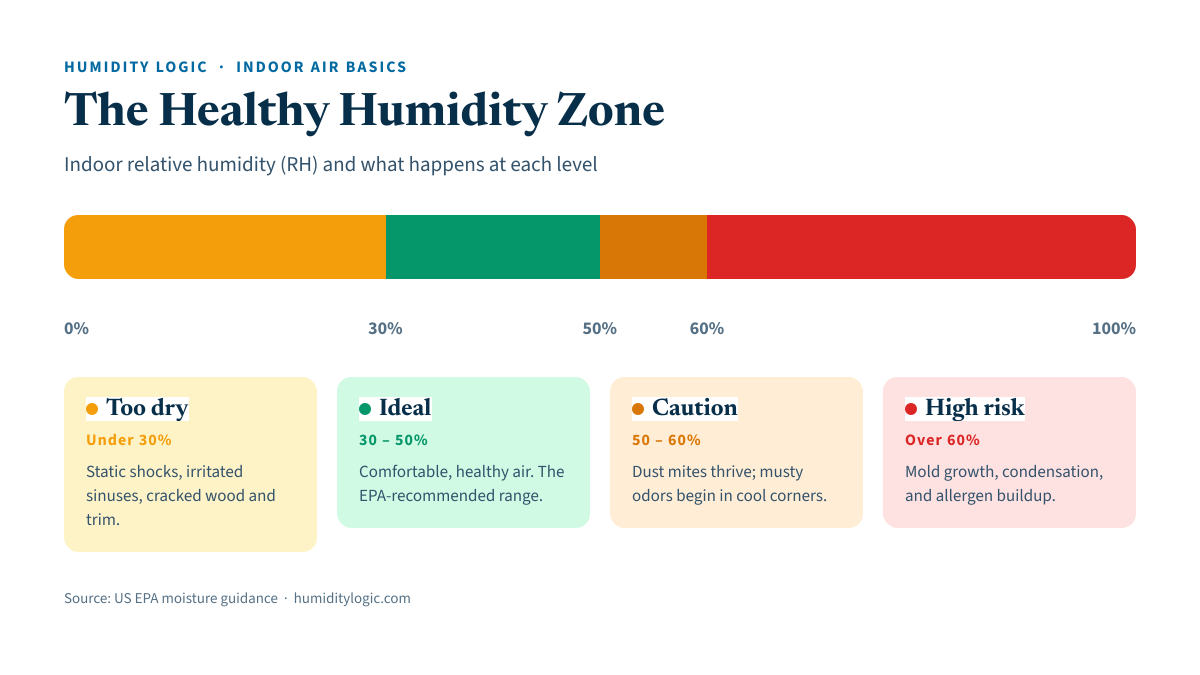
The EPA recommends keeping indoor humidity between 30 and 50 percent. For overnight comfort, the sweet spot sits at the top of that band — roughly 40 to 50 percent RH. Below about 30 percent the air feels dry and can leave your throat, nose, and skin uncomfortable by morning. Above 50 to 60 percent the room feels heavy and clammy, and other problems begin.
Those “other problems” are why the range is worth hitting. Two well-documented moisture thresholds bracket the caution zone:
- Dust mites need relative humidity above 50 percent to survive and reproduce. Hold a room below that and mite populations dehydrate and decline — the basis for the common allergen-reduction advice.
- Mold growth becomes far more likely above 60 percent RH, which is why the EPA flags that threshold in its moisture-control guidance.
Keeping a bedroom in the 40 to 50 percent window therefore does double duty: it feels good to sleep in, and it discourages the two most common indoor allergen sources. To be clear, this is comfort and allergen reduction — a dehumidifier is not a treatment for allergies or asthma, and anyone managing a diagnosed condition should follow their clinician’s guidance. For the broader picture, see our guide to ideal indoor humidity levels and what counts as high humidity.
How do you run a dehumidifier safely all night?
The goal is a machine you set once and forget — no midnight bucket runs, no fire-risk worries.
Running a dehumidifier overnight is safe and routine, but a few settings make it quieter, cheaper, and truly hands-off:
- Set a humidistat target of 45 to 50 percent. The unit runs until the room hits the target, then cycles off. It is not grinding away all night — it works in bursts, which is quieter and uses less power.
- Use continuous drainage if you can. A gravity drain hose to a nearby floor drain or sink means the tank never fills. If you rely on the bucket, pick a model with auto shut-off so it stops safely when full rather than overflowing.
- Give it airflow. Leave a few inches of clearance around the intake and exhaust. A unit crammed against a wall or under a nightstand works harder and louder.
- Plug directly into a wall outlet. Skip lightweight extension cords and power strips for any compressor appliance; a direct connection runs cooler.
What does it cost to run overnight?
Less than you’d guess. A small bedroom unit drawing around 300 watts, running roughly 8 hours at the U.S. average of 17.9¢ per kWh, costs about $13 a month. Because a right-sized unit cycles off once the room is dry, real-world cost is often lower. You can price your own model and rate with the electricity cost calculator.
Putting it together
A good bedroom dehumidifier is defined by restraint, not raw power. Choose a 20-pint unit for a typical 150 to 300 sq ft room, insist on a quiet mode near 45 dB and a display you can dim, set the humidistat to 45 to 50 percent, and let continuous drainage handle the water. Do that and you get the payoff — air held in the EPA’s 30 to 50 percent comfort zone, fewer dust mites and less mold risk, and a machine you genuinely forget is running.
Start by confirming the capacity your room needs with the dehumidifier size calculator, then shortlist models by their quiet-mode decibel rating rather than their headline pint number.
See it in 3D. Explore the bedroom in The Humidity House, our interactive 3D home — click the bed, windows, or a houseplant to see the small, everyday moisture sources that add up overnight.
Frequently asked questions
How many decibels is quiet enough for a bedroom dehumidifier?
Aim for a unit that runs at or below 45 dB, roughly a quiet library. Standard compressor models often measure 50 to 60 dB at full speed, so look for a "sleep" or quiet mode and place the unit a few feet from the bed rather than on the nightstand.
What size dehumidifier do I need for a bedroom?
For a typical 150 to 300 sq ft bedroom that feels moderately damp, a 20-pint unit is usually enough per the AHAM sizing chart. Right-sizing matters because an oversized machine runs at full fan speed more often and is louder, not quieter.
Is it safe to run a dehumidifier all night in the bedroom?
Yes. Set a humidistat target of 45 to 50 percent so it cycles off once the room is dry, use continuous drainage or a large tank with auto shut-off, and give it a few inches of clearance for airflow. There is no need to empty a bucket at 3 a.m.
What humidity should a bedroom be at night?
The EPA recommends keeping indoor humidity between 30 and 50 percent. For sleeping comfort, 40 to 50 percent is a good overnight window: dry enough to discourage dust mites and mold, but not so dry that your throat and sinuses feel parched.
Will a bedroom dehumidifier help with allergies?
It can reduce common allergen sources. Dust mites need relative humidity above 50 percent to thrive, and mold growth rises above 60 percent, so holding the room in the 40 to 50 percent range limits both. This is a comfort and allergen-reduction benefit, not a medical treatment.
Sources & references
Every figure on this page is checked against these published sources. Last reviewed July 21, 2026.