The ideal indoor humidity is 30-50% relative humidity, and the EPA advises keeping it under 60% at all times to discourage mold, dust mites, and condensation. Season shifts the target: aim for 30-40% in winter when it is freezing outside, and up to 50% in humid summers when air conditioning is doing the drying.
Why Is 30-50% the Ideal Indoor Humidity Range?
The 30-50% range is the sweet spot where air is comfortable for people but hostile to the things that damage a house. The EPA’s guidance is explicit: keep indoor relative humidity “below 60 percent (ideally between 30 and 50 percent).” That single sentence anchors nearly every credible recommendation you will find, and it holds up because both edges of the range solve a real problem.
Below 30%, the air turns aggressively dry. It pulls moisture out of everything it touches — your skin and sinuses, wood floors and furniture, houseplants, and the mucous membranes that trap airborne viruses. You get static shocks, cracked trim, and that scratchy morning throat common in heated homes. Dry air is a winter heating-season issue, not a health emergency, but it is genuinely uncomfortable and hard on woodwork.
Above 50%, the opposite problem starts building. Dust mites, which absorb water vapor directly from the air rather than drinking it, thrive once relative humidity climbs past 50%; the American Lung Association notes they struggle to survive in drier air. Push past 60% and mold enters the picture. The EPA’s core principle is blunt — moisture control is the key to mold control — and damp air keeps porous surfaces like drywall, wood framing, and closet contents wet enough to grow it. Condensation on cold surfaces follows close behind. The 30-50% band threads between all of it: dry enough to starve mold and mites, moist enough to feel good and protect your home’s materials.
What Should Indoor Humidity Be by Season?
Your target should move with the weather, staying near 30-40% in winter and rising to 45-50% in summer. The reason is condensation, not comfort. Indoor air can only hold so much moisture before it starts depositing water on the coldest surface in the room — and in winter, that surface is your window glass.
When it is below freezing outside, the interior side of a single-pane or older double-pane window can drop into the 30s or 40s (°F). Warm 45% air meeting that cold glass condenses, pooling on the sill and feeding mold and rot in the frame. Dialing humidity down to 30-40% keeps the air dry enough that the glass stays clear. If your windows are already fogging, our guide to condensation on windows walks through the fix, and the condensation risk calculator shows the exact surface temperature at which your indoor air will start to drip.
Summer flips the logic. Outdoor air is loaded with moisture, so the challenge is removing humidity, not adding it. Air conditioning dehumidifies as it cools, which is why many homes hold a comfortable 45-50% in July without extra equipment. In damp basements or humid-climate homes, a dehumidifier picks up the slack.
| Season / outdoor condition | Target indoor RH | Why |
|---|---|---|
| Winter, below 0°F outside | 30% | Very cold glass condenses easily; keep air dry |
| Winter, 0-32°F outside | 30-40% | Standard heating-season range to avoid window sweat |
| Spring / fall, mild | 40-50% | Comfortable and low risk with little equipment needed |
| Summer, warm and humid | 45-50% | AC handles drying; stay clear of the 60% ceiling |
The one rule that never changes: never let sustained readings exceed 60%, in any season.
What Happens When Humidity Is Too High or Too Low?
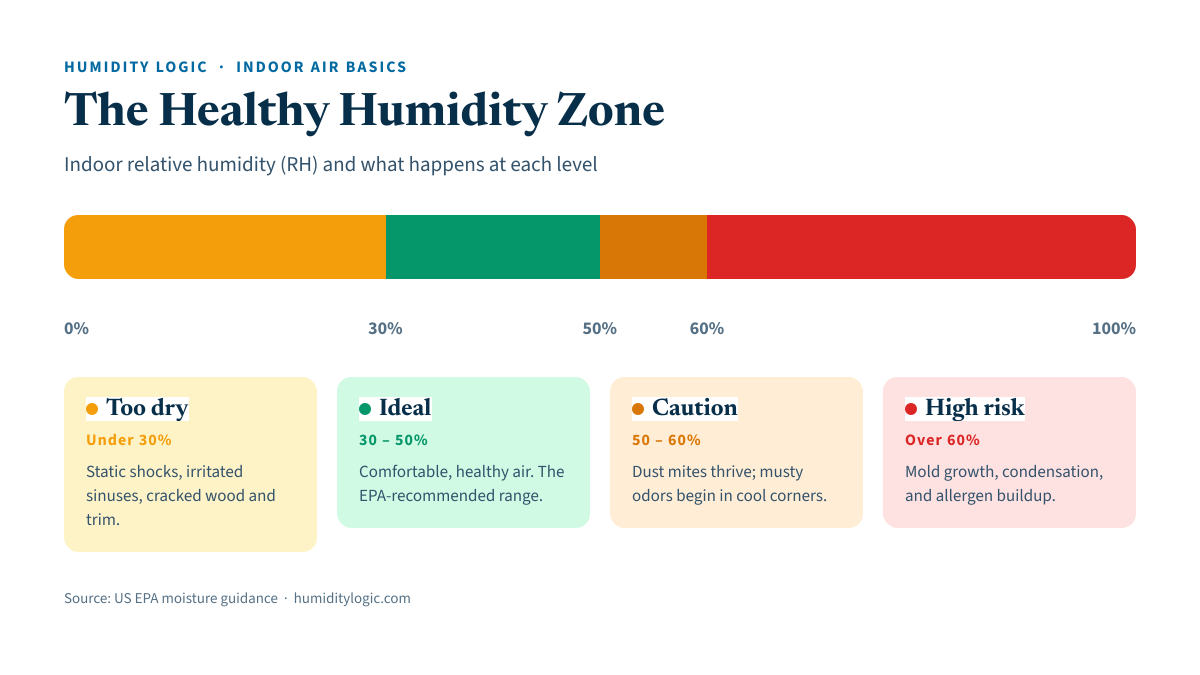
Each side of the ideal range brings its own predictable set of symptoms, and knowing them helps you read your home without a gauge. The infographic above maps the four zones; here is what they feel like in practice.
Below 30% (too dry). Static electricity, chapped lips, dry or bloody noses, and itchy skin. Wood floors develop gaps, trim cracks, and musical instruments fall out of tune. Furniture joints loosen. This is almost always a heating-season problem, and a humidifier or simply running the furnace less aggressively brings it back up.
30-50% (ideal). The zone to live in. Air feels neutral — neither dry nor clammy — allergens are suppressed, and the house itself stays stable. There is nothing to fix here.
50-60% (caution). Nothing dramatic happens at 52%, but this is where dust-mite populations expand and rooms begin to feel faintly humid. Cold mornings may show light condensation on windows. Sustained readings in this band are a signal to find the moisture source before it climbs further. For a full breakdown of the upper thresholds, see what is considered high humidity.
Above 60% (high risk). The damage band. Mold appears on bathroom ceilings and closet walls, musty odors develop, wood doors and drawers swell and stick, and condensation becomes routine on windows and cold-water pipes. The EPA’s mold guidance treats 60% as the line you should not cross. Small mold spots under 10 square feet are usually a DIY cleanup with detergent and water; larger areas, or any mold from contaminated water, warrant a professional.
What Should the Humidity Be in Each Room?
Most of your home should read the same 30-50%, but a few rooms run naturally wetter and deserve their own attention. Kitchens and bathrooms spike well past 60% during cooking and showering — that is normal and temporary, as long as an exhaust fan clears it within 20 minutes or so. The problem is not the spike; it is a spike that lingers because the moisture has nowhere to go.
Basements and crawl spaces are the usual trouble spots. They are cooler than the rest of the house, which raises their relative humidity for the same amount of moisture, and they often take on water through foundation walls or humid outdoor air. A basement that reads 65% all summer needs a dehumidifier sized to the space, not a bigger fan. Bedrooms, by contrast, are where dry winter air is felt most — the 30-40% winter target keeps sinuses comfortable overnight without fogging the windows.
How Do You Measure and Hit Your Target Humidity?
Start by measuring, because you cannot manage what you have not seen. A digital hygrometer costs about $10-15 and is the single best first purchase for anyone serious about indoor humidity. Place it away from bathrooms, kitchens, and exterior doors — those spots read artificially high — and check it morning and evening for a few days before deciding anything. A single reading after a hot shower tells you nothing; a pattern does.
Once you know your baseline, close the gap toward 30-50%:
- Too dry (under 30%)? Add moisture with a humidifier, and run heating systems a touch cooler. Houseplants and drying laundry indoors help at the margins.
- Too damp (over 50-60%)? Remove moisture at the source. Run exhaust fans during and after cooking and showering, use air conditioning or a dehumidifier in humid months, and address foundation drainage, grading, and dryer venting. Our guide to how to lower humidity in your house ranks every method by cost and impact.
One clarification worth keeping in mind: the percentage on your hygrometer is relative humidity, which changes with temperature even when the actual moisture in the air does not. Air at 70°F and 50% RH has a dew point of about 50.5°F — a fixed measure of how much water it actually holds. Cool that same air and its relative humidity climbs toward 100% without a single drop of new moisture, which is exactly why cold window glass sweats. If that distinction matters for your situation, our explainer on dew point vs. humidity covers it in full.
The numbers to memorize are short: 30-50% is the year-round target, 30-40% in freezing weather, and 60% is the ceiling you never sustain. Everything else — the comfort, the protected woodwork, the absence of mold — follows from keeping your house on the right side of those figures.
Frequently asked questions
What should the humidity be in my house?
Aim for 30 to 50 percent relative humidity year-round, and never let it sit above 60 percent. That is the range the EPA recommends to keep your home comfortable while discouraging mold, dust mites, and condensation.
Is 50% humidity too high indoors?
No. Fifty percent is the top edge of the ideal 30-50% range and is perfectly fine, especially in summer. It only becomes a concern if readings keep climbing past 50% toward 60%, where dust mites thrive and mold risk begins.
What is a good indoor humidity level in winter?
Target 30-40% in winter, and lean toward the lower end when it is below freezing outside. Warm indoor air holds more moisture than cold windows can, so higher winter humidity condenses on the glass and frames.
Is 40% humidity good for a house?
Yes. Forty percent sits right in the middle of the ideal range and works well in almost every season. It is comfortable to breathe, protects wood and furnishings, and stays well clear of the mold and dust-mite thresholds.
How do I lower my home humidity to the ideal level?
Match the fix to the source: run exhaust fans while cooking and showering, use air conditioning or a dehumidifier in humid months, and correct any foundation or drainage moisture. Confirm progress with a hygrometer aiming for a steady reading under 50%.
Sources & references
Every figure on this page is checked against these published sources. Last reviewed July 21, 2026.