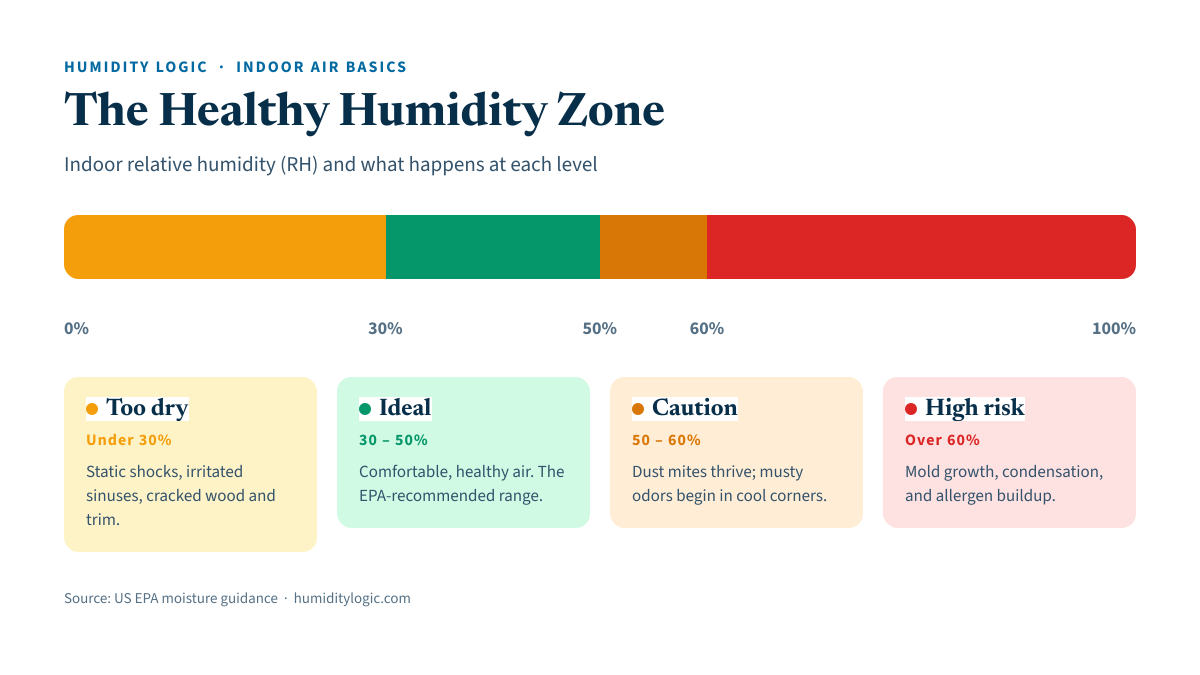
Indoors, relative humidity sustained above 60% RH is considered high — that is the threshold where the EPA warns mold, dust mites, and condensation problems take hold, with 30–50% as the ideal range. Outdoors, the better measure is dew point, not the RH percentage: the National Weather Service considers a dew point above 65°F oppressive, whatever the humidity reading says.
Why Is “High Humidity” Two Different Questions?
The same phrase describes two problems that have almost nothing to do with each other. Ask a meteorologist and “high humidity” means muggy outdoor air that makes a July afternoon feel brutal. Ask a home inspector and it means damp indoor air that feeds mold behind your drywall.
The confusion comes from relative humidity itself. RH measures how close the air is to saturation at its current temperature, not how much water is actually in it. Warm air can hold far more moisture than cold air, so the same percentage means wildly different amounts of water vapor depending on the thermometer. A 90% RH reading on a 40°F morning is harmless; a 90% RH reading in a 75°F basement is a mold incubator.
That is why the two questions get two different answers. Outdoors, where temperature swings 30 degrees in a day, dew point is the honest measure of mugginess. Indoors, where temperature stays in a narrow band around 68–75°F, the RH percentage works fine — and 60% is the number that matters.
What Dew Point Is Considered High Outdoors?
If you remember one number for outdoor humidity, make it a dew point of 65°F — that is where “humid” becomes “oppressive.” Dew point is the temperature the air would need to cool to for condensation to form, which makes it a direct readout of how much moisture the air is carrying. The higher the dew point, the harder it is for sweat to evaporate, and the muggier the air feels.
The National Weather Service uses these general comfort bands for the warm season:
| Dew point | How it feels | What to expect |
|---|---|---|
| Below 55°F | Dry and comfortable | Sweat evaporates easily; pleasant even on warm days |
| 55–65°F | Sticky, increasingly muggy | Noticeable humidity; muggy evenings |
| 65°F and above | Oppressive | Air feels heavy; outdoor exertion becomes taxing |
By this scale, a 75°F dew point on the Gulf Coast in August is seriously humid air — the kind that fogs sunglasses when you step out of an air-conditioned car. Much of the Southeast spends whole summer weeks above the 65°F line, while the Mountain West rarely touches it. You can see how your region compares on our US humidity map.
Humidity also compounds heat stress. The NWS heat index combines air temperature with humidity to estimate how hot it actually feels: at 96°F with 65% relative humidity, the perceived temperature reaches 121°F. That is why a humid 92°F day sends people to the hospital while a dry 102°F day in Phoenix often does not.
Why Doesn’t Relative Humidity Tell You Much Outdoors?
Because 100% humidity in January can feel drier than 50% humidity in July. The NWS illustrates it with exactly that comparison: air at 30°F with a matching 30°F dew point sits at 100% relative humidity, yet feels crisp and dry. Air at 80°F with 50% RH feels far more humid — because its dew point is around 60°F, meaning it holds much more actual water vapor.
Relative humidity is also highest at dawn, when the overnight temperature drops close to the dew point, and lowest mid-afternoon when temperatures peak — even though the moisture content of the air barely changed. Judging outdoor mugginess by RH is like judging a gas tank by the fuel gauge of a car whose tank keeps changing size. For the full explanation of the two measures, see our guide to dew point vs. humidity.
What Indoor Humidity Is Considered High?
Indoors, the thresholds are cleaner, because home temperatures stay within a narrow range. The EPA’s guidance is specific: keep indoor relative humidity below 60%, and ideally between 30% and 50%. Each band above the ideal range comes with its own set of consequences:
30–50% RH — the ideal zone. Comfortable for people, unfriendly to allergens, and low risk for the house itself. This is the range to aim for year-round; our guide to ideal indoor humidity levels covers how the target shifts by season.
50–60% RH — the caution zone. Nothing dramatic happens at 52%, but dust mites thrive once RH climbs past 50%, and their populations grow with the moisture. Rooms start feeling faintly clammy, and windows may show light condensation on cold mornings. Sustained readings here are a signal to find the moisture source before it climbs further.
Above 60% RH — high humidity. This is the band where damage begins. Mold risk climbs steadily above 60% because damp air keeps porous surfaces — drywall, wood framing, closet contents — moist enough to support growth. The EPA’s core principle applies here: controlling indoor moisture controls indoor mold. Condensation on windows, cold-water pipes, and exterior walls becomes routine, musty odors develop, and wood doors and floors begin to swell.
Below the healthy range matters too — under 30% RH, air is too dry, bringing static, cracked wood, and irritated sinuses — but that is a winter heating-season problem, not a high-humidity one.
How Do You Know If Your Home’s Humidity Is Too High?
Your house usually announces it before a gauge does. The common signs of sustained high indoor humidity:
- Condensation on windows in the morning, or sweating cold-water pipes
- Musty odors in closets, basements, or bathrooms
- Visible mold spots on bathroom ceilings, window sills, or exterior-wall corners
- Sticking doors and drawers as wood absorbs moisture and swells
- Clammy air that makes 74°F feel warmer than it should
- Worsening allergies indoors, often a dust-mite population booming above 50% RH
To confirm, a basic digital hygrometer costs about $10–15. Place one in the suspect room away from bathrooms and kitchen steam, and check it in the afternoon. A single spike after a shower means nothing; readings parked above 60% day after day mean the house has a moisture problem. If condensation is your main symptom, our condensation risk calculator shows the surface temperatures at which your indoor air will start dripping.
How Do You Bring High Humidity Back Down?
Match the fix to the source. If humidity spikes only when you cook or shower, the answer is ventilation — run exhaust fans during and 20 minutes after. If a basement or crawl space reads high all summer, the moisture is coming through the foundation or from muggy outdoor air, and a dehumidifier sized to the space is the reliable fix. Air conditioning also dehumidifies as it cools, which is why humid-climate homes often stay comfortable at 50% RH in July without extra equipment.
Whole-house strategies — sealing crawl spaces, correcting grading and gutters, venting dryers outdoors — address the moisture at its source. We walk through all of them, ranked by cost and impact, in our guide to how to lower humidity in your house.
The thresholds are worth memorizing: 30–50% is the indoor target, 60% is the line you should not sustain, and outdoors a 65°F dew point is when the air turns oppressive. Everything else — the mold, the mites, the muggy evenings — follows from which side of those numbers you are on.
Frequently asked questions
Is 70% humidity considered high?
Yes, in both settings. Indoors, 70% RH is well past the 60% threshold where mold risk climbs and condensation forms on cool surfaces. Outdoors, 70% RH on a warm day usually means a dew point above 65°F, which the National Weather Service classifies as oppressive.
Is 60% humidity too high for a house?
It is the line you should not cross for sustained periods. The EPA recommends keeping indoor relative humidity below 60%, and ideally between 30% and 50%. Brief spikes after a shower or while cooking are normal; readings that sit at 60% or higher all day are a problem worth fixing.
What dew point feels uncomfortable?
Most people start noticing stickiness once the dew point passes 55°F, and evenings begin to feel muggy in the 55–65°F range. Above 65°F, the National Weather Service describes conditions as oppressive — sweat evaporates slowly and the air feels heavy regardless of the RH percentage.
Why does 100% humidity in winter feel dry?
Because cold air holds very little moisture. Air at 30°F with 100% relative humidity contains far less actual water vapor than 80°F air at 50% RH. That is why dew point, which measures the actual moisture content, is a better guide to how humid the air really feels.
What humidity level causes mold?
Mold risk climbs when indoor relative humidity stays above 60%, because damp air keeps organic surfaces like drywall and wood moist enough for growth. The EPA identifies moisture control as the key to mold control, which is why it recommends holding indoor RH below 60% and ideally in the 30–50% range.
Sources & references
Every figure on this page is checked against these published sources. Last reviewed July 21, 2026.