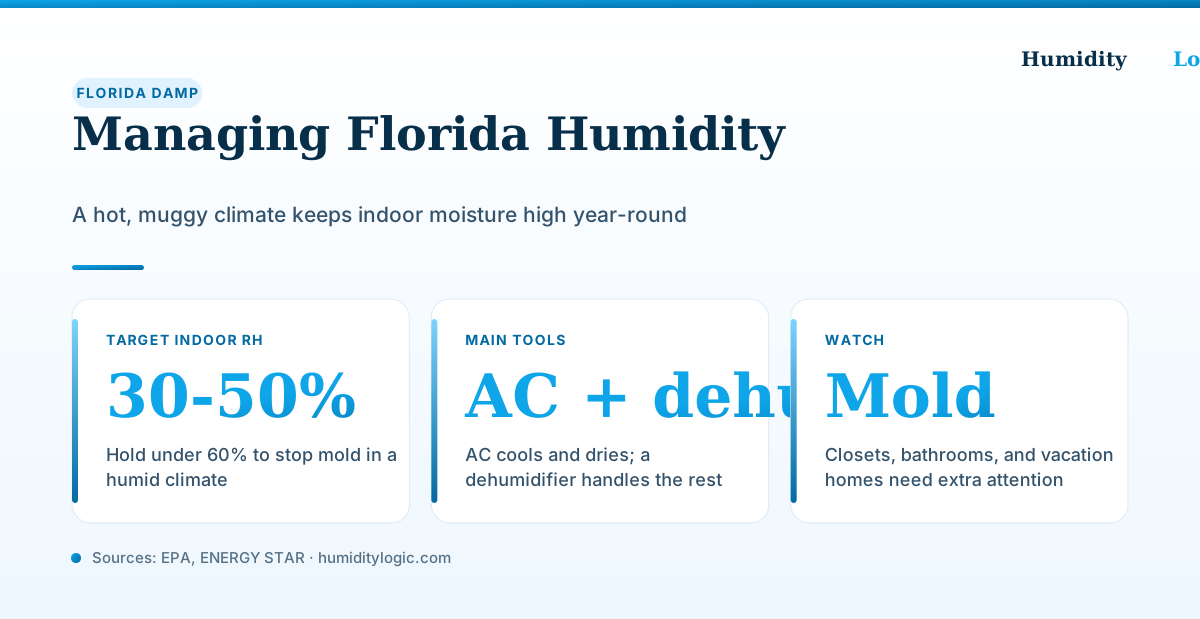
Florida’s hot, subtropical climate keeps indoor humidity high nearly year-round, so mold is the constant risk rather than a seasonal one. The fix is to hold your home at 30-50% relative humidity (and never above 60%) by pairing air conditioning with a dehumidifier: the AC cools and does some drying, and the dehumidifier handles the moisture the AC leaves behind. Do that, watch the damp spots — closets, bathrooms, and especially seasonal homes left with the AC off — and set your dehumidifier to drain automatically, and you shut down the mold, musty smells, and sticky air that come with Florida living.
Why is Florida so humid?
Florida is a low, flat peninsula almost completely surrounded by warm water — the Gulf on one side, the Atlantic on the other. That geography feeds an endless supply of moisture into the air, and sea breezes carry it over the land through the day and night. The result is a humid subtropical climate (tropical in the far south and the Keys) where relative humidity commonly averages in the 70-80% range and the air rarely dries out the way it does in continental or high-desert states.
Relative humidity alone actually undersells how oppressive Florida air feels, though. Dew point — the temperature at which air becomes saturated — is the better comfort gauge, and the National Weather Service in Tampa Bay notes that dew points across the region swing from below 30°F on cool winter days to above 80°F on the muggiest summer days. As they put it, “the higher the dew point, the muggier it will feel.” Florida summers spend long stretches with dew points in the low-to-mid 70s and higher, which is why the air feels heavy even when the thermometer is only moderately warm.
Winter brings some relief up north, where cold fronts can briefly drop dew points into the 40s or lower. But in the southern half of the state, dew points rarely fall low enough to feel genuinely dry. That relentlessness is the defining feature of Florida humidity: the moisture load barely lets up, so your home’s moisture-control equipment has to work more of the year than it would almost anywhere else. If you’re curious how Florida stacks up nationally, see our roundup of the most humid states.
What indoor humidity should I aim for in Florida?
The target is the same as anywhere, but hitting it takes more effort in Florida. The EPA’s guide to mold and moisture recommends keeping indoor humidity “below 60 percent (ideally between 30 and 50 percent) relative humidity.” ENERGY STAR agrees, calling 30-50% “the optimum RH level for a building.”
Why does 60% matter so much? Because that’s roughly where mold risk climbs sharply. The EPA’s mold course is blunt about the underlying rule: control the moisture and you control the mold. Sustained indoor humidity above 60% gives mold the water it needs to grow on walls, ceilings, closets, and behind furniture — and in Florida, outdoor air sits above that line for much of the year, constantly pushing your indoor number up. For more on where the risk line sits, see what’s considered high humidity.
The practical goal for most Florida homes is to hold rooms steady in the 45-55% band — comfortable, mold-suppressing, and not so dry that you’re wasting energy chasing the low 30s in a climate that fights you the whole way.
Why doesn’t my AC fix Florida humidity on its own?
Here’s the catch that trips up new Florida homeowners: an air conditioner is driven by temperature, not humidity. Cooling air does wring out some moisture as a side effect, but the AC’s only real job is to reach its temperature setpoint and then shut off. On a mild, muggy day — common in spring, fall, and even summer mornings — the AC hits that target and cycles off before it has run long enough to remove much water vapor. Between cycles, humidity creeps back up, and the house feels cool but clammy.
That’s why so many Florida homes need a dehumidifier alongside the AC. A dehumidifier targets moisture directly, independent of temperature, so it keeps drying the air even when the AC isn’t calling for cooling. The two work as a team: the AC handles heat, the dehumidifier handles the moisture it leaves behind. Our guide to lowering humidity in your house walks through the full playbook, and a right-sized dehumidifier is the tool that closes the gap.
Size matters here. An undersized dehumidifier runs nonstop and still misses the 30-50% target, while a right-sized one holds the room steady and cycles less. Use our dehumidifier size calculator to match the unit to your square footage and how damp the space is — Florida’s high moisture load usually pushes you toward a larger-capacity model than the same room would need up north. For whole-house control, some Florida homeowners add a ducted dehumidifier that ties into the HVAC system and manages humidity independently of the thermostat.
Which spots in a Florida home need extra attention?
Humidity doesn’t spread evenly. A few areas run damper than the rest of the house and deserve their own watch:
- Closets. Enclosed, poorly ventilated, and often against exterior walls, closets trap moist air and are a classic spot for mold on shoes, leather, and clothing. Leave doors cracked, and add a small dehumidifier or moisture absorber to walk-in closets that stay musty.
- Bathrooms. Every shower dumps water vapor into the air. Run the exhaust fan during and for 15-20 minutes after showering, and make sure it vents outdoors — not into the attic, where it just relocates the moisture problem.
- Laundry rooms. Washers, dryers, and damp clothes raise local humidity fast. Vent the dryer outside and add exhaust or a small dehumidifier if the room stays sticky.
- Kitchens. Cooking and dishwashers add moisture; run the range hood whenever you cook.
- Garages and enclosed patios. These often lack conditioning entirely and can stay well above 60% RH, quietly feeding mold on stored items.
Put an inexpensive digital hygrometer in the dampest of these rooms and check that each holds under 60% RH. If one keeps drifting high, that’s your signal to add or upsize a dehumidifier there.
What about vacation and seasonal homes left empty?
This is the single biggest humidity mistake in Florida — and it deserves its own plan. Snowbirds and second-home owners often shut the house up and turn the AC fully off to save money while they’re away. In Florida’s climate, that’s exactly how a home becomes a mold farm: with no cooling and no dehumidification, indoor humidity climbs to match the muggy outdoors and stays there for weeks or months, and there’s nobody around to notice the musty smell or the spots appearing on the walls.
The set-and-forget fixes are simple:
- Don’t turn the AC off completely. Leave the thermostat at a modest setting — roughly 78-80°F — so the system still cycles and removes some moisture. Many homeowners pair this with a smart thermostat that also watches humidity.
- Or run a dehumidifier on continuous drainage. Set a unit to 50% RH and, instead of a bucket that will overflow and shut the unit down, hook a hose to a floor drain, sump, or condensate pump so it runs unattended. ENERGY STAR notes you can “hook a hose directly to the bucket, which can then be directed into a floor drain or sump pump, so there is no need to empty it” — just keep the drainage away from electrical connections.
- Seal the house well before you leave so you’re not fighting the entire outdoors, and consider a remote humidity sensor that alerts your phone if levels climb.
A little conditioning while you’re gone costs far less than remediating mold and replacing drywall, flooring, and furniture when you return.
The Florida humidity playbook
Pull it together and the approach is straightforward, even if it runs most of the year:
- Target 30-50% RH, never above 60% — the EPA and ENERGY STAR range that starves mold of the moisture it needs.
- Run AC and a dehumidifier as a team — cooling for heat, dehumidification for the moisture the AC leaves behind.
- Right-size the dehumidifier to the space and how damp it is, and drain it automatically where you can.
- Watch the damp spots — closets, bathrooms, laundry rooms, garages — with a hygrometer.
- Never leave a seasonal home unconditioned — keep the AC cycling or a dehumidifier draining while you’re away.
Florida humidity is relentless, but it’s manageable. Control the moisture and, as the EPA puts it, you control the mold — turning a hot, muggy climate into a home that stays dry, comfortable, and healthy year-round.
Frequently asked questions
What is a good indoor humidity level for a Florida home?
Aim for 30-50% relative humidity, and never let it sit above 60%. The EPA recommends keeping indoor humidity below 60 percent (ideally between 30 and 50 percent) to control mold, and in Florida's climate that almost always takes air conditioning plus a dehumidifier rather than ventilation alone.
Why is Florida so humid year-round?
Florida is a low, flat peninsula nearly surrounded by warm water, and its humid subtropical climate keeps sea breezes carrying moisture over the land day and night. The National Weather Service notes dew points across the state can climb above 80°F in summer, and even winter dew points in the south rarely fall low enough to feel truly dry, so the moisture load barely lets up.
Do I need a dehumidifier in Florida if I already run the AC?
Usually yes. An air conditioner is controlled by temperature, not humidity, so on mild, muggy days it reaches its setpoint and shuts off before removing much moisture. A dehumidifier targets humidity directly and holds rooms in the 30-50% range that AC alone often misses, especially in closets, laundry rooms, and closed-off spaces.
Why does my Florida house feel damp even with the air conditioning on?
Because cooling and drying are not the same job. When the AC cycles off after hitting its temperature target, humidity creeps back up between cycles, leaving the air clammy. Adding a right-sized dehumidifier, sealing air leaks, and running bath and kitchen exhaust fans closes that gap so the home feels dry, not just cool.
What humidity should I leave a Florida vacation or seasonal home at?
Never leave it closed up with the AC fully off. Keep the thermostat no higher than about 78-80°F or run a dehumidifier set to 50%, with continuous drainage to a floor drain so nobody has to empty a bucket. An empty, unconditioned Florida house is where mold spreads fastest, so set-and-forget moisture control is essential while you are away.
Sources & references
Every figure on this page is checked against these published sources. Last reviewed August 12, 2026.