Two numbers decide your dehumidifier size: the square footage of the space and how damp it actually is. A moderately damp 500 sq ft room needs about 20 pints per day; a wet 1,500 sq ft basement needs roughly 45 pints. Everything else — ceiling height, laundry, below-grade walls — is an adjustment on top of that baseline.
Sizing sounds fussy, but the whole decision comes down to reading one chart correctly and then avoiding a labeling trap that quietly undersizes thousands of units every year. This guide walks through both. If you would rather skip the arithmetic, our dehumidifier size calculator applies the same standard and adjustments automatically.
How is dehumidifier size actually measured?
Dehumidifier capacity is measured in pints of water removed per day, and that number comes from a standardized lab test overseen by the Association of Home Appliance Manufacturers (AHAM). It is not a tank size or a room rating — it is how much moisture the machine pulls from the air over 24 hours under controlled conditions.
That distinction matters because the test conditions changed. The pint number on the box is only meaningful once you know which version of the standard produced it, which is exactly where most buyers go wrong.
What is the post-2019 rating trap?
Here is the single most important thing to understand before you shop.
In 2019, the U.S. Department of Energy changed the dehumidifier test procedure to run at a cooler, more realistic 65°F instead of the old 80°F. Cooler air holds less moisture, so the same physical machine removes less water during the test — and its label number dropped by roughly 30 percent.
A unit that was once sold as a “70-pint” dehumidifier is now rated around 50 pints. Nothing inside the cabinet changed; only the measuring stick did. This creates a real problem when you research: older buying guides, marketplace listings, and product reviews still quote the pre-2019 numbers. If you read “you need a 70-pint unit for a wet basement” in a 2017 article and then buy a machine labeled 70 pints today, you have accidentally bought a much larger, more expensive unit than you need.
Every number in this guide uses the current post-2019 AHAM scale, the same scale printed on any dehumidifier you can buy new today. When you compare a new label to an old recommendation, translate: today’s 50 is yesterday’s 70.
What size dehumidifier do I need? The AHAM chart
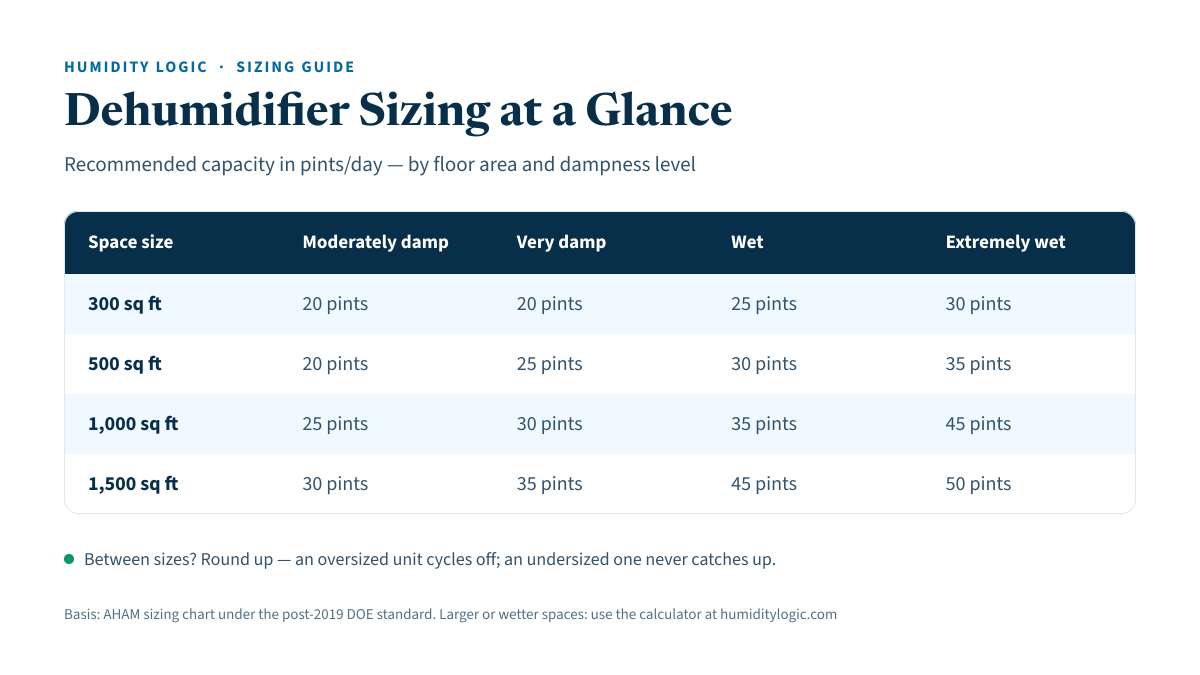
Find your room’s square footage down the left column and its dampness level across the top. The number where they meet is your target capacity in pints per day, post-2019 standard.
| Area | Moderately damp | Very damp | Wet | Extremely wet |
|---|---|---|---|---|
| 300 sq ft | 20 pints | 20 pints | 25 pints | 30 pints |
| 500 sq ft | 20 pints | 25 pints | 30 pints | 35 pints |
| 1,000 sq ft | 25 pints | 30 pints | 35 pints | 45 pints |
| 1,500 sq ft | 30 pints | 35 pints | 45 pints | 50 pints |
| 2,000 sq ft | 35 pints | 45 pints | 50 pints | 60 pints |
| 3,000 sq ft | 45 pints | 55 pints | 60 pints | 70 pints |
Dampness levels, in plain terms:
- Moderately damp: the space smells musty in humid weather but looks dry. Roughly 50 to 60 percent relative humidity.
- Very damp: you notice damp spots on the floor or lower walls, and the musty smell is constant.
- Wet: surfaces feel clammy and you can see beads of moisture on walls, pipes, or windows.
- Extremely wet: there is visible seepage, standing water, or condensation running down surfaces.
If you are not sure, a cheap hygrometer settles it — and it is the only way to catch a space that reads worse than it looks. When your reading lands between two categories, use the wetter one.
What adjustments should I add?
The chart assumes a standard 8-foot ceiling and a room that is not fighting an outside moisture source. Real spaces rarely match that exactly, so layer these adjustments on top of your base number.
Ceiling height. Taller ceilings mean more air volume to dry. Multiply your base capacity by 1.13 for a 9-foot ceiling, 1.25 for 10 feet, and 1.5 for 12 feet. A 1,000 sq ft very-damp room (30 pints) with 10-foot ceilings needs about 38 pints.
Below-grade space. Basements sit against soil that stays damp year-round, feeding moisture through the walls and floor. Add about 5 pints for any below-grade room. See our basement dehumidifier guide for the full picture.
Indoor laundry. A washer and dryer that vents or drips indoors dumps a steady moisture load into the air. Add about 5 pints if you dry clothes in the space.
Exposed-dirt crawl space. Bare earth is the heaviest hidden moisture source in most homes. Add roughly 10 pints for a crawl space with an exposed dirt floor, and consider a vapor barrier as the real fix.
These stack. A 1,000 sq ft very-damp basement (30 pints) with a laundry area (+5) comes to about 35 pints before you even reach the round-up rule.
Should I round up or round down?
When in doubt, round up — and here is the reasoning, not just the rule.
A slightly oversized dehumidifier reaches your target humidity quickly and then cycles off. It spends most of its life resting. An undersized unit runs continuously, never quite catches up, and its compressor and fan stay on around the clock — which means more wear and a higher power bill for a room that is still too humid. ENERGY STAR’s own guidance leans the same way: it is better to oversize than undersize.
Retail sizes cluster at 20, 30, 35, 50, and 70 pints, so you will rarely find an exact match for a number like 38. Take the next size up. Curious what running one actually costs? Run the wattage through our electricity cost calculator before you buy — an efficient, correctly sized unit almost always beats a straining smaller one over a season.
What if my space is cold?
Basic compressor dehumidifiers are built for warm, humid air. As the temperature drops, they pull less water, and below about 65°F frost can form on the cold coil and stall a unit that has no defrost feature. But this is not a hard wall — many modern compressor units include automatic defrost and keep working down to roughly 41°F, and desiccant models work colder still. Two features make the difference.
For a cool basement, look for a model with automatic frost control (sometimes called auto-defrost): it periodically pauses the compressor to let the coil clear, so the unit keeps working down into the low 40s. For a garage, crawl space, or any room that regularly sits below 60°F, a desiccant dehumidifier is the better tool — it uses a moisture-absorbing wheel instead of a cold coil, so cold air does not stop it.
If you are drying out a large or multi-level home rather than a single room, sizing shifts from a portable unit to a ducted system. Our whole-house dehumidifier guide covers that decision, and note that ducted installation ties into your HVAC and should be handled by a licensed contractor, not treated as a weekend DIY job.
How does the machine remove the water?
It helps to picture what the pint rating represents. A compressor dehumidifier pulls room air across a cold coil, where moisture condenses into liquid and drips into the tank or drain, then reheats the now-dry air and returns it to the room. The “pints per day” figure is simply how much of that condensate the unit collects under the test conditions. If you want the full walkthrough, see how a dehumidifier works.
Putting it together
Start with the chart: find your square footage and dampness level for a base number on the current AHAM scale. Add for tall ceilings, below-grade walls, indoor laundry, or a dirt crawl space. Round up to the next retail size, and if the room runs cold, insist on frost control or go desiccant. Do that, and you will land on a unit that dries the space and then rests — instead of one that runs forever and still loses. When you are ready, the dehumidifier size calculator does the math in one screen.
Frequently asked questions
What size dehumidifier do I need for a 1,000 sq ft basement?
For a moderately damp 1,000 sq ft basement, start at 25 pints per day on the post-2019 AHAM scale, then add about 5 pints because it is below grade — roughly a 30-pint unit. If you can see damp spots or smell must, size up to the very-damp column at 30 to 35 pints.
Is it bad to get a dehumidifier that is too big?
A modestly oversized unit is fine and usually better than an undersized one. It reaches your target humidity faster, then cycles off, so it spends less time running. The only real downsides are a higher purchase price and slightly more noise when it runs.
Why do older dehumidifiers have higher pint ratings than new ones?
In 2019 the federal test procedure changed to a cooler, more realistic 65°F condition. The same physical machine now removes less water in the test, so its label number dropped by roughly 30 percent. A former "70-pint" unit is now rated around 50 pints even though nothing inside changed.
What dampness level is my room?
Moderately damp means a musty smell in humid weather. Very damp adds damp spots on floors or walls. Wet means you see beads of moisture on surfaces. Extremely wet means standing water or seepage. A hygrometer helps: 50 to 60 percent relative humidity is moderately damp, and above 90 percent is wet.
Do dehumidifiers work in a cold basement or garage?
Standard compressor units lose capacity as temperatures fall and can ice over below about 65°F. Look for a model with an automatic defrost or frost-control feature for a cool basement, or choose a desiccant dehumidifier for a garage or crawl space that regularly drops below 60°F.
Sources & references
Every figure on this page is checked against these published sources. Last reviewed July 21, 2026.