The home humidity authority
Understand & control the humidity in your home
Practical guidance, free calculators, and symptom-led troubleshooting for condensation, dampness, and dehumidifiers — so every room stays healthy and comfortable.
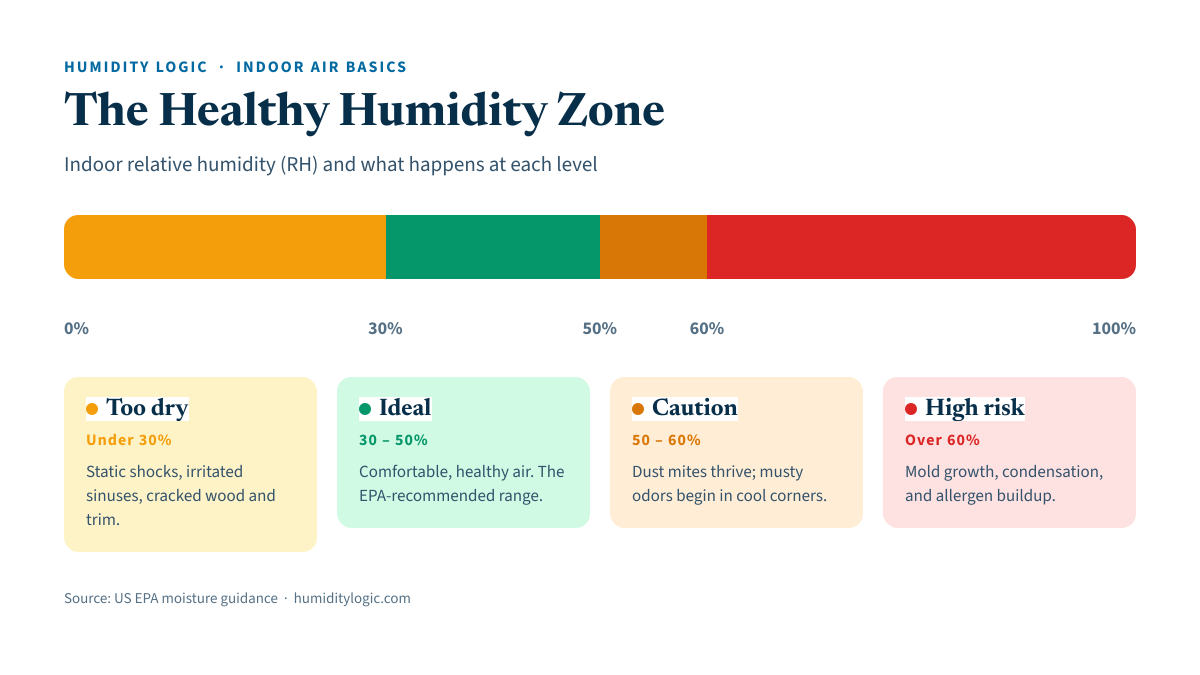
- 30–50%ideal indoor relative humidity (EPA)
- 60%+sustained RH invites mold & dust mites
Free tools
Calculators that answer the hard part
Dehumidifier Size Calculator
Room size + dampness → the pint capacity you actually need.
Live nowElectricity Cost Calculator
What running a dehumidifier really adds to your bill.
Live nowCondensation Risk Checker
Will your windows sweat tonight? Dew point vs surface temp.
Live nowUS Humidity Map
All 50 states, ranked and mapped by average humidity.
Live nowDew Point Calculator
Temperature + humidity → dew point and how the air feels.
Live nowReal-time
Live US humidity, right now
Current outdoor relative humidity in every state, straight from the weather service and refreshing itself automatically. Switch to the annual average, or open the full map to explore all 50 states.
📍 Your area
How humid is it where you are?
Check the dew point and mugginess at your exact location, live.
Uses your device location, in your browser only. Nothing is stored.
Couldn't get your location — pick your metro on the forecast instead.
- Under 45%
- 45–60%
- 60–68%
- 68–72%
- Over 72%
- Under 35%
- 35–55%
- 55–70%
- 70–85%
- Over 85%
Live conditions from each state's largest city viaOpen-Meteo. Average annual figures: NOAA / Brettschneider 2018.
Explore by topic
Every moisture problem, mapped
Humidity Basics
What healthy humidity looks like — and how to get there.
ExploreDehumidifiers
Pick the right capacity, run it well, and keep it working.
ExploreBy Room
Basements, bedrooms, bathrooms, garages, crawl spaces.
ExploreTroubleshooting
Symptom-led fixes for units that stop pulling water.
ExploreComparisons
Solution vs solution, spec vs spec — with real trade-offs.
ExploreInteractive · New
Take a tour of The Humidity House
A fully furnished 3D home you can spin, zoom, and explore. Click any room — or any single item, from the shower to the basement dehumidifier — to fly in and learn where moisture hides, the level to aim for, and the fix that matters. It's the whole site, mapped onto a house you can walk through.
At a glance
Know your numbers
Indoor relative humidity, and exactly what happens to your home and health at each level — the single chart worth memorizing.
Latest guides
Fresh from the research desk
Pantry Humidity Control: Keep Dry Food Dry and Pest-Free
A damp pantry spoils dry goods and invites pests and mold. Control pantry humidity by keeping it cool and under 60%, sealing food in airtight jars, and adding airflow.
By RoomUsing a Dehumidifier for Drying Clothes Indoors
A dehumidifier dries laundry indoors faster and keeps your home from going damp. Here is how to set it up, what it costs to run, and how it compares to a tumble dryer.
By RoomLaundry Room Dehumidifier: Sizing, Setup, and Venting
Laundry rooms run humid from dryers, washers, and drying clothes. Learn when a laundry room dehumidifier helps, what size to buy, and why the dryer must vent outdoors.
By RoomHow to Reduce Kitchen Moisture: 9 Fixes That Work
A practical checklist to reduce kitchen moisture: vent cooking steam outdoors, cover pots, manage the dishwasher and gas stove, and dry the surfaces that collect water.
By RoomKitchen Humidity Control: Stop Cooking Steam and Mold
The kitchen is a top moisture source. Control kitchen humidity by venting the range hood outdoors, cooking with lids, and holding relative humidity under 60%.
DehumidifiersDehumidifier Pint Capacity Explained: What the Number Means
Dehumidifier pint capacity is the water a unit removes in 24 hours at the DOE test condition (65F/60% RH). Learn why real output is lower and how to size it.
Quick answers
Humidity questions, answered directly
What is the ideal indoor humidity level?
Keep indoor relative humidity between 30% and 50%. The EPA recommends staying below 60% at all times to discourage mold and dust mites; in freezing winter weather, aim for the lower half of the range to prevent window condensation.
What size dehumidifier do I need?
It depends on floor area and how damp the space is. Under the post-2019 AHAM standard, a moderately damp 500 sq ft room needs about 20 pints/day, while a wet 1,500 sq ft basement needs about 45 pints/day. Our free size calculator interpolates the full chart for your exact space.
How much electricity does a dehumidifier use?
A typical 50-pint portable draws about 550 watts. Running 8 hours a day at the 2026 US average rate of 17.9¢/kWh costs roughly $24 a month. A correctly sized unit costs less to run because it cycles off at the target humidity.
Why do my windows sweat with condensation?
Condensation appears when the glass surface falls below the dew point of your indoor air. Warm humid indoor air meeting cold glass on winter nights is the classic trigger — lowering indoor humidity or warming the glass surface stops it.
Which US states are the most humid?
By average annual relative humidity, Alaska tops the list at 77.1% (cold air saturates easily), followed by Florida at 74.5%, Louisiana at 74.0%, and Mississippi at 73.6%. Nevada is driest at 38.3%.
Built on evidence, not hype
Every guide cites authoritative sources, shows its update date, and separates manufacturer claims from independent standards. Product pages disclose exactly how we earn.
- Sources cited near every claim
- AHAM & ENERGY STAR based sizing
- Clear affiliate disclosure
- Read our methodology