Drying laundry indoors is convenient, but it dumps litres of water into your rooms. A dehumidifier turns that into an advantage. A dehumidifier dries clothes by keeping the surrounding air dry so wet fabric releases its water faster — and it captures that water instead of letting it condense on your walls and windows. Done in a small, closed room with a fan, it dries a load in a few hours and keeps the house from going damp in the process.
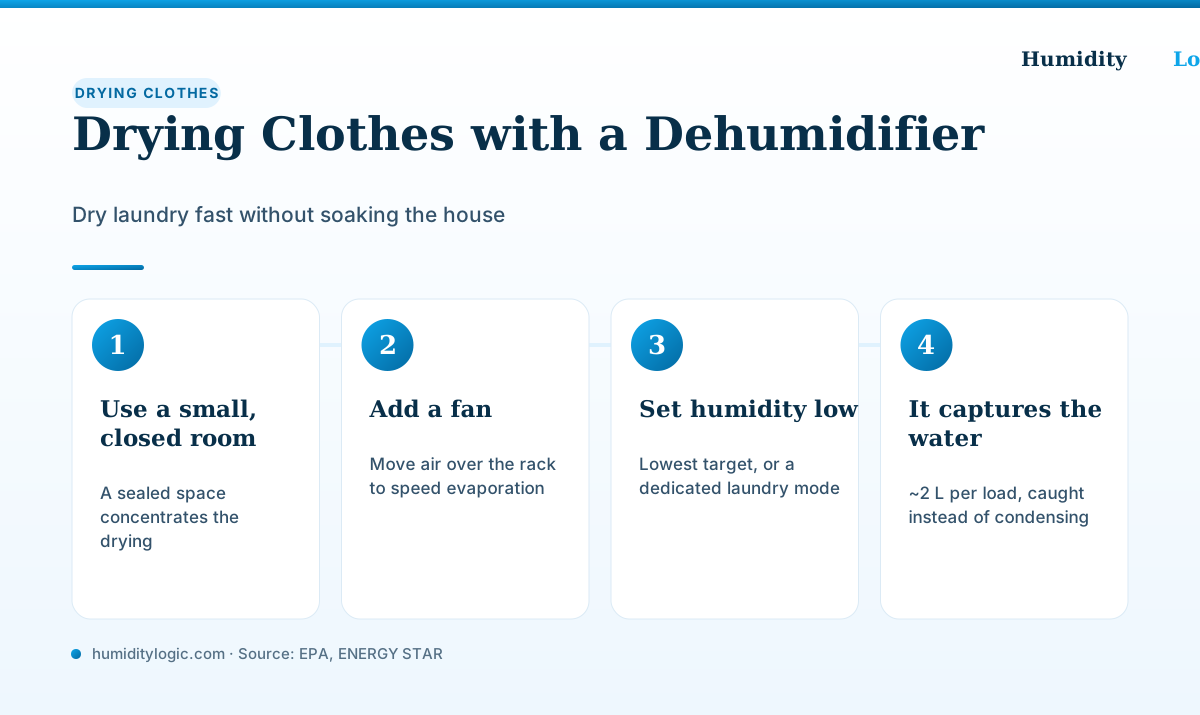
How a dehumidifier dries clothes
It does not work like a tumble dryer. A dryer forces hot air through the fabric; a dehumidifier instead keeps the room air dry, and dry air pulls moisture out of wet clothes much faster than humid air does. The drier the surrounding air, the steeper the “thirst” that draws water out of the fabric.
The second job it does is just as important: it captures the water. Air-drying a load indoors releases roughly 1.5–2 litres (about 2 quarts) of water into the room. Left alone, that moisture raises your indoor humidity and settles on the coldest surfaces — windows, exterior walls — exactly the condensation the EPA warns feeds mold (EPA — A Brief Guide to Mold, Moisture and Your Home). A dehumidifier pulls that same water into its tank or drain hose, so your clothes dry and your house stays dry.
How to set it up for the fastest dry
The technique matters more than the machine. Three things make the difference:
- Use the smallest room you can. Close the laundry and the dehumidifier into a bathroom, a utility room, or a small spare room. A sealed, compact space lets the dehumidifier drive the humidity right down and keep it there; an open-plan area spreads the effect too thin to help.
- Add airflow. A cheap oscillating fan pointed at the rack is the biggest accelerator. Moving air sweeps the humid boundary layer off the fabric so evaporation keeps going instead of stalling. Dehumidifier plus fan beats either one alone.
- Set the humidity low. Run the dehumidifier at its lowest humidity target, or use a dedicated “laundry”/continuous mode if it has one. You want the air as dry as the unit can make it. ENERGY STAR notes every certified dehumidifier has a built-in humidistat, so you can set the target and leave it (ENERGY STAR — Dehumidifiers).
Spin your wash on a high spin speed first, too — the less water the machine leaves in the clothes, the less the dehumidifier has to remove.
How much does it cost to run?
A dehumidifier generally draws far less power than an electric resistance tumble dryer, so running one for a few hours often costs less than a full dryer cycle — the trade-off is that it is slower. But “often” is not “always”: the real number depends on your unit’s wattage, how long you run it, and your local electricity rate, which the US EIA publishes and which varies widely by state.
Rather than guess, put your dehumidifier’s wattage, your hours, and your rate into the electricity cost calculator and compare it to a dryer cycle. For context on what dehumidifiers cost to run generally, see cost to run a dehumidifier and do dehumidifiers save money.
Dehumidifier vs tumble dryer for drying clothes
They solve the same problem differently:
- Tumble dryer — fastest (under an hour for many loads), but an electric resistance model is one of the most power-hungry appliances in the house, and it needs a vent or a condenser. ENERGY STAR-certified and heat-pump dryers cut that energy use significantly (ENERGY STAR — Clothes Dryers).
- Dehumidifier + rack — slower (a few hours), usually cheaper per load, no vent needed, and it protects the house from the moisture at the same time. It is also the only option when you have no dryer, or line-drying outdoors is not possible.
For many people the practical answer is both: the dryer when you are in a hurry, the dehumidifier-and-rack routine for everyday loads. If you are weighing the appliances head to head, our dehumidifier vs other appliances explainers cover what each one actually does.
Keep it from making the room damp
The whole point is to capture the water, so set the unit up to keep it captured. Drain it continuously to a sink or drain if you dry clothes often, so the tank never fills and shuts the unit off mid-dry — see continuous drainage. And give the room a quick airing afterward. Done right, you get dry clothes and a dry house; done in an open, un-dehumidified room, indoor drying is a reliable way to fog the windows and grow mildew, so if that is already happening see foggy windows in the house.
See it in 3D. The washer-dryer and a drying setup live in the basement of The Humidity House, our interactive 3D home. For the full room setup, see the laundry room dehumidifier guide.
Frequently asked questions
Does a dehumidifier actually dry clothes?
Yes. A dehumidifier lowers the humidity of the air around the laundry, which lets wet fabric give up its water faster — the drier the surrounding air, the quicker clothes dry. It does not blow hot air through the clothes like a tumble dryer; it works by keeping the room air thirsty, and it captures the evaporated water so it does not settle on your walls and windows.
How long does it take to dry clothes with a dehumidifier?
In a small, closed room with a dehumidifier running and a fan moving air over the clothes, a load typically dries in a few hours rather than a full day. The exact time depends on the spin speed of your wash, how crowded the rack is, and the room temperature. A tighter room and good airflow make the biggest difference.
Is it cheaper to dry clothes with a dehumidifier or a tumble dryer?
A dehumidifier usually draws far less power than an electric resistance tumble dryer, so running one over a few hours often costs less than a dryer cycle — but it is slower. The honest answer depends on your unit's wattage and your electricity rate, so estimate both with our electricity cost calculator rather than assuming.
Why is drying clothes indoors bad for the house?
Because a single wet load holds roughly 1.5–2 litres of water that all evaporates into your rooms. Without ventilation or a dehumidifier, that moisture raises indoor humidity and condenses on cold windows and walls, where it feeds mold and mildew. A dehumidifier captures that water instead of letting it soak the house.
Where should I set up a dehumidifier to dry clothes?
Close the clothes and the dehumidifier into the smallest practical room, add a fan to move air over the laundry, and set the dehumidifier to its lowest humidity or a dedicated laundry mode. A small, sealed room concentrates the drying effect; an open hallway spreads it too thin to help much.
Sources & references
Every figure on this page is checked against these published sources. Last reviewed October 8, 2026.