A pantry is a storage room for things that must stay dry, which makes humidity its natural enemy. Control pantry humidity by keeping the space cool and under 60% relative humidity, sealing dry goods in airtight containers, and giving it airflow — that combination keeps flour from clumping, bread from molding, and pantry pests from moving in.
What humidity should a pantry be?
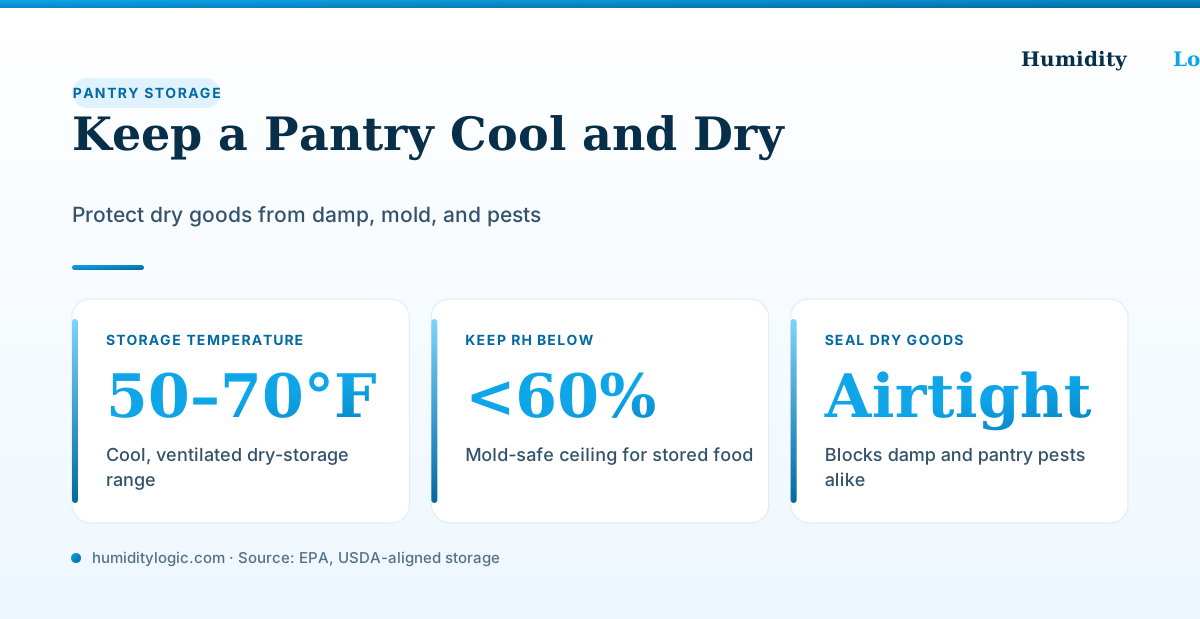
Cool and dry. Guidance for dry-food storage, which follows USDA donated-food rules, puts the ideal at roughly 50–70°F with relative humidity around 50–70%, in a well-ventilated space (Regional Food Bank of Oklahoma — Food Safety Storage Guidelines). For a home pantry, aim for the lower end of that humidity range and treat 60% as the ceiling — that keeps you inside the EPA’s mold-safe zone of 30–50% ideal and under 60% at all times (EPA — A Brief Guide to Mold, Moisture and Your Home). The drier and cooler the pantry, the longer your dry goods hold their quality.
A small hygrometer on a shelf tells you where you stand. Drop a reading into the humidity comfort checker for an instant verdict, or check the mold risk for a given temperature and humidity with the mold risk calculator.
Why pantries get humid
A pantry has a few strikes against it. It usually opens directly off the kitchen, so the cooking steam you work to vent — see how to reduce kitchen moisture — drifts in every time you leave the door open. It is typically small, closed, and poorly ventilated, so whatever moisture gets in has nowhere to go. And a pantry built against an exterior or basement wall has a cool surface where humid air can condense, exactly the mechanism the EPA describes: warm, humid air meeting a cold surface (EPA Mold Course, Chapter 2). Add warm canned goods off-gassing heat and a few open bags, and the humidity creeps up unnoticed until something clumps or molds.
Seal dry goods in airtight containers
This is the first and biggest move. Transferring flour, sugar, rice, pasta, cereal, and crackers into airtight glass or heavy plastic containers does two jobs at once: it keeps humid air away from the food so it cannot clump or go stale, and it locks out the pantry pests — weevils, moths, beetles — that thrive in warm, humid storage. The same food-storage guidance warns that infestation risk rises considerably in warm, humid conditions, so sealing food is pest control as much as moisture control. Keep an eye on bread and dried fruit especially; those mold first when the air is damp.
Keep it cool, ventilated, and off the walls
Three storage habits straight from the dry-storage playbook:
- Keep it cool. Heat and humidity travel together. Do not build a pantry right next to the oven, dishwasher, or a hot water pipe — the warmth drives up both temperature and moisture.
- Give it airflow. A closed, still pantry traps humidity. Leave the door open when you can, add a vent, or run a small fan periodically. Food-storage guidance specifically calls for good ventilation to keep temperature and humidity steady throughout the space.
- Store off the floor and away from walls. Keep food up on shelves, about six inches off the floor and clear of exterior walls, so air can circulate and nothing sits against a cold, potentially damp surface. This is standard dry-storage practice and it keeps condensation off your packaging.
Add a moisture absorber or small dehumidifier
If the pantry still reads above 60% after sealing and ventilating, pull the moisture down directly.
- For a single cabinet or small pantry: a food-safe desiccant pack or a rechargeable moisture absorber in the space does the job — the same approach that works for a damp closet, covered in our closet moisture absorber guide. Recharge or replace them on schedule.
- For a walk-in pantry that stays damp: a small compressor or desiccant dehumidifier holds it under 60%. Set its humidistat around 45–50% and let it cycle — ENERGY STAR notes every certified unit has one built in (ENERGY STAR — Dehumidifiers). If the pantry is cool (a basement or garage pantry), favor a desiccant model, which keeps working in the cold where a compressor unit would ice up. Size it with the dehumidifier size calculator.
You rarely need a full appliance for one cupboard — airtight containers plus a desiccant pack usually cover it — but a walk-in that backs onto a damp wall is worth a dedicated unit.
Keep an eye out for the warning signs
Caking flour or sugar, soft crackers and cereal, a musty smell, or any spot of mold on bread or dried fruit all say the pantry is running too humid. Catch it early: the EPA’s advice to fix moisture problems and dry things out quickly applies to a pantry just as much as a bathroom, because mold can start within a day or two once a surface or food stays damp. Keep it cool, keep it under 60%, seal what you can, and the pantry does its one job — keeping dry food dry.
See it in 3D. The kitchen and its storage are part of The Humidity House, our interactive 3D home. For the room it opens onto, see kitchen humidity control.
Frequently asked questions
What humidity level should a pantry be?
Keep a pantry cool and dry — roughly 50–70°F, with relative humidity on the low side and under 60%. Guidance for dry-food storage puts the range around 50–70% RH, but staying under 60% keeps you in the EPA's mold-safe zone and helps dry goods resist caking, staleness, and pests. The cooler and drier, the longer food keeps.
Why does my pantry get humid and damp?
A pantry usually sits right off the kitchen, so cooking steam drifts in; it is often a small, closed, poorly ventilated space; and if it backs onto an exterior or basement wall, that cool surface lets moisture condense. Warm canned goods, open bags, and no airflow let humidity build with nowhere to escape.
How do I keep moisture out of my pantry?
Seal dry goods in airtight containers, keep the space cool and ventilated, store food off the floor and away from exterior walls, and add a moisture absorber or small desiccant dehumidifier if it still reads above 60%. Airtight containers also block the pantry pests that thrive in warm, humid storage.
Will a dehumidifier help a damp pantry?
If the pantry is a walk-in or a closet-sized room that stays above 60%, a small or desiccant dehumidifier or a rechargeable moisture absorber will bring it down. For a single cabinet, airtight containers plus a food-safe desiccant pack are usually enough — you rarely need a full appliance for one cupboard.
Does high humidity make pantry food go bad faster?
Yes. Damp air makes flour, sugar, and salt clump, softens crackers and cereal, and can grow mold on bread and dried fruit. Warm, humid storage also raises the risk of pantry-pest infestation considerably. Keeping the space cool, dry, and sealed is what preserves both quality and safety.
Sources & references
Every figure on this page is checked against these published sources. Last reviewed October 10, 2026.