A closet moisture absorber — a calcium-chloride tub, a rechargeable silica-gel unit, or a small mini dehumidifier — pulls damp air out of a closed, poorly ventilated closet and keeps it under 60% relative humidity, the threshold below which mold and mildew struggle to grow on clothes and shoes. For most reach-in closets, a passive absorber is enough; a large or chronically humid walk-in needs a powered unit and a fix at the source.
Why do closets get damp and musty in the first place?
Closets are the exact conditions mold likes: small, enclosed, and rarely ventilated. Damp indoor air drifts in, then has nowhere to go behind a closed door, so moisture just sits. The EPA notes that tightly sealed spaces without adequate ventilation let moisture build up until mold grows, and a closet on a cold exterior or below-grade wall makes it worse — warm indoor air condenses against that cool surface. Pack the space with clothing and the air goes completely still.
Mold needs only moisture and an organic surface, and clothing, leather, and cardboard boxes are all it wants. That is why a closet can smell musty long before you see anything: the mildew odor is airborne mold feeding on trapped humidity. Get the moisture out and the problem stops, which is the entire job of a moisture absorber. For the broader playbook on keeping a closet dry, see closet mold prevention.
What relative humidity should a closet stay under?
Keep a closet under 60% RH, and ideally in the 30–50% band the EPA recommends for the whole home. That range comes straight from the EPA’s guidance to “keep indoor humidity below 60 percent” as the core of moisture and mold control. Below that line the air is dry enough to discourage mildew on fabric and leather without over-drying the materials.
Sixty percent is the number to watch because that is roughly where mold gets the moisture it needs. If you want the full picture of where the risk climbs, our guide to what is considered high humidity breaks the thresholds down. The cheapest way to know which side of the line your closet sits on is a small hygrometer on a shelf — absorbers work best when you can confirm they are actually holding the space below 60%.
Which closet moisture absorber should you choose?
There are three main options, and the right one depends on closet size and how damp it gets.
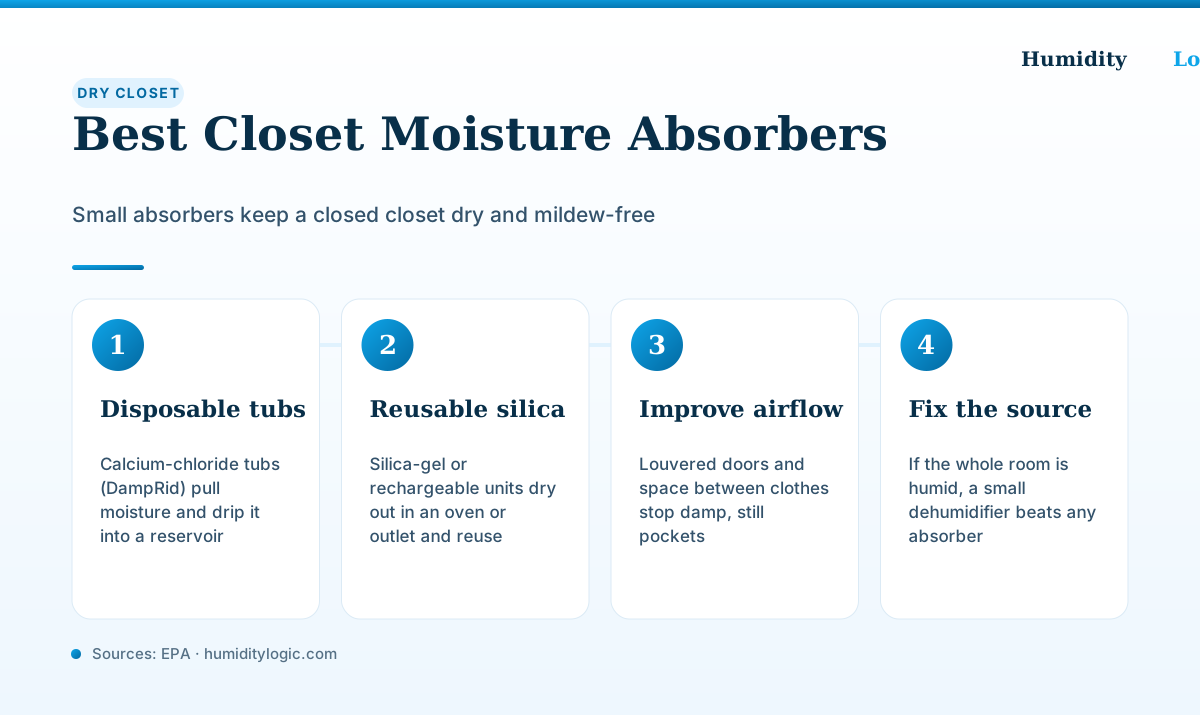
Disposable calcium-chloride tubs (DampRid and similar). These are the tubs of white crystals you see in hardware stores. The active ingredient, calcium chloride, is so hygroscopic it pulls water vapor straight out of the air and dissolves into a brine that drips into a collection chamber below. They pull moisture aggressively, especially above 60% RH, which makes them a good match for a closet that gets genuinely damp. The trade-offs: the crystals get used up (you empty the liquid and refill, typically every 30–60 days), and you have to keep the reservoir upright and out of reach of kids and pets, since the liquid is an irritant.
Reusable / rechargeable silica-gel units. These sealed units hold silica-gel beads that adsorb moisture from the air, with an indicator window that changes color when saturated. Instead of throwing them away, you recharge them — a unit like the Eva-Dry E-500 plugs into a wall outlet to dry the beads back out, covers about 500 cubic feet, and is cordless and silent in use. Small fabric silica packets work the same way and can be dried in a low oven. Because there is nothing to spill and no crystals to buy, they are the most convenient choice for a typical reach-in closet — just less aggressive than calcium chloride in a very damp space.
Small plug-in mini dehumidifiers. For a large walk-in that stays humid year-round, a passive absorber can’t keep up. A small mini dehumidifier pulls far more water per day, but it needs an outlet, makes some noise, and gives off a little heat. Reserve it for a walk-in that is really a small room, and size it to the space rather than guessing — our DampRid vs dehumidifier comparison walks through exactly where each one wins.
| Option | Best closet | Power needed | Reusable | Moisture pull |
|---|---|---|---|---|
| Calcium-chloride tub | Damp reach-in | None | No (refill) | High |
| Rechargeable silica gel | Typical reach-in | Recharge only | Yes | Moderate |
| Mini dehumidifier | Large damp walk-in | Continuous outlet | Yes | Highest |
How do you size a moisture absorber to the closet?
Match the absorber to the volume of air and how wet it is. A single small tub or silica unit is built for the still air of a reach-in or a small walk-in — a few hundred cubic feet at most. The moment you try to dry a large room with one, you’ll find it fills or saturates constantly and never gets ahead, because the absorption rate is too slow for that much air. That is the clearest signal you have outgrown a passive absorber.
For anything walk-in sized or a closet that opens into a humid room, treat it like a room, not a cabinet. Run the numbers through our dehumidifier size calculator or read what size dehumidifier do I need so you buy enough capacity the first time. Undersizing is the most common reason people conclude “absorbers don’t work” — they were simply asking a closet-scale product to do a room-scale job.
What non-product fixes make any absorber work better?
An absorber removes moisture, but airflow keeps it from pooling in the first place — and airflow is free.
- Swap a solid door for a louvered one, or leave the door cracked. Louvers let air circulate so no dead, damp pocket forms behind the door.
- Leave gaps between clothes. Overpacked hangers trap still, humid air against fabric. A few inches of space lets air move.
- Never store damp clothes or shoes. Wet gym clothes, rain-soaked coats, or shoes that aren’t fully dry release moisture for hours. Dry them fully before they go in.
- Keep items off exterior-wall floors and lift boxes. A little air space under and behind stored items stops condensation from wicking into cardboard and fabric.
- Fix the source if condensation keeps returning. The EPA’s rule is that materials dried within 24–48 hours usually won’t grow mold, so wipe up condensation promptly and insulate a cold wall or pipe if that is where it forms.
When is an absorber not enough?
A moisture absorber is a small-space tool, not a cure for a wet house. If the whole room the closet sits in feels clammy, if the tub or silica unit fills up faster than you can keep up with, or if you keep finding condensation on a wall, the moisture is coming from somewhere the absorber can’t reach — a leak, poor whole-house humidity control, or a below-grade damp problem.
In those cases the fix is a properly sized dehumidifier plus tracking down and stopping the source, not a bigger pile of tubs. An absorber holds a closed closet under 60% RH beautifully; it was never designed to dry an entire humid room. Use it for what it is best at, and escalate to a real dehumidifier the moment the space in question is bigger than a closet.
Frequently asked questions
What is the best moisture absorber for a closet?
For most reach-in closets, a rechargeable silica-gel unit is the best fit: it is cordless, silent, and reusable for years, so it works in the still air behind a closed door. Use a disposable calcium-chloride tub (such as DampRid) in a damp closet where you want maximum moisture pull, and step up to a small plug-in dehumidifier only for a large walk-in that stays humid.
Do closet moisture absorbers actually work?
Yes, for small, enclosed spaces. Calcium-chloride tubs and silica-gel units both pull airborne moisture out of a closed closet and can hold it under 60 percent relative humidity, which is enough to stop mildew on clothes and shoes. They do not fix a leak, foundation seepage, or a whole room that is chronically humid — that needs a real dehumidifier and source repair.
What humidity should a closet be kept at?
Keep a closet under 60 percent relative humidity, and ideally in the 30 to 50 percent range the EPA recommends for the whole home. Above roughly 60 percent, mold and mildew have the moisture they need to grow on fabric, leather, and drywall. A small hygrometer inside the closet tells you which side of that line you are on.
How often do I replace or recharge a closet moisture absorber?
A disposable calcium-chloride tub lasts until its crystals dissolve and the reservoir fills with liquid — often 30 to 60 days depending on humidity — then you empty and refill or replace it. A rechargeable silica-gel unit runs until an indicator changes color, then you dry it out in a wall outlet or a low oven and reuse it, typically every few weeks.
Can DampRid or silica gel replace a dehumidifier?
Only for a small, enclosed closet. Absorbers pull a limited amount of airborne moisture and cannot keep pace with a large or persistently humid space. If the whole room the closet sits in feels clammy, or the absorber fills up constantly, the real fix is a properly sized dehumidifier plus finding and stopping the moisture source.
Sources & references
Every figure on this page is checked against these published sources. Last reviewed August 3, 2026.