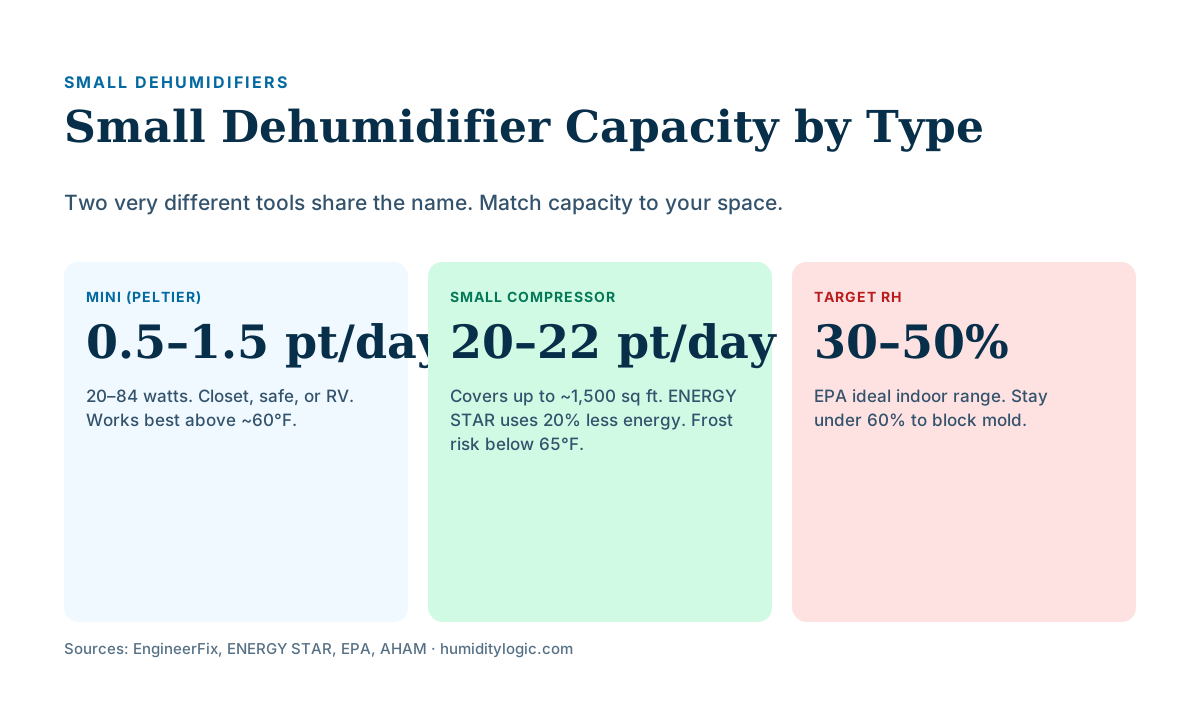
A small dehumidifier comes in two very different forms: a mini thermo-electric (Peltier) unit that pulls 0.5 to 1.5 pints a day for a closet, safe, or RV, and a small compressor rated 20 to 22 pints a day that dries a whole room up to about 1,500 square feet. Match the type to your space, not just the price tag.
The phrase “small dehumidifier” hides a big split. One kind is a shelf-sized gadget with no compressor that gently protects a closet from musty air. The other is a compact but real refrigeration appliance that dries an entire room. Buy the wrong one and you either drown a mini in a job it cannot do, or park an oversized compressor in a closet. The sections below sort out which is which.
What counts as a “small dehumidifier”?
A small dehumidifier is any unit built for a limited space, and in practice it splits into two categories: mini thermo-electric (Peltier) units and small compressor units. They share a name and a compact footprint, but they remove water at completely different rates and suit completely different spaces.
Mini Peltier units use no compressor and no refrigerant. An electric current runs across a junction of two materials so one side gets cold; humid air condenses on that cold plate and drips into a small tank. Because the cooling is gentle, these units draw only 20 to 84 watts and remove just 0.5 to 1.5 pints of water per day, according to technical breakdowns of how the Peltier effect works. A small compressor unit works exactly like a full-size one — it uses the same refrigeration cycle explained in how a dehumidifier works — just in a smaller cabinet, and pulls 20-plus pints a day.
Mini (Peltier) or small compressor — which do I need?
Reach for a mini Peltier unit when the space is small, enclosed, and only lightly damp; step up to a small compressor when you are drying a whole room or the air is visibly humid. The deciding factors are the size of the space, how wet it is, and the temperature.
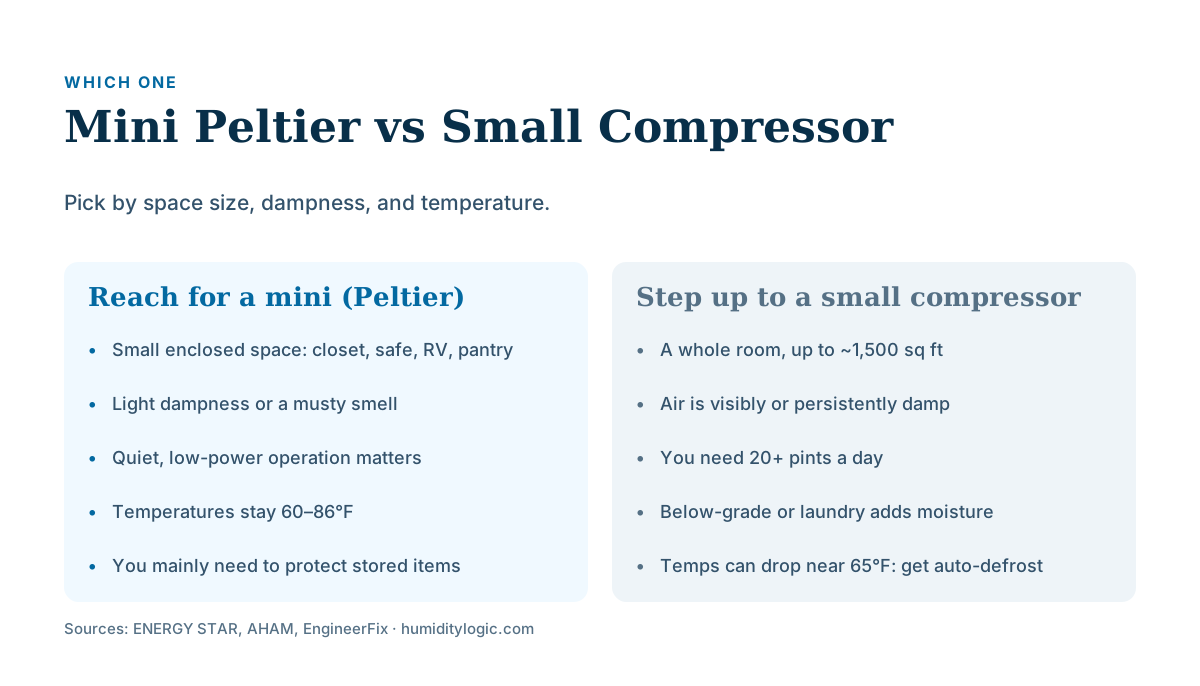
A mini earns its place in a wardrobe, a linen closet, a gun safe, a boat cabin, or an RV in storage — small volumes where you mostly want to stop musty smells and protect stored items. A small compressor earns its place in a bedroom, a bathroom, a home office, or a small basement, where you need to move the whole room’s relative humidity down into a healthy range. When those goals overlap in a mid-size space, err toward the compressor: an undersized unit that runs forever is worse than one with headroom. If you are unsure, run your numbers through the dehumidifier size calculator before you buy.
How much water can a mini Peltier dehumidifier actually remove?
A mini Peltier dehumidifier removes only about 0.5 to 1.5 pints per day — roughly 8 to 24 ounces — and that number drops fast as the air gets cooler or drier. For comparison, even a small compressor unit is rated at 20 to 22 pints per day, more than ten times as much.
That gap is the single most important thing to understand before buying a mini. These units are designed for what the manufacturers describe as small, enclosed spaces, not room-wide control. In a sealed closet with a light moisture problem, a mini quietly keeps things dry on very little power. Put that same mini in an open, genuinely damp room and it will fill its little tank slowly while the room stays humid, because it simply cannot pull moisture out faster than a room-sized space produces it. Do not judge a mini by pints alone — judge it by whether the space is small and closed enough for a fraction of a pint per day to matter.
What is the best small dehumidifier for a closet, safe, or RV?
For a closet, gun safe, boat, or stored RV, a mini Peltier unit is usually the right small dehumidifier because the space is enclosed, the moisture load is light, and quiet, low-power operation matters more than raw capacity. This is the one job Peltier units do genuinely well.
Look for a tank you can empty easily and, for a safe or a spot with no drain, a renewable desiccant cartridge as a backup for very tight enclosures. Keep the unit’s warm exhaust side clear so heat can escape, and remember it is protecting the contents of a small box, not conditioning a room. For enclosed damp spots that adjoin living space — like a small bathroom or a bedroom closet — decide honestly whether you are treating the closet or the room. If it is the room, a mini will disappoint and a compressor is the answer.
When should I skip the mini and get a small compressor?
Skip the mini and buy a small 20 to 22 pint compressor the moment you are drying an actual room, the air feels visibly or persistently damp, or the space is below grade. Manufacturers rate these compact compressor units for coverage up to about 1,500 square feet, and ENERGY STAR-certified models use about 20% less energy than conventional units of the same size.
Post-2019 federal test rules mean pint labels read roughly 30% lower than older units, so a modern “20 pint” model is more capable than the number suggests — AHAM sizing puts even a moderately damp 300-square-foot room at a 20-pint unit. Running cost stays modest at this size: a 50-pint unit draws about 550 watts and costs around $24 a month at eight hours a day and the US average of 17.9¢ per kWh, and a 20-pint unit uses less. For a full walkthrough of matching capacity to space, see what size dehumidifier you need.
Do small dehumidifiers work in cold spaces like a garage or unheated closet?
Not well — both mini Peltier units and standard compressors lose capacity as the air cools, so a cold garage, an unheated basement closet, or a chilly crawl space is the wrong home for either. This is the most common way a small dehumidifier disappoints.
Peltier units need a workable temperature difference to condense moisture, so they fade below about 60°F. Compressors have their own limit: ENERGY STAR advises that if a space “typically fall[s] below 65 degrees (F)” you should choose a unit specified for low temperatures, because coils frost over and performance drops. For a genuinely cold small space, the better tool is a desiccant dehumidifier, which keeps working down to around 33°F — the trade-offs are laid out in compressor vs desiccant.
Small dehumidifier quick reference
| Space | Best type | Why |
|---|---|---|
| Closet, wardrobe, linen shelf | Mini Peltier | Enclosed, light moisture, quiet |
| Gun safe, boat, stored RV | Mini Peltier or desiccant | Tiny sealed volume, protects contents |
| Small bedroom, office, bathroom | 20-22 pint compressor | Whole-room control, 20-plus pints/day |
| Small basement | 20-22 pint compressor, auto-defrost | Below grade, damp; watch the 65°F frost line |
| Cold garage or unheated space | Desiccant | Compressors frost, Peltier fades below ~60°F |
Whichever way you go, the target is the same: hold the space in the EPA’s recommended 30 to 50% relative humidity, and always under 60%, the level above which mold takes hold. A small dehumidifier controls moisture — it does not remove existing mold. If you already see it, note that the EPA says a moldy area larger than about 10 square feet should be handled by a professional, and fixing the underlying dampness is what a small dehumidifier is actually for. See dehumidifiers for mold for the moisture-first approach.
Frequently asked questions
What is the best small dehumidifier?
It depends on the space. For a closet, gun safe, or RV, a mini thermo-electric (Peltier) unit that pulls 0.5 to 1.5 pints a day is enough. For a whole small room up to about 1,500 square feet, choose a 20 to 22 pint compressor model instead. Match the type to the space, not just the price.
Do mini Peltier dehumidifiers actually work?
Yes, but only in small, enclosed spaces with a light moisture load. They remove roughly 0.5 to 1.5 pints of water a day and work best above about 60°F. In an open room, or in cool conditions, they cannot keep up and a compressor unit is the right tool.
How many square feet does a small dehumidifier cover?
A mini Peltier unit is rated for small enclosed volumes, often a closet or a space of a few hundred cubic feet, not open rooms. A small 20 to 22 pint compressor dehumidifier covers up to about 1,500 square feet according to manufacturer ratings.
Will a small dehumidifier work in a cold garage or unheated closet?
Not well. Both Peltier minis and standard compressors lose capacity in the cold, and compressors can frost over below about 65°F. For a cold small space, a desiccant dehumidifier is the better choice because it keeps working at low temperatures.
Is a small dehumidifier enough to stop mold?
A small unit helps by holding relative humidity in the EPA range of 30 to 50 percent and under 60 percent, which discourages mold. It does not remove existing mold. EPA says a moldy area larger than about 10 square feet should be handled by a professional.
Sources & references
Every figure on this page is checked against these published sources. Last reviewed July 21, 2026.