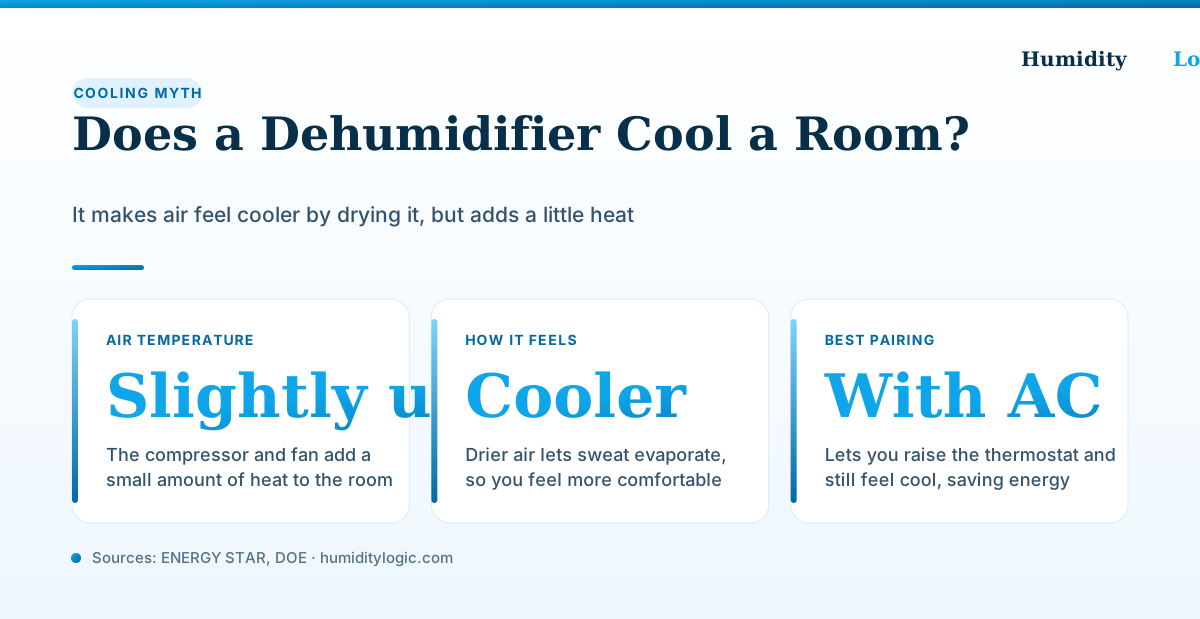
No—a dehumidifier does not cool the air; it slightly warms it, but it makes the room feel cooler by drying it. The compressor and fan add a small amount of heat, so a thermometer near the unit actually ticks up. What genuinely changes is comfort: pulling moisture out of the air lets your sweat evaporate, and that is what makes a muggy room finally feel bearable. Understanding this difference is the key to using a dehumidifier well—and to saving money when you pair it with an air conditioner.
Does a dehumidifier cool a room?
No—a dehumidifier removes moisture, not heat, so it cannot lower a room’s temperature the way an air conditioner does. It works on the same refrigeration cycle as an AC, but with one crucial difference: everything stays inside the room. A fan pulls humid air across a cold coil, water vapor condenses and drips into the tank, and the now-drier air passes back out into the space. The moisture leaves the air, but the heat has nowhere to go.
An air conditioner, by contrast, has an outdoor unit. It collects heat from your indoor air and dumps it outside, which is why the temperature actually falls. A dehumidifier has no outside to dump into, so it is a closed loop. That is the whole reason the two appliances feel so different even though they share the same basic parts.
Why does a dehumidifier make the air warmer?
A dehumidifier warms the air because it is a sealed system that turns electricity into heat and keeps all of it in the room. Two things add warmth. First, the compressor and fan draw power, and nearly all of that energy becomes heat—the same way a laptop or a lamp warms the space around it. Second, when water vapor condenses on the cold coil it releases the latent heat it was carrying, and the dried air then flows over the warm condenser coil on its way out.
ENERGY STAR tells owners this outright: “Do not be alarmed if the air temperature directly around the unit is warmer than in surrounding areas. As a dehumidifier removes moisture from the air, it slightly warms the space around it.” The rise is usually modest—a few degrees in the exhaust air—but it is real, and it is the opposite of cooling. In a small, closed room you may even notice the ambient temperature creep up a degree or two over a long run, since the appliance is quietly acting as a low-wattage space heater on top of its main job of drying the air.
If it warms the air, why does the room feel cooler?
The room feels cooler because your body reads humidity, not just temperature—and drier air lets your sweat evaporate freely. Evaporation is how humans dump heat. When the air is already saturated with moisture, sweat lingers on your skin and you feel sticky and hot. When a dehumidifier lowers the humidity, that sweat evaporates quickly and carries heat away with it, so you feel cooler even though the thermometer has not moved.
This is why a bone-dry 80°F afternoon can feel pleasant while a muggy 78°F evening feels oppressive. The measured temperature is nearly identical; the humidity is what your skin actually notices. So a dehumidifier does not cheat physics—it simply shifts the one variable that governs how warm you feel.
There is a limit to the illusion, though. Evaporative cooling only helps while your skin still has sweat to shed and the air still has room to absorb it. Once a room is already dry, pulling out more moisture does little extra good, and the comfort curve flattens out. That is why chasing a very low humidity reading is wasted effort—the payoff lives in getting out of the sticky zone, not in wringing the air completely dry.
Can a dehumidifier replace an air conditioner?
No—a dehumidifier is not a substitute for an air conditioner, because it cannot lower the actual temperature of a hot room. If a bedroom is 88°F, a dehumidifier will do nothing to bring that number down, and its own waste heat means the space may feel a shade warmer, not cooler. The comfort boost from drier air only goes so far once the temperature climbs into genuinely hot territory.
Where a dehumidifier shines is in spaces that are damp but not scorching—basements, laundry rooms, and living areas during humid but mild weather. In those conditions the muggy feeling, not the raw heat, is the real problem, and removing moisture solves it. A basement that sits at 70°F and 70% humidity feels clammy and cold-damp; drop it to 45% and the same space feels dry and settled, no cooling required. This is also why a dehumidifier and an air purifier serve entirely different jobs, as the dehumidifier vs. air purifier comparison spells out. Reach for cooling equipment when you need cooling, and a dehumidifier when you need dryness.
How do a dehumidifier and AC work together to save energy?
Paired with an AC, a dehumidifier lets you raise the thermostat a few degrees and stay just as comfortable—which is where the real savings come from. Because dry air feels cooler, a room held at 45% humidity is comfortable at a higher set point than the same room at 65% humidity. Nudge the thermostat up, and the air conditioner cycles on less often.
The Department of Energy notes that running the AC at 78°F instead of 72°F can trim a cooling bill by roughly 6 to 18 percent. Trane makes the same point from the comfort side: reducing humidity is what lets you push the thermostat higher without feeling the difference. There is a catch worth naming—you are now running two appliances, and the dehumidifier itself uses power and adds heat. In humid climates the trade usually still favors the pairing, because the AC no longer has to fight the moisture load on its own.
What humidity level makes a room feel cooler?
Target 30 to 50 percent relative humidity—that is the sweet spot where warm air starts to feel comfortable. The EPA recommends keeping indoor humidity “below 60 percent—ideally between 30 percent and 50 percent.” Below 60% you also stop giving mold and dust mites the damp conditions they need, so the comfort win comes with a health win.
In summer, aim for the lower half of that band. Getting from a sticky 65% down to a dry 45% is exactly the change that makes an 78°F room feel like relief rather than a sauna. A hygrometer costs a few dollars and takes the guesswork out—set your dehumidifier’s humidistat to hold the room in range and let it cycle on its own.
Does a bigger or longer-running dehumidifier cool better?
No—size and runtime do not add cooling, but the right size does make the comfort effect show up faster and more reliably. An undersized unit in a large or very damp space may never pull the humidity down far enough to feel the difference, while a correctly sized one reaches your target and holds it. Use the dehumidifier sizing calculator or the guide on what size dehumidifier you need to match capacity to your room.
Running it longer will not chill the air either—remember, more runtime means slightly more waste heat, not less. What matters is reaching and maintaining a comfortable humidity level, then letting the humidistat take over. For a fuller picture of scheduling, see how long to run a dehumidifier. The goal is steady, moderate dryness—not marathon operation, and certainly not a lower thermometer reading, which a dehumidifier was never built to deliver.
Frequently asked questions
Does a dehumidifier cool a room or warm it?
It warms it slightly. A dehumidifier moves moisture, not heat, so every watt it draws to run the compressor and fan ends up as warmth in the room. The air leaving the unit is typically a few degrees warmer than the air going in, even though the space feels more comfortable.
Why does my room feel cooler after running a dehumidifier?
Because drier air lets your sweat evaporate faster, and evaporation is how your body sheds heat. The thermometer does not drop, but 78°F at 45% humidity feels noticeably cooler than 78°F at 65% humidity. Your comfort improves even as the measured temperature ticks up.
Can I use a dehumidifier instead of an air conditioner?
No. An air conditioner removes heat and vents it outdoors, actually lowering the temperature. A dehumidifier keeps all its heat inside and only removes moisture. In a genuinely hot room it cannot substitute for AC and may even make the air feel a touch warmer.
Does a dehumidifier help my air conditioner save energy?
Often, yes. When a dehumidifier pre-dries the air, the room feels cooler at a higher thermostat setting, so you can raise the temperature a few degrees. The Department of Energy notes cooling costs fall meaningfully for each degree you set the thermostat higher in summer.
What humidity level makes a room feel most comfortable?
Aim for 30 to 50 percent relative humidity. The EPA recommends keeping indoor humidity below 60 percent, ideally in that 30 to 50 percent range, to limit mold and feel comfortable. In summer, targeting the lower half of that band is what makes warm air feel cooler.
Sources & references
Every figure on this page is checked against these published sources. Last reviewed August 11, 2026.