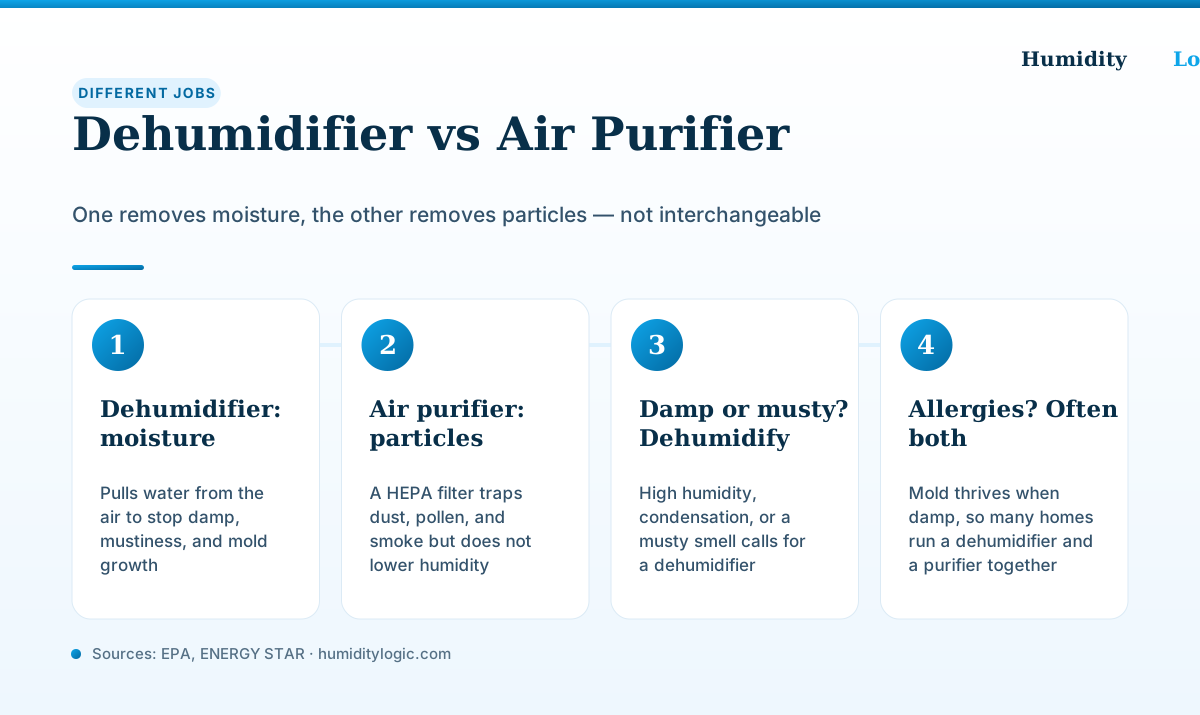
If you are deciding between the two, the short answer is that a dehumidifier removes moisture and an air purifier removes particles — so pick by the symptom, and for mold the dehumidifier is the one that fixes the cause. A dehumidifier pulls water vapor out of the air to stop damp, mustiness, condensation, and the conditions mold needs. An air purifier draws air through a filter to trap dust, pollen, smoke, and pet dander. Neither does the other’s job: a purifier cannot lower humidity, and a dehumidifier cannot filter allergens out of the air. They are not interchangeable.
What does a dehumidifier do?
A dehumidifier is a moisture machine. A fan draws humid room air across a set of cold coils, water vapor condenses into liquid and drains into a tank or hose, and drier air blows back into the room. Run it in a damp space and it lowers the relative humidity — the percentage of moisture the air is holding — and keeps it there.
That matters because humidity is what drives a whole category of household problems. ENERGY STAR recommends keeping indoor relative humidity between 30% and 50%, noting that “anything above this range may promote mold growth.” When a basement or bathroom sits above that band, you get the familiar signs: a clammy feel, a musty smell, condensation beading on windows and pipes, warped wood, and mildew creeping into grout and corners. A dehumidifier addresses every one of those because it removes their shared cause — excess water in the air. If you want the mechanics in more detail, see how a dehumidifier works.
What a dehumidifier does not do is clean the air of particles. It has no fine filter for pollen or smoke, and the coarse screen it does have is only there to protect the coils. Muggy air becomes dry air; dusty air stays dusty.
What does an air purifier do?
An air purifier is a particle machine. It uses a fan to pull room air through one or more filters — most commonly a HEPA filter, which traps very fine airborne particles — and returns cleaner air to the room. Many models add an activated-carbon stage to adsorb odors and gases.
That makes a purifier the right tool for airborne contaminants: household dust, pollen and other allergens, pet dander, and smoke particles. If someone in the home sneezes through allergy season, or wildfire haze or cooking smoke lingers, a HEPA purifier measurably lowers the count of those particles in the air.
But the EPA is explicit about the boundary: air cleaners “do not address the cause of mold and musty odors,” because “mold is caused by a water or moisture problem.” A purifier moves air through a filter — it has no way to condense or remove water vapor, so it cannot lower humidity at all. A room can be filtered spotless and still be damp, muggy, and primed for mold.
Which one do I need? Match the tool to the symptom
The fastest way to choose is to name the symptom, because the symptom points straight at the cause.
- Damp, clammy, or muggy air; a musty smell; condensation on windows; warping or mildew — these are moisture problems. You need a dehumidifier. Not sure your home even qualifies as damp? Check what is considered high humidity.
- Sneezing and allergy flare-ups; visible dust; pet dander; pollen; lingering smoke or cooking odor — these are airborne-particle problems. You need an air purifier.
If your list has items in both buckets, that is a signal you may want both devices, which is common and covered below.
Dehumidifier vs air purifier: side by side
| Dehumidifier | Air purifier (HEPA) | |
|---|---|---|
| What it removes | Moisture (water vapor) | Particles (dust, pollen, smoke, dander) |
| Effect on humidity | Lowers it | None |
| Effect on allergens | None | Removes them from the air |
| Musty smell / dampness | Fixes the cause | No effect on the cause |
| Mold | Removes the moisture mold needs | Filters some airborne spores only |
| Best symptoms | Damp, clammy, condensation, mildew | Sneezing, dust, pet dander, smoke |
The table makes the split clear: the two devices barely overlap. Each solves the problem the other ignores.
Mold sits in the overlap — but the dehumidifier fixes the cause
Mold is where people most often confuse the two, because a purifier and a dehumidifier both seem to “help,” yet only one addresses the actual problem. Mold is fundamentally a moisture issue. The EPA states plainly that “there is no practical way to eliminate all mold and mold spores in the indoor environment; the way to control indoor mold growth is to control moisture.”
A HEPA air purifier can catch some mold spores that are already floating in the air, which is a genuine but narrow benefit. What it cannot do is stop new mold from forming, because it never touches the dampness feeding it. A dehumidifier does the opposite: it removes the moisture, so — per the EPA’s mold guidance that mold cannot grow without it — the growth loses its fuel. That is why, for a mold or mildew problem, moisture control comes first and filtration is at most a complement. Our deeper dive on mildew vs mold explains how to tell what you are dealing with, and the air purifier vs dehumidifier for mold comparison walks through the priority in full.
Should I run both at the same time?
For many homes, yes — the two devices work together without conflict. A damp house frequently has both problems at once: high humidity and airborne allergens, and because mold thrives in moisture, dampness can itself raise the spore and allergen load. Running a dehumidifier to hold relative humidity in the 30–50% range while a HEPA purifier filters the particles already in the air covers both fronts.
There is no interference between them. The dehumidifier changes the air’s moisture; the purifier changes its particle content. If anything, keeping humidity in range reduces the mold and dust-mite activity that gives the purifier more work to do, so the two reinforce each other.
What about combo units?
Combination products exist. A handful of appliances bundle a dehumidifier and an air filter into one cabinet, and many air conditioners both filter the air and wring some moisture out of it as a side effect of cooling. In a single room where you want one appliance and one plug, a combo can be a reasonable convenience.
The trade-off is that a device trying to do two jobs usually does neither as well as a dedicated unit sized for the task. If moisture is your real problem, confirm the combo removes a meaningful number of pints of water per day rather than just passing air through a filter. For a whole basement or a chronically damp room, two purpose-built devices almost always outperform one hybrid.
Sizing and running costs
Whichever you buy, size it to the space. An undersized dehumidifier runs nonstop and never reaches its target humidity, while an undersized purifier cycles the room’s air too slowly to keep up. For moisture, our dehumidifier size calculator matches capacity to your square footage and how damp the room is, and our guide to what size dehumidifier you need explains the pint ratings.
On energy, a dehumidifier is the bigger draw of the two because it runs a compressor and coils much like a small air conditioner; an ENERGY STAR certified model uses about 20% less electricity than a conventional unit to remove the same moisture. A HEPA purifier is a fan plus a filter, so it costs less to run, but budget for replacement filters over its life. If you are choosing a dehumidifier type for efficiency, our compressor vs desiccant dehumidifier comparison covers which suits your climate.
Bottom line
A dehumidifier and an air purifier are not competitors — they are specialists. Buy a dehumidifier when the problem is moisture: damp, mustiness, condensation, or mold, where it removes the underlying cause. Buy an air purifier when the problem is particles: dust, pollen, dander, or smoke. When your home shows both sets of symptoms, running the two together is the complete answer, with the dehumidifier doing the load-bearing work of keeping mold from ever starting.
Frequently asked questions
What is the difference between a dehumidifier and an air purifier?
A dehumidifier removes water vapor from the air, lowering relative humidity to stop dampness, mustiness, condensation, and mold growth. An air purifier pulls air through a filter to trap particles — dust, pollen, smoke, and pet dander — but it does not lower humidity or remove moisture. They target different problems, so one cannot replace the other.
Do I need a dehumidifier or an air purifier?
Match the tool to the symptom. If the room feels damp or clammy, smells musty, has condensation on windows, or shows mold, you need a dehumidifier because those are moisture problems. If the issue is sneezing, dust, pet dander, pollen, or lingering smoke odor, you need an air purifier because those are airborne particles. Homes with both symptoms often run both.
Can an air purifier lower humidity?
No. An air purifier only moves air through a filter; it has no mechanism to condense or remove water vapor, so it does not change the relative humidity in a room. If your air feels muggy or a space is damp, a purifier will not help — you need a dehumidifier or air conditioning to pull moisture out.
Should I use a dehumidifier and an air purifier together?
Often, yes. Because mold needs moisture to grow, a damp home can have both high humidity and airborne spores or allergens. Run the dehumidifier to hold relative humidity in the 30 to 50% range so mold cannot take hold, and run the HEPA purifier to filter the particles already circulating. The two devices complement each other and do not interfere.
Are there combined dehumidifier and air purifier units?
A few products combine dehumidification with air filtration in one cabinet, and some air conditioners include filtration and moisture removal. They can be convenient in a single room, but a combo unit is usually a compromise on both jobs compared with two dedicated devices sized for the space. Check that it actually removes a meaningful amount of moisture, not just filters air.
Sources & references
Every figure on this page is checked against these published sources. Last reviewed August 3, 2026.