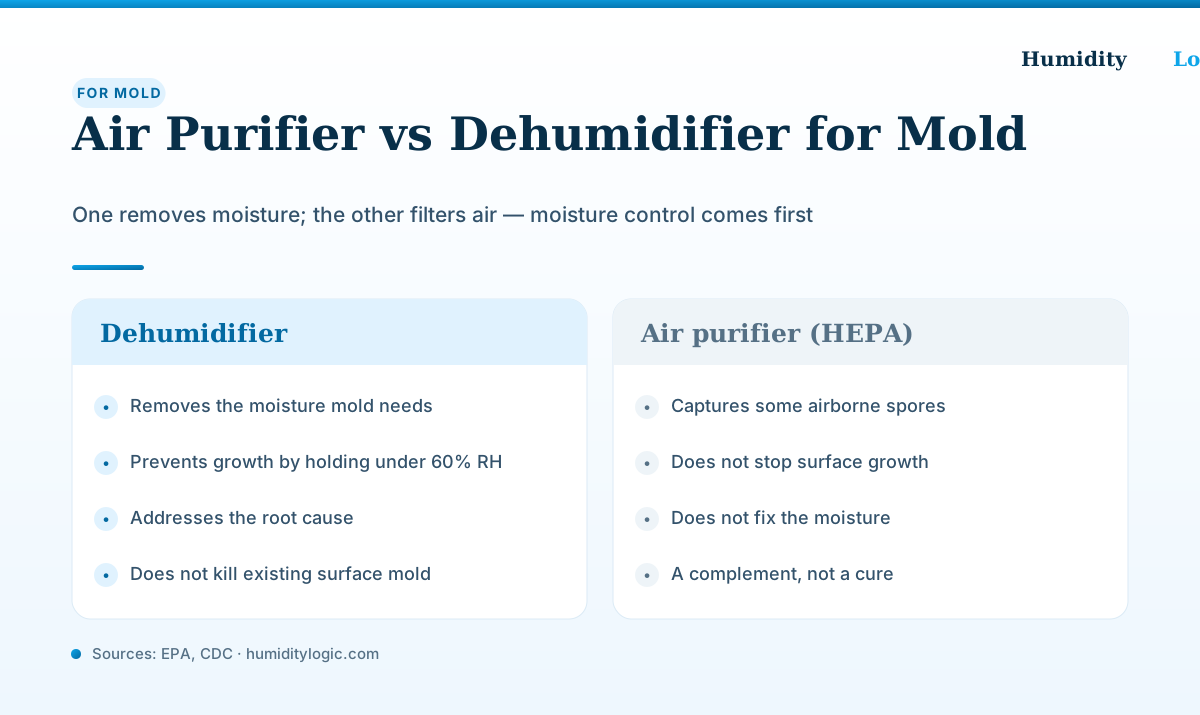
For a mold problem, a dehumidifier is the primary tool and an air purifier is, at best, a helper. A dehumidifier pulls water out of the air so relative humidity stays under 60%, removing the one condition mold cannot grow without. A HEPA air purifier only filters some mold spores out of the air that passes through it — it does nothing about the dampness on your walls and does not stop mold from spreading on surfaces. Moisture control comes first; air filtration is a complement, not a cure. Neither device kills mold that is already growing.
Why Mold Is a Moisture Problem, Not an Air Problem
Mold is not really an air-quality issue at its root — it is a water issue. The EPA states plainly that “there are many types of mold, and none of them will grow without water or moisture,” and that “the key to mold control is moisture control.” That single fact decides which appliance actually solves the problem.
Mold spores are everywhere, indoors and out, all the time. They only turn into a visible, spreading, smelly colony when they land on a surface that stays damp. Cut off the dampness and the spores have nowhere to take hold. That is why the EPA’s core recommendation is to keep indoor relative humidity below 60% — ideally between 30% and 50%. The CDC gives the same guidance, advising homeowners to keep humidity as low as they can, no higher than 50%, using an air conditioner or dehumidifier.
A dehumidifier attacks that condition directly. An air purifier does not touch it.
Air Purifier vs Dehumidifier: Side-by-Side
| Dehumidifier | Air purifier (HEPA) | |
|---|---|---|
| What it does | Removes moisture from the air | Filters particles, including some spores, from the air |
| Effect on mold | Removes the condition mold needs to grow | Captures a fraction of airborne spores |
| Root cause | Addresses it (moisture) | Ignores it (moisture untouched) |
| Surface mold | Stops it spreading by drying the air | No effect on surface growth |
| Kills existing mold | No | No |
| Musty smell | Fixes it by removing the moisture source | May mask it briefly, returns if source stays wet |
| Role in a mold plan | Primary tool | Optional complement |
The pattern is clear: the dehumidifier changes the environment so mold cannot thrive, while the purifier only cleans up a small share of what is already airborne. One is prevention; the other is partial mitigation.
What a Dehumidifier Actually Does for Mold
A dehumidifier works like a small air conditioner that returns its heat to the room. A fan draws humid air across cold coils, water vapor condenses and drains away, and drier air blows back out. Run continuously in a damp space, it holds relative humidity in the EPA’s safe band and keeps it there.
That is exactly the lever that matters. If your basement sits at 70% RH all summer, every porous surface down there — drywall, framing, stored cardboard, upholstery — is a candidate for mold. Drop the room to 50% and you have removed the fuel. This is why a dehumidifier is the appliance most closely tied to actually stopping and preventing mold, and why damp basements are the classic use case; our guide to basement humidity covers the specifics of sizing and drainage for that space.
To be clear about the limit: a dehumidifier does not kill or remove mold that has already colonized a surface. It stops the growth by drying the air, but you still have to physically clean what is there. It is prevention and control, not remediation.
What an Air Purifier Can — and Cannot — Do
A HEPA air purifier pulls room air through a dense filter that traps fine particles, and mold spores are among the particles it can capture. In a room where spores are circulating, running one will lower the airborne spore count somewhat. That is a real, if narrow, benefit.
But the EPA is direct about the boundary: portable air cleaners “may remove some of the particles generated by mold” and “help reduce odors,” but “will not resolve a mold and moisture problem.” The agency’s bottom line is that air cleaners “do not address the cause of mold and musty odors,” and “to solve a mold problem, get rid of the source of the moisture and clean up the mold.”
So a purifier has three hard limits worth stating outright:
- It ignores the moisture. The dampness driving growth is untouched, so mold keeps forming on surfaces regardless of how clean the air gets.
- It does not reach surface mold. Spores on a wall or in grout are not airborne, so they never pass through the filter.
- It does not kill mold. HEPA media traps spores; it does not sterilize a colony.
Used correctly, a purifier is a reasonable complement while you fix the real problem — helpful for the spores already in the air, useless for the cause.
Neither One Removes Mold That Is Already Growing
This is the point that trips people up most, so it deserves its own heading: buying either appliance does not clean up existing mold. A dehumidifier dries the air; a purifier filters the air; a visible patch on the wall sits there either way until someone physically removes it.
For hard surfaces, the CDC recommends cleaning with soap and water or a bleach solution of no more than one cup of household bleach per gallon of water, wearing gloves and eye protection. Porous materials that have stayed wet — soaked drywall, carpet, ceiling tile — often cannot be cleaned and need to be discarded. If you are unsure whether the spots you see are even mold, our explainer on mildew vs mold and on what mold smells like can help you identify it before you start.
How to Actually Fix a Mold Problem
The sequence that works, in order:
- Find and fix the moisture source. A leak, poor drainage, condensation, or chronically high humidity. Nothing else holds until this is done.
- Dry everything within 24 to 48 hours. The EPA notes that materials dried in that window usually will not grow mold in the first place.
- Clean up the mold that is already there. Soap and water or diluted bleach on hard surfaces; discard porous materials that stayed wet.
- Hold humidity below 60% for good. This is the dehumidifier’s standing job — keep the room in the 30–50% band so mold cannot return. Check whether your space even qualifies as damp with our guide to what is considered high humidity.
- Add a HEPA purifier if you want cleaner air during and after cleanup. Optional, and strictly a complement to the four steps above.
Notice where each appliance lands. The dehumidifier is step four — the permanent prevention that keeps the fix from undoing itself. The purifier is an optional add-on at step five. Neither replaces steps one through three.
Which Should You Buy?
If you have to choose one, choose the dehumidifier — it is the only one of the two that addresses why mold grows. Size it to the room so it can actually hold humidity down; a unit that is too small runs constantly and never reaches target. Our dehumidifier size calculator matches capacity to your square footage and dampness level.
Add a HEPA air purifier if airborne spores or lingering odor bother you, or if someone in the home is sensitive to them — but add it knowing what it is: a helper that cleans some of the air while the dehumidifier does the real work of keeping mold from growing in the first place. Moisture control leads; air filtration follows.
Frequently asked questions
Does an air purifier get rid of mold?
No. A HEPA air purifier can capture some airborne mold spores as they pass through the filter, but it does not remove mold growing on walls, grout, or wood, and it does nothing about the moisture feeding that growth. The EPA is explicit that portable air cleaners will not resolve a mold and moisture problem. Treat a purifier as a complement to moisture control, not a substitute for it.
Will a dehumidifier kill mold that is already there?
No. A dehumidifier removes the airborne moisture mold needs to keep growing, which stops it from spreading, but it does not kill or remove colonies already established on a surface. You still have to physically clean those. The CDC says hard surfaces can be cleaned with soap and water or a diluted bleach solution; porous materials that stay wet often have to be thrown out.
Should I run an air purifier and a dehumidifier at the same time?
Yes, and in a damp, musty room the pairing makes sense. Let the dehumidifier hold relative humidity under 60% so new mold cannot take hold, and let the HEPA purifier reduce the spores already floating in the air. Just remember the dehumidifier is doing the load-bearing work — the purifier is cleanup, not prevention.
What humidity level stops mold from growing?
The EPA recommends keeping indoor relative humidity below 60% at all times, and ideally between 30% and 50%. Mold cannot grow without moisture, so holding the air in that band removes the condition it depends on. A $10 to $20 hygrometer lets you confirm the room is actually in range instead of guessing.
Can an air purifier remove a musty smell?
A purifier with an activated-carbon stage may reduce a musty odor temporarily, but the smell comes from active mold growth and moisture, so it returns as long as the source is wet. The EPA notes air cleaners do not address the cause of mold and musty odors. Find and dry the moisture source, clean the mold, and the smell resolves for good.
Sources & references
Every figure on this page is checked against these published sources. Last reviewed July 28, 2026.