Basements run damp because they sit in cool, moist soil that wicks water through concrete year-round. Aim for under 55% relative humidity in summer, with the EPA’s ideal band of 30-50% as the goal. But fix any bulk water problem — gutters, grading, seepage — before you plug in a dehumidifier, or you are only treating a symptom.
Why is my basement so humid?
A basement is the one room in the house that is surrounded on almost every side by wet ground. That single fact drives most of what follows.
The usual culprit is vapor migration through the concrete itself. Foundation walls and slabs are porous, and when most of a wall sits below grade it can only dry inward — toward your basement. The DOE Building America program describes this as vapor diffusion: moisture is pushed through the concrete by the pressure difference between damp soil and drier indoor air, and it never really stops. A poured wall also carries construction water for months or years after it is placed, and that has nowhere to go but inside.
Layered on top of that are three other sources, in rough order of how often they matter:
- Condensation. Warm, humid summer air meets cool basement walls, floors, and cold-water pipes and gives up its moisture as liquid. This is worst in early summer, when the ground is still cold but the air outside has turned muggy.
- Bulk water. Clogged gutters, downspouts that dump at the foundation, or ground that slopes toward the house send rainwater straight to the basement wall. This is the loudest problem and usually the cheapest to fix.
- Interior sources. An unvented clothes dryer is effectively a humidifier, adding roughly a gallon of water to the air per load. Showers, cooking, and even stored firewood add to the load.
Sorting out which of these dominates is what tells you where to spend money — so before buying anything, it is worth a few minutes of diagnosis.
What is a realistic basement humidity target?
Do not chase the number you would set upstairs. Below-grade air is a different animal.
The EPA is clear on the ceiling: keep indoor relative humidity below 60% at all times, and between 30% and 50% where possible. Those figures prevent mold, dust mites, and the musty smell that signals microbial growth. For a basement specifically, treat under 55% in summer as your working target, and aim for the finished-space end of the range — closer to 50% — if the basement is carpeted, used as living space, or stores anything that can be damaged.
What you should not do is try to hold 40% in July. A below-grade space fighting continuous vapor migration will only reach that with badly oversized equipment that short-cycles and wastes energy. Set a realistic humidistat target, confirm it with a cheap hygrometer, and let the equipment cycle. If you want the full walkthrough for the rest of the house, our guide on how to lower humidity in your house covers whole-home strategy.
How do I figure out where the moisture is coming from?
Before you spend a dollar, find out whether you are fighting condensation, seepage, or vapor. The fix is different for each, and the test is free.
Tape a 12-inch square of aluminum foil tightly to the basement wall, sealing all four edges, and leave it for 24 to 48 hours. Then check which side is wet:
- Moisture on the room-facing surface means humid indoor air is condensing on the cool wall. Ventilation and dehumidification will help.
- Moisture trapped behind the foil means water is moving through the wall from the soil — that is vapor migration or seepage, and it points to exterior water management, not just a dehumidifier.
If you can see water actually running in or pooling after rain, skip the test — you have a bulk-water problem, and no dehumidifier will keep up until the water is diverted. This same diagnostic logic applies next door in a crawl space dehumidifier setup, where a ground vapor barrier does much of the work.
How do you lower basement humidity, cheapest first?
Spend money in the order water actually reaches your basement: divert it outside first, block what seeps in second, and only then condition the air that is left.
The EPA’s own guidance is to fix the water problem before anything else — cleanup and equipment come after the source is controlled. Here is the cost-ordered sequence.
| Fix | Typical cost | What it addresses |
|---|---|---|
| Clean gutters, extend downspouts 4-6 ft from the foundation | $0-100 | Bulk water at the wall |
| Regrade soil to fall ~6 in. over 10 ft away from the house | $0-300 DIY | Surface water pooling |
| Vent the clothes dryer to the outdoors | $20-60 | Interior moisture source |
| Seal visible slab and wall cracks | $20-150 | Minor seepage and vapor |
| Run a right-sized dehumidifier on a continuous drain | $200-350 | Residual vapor and condensation |
| Interior drain tile or exterior waterproofing | $3,000+ | Persistent seepage (professional) |
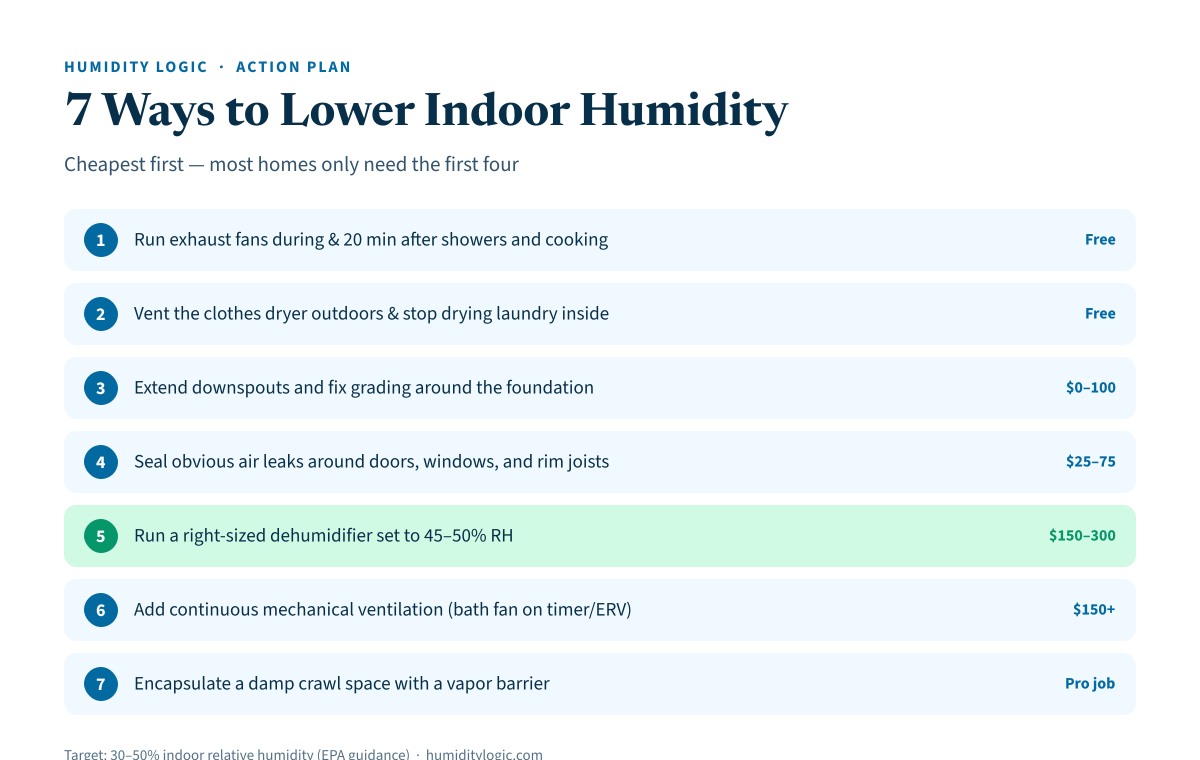
Work down the list and stop when the basement holds under 55%. Most homes never reach the bottom row.
Start outside. Gutters and grading are the highest-leverage, lowest-cost fixes there are. The DOE foundation guidance calls for grading the ground to fall at least six inches over the first ten feet, and for downspouts to discharge well away from the wall. Deal with gutters and grading before you dehumidify — a machine cannot out-run a downspout emptying at the foundation.
Then handle the interior sources you control. Vent the dryer outdoors, run bath and kitchen exhaust fans, and seal obvious cracks with hydraulic cement or a masonry sealant.
Only then condition the air. Once bulk water is diverted, a dehumidifier is the right tool for the vapor that still diffuses through the concrete. Size it correctly: use the dehumidifier sizing calculator and add about 5 pints per day because the space is below grade. Set the humidistat to 45-50%, and run a hose to a floor drain or sump so you never empty a bucket. Our companion basement dehumidifier buying guide walks through exact pint sizing, placement, drainage, and running cost.
When does basement moisture need a professional?
Some basement problems are diagnosis-and-DIY. Others are a signal to call someone, and it pays to know the line.
The clearest threshold comes from the EPA: if mold covers more than about 10 square feet, or follows significant water damage, bring in a professional rather than scrubbing it yourself. Large-area growth usually means the moisture source has been active for a while, and disturbing it can spread spores through the house. Persistent, visible mold also warrants a dedicated plan — our guide to choosing a dehumidifier for mold covers how humidity control fits alongside remediation.
Structural water is the other professional trigger. If the foil test shows water pushing through the wall, if seepage returns after every storm, or if you have standing water, the fix is foundation-side: interior drain tile, a sump system, or exterior waterproofing. Those are engineered solutions, not weekend projects, and no amount of interior dehumidification substitutes for them.
For everything short of that — cool damp air, a musty smell, a hygrometer stuck in the high 50s — the path is straightforward. Divert the outside water, cut the interior sources, and let a correctly sized dehumidifier hold the line under 55%. Do those three things in order and the average basement dries out without any structural work at all.
See it in 3D. The basement is one of eight spaces you can walk through in The Humidity House, our interactive 3D home — click the basement to see where damp collects and which fix comes first.
Frequently asked questions
What is a healthy humidity level for a basement?
Keep a basement under 55% relative humidity in summer. The EPA recommends keeping indoor humidity below 60% at all times, ideally between 30% and 50%, to prevent mold, dust mites, and musty odors. Below-grade spaces rarely hold a steady 40% in July without oversized equipment, so under 55% is the realistic working target.
Why is my basement so humid even with a dehumidifier?
A dehumidifier only removes water that is already in the air, so it cannot keep up if bulk water keeps entering through cracks or from poor drainage. Extend downspouts, correct the grading, and seal obvious cracks first, then let a right-sized unit handle the residual vapor that migrates through the concrete.
Does a damp basement raise humidity in the rest of the house?
Yes. Vapor diffuses from a damp basement up into the living space and can noticeably raise moisture levels throughout the home. Controlling basement humidity at the source is often the fastest way to fix musty smells and sticky air on the floors above.
Do I need a bigger dehumidifier because my basement is underground?
Add about 5 pints per day to whatever the standard sizing chart recommends for the square footage, because below-grade spaces stay cooler and damper than rooms above ground. Our sizing calculator applies that adjustment automatically once you enter the floor area and dampness level.
When is basement mold a job for a professional?
The EPA advises hiring a professional when mold covers more than about 10 square feet or follows major water damage. Recurring seepage and structural waterproofing are also professional territory, since they involve foundation drainage rather than surface cleanup.
Sources & references
Every figure on this page is checked against these published sources. Last reviewed July 21, 2026.