A dehumidifier prevents mold by keeping indoor relative humidity below 60% — ideally in the 30-50% range the EPA recommends — so new colonies cannot get the moisture they need to grow. What it does not do is kill or remove mold that already exists. Established mold has to be physically cleaned off hard surfaces, and moldy porous materials often have to be thrown out.
That distinction is the whole reason this article exists. A dehumidifier is a prevention tool, not a cleanup tool, and treating it as a cure is how small moisture problems quietly turn into large ones. Below is the honest version: what a dehumidifier actually changes, when a patch is small enough to clean yourself, when to step back and call a professional, and how to build a prevention routine that keeps mold from coming back.
Does a dehumidifier kill mold?
No. A dehumidifier does not kill mold and it does not remove it. It changes the environment, not the mold itself.
Mold is a living organism that needs moisture, a food source (drywall, wood, dust, fabric — most building materials qualify), and time. As the EPA puts it, “The key to mold control is moisture control.” A dehumidifier attacks exactly one leg of that stool: it pulls water vapor out of the air so the surrounding surfaces stay dry. When relative humidity stays low enough, mold spores that are always present in indoor air cannot germinate and spread.
But the mold already growing on your bathroom ceiling or basement wall does not vanish when the air dries out. It may stop expanding, and it may go dormant, but the stain, the spores it has already released, and the material it has rooted into are all still there. Drying the air is a real and important step — it just is not the same as cleanup.
Think of it like this: a dehumidifier is the lock you put on the door, not the crew that clears out the room. It keeps the next problem from starting. Someone still has to deal with the mess that is already inside.
What humidity level actually stops mold?
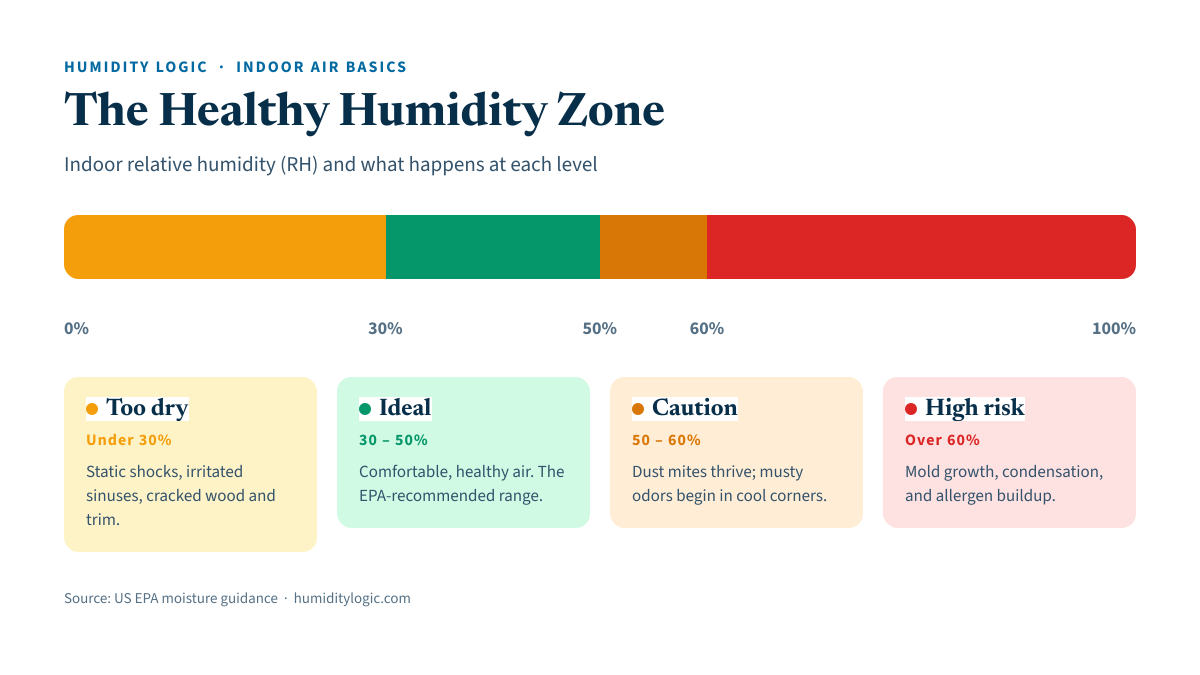
Here is the number to anchor everything to: keep indoor relative humidity below 60%, and ideally between 30% and 50%. If you are not sure where your rooms fall, the mold risk calculator turns a temperature and humidity reading into a plain risk band.
That range comes straight from federal guidance. The EPA advises homeowners to “keep indoor humidity below 60 percent (ideally between 30 and 50 percent) relative humidity.” The CDC’s recommendation is tighter still, advising you keep humidity as low as you can — no higher than 50% — throughout the day. Both agencies agree on the direction and the ceiling.
Why 60% as the hard ceiling? Because sustained relative humidity at or above roughly that level keeps surfaces damp enough for mold to establish. Drop into the 30-50% band and you are in the zone that is comfortable for people and hostile to mold, dust mites, and mildew alike. Go below 30% and the air gets uncomfortably dry for skin, sinuses, and wood furniture, so there is no benefit to overshooting.
The practical takeaway: buy a cheap hygrometer, put it in the problem room, and treat 50% as your target and 60% as the line you never want to cross for long. A dehumidifier with a built-in humidistat can hold that band automatically.
| Relative humidity | What it means for mold |
|---|---|
| Below 30% | Too dry — uncomfortable for people, no mold benefit |
| 30-50% | Ideal zone (EPA and CDC target) |
| 50-60% | Caution — acceptable but trending toward risk |
| Above 60% | High risk — mold can establish and spread |
For more detail on where these lines come from, see what is considered high humidity.
When can you clean mold yourself, and when should you call a pro?
This is the most important boundary in the whole article, so here is the rule plainly: small patches on hard surfaces are a reasonable do-it-yourself job; large or contaminated areas are not.
EPA guidance draws the line at size. “If the moldy area is less than about 10 square feet (less than roughly a 3 ft. by 3 ft. patch), in most cases, you can handle the job yourself.” For a patch under that threshold on a hard, non-porous surface, the EPA’s own tip is straightforward: scrub the mold off with detergent and water, then dry the surface completely. Fix the water source first, or it comes right back.
Step back and bring in a professional when any of these are true:
- The moldy area is larger than about 10 square feet (bigger than a 3 ft by 3 ft patch).
- There has been extensive water damage, or the mold followed a flood.
- The water involved was sewage or otherwise contaminated.
- You suspect mold inside the HVAC system — running it could spread spores through the whole house.
- The mold keeps returning after you clean it, which usually signals a hidden moisture source.
Anything at that scale is remediation work, not a weekend chore, and this article will not walk you through doing it yourself — larger jobs involve containment, safe material removal, and worker protection that belong in professional hands. Porous materials are the quiet trap here: the EPA notes that absorbent items like ceiling tiles and carpet may simply have to be removed and replaced, because mold grows into the material where surface scrubbing cannot reach.
Where a dehumidifier earns its keep
A dehumidifier is most valuable in the rooms that stay damp no matter how often you clean — and that is where it prevents the next patch from ever forming.
Basements are the classic case. They sit below grade, against cool soil, where humidity collects and lingers. A dehumidifier sized for the space holds that air in the safe band year-round; our guide to basement humidity covers the specifics. Bathrooms and laundry rooms generate moisture in bursts, so there ventilation matters as much as dehumidification — the EPA specifically recommends running an exhaust fan or opening a window for recurring bathroom mold.
Sizing matters more than people expect. A unit that is too small runs constantly and never reaches its setpoint, leaving the room in the danger zone; one matched to the room’s square footage and dampness pulls the air down and then cycles off. Use the dehumidifier size calculator to match the unit to the room instead of guessing.
What is the full mold-prevention playbook?
Preventing mold is really about denying it water, everywhere it might find some. A dehumidifier is one line of defense; here is the rest of the routine.
Fix leaks fast. The single highest-value habit. The EPA is explicit that if wet or damp materials are dried within 24-48 hours after a leak or spill, in most cases mold will not grow. Beat that clock and you win by default.
Hold humidity in range. Run a dehumidifier or air conditioner to keep relative humidity in the 30-50% band. Check it with a hygrometer rather than assuming.
Move the air out. Use exhaust fans that vent outside in the kitchen and bathroom, and make sure your clothes dryer vents outdoors. For a fuller list of tactics, see how to lower humidity in your house.
Address the source, not just the symptom. As the EPA says, you have to clean up the mold and fix the water problem. Cleaning without fixing the leak, the grade, or the condensation just resets the clock on regrowth.
Do not paint or caulk over it. The EPA warns against painting or caulking moldy surfaces — clean and dry them first, or the paint will peel and the mold will keep going underneath.
The honest bottom line
A dehumidifier is one of the best mold-prevention tools you can own, and one of the worst mold-removal tools, because it was never built to remove anything. Keep the air below 60% relative humidity — ideally 30-50% — and you deny new mold the moisture it needs to start. That is genuinely powerful, and for a home that has never had a mold problem, it may be all the insurance you need.
But if mold is already growing, the dehumidifier is step two, not step one. Clean small hard-surface patches under about 10 square feet yourself, call a professional for anything larger or contaminated, fix the water source, and then let the dehumidifier hold the line so it never comes back. Prevention and cleanup are two different jobs. A dehumidifier only does the first one — and it does it well.
This article is general home-maintenance information, not medical advice. For questions about mold and your health, consult the CDC’s mold guidance or a medical professional.
Frequently asked questions
Will a dehumidifier kill mold that is already on my wall?
No. A dehumidifier lowers the humidity that mold needs to grow, but it does not kill or remove mold that is already there. Existing mold has to be physically cleaned off hard surfaces, and porous materials it has grown into often need to be removed.
What humidity level stops mold from growing?
Keep indoor relative humidity below 60%, and ideally between 30% and 50%, per EPA guidance. Mold cannot start new growth once the air stays dry enough, which is why a right-sized dehumidifier is the most reliable prevention tool.
How big does a mold patch have to be before I call a professional?
EPA guidance says areas larger than about 10 square feet (roughly a 3 ft by 3 ft patch) should generally be handled by a professional. The same is true if mold followed sewage or flood water, if your HVAC system is involved, or if there is extensive water damage.
Do I still need a dehumidifier after the mold is cleaned up?
Yes. Cleanup without fixing the moisture almost always leads to regrowth. Running a dehumidifier to hold humidity in the 30-50% range keeps the surface dry so mold cannot re-establish after you clean and after you fix the underlying leak.
Does a dehumidifier remove mold spores from the air?
No. A dehumidifier controls moisture, not airborne particles. It does not capture spores. To reduce spores already floating in the air, you would need HEPA filtration, but the priority is always fixing the moisture that lets mold grow in the first place.
Sources & references
Every figure on this page is checked against these published sources. Last reviewed July 21, 2026.