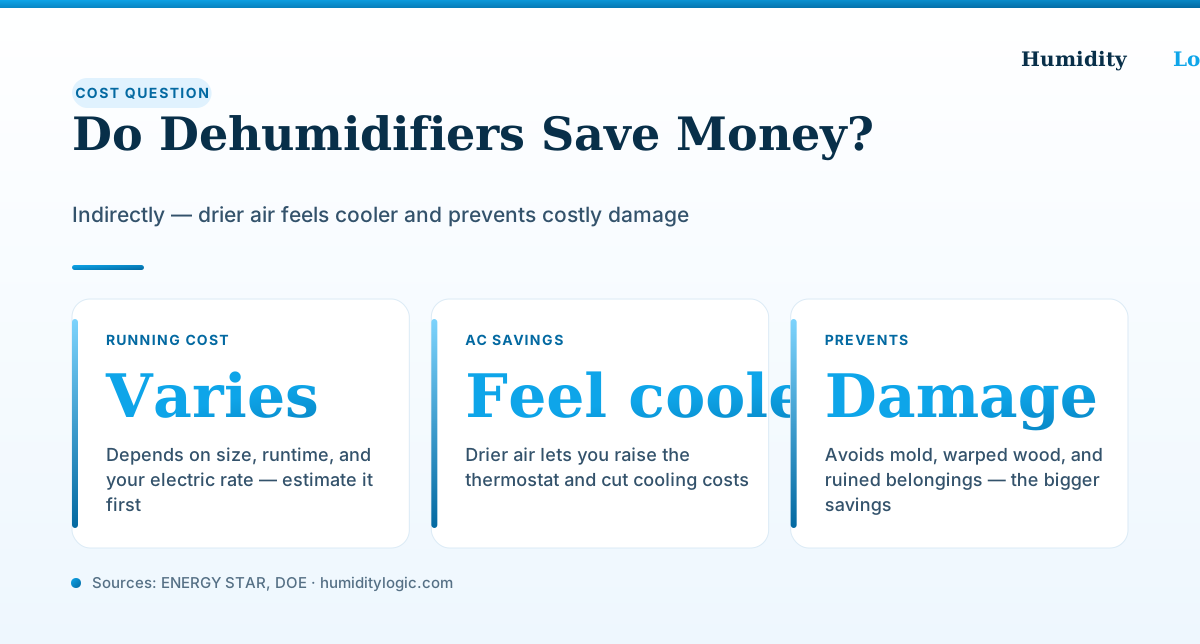
Do dehumidifiers save money? Indirectly — a dehumidifier costs electricity to run, but drier air lets you raise the AC and it prevents costly moisture damage. On its own, it is an appliance that adds to your electric bill, not a device that puts cash back in your pocket. The savings show up in two other places: lower cooling costs, because dry air feels cooler and lets you nudge the thermostat up, and the expensive problems you never have to pay for — mold remediation, warped floors, and ruined belongings. Whether you come out ahead depends on your climate, your electric rate, and how damp your home would be without it.
The rest of this guide breaks down what a dehumidifier actually costs to run, where the indirect savings come from, and how to estimate whether it pays off in your own home.
What does a dehumidifier cost to run?
Start with the honest side of the ledger: running one costs money. A typical 50-pint portable dehumidifier draws about 500 to 600 watts while its compressor is working. Three things decide your monthly bill.
- Size and capacity. A bigger unit removes more moisture but pulls more watts. A small closet dehumidifier might sip 50 to 70 watts; a whole-home model pulls far more.
- Runtime. This is the big one. A dehumidifier with a humidistat cycles off once the room hits your target humidity, so “running all day” usually means the compressor is only active for part of it. A right-sized unit in a normal room might run 8 to 12 hours a day rather than a full 24.
- Your electric rate. The US average residential price is around 18 cents per kilowatt-hour, according to the EIA’s Electric Power Monthly, but rates range from roughly 11 cents to over 30 cents depending on where you live.
Put those together and a right-sized portable unit usually lands somewhere around $15 to $40 a month during humid weather. The scary triple-digit estimates you sometimes see assume the compressor runs flat out, every minute, all month — which almost never happens with a working humidistat. To see how long your unit really needs to run each day, our guide on how long to run a dehumidifier walks through the runtime math, and how a dehumidifier works explains why the compressor cycling is what keeps the cost down.
The takeaway: the running cost is real but modest, and it is entirely under your control. The question is not whether a dehumidifier adds to your bill — it does — but whether what it saves elsewhere is worth more than that dollar or two a day.
How does a dehumidifier save money indirectly?
If it only ever costs electricity, why do people say dehumidifiers save money? Because of what happens to the rest of your home when the air dries out.
Drier air lets you raise the AC
Humidity is a huge part of why a room feels hot and sticky. Your air conditioner spends real energy not just cooling the air but wringing moisture out of it. When a dehumidifier takes over the moisture job, the same temperature simply feels cooler and more comfortable — which means you can often push the thermostat up a degree or two without noticing.
That matters because cooling is where the money is. The Department of Energy estimates you can save roughly 10% a year on heating and cooling by setting your thermostat back 7 to 10 degrees for part of the day, and even a couple of degrees of daytime setback adds up over a long summer. A dehumidifier is what makes that higher setting feel fine instead of stuffy. If your goal is comfort rather than a lower bill, our look at high humidity explains why the sticky feeling kicks in above about 60% relative humidity.
It prevents expensive moisture damage
This is the bigger, quieter saving. Damp air does slow, costly damage: mold behind walls and on stored items, musty carpets, cupping and warping in hardwood floors, peeling paint, and rusting tools. The EPA’s guide to mold and moisture is blunt about it — the agency says to keep indoor humidity below 60 percent, and that by “controlling moisture and eliminating mold growth” you can “prevent damage to your home and furnishings, save money, and avoid potential health problems.”
It is worth being clear about which appliance does this job, too: an air purifier filters particles but does nothing to the moisture, so it cannot prevent this kind of damage — our dehumidifier vs air purifier comparison covers why only the dehumidifier addresses the underlying dampness.
Think about what one of those problems actually costs. Professional mold remediation routinely runs into the hundreds or thousands of dollars. Refinishing a warped hardwood floor, replacing a moldy mattress, or tossing water-damaged boxes in a basement all dwarf the few dollars a day a dehumidifier uses. Spending a modest amount on electricity to avoid a large repair bill is the clearest way a dehumidifier “saves” money — even though it never shows up as a line item.
Does an efficient dehumidifier save more?
If the unit is going to run for hundreds of hours a season, efficiency is worth paying for. ENERGY STAR certified dehumidifiers use about 20% less energy than conventional models to pull the same amount of water out of the air, which the program achieves through better compressors, coils, and fans.
That efficiency is measured as an Integrated Energy Factor — liters of water removed per kilowatt-hour — and ENERGY STAR sets minimum thresholds by size, such as at least 2.01 L/kWh for a mid-size 25-to-50-pint portable under its efficiency criteria. For a unit doing heavy seasonal duty, that 20% cut in running cost usually repays the modest price premium within a few seasons. For a small unit you only switch on occasionally, the payback is slower and matters much less.
How do I estimate the cost for my own home?
Because runtime and rates vary so much, the only honest answer to “will it save me money?” is one you calculate for your own situation. Here is the quick version:
- Find the wattage. Check the label or manual — most portable units list it. If not, assume about 550 watts for a 50-pint model.
- Estimate real runtime. Don’t use 24 hours. A right-sized unit in a typical room runs closer to 8 to 12 hours a day; a very damp basement runs longer.
- Multiply it out. Watts ÷ 1,000 × hours per day × your rate = daily cost. At 550 watts, 10 hours, and 18 cents per kWh, that’s about $1 a day, or roughly $30 a month.
Our electricity cost calculator does this for you — plug in the wattage, hours, and your rate to see the real monthly number instead of guessing. Getting the size right also keeps the cost down, since an oversized unit short-cycles and an undersized one runs constantly; what size dehumidifier you need covers how to match capacity to your space.
So, is it worth it?
A dehumidifier is not a money-maker. It is a piece of insurance that happens to make your home more comfortable. Run the numbers honestly and it costs a dollar or two a day during humid weather. Set against that are two real returns: a cooler-feeling home that lets you ease off the AC, and protection from moisture damage that would cost far more to repair than the appliance ever will to run. In a genuinely damp home — a humid climate, a wet basement, a coastal summer — those returns comfortably outweigh the electricity. In a home that is only occasionally muggy, treat it as comfort and protection rather than a way to lower your bill.
Frequently asked questions
Do dehumidifiers actually save you money?
Not directly — a dehumidifier is an appliance that uses electricity, so on its own it adds to your bill. It saves money indirectly. Drier air feels cooler, so you can raise the AC thermostat and cut cooling costs, and controlling moisture prevents expensive mold remediation, warped floors, and ruined belongings. Whether you come out ahead depends on your climate, your electric rate, and how much moisture damage you would otherwise face.
How much does it cost to run a dehumidifier per month?
A typical 50-pint portable unit draws around 500 to 600 watts while the compressor runs. Because it cycles off once the room hits your target humidity, real-world running cost is usually about $15 to $40 a month at the US average rate near 18 cents per kWh. Bigger units, longer runtime, and higher electric rates push that number up, which is why estimating your own cost is the only reliable answer.
Does a dehumidifier reduce air conditioning costs?
It can. Air conditioners spend real energy wringing moisture out of the air, and drier air feels cooler at the same temperature. When a dehumidifier handles the moisture, you can often raise the thermostat a couple of degrees and stay comfortable. The Department of Energy notes you can save roughly 10% a year on cooling by setting the thermostat higher, so the comfort boost from drier air can translate into lower AC bills.
Is an ENERGY STAR dehumidifier worth the extra cost?
For a unit that runs many hours a day through a humid season, usually yes. ENERGY STAR certified dehumidifiers use about 20% less energy than conventional models to remove the same moisture, so the efficiency premium tends to pay itself back over a few seasons of heavy use. If you only run a small unit occasionally, the payback is slower and matters less.
What is the biggest money-saving benefit of a dehumidifier?
Preventing damage. The EPA says controlling moisture and keeping indoor humidity below 60% helps you prevent damage to your home and furnishings, save money, and avoid health problems. A single episode of mold remediation, warped hardwood, or a ruined mattress and stored belongings can cost hundreds or thousands of dollars — far more than the electricity a dehumidifier uses to keep that from happening.
Sources & references
Every figure on this page is checked against these published sources. Last reviewed August 10, 2026.