Set your dehumidifier’s humidistat to 45–50% RH and let it cycle on and off automatically — don’t run it by hand. A correctly sized unit then runs about 6–12 hours a day: longer in humid summer, far less in dry winter. Running it manually 24/7 once you’ve hit target wastes electricity, costing roughly $24 a month for a 50-pint unit at 8 hours a day.
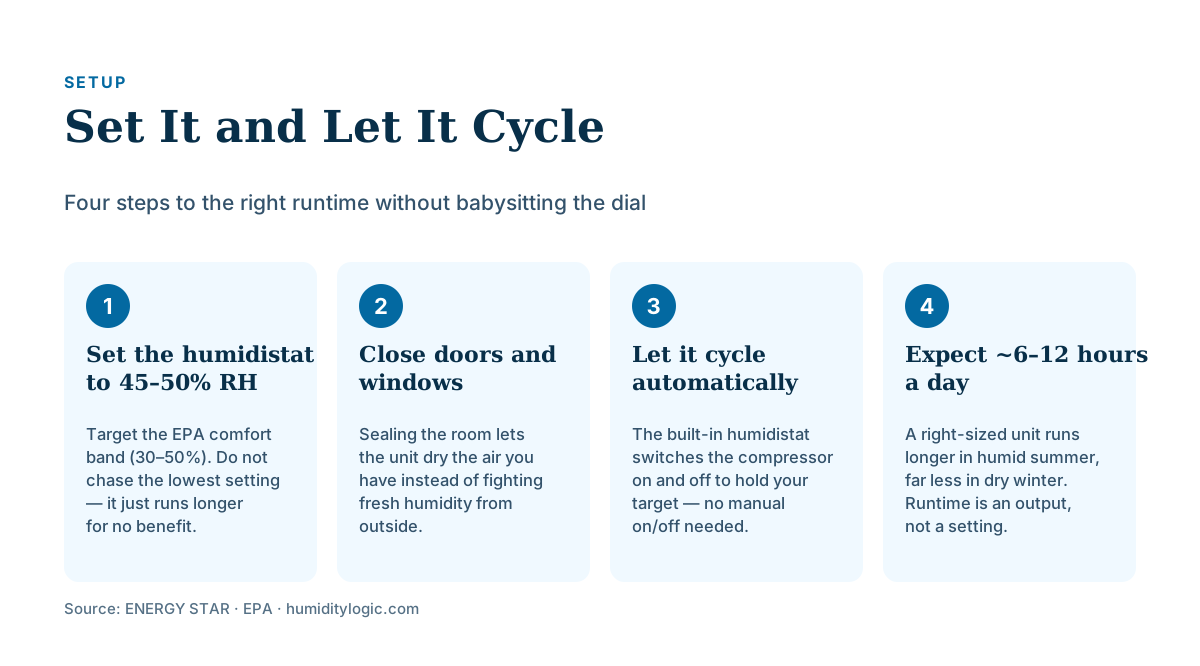
The right way to think about runtime is that you don’t choose the hours — you choose a humidity target and let the machine work out how long it needs. The sections below cover what target to set, why cycling beats manual operation, how the seasons change everything, and what it all costs.
How many hours a day should a dehumidifier run?
A right-sized dehumidifier set to a humidistat target typically runs about 6 to 12 hours a day, but that number is an output, not a setting. The unit runs as long as it takes to pull the room down to your target humidity, then shuts off until moisture creeps back up. In a swampy August basement that might mean most of the day; on a dry winter afternoon it might mean an hour.
Because runtime depends on conditions, comparing your unit’s hours to a neighbor’s tells you little unless the rooms, climate, and target are identical. What matters is that the air stays in the healthy range. The EPA advises keeping indoor humidity below 60 percent, ideally between 30 and 50 percent — if your unit holds that band, it is running the right amount of time by definition, whether that turns out to be 4 hours or 14.
What humidity should I set my dehumidifier to?
Set the humidistat to 45 to 50 percent relative humidity for most homes. That sits comfortably inside the EPA’s ideal 30–50 percent range and inside the band ENERGY STAR describes as the optimum for a building, “generally considered to be between 30% and 50%”. At 45–50 percent you get mold protection and comfort without forcing the compressor to run needlessly.
Resist the urge to dial it down to 30 percent “to be safe.” A lower target does not make the room healthier in normal conditions — it simply extends runtime, raises your power bill, and can leave the air uncomfortably dry. The exception is the initial dry-out of a very damp space, where a lower setting for a day or two helps pull the room down fast. After that, return to 45–50 percent and let it maintain. Our guide to ideal indoor humidity levels breaks down the targets room by room and season by season.
Is it better to let it cycle or run it 24/7?
Let it cycle. Every ENERGY STAR dehumidifier has a built-in humidistat, and once your target is reached the unit “will cycle on and off automatically to maintain the level.” That automatic cycling is almost always cheaper and gentler on the machine than running it continuously by hand, because the compressor rests once the air is dry instead of grinding against a target it has already met.
Manual 24/7 operation only earns its keep in two situations: the first day or two of drying out a flooded or long-neglected space, or a whole-home unit deliberately set to hold a low target across a large area. For a portable unit in a normal room, “on” should mean “set to a target and cycling,” not “compressor running every minute.” If yours never seems to cycle off, it may be undersized for the space — our dehumidifier size calculator checks pint rating against your room’s square footage and dampness. Placement matters too: a unit crammed into a corner runs longer than the same machine in an open, central spot.
Does the season change how long it runs?
Yes — dramatically. Outdoor humidity drives indoor humidity, so the same unit at the same 45–50 percent target runs far longer in summer than in winter. During a humid summer stretch it may cycle for 10 to 12 hours or more; on a dry winter day it might run only an hour or two, or stay off entirely because the air is already below target.
That seasonal swing is normal and is exactly why humidistat control beats a fixed schedule. A timer set to “8 hours every day” would over-dry the house in January and under-dry it in July; a humidistat simply tracks the real conditions. In heating season in cold climates, ENERGY STAR suggests holding 30–40 percent RH to prevent condensation on windows. And if you run a unit in an unheated basement below about 65°F, choose a model with automatic defrost — a basic compressor without it can frost up and stall on the cold coils.
How much does it cost to run a dehumidifier?
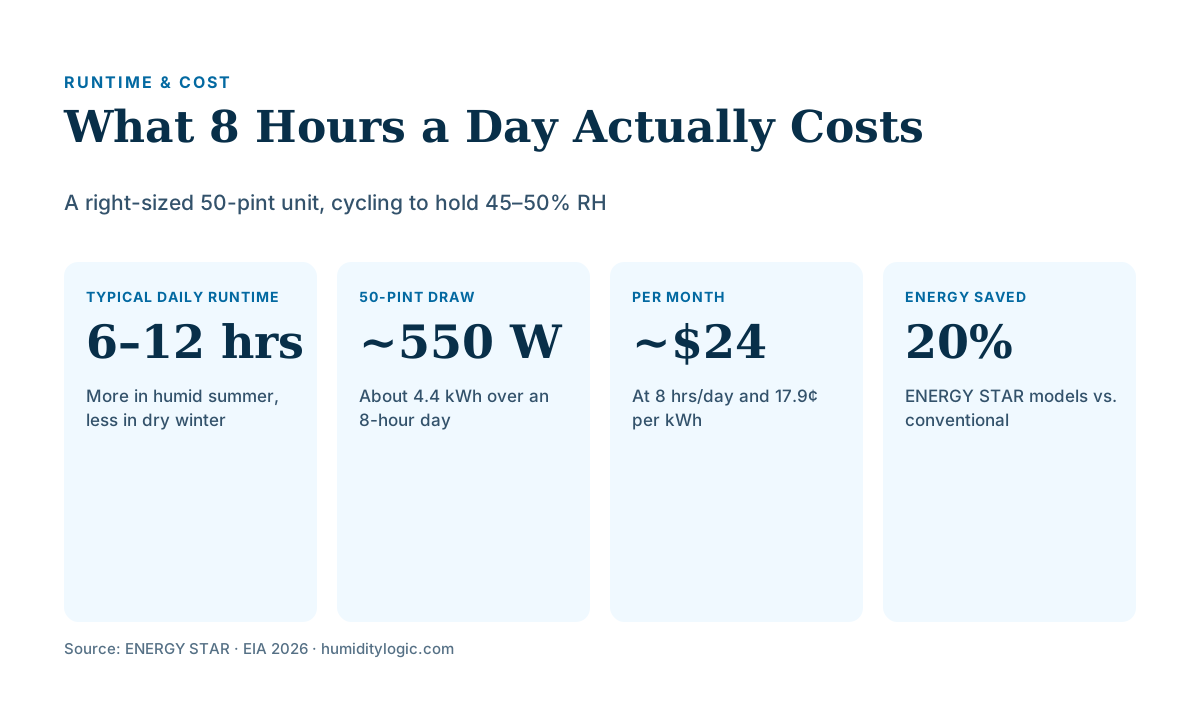
A 50-pint dehumidifier draws roughly 550 watts, so an 8-hour cycling day uses about 4.4 kWh. At the US average residential electricity price — near 17.9 cents per kWh in 2026, per EIA — that works out to about $24 a month. Run the same unit manually 24/7 and the bill climbs well past $70 for little added benefit once you’re already at target.
The table below shows how runtime alone moves the monthly cost for that 50-pint unit.
| Daily runtime | Energy per day | Approx. monthly cost |
|---|---|---|
| 4 hours | 2.2 kWh | ~$12 |
| 8 hours | 4.4 kWh | ~$24 |
| 12 hours | 6.6 kWh | ~$35 |
| 24 hours | 13.2 kWh | ~$71 |
Two levers keep that cost down. First, an ENERGY STAR certified model uses about 20 percent less energy than a conventional unit of similar capacity. Second — and bigger — letting the humidistat cycle instead of running the machine around the clock is what keeps you in the $24 column rather than the $71 one. To price your own unit at your local rate, plug its wattage and hours into the electricity cost calculator.
What if my dehumidifier never shuts off?
If the unit runs constantly and never reaches its target, something is out of balance rather than broken. The most common causes are an undersized unit for the space, an unusually damp room, doors and windows left open, or a target set unrealistically low. Start by closing up the room and raising the target to 45–50 percent, then watch for a day.
If it still never cycles off in normal (non-flood) conditions, the capacity is likely too small — a persistently damp basement or a large open floor plan needs more pints per hour than a compact unit can deliver. Sizing up, or adding a second unit, will let each machine reach target and rest. Constant running with no drop in humidity can also point to a maintenance issue like a clogged filter or iced coils, so check those before assuming the room is simply too wet.
Frequently asked questions
How many hours a day should a dehumidifier run?
A right-sized unit set to a humidistat target usually runs about 6 to 12 hours a day. It runs longer during a humid summer and much less in dry winter weather. The number of hours is a result of the conditions, not something you set directly — you set the target humidity and let the unit cycle to reach it.
Is it OK to run a dehumidifier 24/7?
You rarely need to. If you set a humidistat target of 45 to 50 percent, the unit cycles off once it hits that level and back on when humidity climbs, which uses far less electricity than running it by hand around the clock. Continuous manual operation only makes sense during the first day or two of drying out a very damp space.
What humidity level should I set my dehumidifier to?
Set it to 45 to 50 percent relative humidity for most homes. The EPA recommends keeping indoor humidity below 60 percent and ideally between 30 and 50 percent. Chasing a lower setting like 30 percent just makes the unit run longer and cost more without extra comfort or mold protection in typical conditions.
How much does it cost to run a dehumidifier all day?
A 50-pint unit drawing about 550 watts costs roughly $24 a month if it cycles for about 8 hours a day, at the US average electricity price near 17.9 cents per kWh. Running it manually 24/7 can more than double that with little added benefit once you have reached your target humidity.
Should I run a dehumidifier in winter?
Usually much less, and sometimes not at all. Indoor air is naturally drier in winter, so a humidistat-controlled unit may cycle for only an hour or two a day or stay off entirely. In an unheated basement below about 65°F, use a model with automatic defrost so the coils do not ice over.
Sources & references
Every figure on this page is checked against these published sources. Last reviewed July 23, 2026.