Place a dehumidifier in the center of the dampest room, on the floor, with at least 6 to 12 inches of clearance on every side so air can move freely through its intake and exhaust grilles. Keep it near the moisture source — a sump pit, a seeping wall, or a laundry area — and close the room’s doors and windows while it runs.
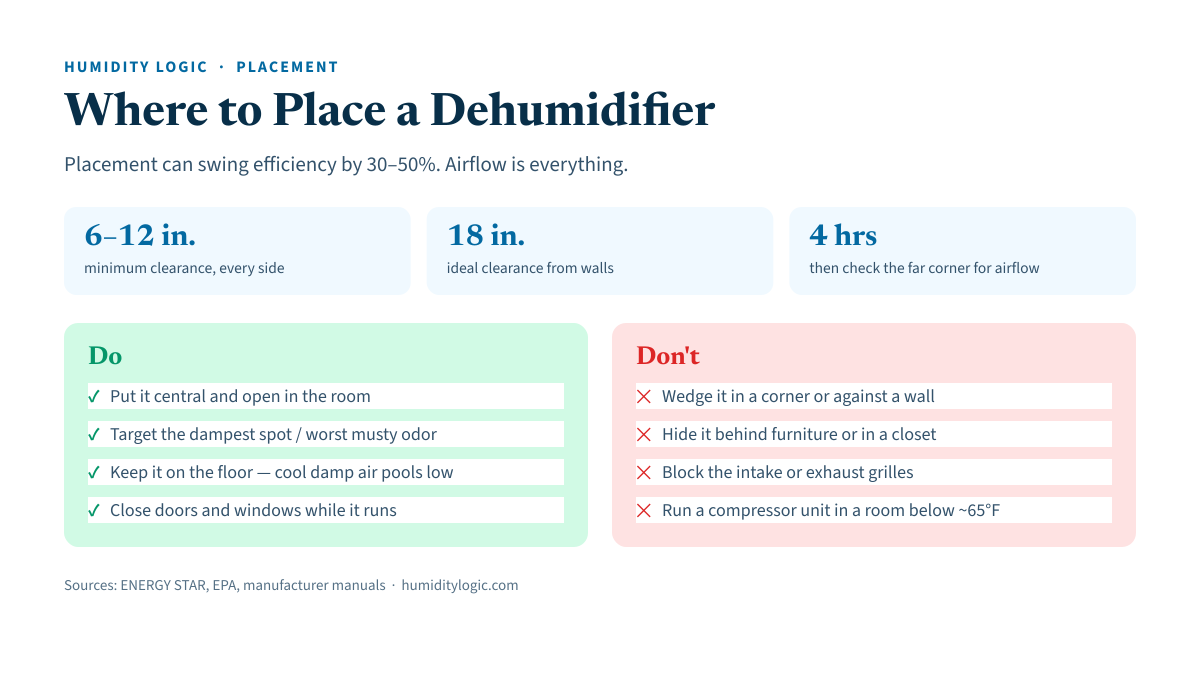
Placement decides how well a correctly sized unit actually performs. A machine crammed into a corner can run all day and still leave the far side of the room damp, while the same machine in an open, central spot dries everything evenly. The rules below come down to two ideas: give the air a clear path, and put the unit where the moisture is.
Where is the best place to put a dehumidifier?
The best place is a central, open area of the room you most want to dry, where nothing blocks the flow of air to and from the unit. A dehumidifier does not dry a room by sitting next to a wet patch — it pulls in the room’s air, condenses moisture out of it, and blows the drier air back out. It dries the whole space by circulating that air, so it needs to sit where its intake and exhaust can reach the entire room.
That is why the middle of the floor beats a wall or a corner. From a central position the unit draws humid air from every direction and pushes treated air back across the room, instead of endlessly recycling the same pocket of already-dry air trapped against a wall. If you have not settled on capacity yet, our dehumidifier size calculator matches pint rating to your room’s square footage and dampness first — the right size in the wrong spot still underperforms.
How much clearance does a dehumidifier need?
Give a portable dehumidifier at least 6 inches of clearance on every side, and 12 to 18 inches is better, with the top vent unobstructed. ENERGY STAR is explicit that the unit should be located “away from walls and furniture, so that air can circulate freely around the unit,” and manufacturer owner’s manuals set similar minimums for the air inlet and outlet grilles.
The reason is simple airflow. Most portable units draw air in through one grille and blow it out through another. If either grille sits flat against a wall, a sofa, or a stack of storage bins, the machine chokes on restricted airflow and starts pulling back the same air it just dried. It runs longer, works harder, and removes less water for the electricity it uses. Never block the intake or exhaust, and never tuck the unit into a closed cabinet or closet expecting it to keep up.
Should it go near the moisture source or in the middle of the room?
Aim for a spot that is both open and as close as practical to where moisture enters the space. When those two goals conflict, favor open airflow — but in most rooms you can have both. In a basement that means a central position near the sump pit or the dampest wall. In a bathroom or laundry it means near the shower or the machines, where humid air is generated, without crowding the grilles against fixtures.
Putting the unit near the source lets it catch humid air before it spreads and condenses on cooler surfaces elsewhere. This is the same physics behind how a dehumidifier works: the faster it intercepts moisture-laden air, the less of that moisture ends up soaking into drywall, wood, or stored items across the room.
Does the floor or a shelf work better?
The floor is the right choice for most rooms, on a level, stable surface. Cool, humid air is denser and settles toward the floor, so a floor-level unit treats the air that most needs treating. A level surface also matters for the compressor and for drainage — a tilted unit can trip its safety float or drain unevenly.
There are two exceptions. If you run a continuous drain hose by gravity, raising the unit slightly onto a low, sturdy platform helps water flow down to a nearby floor drain. If there is no lower drain to reach, choose a model with a built-in pump so it can push condensate up and out instead of relying on gravity. Either way, keep the base intake clear — setting a unit directly on thick carpet can block a bottom-mounted grille.
Where should I place a dehumidifier in a basement?
In a basement, put the unit in a central, open area near the sump pit or the dampest wall, on the floor, with the grilles clear of shelving and boxes. Basements are usually the dampest space in a home because below-grade walls stay cool and moisture wicks through them, so they are where placement pays off most.
Two basement-specific cautions. First, close the basement’s doors and windows while the unit runs; ENERGY STAR notes that open doors and windows let in a steady supply of new humid air the machine then has to chase. Second, watch the temperature. A standard compressor dehumidifier loses capacity as air cools and can frost over below about 65°F, which is common in an unheated basement in the shoulder seasons. If yours ices up, our guide to a dehumidifier freezing up walks through the fix, and a unit with automatic defrost or frost control avoids it. For full setup details, see the basement dehumidifier guide.
Which spots should you avoid?
Avoid enclosed, obstructed, and dusty locations — they undercut even a well-sized unit. The worst offenders are closed closets, spots behind or under furniture, tight corners, and any position where a grille presses against a surface. Each one restricts airflow, so the unit recycles dry air and leaves the rest of the room humid.
Two more to skip. Keep the unit away from sources of sawdust and drywall dust; ENERGY STAR warns that dust and dirt clog the coils and grilles, dropping performance over time. And avoid placing a standard compressor unit in an unheated garage or crawl space that regularly drops below 60 to 65°F — those units struggle in the cold. A garage dehumidifier or crawl space dehumidifier that runs in cool conditions is usually a desiccant model, which keeps working at low temperatures where a compressor stalls.
Room-by-room placement quick reference
| Space | Best placement | Watch out for |
|---|---|---|
| Basement | Central, near sump or dampest wall, on the floor | Below ~65°F frosting; doors and windows open |
| Bathroom | Near the shower, grilles clear of fixtures | Splashing water; blocked base intake |
| Laundry room | Near the machines, central floor spot | Lint clogging the grilles |
| Bedroom | Open floor spot a few feet from the bed | Noise; exhaust aimed at the bed |
| Garage / crawl space | Central, but use a desiccant unit if cold | Compressor stalling below ~60°F |
Whichever room you are treating, the through-line is the same: clear air on every side, on the floor, near the moisture, with the room reasonably sealed. Get placement and dehumidifier sizing right together and the unit will hold the room in the EPA’s recommended range of 30 to 50% relative humidity — below the 60% mark where mold starts to take hold — without running any longer than it has to.
Frequently asked questions
Where is the best place to put a dehumidifier?
Put it in the center of the dampest room, on the floor, with at least 6 to 12 inches of clearance on every side. Central placement lets the unit pull in and return air from the whole room instead of just one corner, so the space dries evenly.
How far from the wall should a dehumidifier be?
Keep at least 6 inches of clearance on every side, and 12 to 18 inches is better. ENERGY STAR advises placing the unit away from walls and furniture so air can circulate freely to the intake and exhaust grilles. Pushing the grilles against a wall makes the machine recycle its own dried air.
Can I put a dehumidifier in a closet or corner?
Only if you leave the door open and keep clearance around the grilles, which usually defeats the point of a closet. A closed closet or a tight corner starves the unit of airflow, so it runs longer and dries the rest of the room poorly. An open, central spot works far better.
Should a dehumidifier be on the floor or raised up?
The floor is correct for most rooms because cool, humid air settles low, and that is the air you want to treat. Raise it slightly only when you are gravity-draining a hose to a nearby floor drain, or use a model with a built-in pump to send water upward.
Where should I place a dehumidifier in a basement?
Choose a central, open area near the sump pit or the dampest wall, on the floor, with the grilles clear of storage. Keep basement doors and windows closed while it runs. If the basement stays below about 65°F, pick a unit with automatic defrost so the coils do not ice over.
Sources & references
Every figure on this page is checked against these published sources. Last reviewed July 21, 2026.