If your dehumidifier is freezing up, the most likely cause is a room temperature below ~65°F — cold air lets the coils dip under freezing, so condensation turns to frost instead of dripping into the bucket. Unplug the unit, let the ice thaw completely, clean the filter, and retest in a warmer spot. The ordered fixes below cover everything else.
Why do dehumidifier coils ice up at all?
A frozen dehumidifier isn’t broken — it’s doing its job in conditions it wasn’t designed for.
A compressor dehumidifier works by pulling room air across a refrigerated evaporator coil. The coil runs close to freezing on purpose: moisture in the air condenses on the cold metal and drips into the tank. As Frigidaire’s support documentation notes, a light film of frost on the coil is normal because the evaporator operates near 32°F even in ideal conditions, and the built-in frost sensor cycles the compressor off to melt it.
Two things break that balance. First, cold room air: if the incoming air is already chilly, it can’t warm the coil enough, the coil surface drops below freezing, and condensation freezes on contact instead of dripping off. Second, weak airflow: even in a warm room, if not enough air moves across the coil — dirty filter, blocked intake, failing fan — the coil overcools and ices the same way.
Ice then makes everything worse. Frost is an insulator and a physical barrier, so once a layer forms it blocks airflow through the coil, extraction stops, and the tank stays empty while the unit hums away. That’s why a freezing dehumidifier and a dehumidifier that’s not collecting water are often the same problem wearing two disguises.
How do I thaw and test a frozen dehumidifier?
Never chip at the ice or point a heat gun at the coils — the fins bend easily, and a punctured coil means a dead unit.
Work through this sequence in order. It resolves the majority of icing cases without a single part.
- Switch off and unplug the unit. Empty the water bucket so meltwater has somewhere to go.
- Let the ice melt completely on its own — several hours, sometimes overnight for a heavily iced coil. Moving the unit to a warmer room speeds this up; direct heat does not, and risks warping plastic and damaging the coil. TCL’s troubleshooting guidance is explicit: the unit stays off until the coils are “clear and wet, not frosty.”
- Clean the filter. Slide it out, wash it with lukewarm water and a drop of dish soap, and let it dry fully before reinstalling. A clogged filter is the single most common airflow restriction.
- Clear the intake and exhaust. Give the unit at least 12 inches of clearance on all sides — pulled away from walls, curtains, and stored boxes.
- Check the room temperature. If it reads below about 65°F, relocate the unit somewhere warmer for the test, because a retest in a cold room proves nothing.
- Plug in and run for 2–3 hours with the humidistat set to a moderate 45–55% RH rather than the driest setting. Then inspect the coil: wet and frost-free means you’ve fixed it; fresh ice means read on.
Is the room too cold for a compressor dehumidifier?
Below 65°F, a compressor dehumidifier isn’t underperforming — it’s out of its element.
Room temperature is the number one cause of icing, and it’s also the one people are most reluctant to accept, because the unit worked fine all summer. Compressor extraction capacity collapses as temperatures fall below ~65°F, and many units cut out entirely near 41°F, where Frigidaire notes frost formation accelerates sharply.
| Room temperature | What happens to a compressor dehumidifier |
|---|---|
| Above 65°F | Normal operation; rated extraction |
| 55–65°F | Capacity drops noticeably; frost risk begins |
| 41–55°F | Frequent icing; auto-defrost cycles dominate runtime |
| Below ~41°F | Many units shut down or ice solid; near-zero extraction |
Auto-defrost (sold as “frost control” or “low-temp operation”) helps at the margins: a coil sensor pauses the compressor while the fan blows room air across the ice to melt it, then restarts. That protects the machine, but in a 50°F room the unit can spend more time defrosting than dehumidifying. If you want to understand the refrigeration cycle behind all this, see how a dehumidifier works.
The honest test: put a thermometer next to the unit for 24 hours. If it dips below 65°F for a chunk of the day, the room — not the machine — is your problem.
Could a dirty filter or blocked intake be freezing the coils?
A starved coil in a warm room ices exactly like a healthy coil in a cold one — which is why airflow is the great impostor of dehumidifier diagnosis.
Airflow restriction is the number two cause, and it perfectly mimics cold-room icing: less air across the evaporator means less heat delivered to the coil, so the coil overcools and frosts even at comfortable room temperatures. If your unit ices up in a space you know stays above 65°F, suspect airflow first.
Check these in order of likelihood:
- Dirty filter. Dust loading builds slowly, so the icing appears gradually over weeks. Monthly washing prevents it.
- Blocked placement. Shoved into a corner, against a wall, or behind furniture, the intake can’t breathe. Twelve inches of clearance, minimum.
- Dusty coils. With the unit unplugged, look at the coil fins behind the filter. A felt-like dust blanket insulates the coil; a soft brush or gentle vacuuming clears it.
- Weak or dead fan. Turn the unit on and hold a hand over the exhaust. Little or no airflow — or a motor that hums without spinning — points to a fan problem, covered below.
When does recurring frost mean I need a desiccant dehumidifier instead?
If the unit ices up every time the weather turns, you don’t have a broken dehumidifier — you have the wrong kind of dehumidifier.
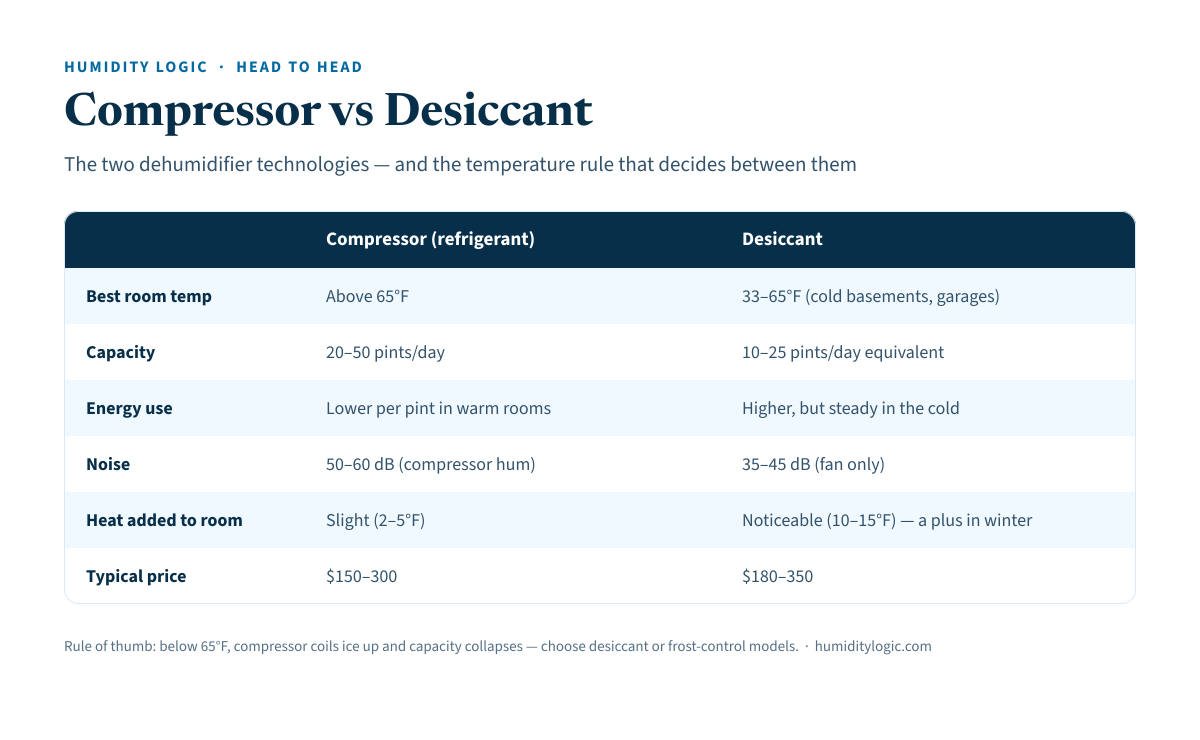
Recurring frost in a garage, crawl space, unheated basement, or workshop is a technology mismatch, not a fault. No amount of thawing and filter-cleaning changes the fact that a compressor unit needs warm air to function.
Desiccant dehumidifiers solve this by removing the cold coil from the equation entirely. Instead of condensing moisture on refrigerated metal, they pass air through a slowly rotating wheel of moisture-absorbing material, then use a heater to regenerate it. With nothing in the machine running below freezing, there is nothing to ice, and extraction holds steady across the 33–65°F range where compressors fail.
The trade-offs are real: desiccants typically draw more power per pint removed in warm conditions, which is why they’re the cold-space specialist rather than the default. The full breakdown is in our compressor vs desiccant comparison, and if the frozen unit lives in your garage, our garage dehumidifier guide covers sizing and placement for unheated spaces.
If the space only sits cold a few weeks a year, a compressor unit with auto-defrost may be an acceptable compromise. If it’s cold from October to April, buy the desiccant.
When is freezing a fan, sensor, or refrigerant failure?
When a clean, well-placed unit ices over in a 70°F room, stop cleaning filters — a component has failed.
Three suspects remain at this point:
Fan motor. The fan must move air across the coils continuously; a motor that hums without turning, spins slowly, or rattles is starving the coil of airflow from the inside. On larger units a fan motor is a replaceable part; on budget portables the part plus labor often approaches replacement cost.
Humidistat or frost sensor. Per Sears PartsDirect’s diagnostic guidance, a humidistat that misreads the room — or whose contacts stick closed — keeps the compressor running past the point the coil should have cycled off. Similarly, a failed defrost sensor never triggers the melt cycle. Symptom: the unit runs continuously and ices even at moderate settings.
Low refrigerant. A slow leak drops the coil pressure, which drops the coil temperature, which frosts the coil — often as an odd partial ice pattern rather than a full white block, accompanied by falling water collection. This one is not a DIY job under any circumstances: diagnosing and recharging a sealed system requires an EPA 608 certified technician, because handling refrigerant without certification is illegal in the US. For most portable dehumidifiers, the service call costs more than the unit, so get a repair quote before committing.
Thaw, clean, warm, retest — in that order. Most frozen dehumidifiers walk away from that sequence working. The ones that don’t are telling you something specific: cold room, dead fan, or a sealed-system fault that ends the repair conversation.
Frequently asked questions
Why does my dehumidifier keep freezing up?
The most common cause is running a compressor dehumidifier in a room below about 65°F, where the cold coils drop under freezing and condensation turns to frost. The second most common cause is restricted airflow from a dirty filter, blocked intake, or failing fan. Thaw the unit fully, clean the filter, and retest before assuming a component has failed.
Can I use a frozen dehumidifier while it defrosts?
No. Unplug it and let the ice melt on its own, which can take several hours. Running it frozen forces the compressor to work against an iced coil, and chipping at the ice or using a heat gun can puncture the coil and release refrigerant.
What temperature is too cold for a dehumidifier?
Compressor models lose extraction capacity below about 65°F, and many shut down entirely near 41°F. If your space regularly sits in that 33–65°F band — a garage, crawl space, or unheated basement — a desiccant dehumidifier is the better technology because it has no cold coil to ice over.
Does auto-defrost fix a dehumidifier that ices up?
Auto-defrost (frost control) pauses the compressor while the fan keeps blowing room air over the coil to melt frost, then resumes. It prevents damage, but in a genuinely cold room the unit spends much of its time defrosting instead of dehumidifying, so water removal stays poor. It manages the symptom rather than curing the cause.
When is a freezing dehumidifier worth repairing versus replacing?
A dirty filter, blocked intake, or cold placement costs nothing to fix. A failed fan motor is often replaceable on larger units. If the coil ices in a warm room with strong airflow, the likely fault is low refrigerant or a failed sensor — refrigerant work requires an EPA 608 certified technician, and on most portable units that repair costs more than a new machine.
Sources & references
Every figure on this page is checked against these published sources. Last reviewed July 21, 2026.