A garage dehumidifier has to solve a problem basement units never face: cold. If your garage regularly sits below 65°F, choose a desiccant dehumidifier or a compressor model with frost control (auto defrost) — a standard compressor unit frosts up and quietly stops extracting. Size a typical 2-car garage at roughly 25–30 pints per day, and target under 55% relative humidity to keep rust off your tools.
Why is a garage harder to dehumidify than any room in the house?
Because a garage is barely a room. It has an uninsulated slab that wicks ground moisture, a giant door that leaks air at every edge, usually no heat, and a regular delivery of wet vehicles — a snow-covered car can drop a gallon or more of water onto the floor as it melts. Then that moisture meets cold surfaces and condenses.
The temperature is the part that catches people out. Dehumidifier capacity ratings are measured in warm, humid lab conditions. A garage in most of the US spends half the year below those conditions, which means the “50-pint” unit you bought may be pulling a fraction of that — or nothing at all — exactly when condensation on your tools is worst.
What does cold actually do to a dehumidifier?
It attacks the physics the machine depends on. A compressor (refrigerant) dehumidifier works by pulling air across a cold coil so moisture condenses out. That works well above 65°F. Below it, two things go wrong:
- Capacity collapses. Cooler air holds less moisture, so there’s less for the coil to grab. Extraction falls off steadily as the temperature drops below about 65°F, even though the unit runs and draws power the whole time.
- The coil ices over. Near and below roughly 41°F, condensate freezes on the coil instead of dripping into the tank. A unit without frost protection will run coated in ice, extracting almost nothing. That’s why manufacturers list 41°F as the floor for even their low-temperature compressor models, and why units frosting up is one of the most common failure complaints — see our guide to why dehumidifiers freeze up.
Frost control (usually labeled auto defrost) pauses the compressor and runs the fan to melt ice off the coils, then resumes. It keeps a compressor unit alive down to around 41°F — working slowly, but working.
Desiccant dehumidifiers sidestep the problem entirely. They absorb moisture into a rotating desiccant wheel and drive it off with a heater, so there’s no cold coil to frost. Most are rated to operate down to about 33°F with little loss of capacity, and as a bonus they add a few degrees of gentle heat to the space — genuinely useful in a winter workshop.
Desiccant or compressor: which should you buy for a garage?
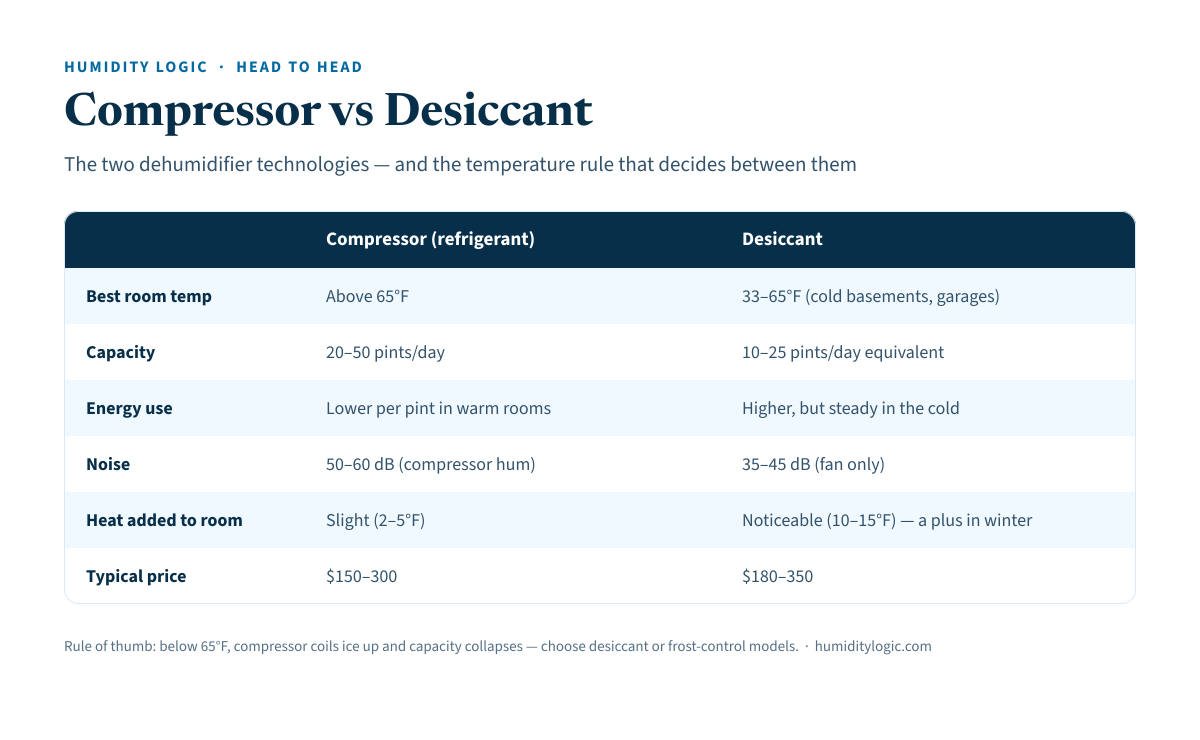
Match the machine to your garage’s coldest working months, not its July average. The honest comparison looks like this:
| Factor | Compressor (with auto defrost) | Desiccant |
|---|---|---|
| Best temperature range | Above 65°F; works to ~41°F | ~33°F to ~80°F, steady across it |
| Capacity in a warm garage | High — best pints-per-day value | Moderate |
| Capacity in a cold garage | Falls sharply below 65°F | Barely changes |
| Energy use | Lower per pint in warm air | Higher (heater-driven) |
| Noise | Compressor hum plus fan | Fan only — usually quieter |
| Added heat | Slight | Noticeable (~10°F boost to output air) |
| Typical price | Lower per pint of rated capacity | Higher |
The decision rule is short:
- Garage stays above 65°F most of the year (attached, insulated, or Gulf/Southern climate): buy a compressor unit — more capacity per dollar and per kilowatt-hour.
- Garage regularly runs 41–65°F (most attached garages in the northern half of the US, spring through fall): a compressor unit with auto defrost works, but expect reduced output. A desiccant will outperform it on the cold end.
- Garage drops below 41°F for weeks at a time (detached, uninsulated, real winters): desiccant is the only type that keeps extracting.
For a deeper teardown of the two technologies, see our full compressor vs desiccant comparison.
What size dehumidifier does a garage need?
Size for the space you actually have, not the space the box assumes. A typical 2-car garage runs about 400–600 sq ft, and by AHAM’s sizing method it should be treated as very damp to wet — an uninsulated slab, outdoor air leakage, and wet vehicles put it in the worst moisture class. That works out to roughly 25–30 pints per day of rated capacity.
Then add headroom. AHAM ratings are measured at 65°F and 60% RH; an uninsulated garage will spend much of the year colder than that, where real-world extraction drops. Practical guidance:
- 1-car garage (~200–300 sq ft): 20–25 pint rating minimum
- 2-car garage (~400–600 sq ft): 25–30 pints by the chart; buy 35–50 to cover cold-weather losses
- 3-car or workshop garage (600+ sq ft): 50 pints, or a commercial-style unit if it doubles as a shop with frequent door traffic
Run your exact dimensions and dampness level through our dehumidifier sizing calculator — ceiling height matters in garages, which often run 9–12 ft.
Oversizing costs little in practice. A larger unit reaches the target RH faster, cycles off sooner, and handles the moisture spike after you park a rain-soaked car. An undersized unit simply runs forever and never gets there.
How dry does a garage need to be to stop rust?
Drier than you’d guess, but not as dry as a museum. Bare steel begins forming an invisible moisture film — and with it, surface rust — once relative humidity climbs past roughly 60%. The EPA’s general indoor guidance is to stay below 60% RH (ideally 30–50%) to prevent mold; for rust protection on tools, cast-iron tops, and unpainted machine surfaces, target under about 55%.
There’s no benefit chasing 40% in a garage. Every open-door event resets your progress, and the last few points of RH cost disproportionate electricity. Under 55% keeps steel stable, under 50% is excellent, and either will also stop mold on drywall and cardboard storage.
A $10–15 hygrometer is the honest referee here. Put one at bench height near your tools, not next to the dehumidifier’s own (optimistic) onboard sensor.
How do you set up a garage dehumidifier so it actually works?
Plumb it, place it, and stop feeding it outdoor air. The details:
- Use the drain hose, always. A garage unit at 55% duty will fill a bucket daily in humid weather. Run the hose to a floor drain, utility sink, or through-wall drip point. Desiccants and small compressor tanks especially need this.
- Place it centrally with airflow clearance — a foot from walls, not tucked behind the shelving. Cold-garage extraction is slow enough without starving the intake.
- Weatherstrip the big door. The bottom seal and side seals on a garage door are the cheapest humidity upgrade you can buy. A dehumidifier can’t win against a half-inch gap along a 16-ft door.
- Let wet cars drip, then dry. If you can, squeegee or let the worst of the meltwater run off before closing up for the night.
- Set the humidistat to 50–55% and leave it. Continuous mode is for drying out a soaked floor, not daily duty. Running costs are modest at a sensible setpoint — estimate yours with the electricity cost calculator, remembering desiccants draw more watts but often run fewer hours in the cold.
One safety note: hardwired solutions — heaters, exhaust fans, dedicated circuits for large units — are electrician territory, not a weekend wiring project. Everything above runs off a standard outlet.
The bottom line
Check your garage’s winter temperature before you check any product page. Above 65°F year-round, a cheap compressor unit is the right buy. Between 41°F and 65°F, insist on auto defrost and accept slower extraction — or step up to a desiccant. Below 41°F, desiccant is the only tool that keeps working. Size a 2-car garage at 25–30 pints per day with headroom, hold the space under 55% RH, and your tools will stay bright through the dampest season.
Frequently asked questions
Can I use a regular basement dehumidifier in my garage?
Only if your garage stays above roughly 65°F most of the year. Below that, a standard compressor unit frosts up and extracts far less than its rating. In a garage that sees real winter, choose a desiccant unit or a compressor model with auto defrost rated to 41°F.
What humidity should I keep my garage at?
The EPA recommends keeping indoor spaces below 60% relative humidity. For a garage with bare-steel tools, cast-iron machine surfaces, or a car you care about, aim lower — under about 55% — because corrosion on unprotected steel accelerates once RH climbs past roughly 60%.
What size dehumidifier do I need for a 2-car garage?
Treat a typical 2-car garage (roughly 400–600 sq ft) as a very damp to wet space: that puts you around 25–30 pints per day under AHAM sizing. Because uninsulated garages leak air and run cold, buy headroom rather than the minimum — a 35–50 pint unit will cycle less and cope better.
Will a dehumidifier work in an unheated garage in winter?
A desiccant dehumidifier will — most are rated to operate down to about 33°F and lose little capacity in the cold. A compressor unit with auto defrost keeps working to around 41°F but extracts slowly there. Below freezing, extraction largely stops mattering anyway, since frozen air holds very little moisture.
Should I run my garage dehumidifier all the time?
Set it to a target (55% RH or below) and let the humidistat decide. Continuous manual running wastes electricity in dry weather and may over-dry nothing in particular. The exception is a drying task — wet car, flooded floor — where a timed continuous run makes sense.
Sources & references
Every figure on this page is checked against these published sources. Last reviewed July 21, 2026.