Condensation on a skylight forms when warm, humid indoor air reaches the coldest glass in the room and drops below its dew point — and skylights are especially prone to it because warm, moisture-laden air rises and pools right where they sit, high on the ceiling. It is the same physics as a sweating window, just overhead. Before you chase it, rule out an actual roof or flashing leak; once you confirm the water is condensing out of your indoor air, the fix is to lower your indoor humidity, keep the air moving so it does not stagnate against the glass, and insulate the skylight shaft so the pane stays warmer.
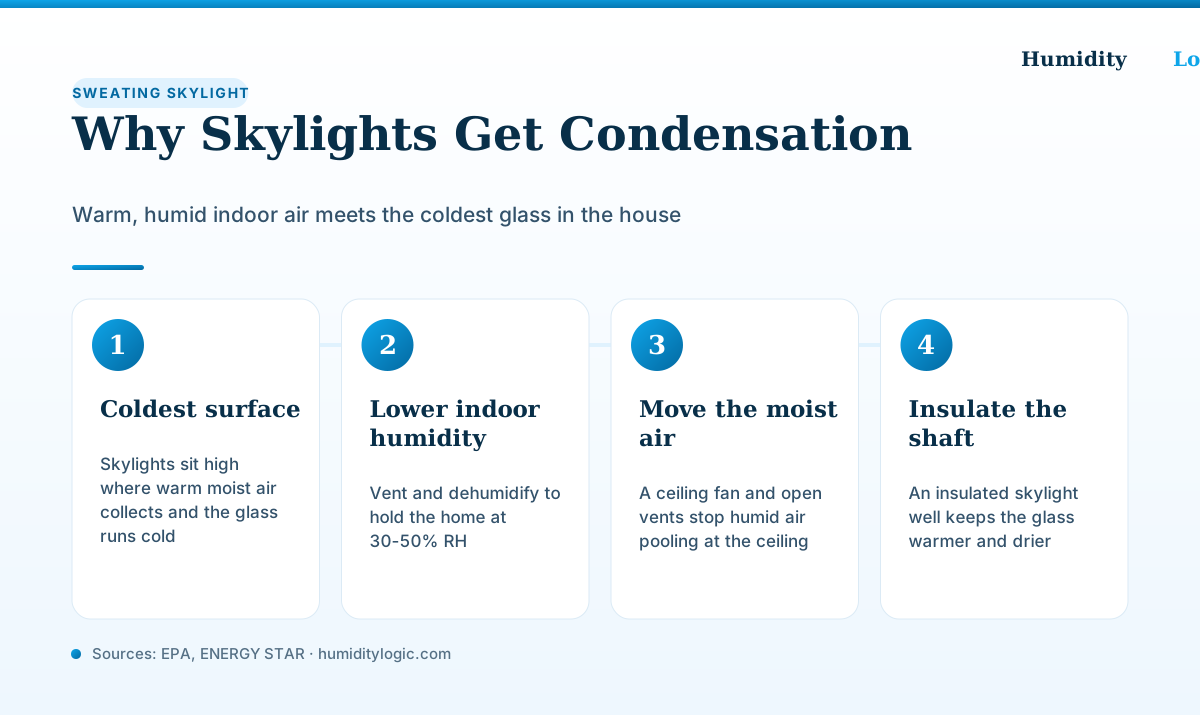
Why Is My Skylight Sweating?
A sweating skylight is condensing water out of your indoor air because the glass is the coldest thing that warm, humid air can reach. Air holds less moisture as it cools, and for every temperature-and-humidity combination there is a dew point — the temperature at which the air becomes saturated and vapor must condense out. The EPA states the mechanism plainly: “When warm, humid air contacts a cold surface, condensation may form.”
Skylights turn that mechanism against you for two reasons. First, warm air rises. As VELUX notes, “when warm, moisture-laden indoor air contacts a cool surface, such as a window pane, the moisture in the air forms condensation on that cooler surface” — and because skylights sit at the highest point in the room, the most humid air in the house collects right against them. Second, the glass runs cold. A skylight is a pane of glass set into the roof, exposed to the outdoor temperature on the other side, so on a cold morning it is often several degrees colder than any wall or standard window. Put the wettest air in the house against the coldest glass in the house and you get the room’s first drips there. If the gap between air temperature and dew point is new to you, our dew point vs. humidity explainer breaks down why dew point is the number that predicts a wet surface.
Modern homes make this worse. VELUX points out that “homes are more airtight and energy-conscious than they’ve ever been before,” so the moisture from cooking, showering, and even breathing has fewer ways to escape and builds up indoors. The condensation is not a defect in the skylight — it is a visible readout of how much moisture your air is carrying.
Is It Condensation or a Roof Leak?
This is the single most important question, because condensation and a leak have completely different fixes. Condensation is a moisture-in-the-air problem; a leak is a hole-in-the-roof problem.
Look at the pattern and the timing. Condensation appears as an even film of tiny droplets across the glass, or beading on the frame and lower edge, and it tracks your indoor humidity — worse after showers and cooking, worse on cold mornings, and gone once the air dries out. A roof or flashing leak behaves differently: it produces a concentrated stain or steady drip around the frame or down the drywall shaft, it grows over time, and it gets worse during or right after rain rather than following your indoor humidity. If a skylight drips in dry weather or only when it rains, and the water seems to come from around the frame rather than off the glass itself, stop treating it as condensation and inspect the flashing — the metal that seals the skylight to the roof — for gaps, cracked sealant, or debris damming water above it. Well-designed skylights account for a little exterior moisture; VELUX skylights, for example, use “an exclusive gasket system that drains condensation that forms on the outside glass,” so interior water pooling on the inside pane is a humidity signal, not a hardware failure. The same interior-versus-intrusion test applies to ordinary windows, which our guide to condensation on the inside of windows walks through in more detail.
How Do I Diagnose the Moisture Source?
Two quick checks tell you whether you have a humidity problem, a cold-glass problem, or both — do them before spending money.
Measure your indoor humidity. Put a hygrometer in the room with the skylight. The EPA notes that meters reading both temperature and humidity are widely available for under $50. Compare the reading against the EPA target: relative humidity “should be kept below 60 percent — ideally between 30 percent and 50 percent.” Readings north of 55 to 60 percent mean the air is carrying more moisture than cold skylight glass can tolerate. You can also drop your indoor temperature and humidity into our condensation risk calculator to see the exact dew point your air is running at and how close the glass is to it.
Map where it is wet. If only the skylight sweats, the glass is simply the coldest surface and you are close to your dew point — moisture control plus better airflow usually solves it. If skylights, windows, and cold walls are all streaming, indoor humidity is too high across the whole house and moisture control comes first. Our broader guide to condensation on windows covers that whole-house picture, and what condensation actually is explains the underlying process if you want the physics.
How Do I Stop Condensation on a Skylight?
You can attack the problem from either side of the dew-point equation: take moisture out of the air, or warm the glass so it stays above the dew point. Most homes need some of both. Start with the cheapest fixes.
Lower your indoor humidity. This is the root fix. Run bath and kitchen exhaust fans during and after showers and cooking, vent the clothes dryer outdoors, and run a dehumidifier to hold the home in the EPA’s 30-to-50-percent band. VELUX frames the same goal from the ventilation side: by letting “moist inside air to escape and dry outdoor air to enter, you can reduce a home’s humidity level.” Our step-by-step guide on how to lower humidity in the house lists the biggest moisture sources and the order to tackle them.
Move the moist air. Humid air that stagnates at the ceiling condenses fastest, so break it up. VELUX recommends running “kitchen and bathroom exhaust fans more often during the winter to expel hot moist air,” keeping “window drapes, blinds and shades open, allowing warm air to circulate around the glass,” and turning on a ceiling fan near the skylight to keep warm room air moving across the glass. If your skylight is a venting model, cracking it open releases the warmest, wettest air straight out through the roof — VELUX skylights “have the ability to open to release warm, moist air.”
Keep the glass warmer. The colder the pane, the more it sweats, so anything that raises the glass temperature helps. VELUX builds its skylights with Low-E insulated glass, which “keeps the interior glass pane warmer, lessening the chance of condensation forming,” and uses insulating wood frames rather than conductive metal — worth knowing if you are replacing an old single-pane unit. For an existing skylight, the biggest win is the shaft, or light well — the drywall tunnel connecting the roof opening to the ceiling. If that shaft is poorly insulated, it stays cold and pulls the glass temperature down with it. Insulating and air-sealing the shaft keeps warm room air from leaking up into it and keeps the whole assembly warmer. ENERGY STAR notes that “sealing air leaks around your home and adding insulation can help your home be more comfortable and energy efficient,” and the skylight shaft is a spot that is easy to overlook.
When Should I Worry?
A little fog on the glass on a cold morning that clears by midday is normal and harmless. Persistent wetness is not. The EPA’s moisture control guidance is blunt about the stakes: keep surfaces dry, because standing moisture feeds mold, which can take hold within 24 to 48 hours. If the skylight frame, the shaft drywall, or the ceiling around it stays damp for days, you risk mold, staining, peeling paint, and eventually rot in the framing. And if the water keeps coming in dry weather or worsens with rain, you are looking at a leak, not condensation — get the flashing inspected before the next storm. Otherwise, the playbook is straightforward: confirm it is condensation, dry the air, keep it moving, and warm the glass.
Frequently asked questions
Why is my skylight sweating on the inside?
Warm, humid indoor air rises and collects near the ceiling, where the skylight glass is usually the coldest surface in the room. When that glass sits below the air's dew point, water vapor condenses into droplets on the inside pane. It is the same physics as a foggy bathroom mirror, just overhead, and it points to indoor humidity that is too high for how cold the glass is running.
How do I tell skylight condensation from a roof leak?
Condensation forms an even film of fine droplets on the glass or frame that comes and goes with indoor humidity, cooking, and showers, and it is worst on cold mornings. A leak makes a localized, growing stain around the frame or drywall shaft that worsens during or right after rain, regardless of indoor humidity. If drips persist in dry weather or track the weather instead of your humidity, inspect the flashing and treat it as water intrusion.
Will a dehumidifier stop condensation on my skylight?
Often, yes. Lowering indoor relative humidity lowers your air's dew point, so the cold skylight glass no longer falls below it. The EPA advises keeping indoor humidity below 60 percent, ideally 30 to 50 percent. Pair a dehumidifier with a hygrometer and watch whether the sweating stops as the reading drops into that range.
Does opening the skylight or blinds help with condensation?
Yes. VELUX advises keeping blinds and shades open so warm room air can circulate across the glass, and opening a venting skylight releases warm, moist air before it can condense. Closed blinds trap a pocket of cold air against the glass, which makes sweating worse. A ceiling fan near the skylight helps by keeping humid air from pooling at the ceiling.
Why does my skylight only sweat in winter?
In winter the outdoor air is cold, so the skylight glass runs far colder than the warm, humid air inside — a wide gap that easily pushes the glass below the dew point. Heating season also seals the house tighter, trapping moisture from cooking, showers, and breathing. Venting that moisture outdoors and lowering indoor humidity closes the gap.
Sources & references
Every figure on this page is checked against these published sources. Last reviewed August 12, 2026.