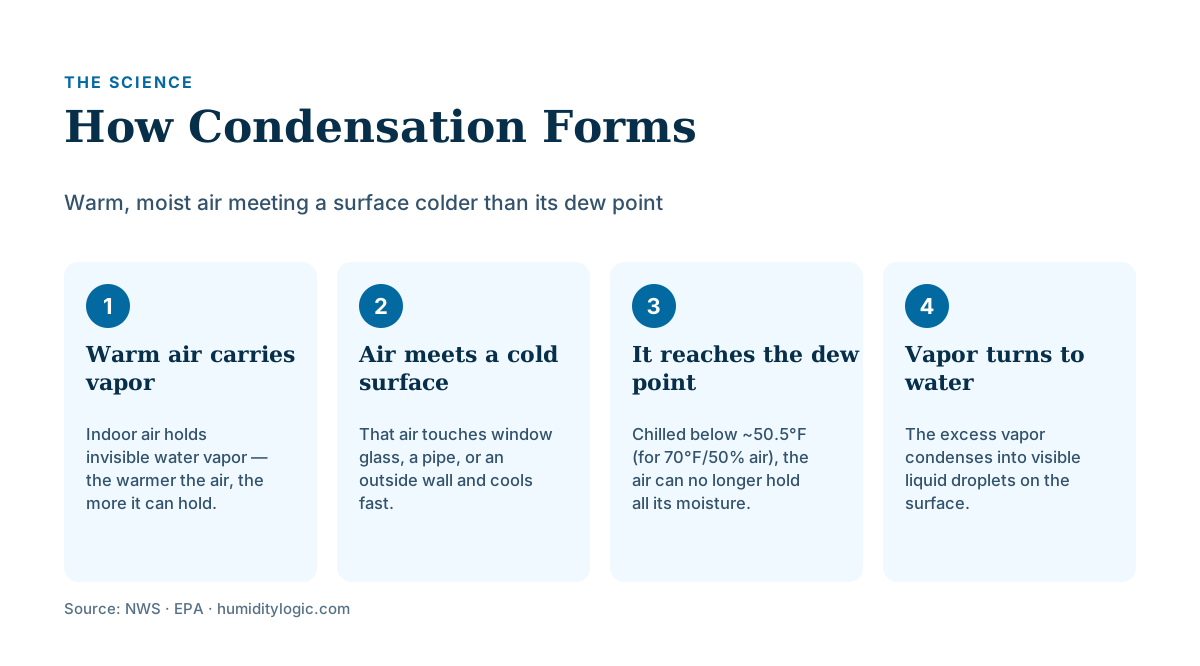
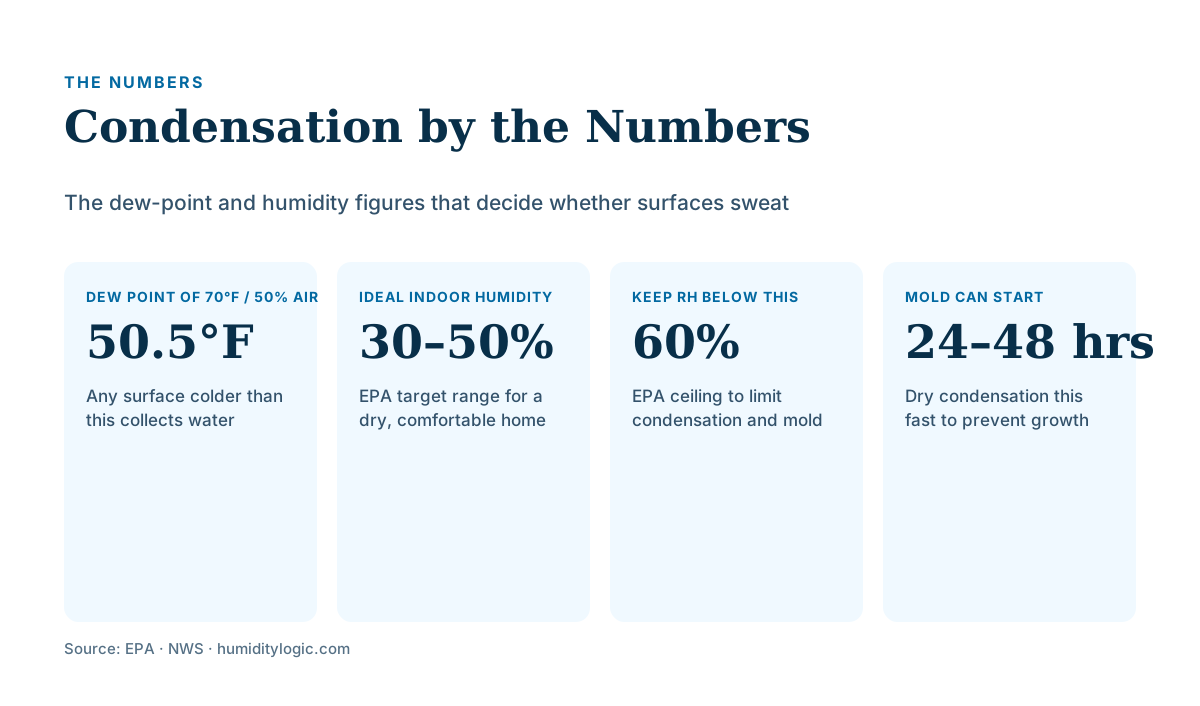
Condensation is the phase change where water vapor cools into liquid on any surface colder than the air’s dew point. Room air at 70°F and 50% relative humidity has a dew point near 50.5°F, so a window, pipe, or wall below that temperature collects droplets. Keeping indoor humidity at 30–50% stops most of it.
How does condensation actually work?
Condensation is a phase change: warm air holds invisible water vapor, and when that air is chilled to its dew point it can no longer hold all the moisture, so the excess turns back into liquid. The colder the air gets past that point, the more water it releases.
Warm air holds far more water vapor than cold air. As a parcel of air cools, its capacity to hold moisture shrinks until it hits 100% relative humidity — the saturation point. The National Weather Service defines the dew point as “the temperature the air needs to be cooled to (at constant pressure) in order to achieve a relative humidity of 100%.” Cool the air one degree below that and the surplus vapor must condense onto whatever surface pulled the heat away.
This is simply evaporation running in reverse. Evaporation absorbs heat to lift liquid water into vapor; condensation releases that heat as vapor collapses back into liquid, which is why a fogged surface feels faintly warm. The trigger is always the same — air meeting a surface below its dew point — whether that fogs a bathroom mirror, beads a cold glass of iced tea in July, or paints frost on a winter window when the surface is below freezing. Crucially, the dew point rises with indoor humidity: air at 70°F and 30% RH condenses only on surfaces below about 37°F, but bump it to 60% RH and the dew point climbs to roughly 55°F, so far more surfaces start to sweat. If the distinction between the percentage and the temperature is still fuzzy, our guide to dew point vs. humidity works through it with examples.
Why does condensation form on windows and cold surfaces?
Condensation forms wherever a surface sits colder than the surrounding air’s dew point. In a heated home during winter, window glass is usually the coldest indoor surface, which is why it fogs first.
Outdoor cold pulls heat straight through a single pane, dropping the interior glass temperature well below the room’s dew point. Double- and triple-pane windows add insulating air or gas between panes, keeping the inner surface warmer and closer to room temperature — often warm enough that the air never reaches saturation against it. The same effect explains sweating cold-water pipes, damp basement walls, and the cool corners of poorly insulated exterior walls: each is a cold spot where indoor moisture finds a surface below its dew point.
Where the water appears on a window tells you what to fix. Condensation on the inside face means indoor humidity is too high for how cold the glass is — the most common and the most fixable case. Condensation on the outside face, typically on a cool morning, is actually a sign of an efficient window: the inner pane is insulating so well that the outer glass stays cold enough to collect dew, and it clears on its own. Fog trapped between the panes is different — it means the sealed unit has failed and the insulating gas has leaked, and the glass unit itself needs replacing. Our dedicated guide to condensation on windows covers glass-specific fixes in more detail.
Where in a home does condensation appear, and why?
Condensation shows up on the coldest surfaces that indoor moisture can reach. That means glass, uninsulated pipes, exterior wall corners, and below-grade concrete are the usual first offenders.
Each spot has the same root cause — a surface below the air’s dew point — but a different practical fix:
| Where it shows up | Why it forms | First fix |
|---|---|---|
| Window glass | Coldest indoor surface, often below the dew point | Lower indoor RH; upgrade to double glazing |
| Exterior wall corners | Poor insulation creates cold spots | Improve insulation; boost air circulation |
| Cold-water pipes | Pipe surface runs far below room dew point | Wrap with foam pipe insulation |
| Toilet tanks | Incoming water chills the porcelain | Insulate the tank or add a mixing valve |
| Basement walls and floors | Below-grade concrete stays cool year-round | Dehumidify, insulate, and check drainage |
The EPA’s guidance is blunt about the stakes: “If you see condensation or moisture collecting on windows, walls or pipes act quickly to dry the wet surface and reduce the moisture/water source.” Standing moisture is the fuel for the mold and rot that follow. If your whole house feels damp rather than one cold spot, the real problem is the moisture source feeding every cold surface at once.
How do you prevent condensation in your home?
Prevention comes down to two levers: lower the moisture in the air and warm up the cold surfaces. Keeping indoor relative humidity between 30% and 50% removes most condensation risk on typical interior surfaces.
Start with ventilation, because everyday activities dump moisture into the air. The Department of Energy recommends venting bathrooms with at least a 50 CFM exhaust fan and kitchens with a range hood of at least 100 CFM, and making sure both actually exhaust to the outdoors rather than into an attic. Run them during and after showering or cooking. From there:
- Control humidity directly. A dehumidifier physically condenses water out of the air, lowering the dew point so surfaces stay dry. This is the fastest fix in damp basements and bedrooms — see how to lower humidity in your house for the full playbook of moisture-cutting tactics.
- Warm the cold surfaces. The EPA advises covering cold surfaces “such as cold water pipes, with insulation.” Foam pipe sleeves, wall insulation, and better windows all raise surface temperature above the dew point.
- Keep air moving. Stagnant air lets corners and closets stay cold and damp. Ceiling fans, cracked closet doors, and pulling furniture off exterior walls all help.
To find your own threshold, plug your indoor temperature and humidity into the condensation-risk calculator — it tells you exactly how cold a surface can get before it starts to sweat.
When is condensation a mold problem?
Persistent condensation is a mold warning. The EPA advises keeping indoor humidity below 60% — ideally 30–50% — and drying wet surfaces within 24–48 hours, because mold can take hold on damp materials that quickly.
Once mold appears, size decides the response. The EPA says that if “the moldy area is less than about 10 square feet (less than roughly a 3 ft. by 3 ft. patch), in most cases, you can handle the job yourself.” Larger patches, or growth that follows major water damage, call for a professional experienced in mold cleanup — do not treat wide remediation as a DIY weekend project. Either way, the durable fix is drying out the air and the surface, not just wiping the spots. If moisture keeps returning, our guide to using a dehumidifier for mold explains how humidity control breaks the cycle at its source.
Frequently asked questions
What is condensation in simple words?
Condensation is water vapor changing back into liquid water when air is cooled below its dew point. The air can no longer hold all of its moisture, so the excess collects as droplets on the nearest cold surface — a window, a pipe, or a wall.
At what temperature does condensation form?
There is no single temperature; it depends on the dew point of the air. Room air at 70°F and 50% relative humidity has a dew point near 50.5°F, so any surface colder than about 50.5°F will collect condensation. Drier air has a lower dew point and needs a colder surface.
Is condensation on windows bad?
Occasional light fogging on cold mornings is normal, but persistent condensation is a warning that indoor humidity is too high. Water pooling on the frame or sill can rot wood, peel paint, and feed mold, so treat steady window sweating as a signal to lower humidity.
How do I stop condensation on my walls?
Lower indoor humidity toward the 30–50% range, improve air circulation so cold corners stay warmer, and add insulation to cold exterior walls. Wall condensation usually points to a combination of high indoor moisture and poorly insulated surfaces.
Does a dehumidifier stop condensation?
Yes. A dehumidifier removes water vapor from the air, which lowers the dew point, so surfaces have to get much colder before they sweat. In a damp basement or bedroom, holding relative humidity under 50% is often enough to eliminate condensation entirely.
Sources & references
Every figure on this page is checked against these published sources. Last reviewed July 21, 2026.