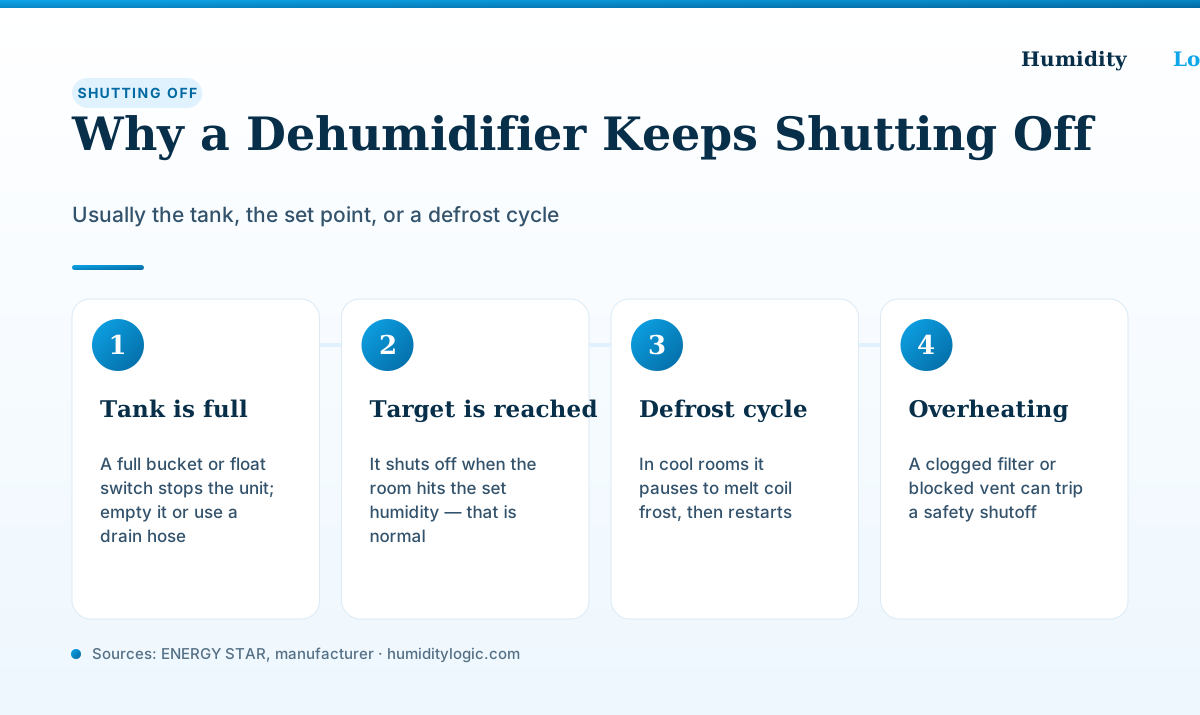
A dehumidifier that keeps shutting off is, in most homes, doing exactly what it was built to do. The three everyday explanations are a full tank, a satisfied humidistat, and a defrost cycle — all completely normal. A full bucket trips a float switch that pauses the unit until you empty it; once the room reaches the humidity you set, the compressor idles off and cycles back on later; and in a cool room the compressor pauses so frost can melt off the coil before it restarts. Genuine problems — overheating from a clogged filter, or a failed part like a capacitor or compressor overload — are real but far less common. This guide walks the causes in order of likelihood so you can tell a normal cycle from a fault. Always unplug the unit before inspecting anything inside it.
Is the water tank full?
Start with the simplest cause. Nearly every portable dehumidifier has a float switch in the bucket that stops the unit the moment the tank fills, so the water can’t overflow onto your floor. ENERGY STAR describes this as an automatic shutoff when the bucket is full, “so you won’t have to worry about the bucket overflowing.” Empty the tank, seat it firmly until it clicks into place, and the unit should resume.
Two things fool people here. First, a bucket that isn’t pushed all the way in can read as full even when it’s empty, because the float never resets. Second, the float itself can stick — mineral scale or debris can hold it in the “full” position so the unit shuts off with a nearly empty tank. Slide the bucket out, check that the float moves freely up and down, and rinse it clean.
If you’re tired of emptying the bucket, most units accept a continuous drain hose. Frigidaire’s drainage guidance explains that removing the drain cap and attaching a hose routes the water to a floor drain or sump by gravity, so the tank never fills and the float never trips. The catch: the hose has to run downhill with no kinks or sags, or water backs up and re-triggers the full-tank shutoff. Our drain hose setup guide covers the details.
Has the room reached your target humidity?
If the tank is fine, the next question is whether the unit simply finished its job. A compressor dehumidifier is not meant to run forever — it’s meant to hold a set humidity. As ENERGY STAR puts it, once you set your desired level, “the dehumidifier will cycle on and off automatically to maintain the level.”
That cycling is the behavior people most often mistake for a malfunction. The unit runs until the room drops a few percent below your set point, shuts the compressor off, waits as humidity slowly creeps back up, then kicks on again. In a room that’s already fairly dry — or on a mild, low-humidity day — those “off” stretches can be long enough to look like the machine quit. It hasn’t; it’s idling because there’s little moisture left to remove.
A quick test settles it: put a cheap hygrometer next to the unit. If the reading is at or below your set point when the compressor is off, the shutoff is normal. Watch it over a few hours — a healthy unit will visibly restart once the number climbs back above your target, proving it’s cycling rather than quitting. Want it to run more? Lower the target or switch to continuous mode. Just don’t chase an unnecessarily dry room — 30 to 50 percent relative humidity is the healthy range for most homes, and setting 35 percent in a humid climate only makes the unit work harder than it needs to. If the dial and its cycling still confuse you, our humidistat explainer breaks down how the control actually decides when to stop.
Is it running a defrost cycle?
If the unit shuts off — or seems to pause with the fan still spinning — in a cool basement, garage, or crawl space, you’re almost certainly watching an automatic defrost cycle, not a breakdown.
A compressor dehumidifier chills a coil to wring moisture out of the air. In a warm room that’s fine, but as the room cools toward the 40s, the coil can drop below freezing and frost over. To prevent that, units include a coil sensor and an auto-defrost routine. GE Appliances explains that below about 41 degrees Fahrenheit, “when frost builds up on the coils, the compressor will cycle off and the fan will run continuously until the frost disappears,” and “once the coils are defrosted, the compressor will automatically restart.” Frigidaire describes the same system — a sensor that shuts the compressor off to warm the coil — and lists a low operating limit around 41 degrees.
So in a cold room, expect the compressor to stop and start repeatedly while the fan keeps going. That’s protection, not failure. The real fix is temperature: a standard compressor unit just isn’t designed for near-freezing spaces, and a desiccant dehumidifier works far better in the cold. If frost is building faster than the unit can clear it, or the coil stays iced over, that’s a separate issue — see our guide on a dehumidifier freezing up.
Could it be overheating?
Once tank, humidistat, and defrost are ruled out, the next suspect is heat. Dehumidifiers have a thermal safety cutout that kills power if the unit runs too hot, and the usual trigger is restricted airflow.
The two big culprits are a clogged filter and blocked vents. Both GE and Frigidaire specifically recommend keeping the filter clean and giving the cabinet clearance to prevent frost and airflow problems. When the intake or exhaust is choked — by a dirty filter, a wall pushed up against the back, or clutter around the unit — the motor and compressor overheat, the safety cutout opens, and the unit shuts down until it cools. It may run for a while, quit, then restart once cooled, which looks a lot like a random shutoff.
Unplug the unit, wash or replace the filter, and pull the cabinet several inches away from walls and furniture so air moves freely. If a shutdown also killed the fan and it won’t spin back up, our fan not working guide helps you sort an overheating pause from a dead fan motor.
When it’s a real fault
If none of the above explains it — the tank is empty and seated, the room is still humid, it’s warm enough that defrost shouldn’t trigger, and the filter and vents are clean — then you’re likely looking at an actual failure. The common ones are a stuck or defective float switch that reports “full” no matter what, a failing start capacitor that lets the unit power up but drop out under load, and a compressor overload protector cutting power when the compressor runs hot. A unit that won’t power up at all is a different symptom — start with dehumidifier not turning on.
One last check worth making: size. A unit that’s badly undersized for a large or very wet space runs hard, heats up, and is more prone to overheating shutdowns, while a right-sized unit cycles calmly. Run your room through the dehumidifier sizing calculator, and our what size dehumidifier you need guide walks through matching capacity to the space. Most “keeps shutting off” complaints, though, end at the first three causes — the tank, the set point, or a defrost cycle — and never reach a repair at all.
Frequently asked questions
Why does my dehumidifier keep shutting off by itself?
In most cases nothing is wrong. The three everyday causes are a full water tank, a room that has reached the humidity you set, and an automatic defrost cycle in a cool room. A full bucket trips a float switch that pauses the unit until you empty it; a satisfied humidistat cycles the compressor off once the target relative humidity is reached; and in cooler rooms the compressor pauses so frost on the coil can melt. Overheating from a clogged filter or a blocked vent, and part failures like a bad capacitor or compressor overload, are real but much less common.
Is it normal for a dehumidifier to turn off when the room reaches the set humidity?
Yes, that is exactly what it is designed to do. ENERGY STAR notes that every ENERGY STAR dehumidifier has a built-in humidistat, and once you set your desired humidity level the unit cycles on and off automatically to maintain it. It shuts the compressor off a few percent below your target and starts again once humidity drifts back up. If you want it to run longer, lower the set point or switch to continuous mode, though 30 to 50 percent relative humidity is the healthy range for most homes.
Why does my dehumidifier shut off in a cold basement or garage?
That is almost always the automatic defrost cycle. GE Appliances explains that if the room temperature drops below about 41 degrees Fahrenheit, frost can form on the coils, so the compressor cycles off and the fan keeps running until the frost disappears, then the compressor restarts on its own. Frigidaire describes the same coil sensor and lists a low operating limit of roughly 41 degrees. A standard compressor dehumidifier simply is not built for near-freezing rooms; a desiccant model handles the cold better.
Can a dirty filter make a dehumidifier keep shutting off?
It can. A clogged filter or a blocked intake or exhaust vent starves the coil of airflow, which makes the unit run hot and can trip a thermal safety cutout that shuts it down until it cools. The same restricted airflow also encourages the coil to frost over in cool rooms, adding more defrost pauses. Unplug the unit, wash or replace the filter, and give the cabinet several inches of clearance on all sides so air can move freely.
When is a dehumidifier shutting off actually a fault?
Treat it as a fault when the everyday causes are ruled out: the tank is empty and properly seated, the room is still humid so the humidistat is not satisfied, the room is warm enough that defrost should not trigger, and the filter and vents are clean. If it still shuts off quickly or will not restart, suspect a stuck or defective float switch, a failing capacitor, or a compressor overload protector cutting power on heat. Those repairs usually call for a technician or a warranty claim.
Sources & references
Every figure on this page is checked against these published sources. Last reviewed August 12, 2026.