Choose a dehumidifier by matching capacity to the room, type to the temperature, and features to your needs — and, where you can, picking an ENERGY STAR model. Those four decisions, in that order, take you from a wall of similar-looking white boxes to the one unit that will actually keep your space dry without wasting electricity or your time emptying a tank.
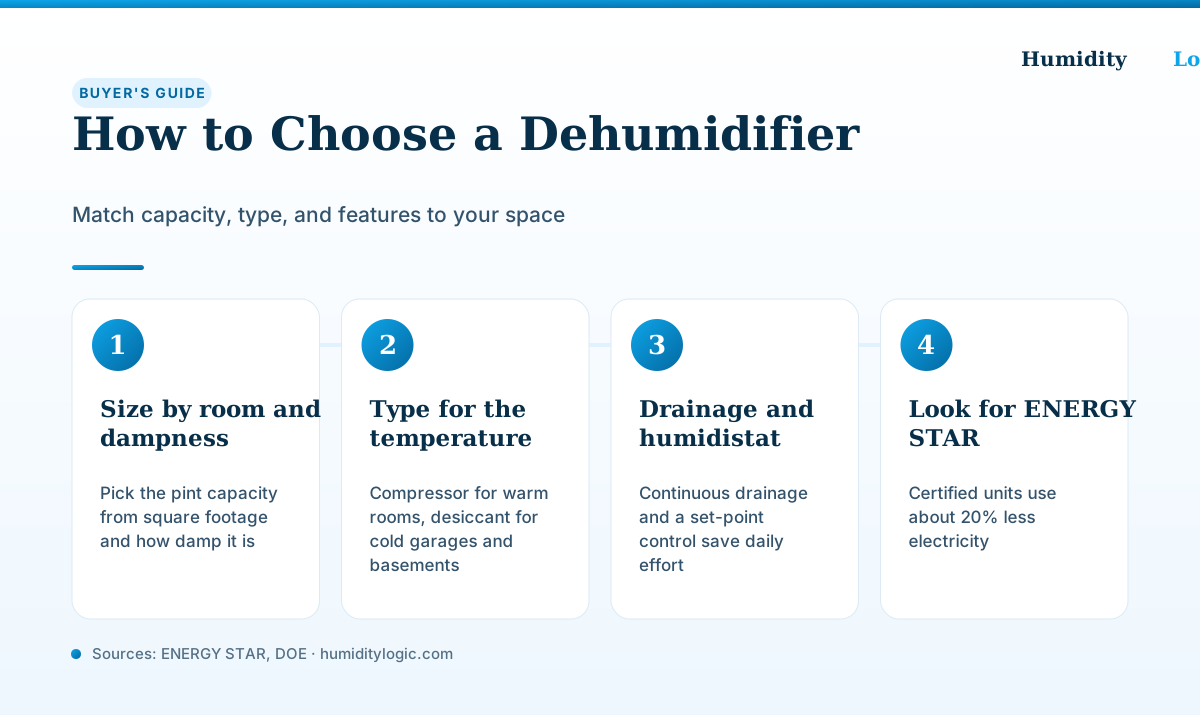
Most buying mistakes come from stopping after the first decision. People size a unit correctly, then put a warm-room machine in a cold garage, or skip the drainage option and end up hauling a bucket twice a day. This guide walks through all four so the unit you buy fits the space you actually have.
What size dehumidifier do I need?
Capacity is the first and most important choice, and it is measured in pints of water removed per 24 hours. That number comes from a standardized lab test overseen by the Association of Home Appliance Manufacturers (AHAM) — it is not the tank size and not a room rating.
Two things set the capacity you need: the square footage of the space and how damp it already is. A small, mildly damp room is usually fine with a 20 to 30 pint unit. A medium room lands around 35 to 50 pints. A large or very damp basement often needs 50 pints or more. ENERGY STAR publishes a chart along these lines and adds a useful rule: when you are between two sizes, “it’s better to oversize than undersize.” A slightly larger unit reaches your target humidity faster and then spends more time cycled off, which is easier on the machine and often quieter overall.
One trap to watch for: the federal test procedure changed in 2019 to a cooler, more realistic condition, which dropped every unit’s label number by roughly 30 percent. A machine once sold as “70 pints” is rated around 50 pints today, even though nothing inside changed. Older buying guides still quote the pre-2019 figures, so translate before you shop. Our full dehumidifier size guide walks through the chart and the adjustments for below-grade walls, ceiling height, and laundry.
Compressor or desiccant — which type fits my space?
Once you know the capacity, temperature decides the type. The two technologies pull moisture from the air in completely different ways, and each has a comfort zone.
A compressor dehumidifier — sometimes called a refrigerant unit — passes warm, damp air over a cold coil so moisture condenses and drips into the tank. This is the efficient default for occupied rooms, laundry areas, and basements that stay reasonably warm. But the method depends on making a surface colder than the room, so as the air cools the coil starts to frost. Below about 65°F a compressor unit runs periodic defrost cycles during which it removes no moisture, and by the time a space sits at 50°F its effective extraction can fall well below the rated capacity.
A desiccant dehumidifier sidesteps that problem. It passes air over a moisture-absorbing wheel instead of a cold coil, so there is no surface to freeze and no defrost penalty. That makes it the reliable choice for a cold, unheated space — a garage, crawl space, workshop, or a basement that regularly drops into the 40s and 50s. The trade-off is electricity: a desiccant unit typically uses noticeably more energy per pint of water in warm conditions than a compressor unit does.
The short version: warm space, compressor; cold space, desiccant. If your room hovers right around the boundary, a compressor model with an automatic defrost feature is often enough. Our compressor vs. desiccant comparison breaks down the temperature ranges and running costs in more detail, and if you want to understand the mechanics first, see how a dehumidifier works.
Which features actually matter?
Feature lists on dehumidifier boxes are long, and only a handful change day-to-day life with the machine. Here are the ones worth paying for, roughly in order of impact.
Built-in humidistat. This is the control that lets you set a target relative humidity and have the unit switch itself on and off to hold it, instead of running non-stop. It is the single feature that most affects both comfort and your power bill. Conveniently, ENERGY STAR notes that all certified dehumidifiers include one, so choosing ENERGY STAR settles this feature for you.
Continuous drainage. Every dehumidifier fills a tank, and in a damp space that tank can fill more than once a day. A continuous-drainage port lets you connect a hose so condensate flows straight to a floor drain and you never empty a bucket. Where the drain sits below the unit, plain gravity is all you need. Where you have to move water upward — into a sink or out a window — look for a model with a built-in pump, which pushes condensate uphill. If you do not need to lift the water, skip the pump; it is one more component that can fail.
Auto-restart. After a power blip, a unit with auto-restart returns to your last settings on its own. This matters most for a basement or crawl space you rarely visit, where a unit that stayed off after an outage could let humidity climb for days before you noticed.
Auto-defrost (frost control). If you are buying a compressor unit for a cool space, confirm it has automatic defrost. Without it, the coil can ice over and the machine effectively stops dehumidifying until it thaws.
Tank size. A larger tank means fewer trips to empty it — but only matters if you are relying on the tank at all. If you plan to run continuous drainage, tank capacity is nearly irrelevant, so do not pay a premium for it.
A few extras — Wi-Fi apps, laundry modes, air filters — are pleasant but rarely decide whether a unit does its core job. Weigh them last, and only after capacity, type, and the essentials above are settled. If a feature does not save you effort or money in your particular space, it is not worth paying for.
Why choose ENERGY STAR?
Efficiency is the last filter, and for a dehumidifier it carries real weight because these machines can run for months at a stretch. According to ENERGY STAR, a certified unit “uses more efficient refrigeration coils, compressors, and fans to remove the same amount of moisture as a similarly sized conventional unit but uses 20% less energy.” The U.S. Department of Energy, which sets the underlying efficiency standards, cites a comparable savings figure for qualified units.
Twenty percent may sound modest, but on an appliance that could run much of the humid season, it compounds. Over the life of the machine, the reduced electricity use typically more than offsets the small upfront premium a certified model commands — which is why efficiency belongs in the buying decision, not as an afterthought.
Putting it together
Work the four decisions in order and the right unit falls out on its own:
- Capacity — set the pint rating from your room size and dampness, and round up when in doubt.
- Type — compressor for warm rooms, desiccant for cold garages and basements.
- Features — a humidistat and the drainage method that fits your space (gravity hose, or a pump only if you must lift water), plus auto-restart and auto-defrost where they apply.
- Efficiency — favor ENERGY STAR to trim the running cost of a machine that works long hours.
Nail the capacity and the type and you have a unit that can keep up with your space; add the right features and efficiency and you have one that does it quietly, cheaply, and without daily attention. When you are ready to pin down the exact pint figure, run your numbers through the dehumidifier size calculator and start your shortlist from there.
Frequently asked questions
How do I choose the right dehumidifier?
Start with capacity: match the pint-per-day rating to your room size and how damp it is. Then pick the type by temperature — a compressor unit for warm rooms, a desiccant unit for a cold garage or basement. Finally, choose the features you will actually use, such as continuous drainage and a built-in humidistat, and favor an ENERGY STAR model to cut running costs.
What size dehumidifier do I need?
Size is measured in pints of water removed per 24 hours under the AHAM test. A small, mildly damp room needs roughly a 20 to 30 pint unit; a large or very damp basement needs 50 pints or more. When you are between two sizes, ENERGY STAR advises that it is better to oversize than undersize, because a larger unit reaches your target humidity faster and then cycles off.
Should I get a compressor or desiccant dehumidifier?
Compressor (refrigerant) units are the efficient default for living spaces and basements that stay above about 65°F. Desiccant units keep working in cold rooms where a compressor would ice over and lose capacity, so they suit an unheated garage, crawl space, or workshop — at the cost of using more electricity per pint removed.
Do I need a dehumidifier with a pump?
A pump is worth it only when you want to drain uphill — into a sink, a window, or across a room to a floor drain. If your unit sits above or level with a drain, plain gravity continuous drainage through a hose does the same job with nothing extra to fail. Without either, you empty the tank by hand, often more than once a day in a damp space.
Is an ENERGY STAR dehumidifier worth it?
For a unit that may run for months at a time, yes. ENERGY STAR certified dehumidifiers use about 20% less energy than a conventional model of the same capacity, and every certified unit includes a built-in humidistat so it runs only until the room hits your set humidity. Those savings usually outweigh the small price premium over the life of the machine.
Sources & references
Every figure on this page is checked against these published sources. Last reviewed August 9, 2026.