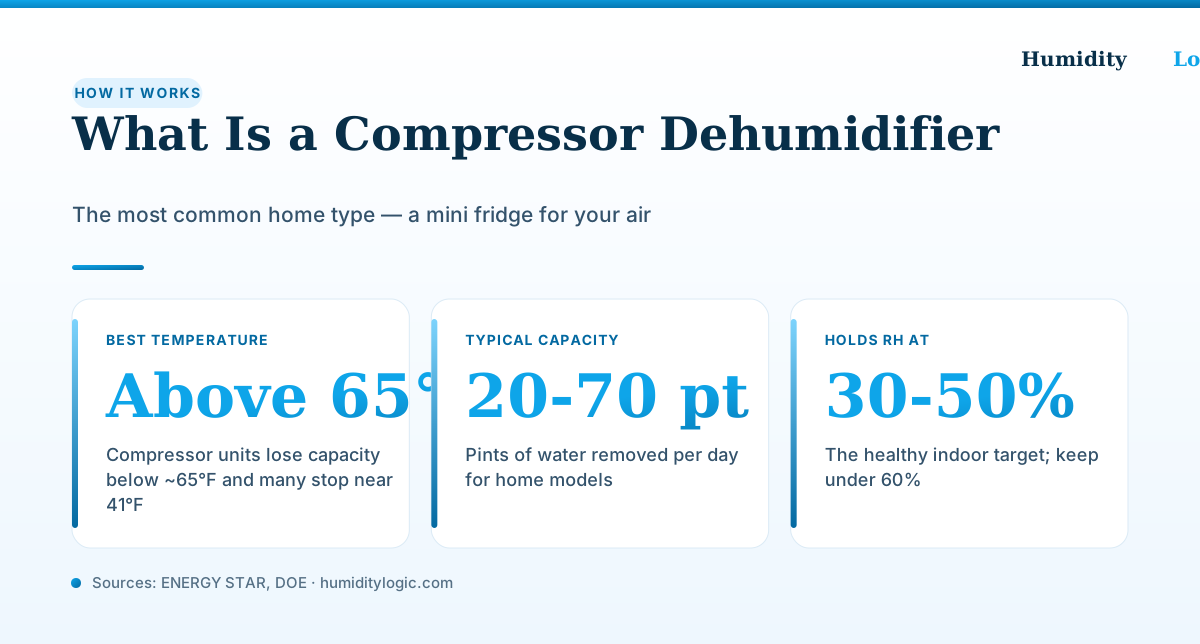
A compressor dehumidifier pulls water out of your air by chilling a cold coil so moisture condenses on it — the same trick a refrigerator uses — and it is by far the most common home type. It is also called a refrigerant dehumidifier. Because it relies on air being warm enough to hold plenty of moisture, it works best above ~65°F and loses capacity as a room gets colder.
How does a compressor dehumidifier work?
Picture a cold glass of iced tea on a humid day. Water beads up on the outside because the glass is colder than the air’s dew point — the temperature at which air can no longer hold all its moisture. A compressor dehumidifier manufactures that cold surface on purpose and blows air across it all day.
Here is the loop, which Carrier describes as a refrigeration cycle:
- Intake. A fan draws humid room air through a filter and into the cabinet.
- Condensation. The air passes over a cold evaporator coil, held well below the air’s dew point. Water vapor gives up its heat, changes phase, and beads onto the metal.
- Collection. That condensate drips into a removable tank or runs out through a drain hose. A float switch shuts the unit off before the tank overflows.
- Reheat and return. The dried air then crosses the warm condenser coil and exits a few degrees warmer and noticeably drier than it came in.
Driving the whole thing is the compressor — the part these units are named for. It squeezes refrigerant into a hot, high-pressure gas that dumps heat at the condenser coil, condenses to a liquid, then flashes through an expansion valve into the evaporator coil, where the sudden pressure drop makes it turn frigid. The refrigerant loops endlessly; the water only moves one way, out of your air. If you want the full walkthrough, see how a dehumidifier works.
One side effect surprises a lot of first-time buyers: the air comes out slightly warm, not cool. A compressor dehumidifier is essentially an air conditioner folded into a single box, with the hot side venting back into the same room instead of outdoors. The heat pulled out of the air, the heat released as vapor condenses, and the waste heat from the compressor and fan all exit into your space. In a damp basement in spring that gentle warming is welcome; in a hot upstairs room in August it is worth knowing about before you buy.
Why does it work best above ~65°F?
Warm air holds far more water vapor than cold air, so warm, muggy rooms give a compressor unit the most moisture to grab. As a room cools, two things happen at once: there is less vapor available to remove, and the cold coil gets closer to freezing.
Below about 65°F, frost can start forming on the coil. Below roughly 50°F it becomes likely, and many models simply stop near 41°F because a frozen coil can no longer condense water — the compressor keeps cycling but pulls almost nothing out of the air. If your unit is turning to ice in a cool basement, our guide to a dehumidifier freezing up walks through the causes.
This is exactly why cold spaces are the one place a compressor model struggles, and where a desiccant unit pulls ahead. More on that below.
What is auto-defrost, and why does it matter?
Auto-defrost is the feature that keeps a compressor unit useful near the bottom of its temperature range. When the coil starts to frost, the control board pauses the compressor and keeps the fan running so relatively warm room air melts the ice, then restarts the refrigeration cycle. Better units use a coil sensor to defrost only when needed rather than on a fixed timer.
It matters because in cooler rooms a compressor dehumidifier can spend a large share of its run time defrosting instead of dehumidifying. If you plan to run one in a space that dips toward the low 60s or below, auto-defrost is close to a requirement — and even with it, a desiccant unit may be the smarter buy.
How many pints per day does a compressor unit remove?
Home compressor dehumidifiers are typically rated from about 20 to 70+ pints per day. That number comes from a standardized test, and ENERGY STAR’s testing and capacity guidance explains why the label rarely matches your bucket: units are measured under set laboratory conditions, so a cooler or drier room always yields less than the sticker.
Removing less than the rated maximum in a normal room is expected behavior, not a fault. Manufacturers now rate models on a cooler, more realistic test, so a modern “20-pint” unit and an older “30-pint” one may pull nearly the same amount of water — pay attention to the current rating rather than the number on a decade-old box. What matters most is matching capacity to the size and dampness of your space: an undersized unit runs nonstop and never catches up, while an oversized one short-cycles and leaves the room clammy. Our guide on what size dehumidifier you need covers the math, and you can get a quick estimate with the dehumidifier size calculator.
How much energy does a compressor dehumidifier use?
In a warm, heated home, a compressor dehumidifier is the more energy-efficient option — it is why the type dominates the market. The U.S. Department of Energy and EPA run the ENERGY STAR program precisely to reward the models that remove the most moisture per watt, measured as Integrated Energy Factor (liters removed per kilowatt-hour). Choosing an ENERGY STAR certified unit lowers running costs without giving up capacity.
Two habits keep that efficiency high. First, set a sensible humidity target. The EPA and DOE recommend keeping indoor relative humidity between 30% and 50%, and always under 60%, to discourage mold and dust mites; a correctly sized unit reaches that setpoint and then cycles off rather than running 24/7. Second, don’t run one in a room too cold for it — the defrost cycles waste energy for little water removed. For a sense of real-world cost, see how long to run a dehumidifier.
When should you choose a desiccant unit instead?
Reach for a desiccant dehumidifier when the space is cold. Instead of a cold coil, a desiccant model passes air over a moisture-absorbing wheel and gently warms it, so it keeps working in unheated garages, crawl spaces, boats, and basements that sit below roughly 60–65°F in winter — exactly the conditions that ice up a compressor unit. Desiccant models tend to draw a little more electricity and put out warmer exhaust air, but in a cold room they simply remove water when a compressor model can’t.
For a warm or temperate living space, a compressor unit wins on efficiency and running cost. For a cold one, a desiccant unit wins on actually getting the job done. A useful rule of thumb: if the room you are trying to dry stays comfortable for people most of the year, a compressor model is the right call; if it is a space you would put on a coat to work in, lean desiccant. Our full compressor vs desiccant dehumidifier comparison breaks down the trade-offs side by side.
The bottom line
A compressor dehumidifier is the default choice for most American homes: it is efficient, widely available across the 20-to-70-pint range, and well suited to the warm, humid conditions where excess moisture is usually a problem. Keep it in spaces above ~65°F, aim for 30–50% relative humidity, and look for auto-defrost if your room runs cool. If your problem space stays genuinely cold, that is the signal to consider a desiccant unit instead.
Frequently asked questions
What is a compressor dehumidifier?
It is the most common type of home dehumidifier. It uses a refrigerant compressor and a cold coil to chill incoming air below its dew point, so water vapor condenses out as liquid — the same basic process a refrigerator uses. It is also called a refrigerant or refrigerative dehumidifier.
What temperature range does a compressor dehumidifier work best in?
Above roughly 65°F. Warm, humid air holds the most moisture, so that is where these units are most productive. Capacity falls as the room cools, and many models stop near 41°F because the cold coil starts to ice over.
How many pints per day should a compressor dehumidifier remove?
Most home models are rated between about 20 and 70+ pints per day. That rating comes from a standardized test at set conditions, so real-world collection in a cooler or drier room is normally lower — that is expected, not a defect.
What is auto-defrost and do I need it?
Auto-defrost pauses the compressor and runs the fan to melt frost off the coil, then resumes. It matters most in cooler spaces near the low end of the operating range. Without it, a coil that ices up keeps running but stops removing water.
When is a desiccant dehumidifier a better choice?
In cold spaces — an unheated garage, a crawl space, a boat, or a basement that stays below about 60–65°F in winter. Desiccant units use a moisture-absorbing wheel instead of a cold coil, so they keep working at temperatures where a compressor model ices up or shuts down.
Sources & references
Every figure on this page is checked against these published sources. Last reviewed August 3, 2026.