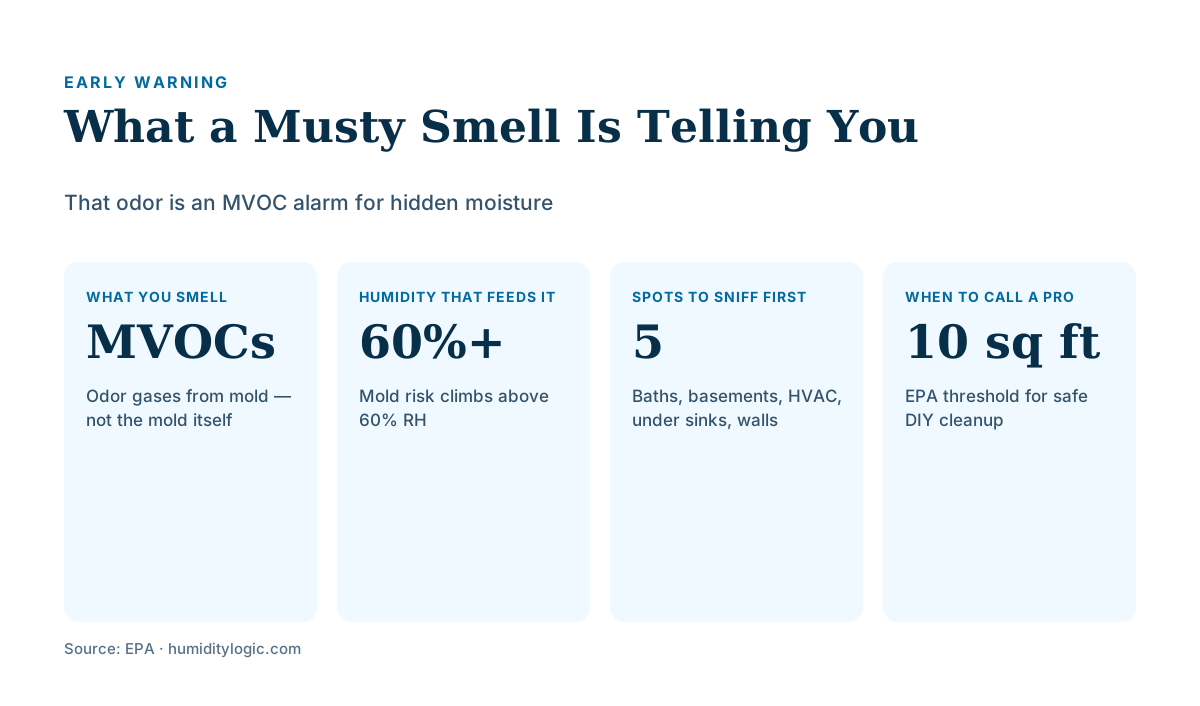
Mold smells musty and earthy — think damp basement, old books, wet cardboard, or a whiff of forest floor. That odor is not the mold itself but the microbial volatile organic compounds (MVOCs) it releases as it grows. A persistent musty smell is an early warning of hidden moisture, almost always where indoor humidity has crept above 60%.
What does mold smell like?
Mold smells musty, damp, and earthy — the stale scent of a basement that never quite dries out. Most people describe it as old books, wet socks, rotting wood, or soil after rain.
The exact character shifts with the type of mold and how wet the surface is. Bob Vila’s overview notes that a freshly forming colony gives off a faint, distinctly earthy or musty smell, while more established growth can turn sour and tangy like fermenting alcohol, or edge toward a heavier, decaying odor. A sharp “sweaty sock” note often means bacteria are growing alongside the mold. What all of these share is dampness — if a smell reads as musty or earthy, moisture is behind it.
Why does mold smell musty and earthy?
The musty smell is a chemical signal, not the mold’s physical odor. As mold grows and reproduces, it releases microbial volatile organic compounds (MVOCs) — gases light enough to travel through the air and reach your nose from surfaces you cannot see.
That is the key insight for tracking a mold problem by smell. The colony can sit inside a wall cavity, under carpet padding, or behind a vanity, while its MVOCs drift out into the living space. So the strength of the odor tells you a colony is active and feeding on moisture, but not exactly where — the gases spread out from the source. The earthy, “just-rained” note that often rides underneath the mustiness comes from the same family of compounds soil microbes produce, which is why a moldy room can smell faintly like the outdoors after a storm.
What if I smell mold but can’t see it?
Trust the smell and start looking, because hidden mold is common. The EPA specifically flags a building that “smells moldy” with no visible source as a sign there may be mold you need to find and fix.
Mold grows wherever moisture collects and airflow is poor, so those are the places to check first. MVOCs concentrate in still, enclosed spaces — closets, cabinets, corners, and behind furniture — where the gas is not diluted by moving air. Focus your search on the damp, low-traffic parts of the house:
- Under sinks and around plumbing — slow leaks feed mold inside the cabinet base.
- Around windows and on sills — condensation soaks frames and caulk each winter.
- Basements and crawl spaces — cool, humid, and rarely ventilated (see our basement humidity guide).
- The HVAC filter and ducts — a damp coil or filter circulates the smell through the whole house.
- Behind or under flooring, drywall, and wallpaper — porous materials trap water you cannot see.
If the odor is strong but the surface source stays hidden after checking these spots, the moisture is likely inside the building envelope — a wall cavity or subfloor — and that is where a mustier, more persistent smell earns a closer look.
How do you track a musty smell to its source?
Work from the nose to the moisture: follow the smell to the dampest, stillest spot, confirm it with a humidity reading, then fix the water before you clean anything. The odor points you at a region; your hygrometer confirms the cause.
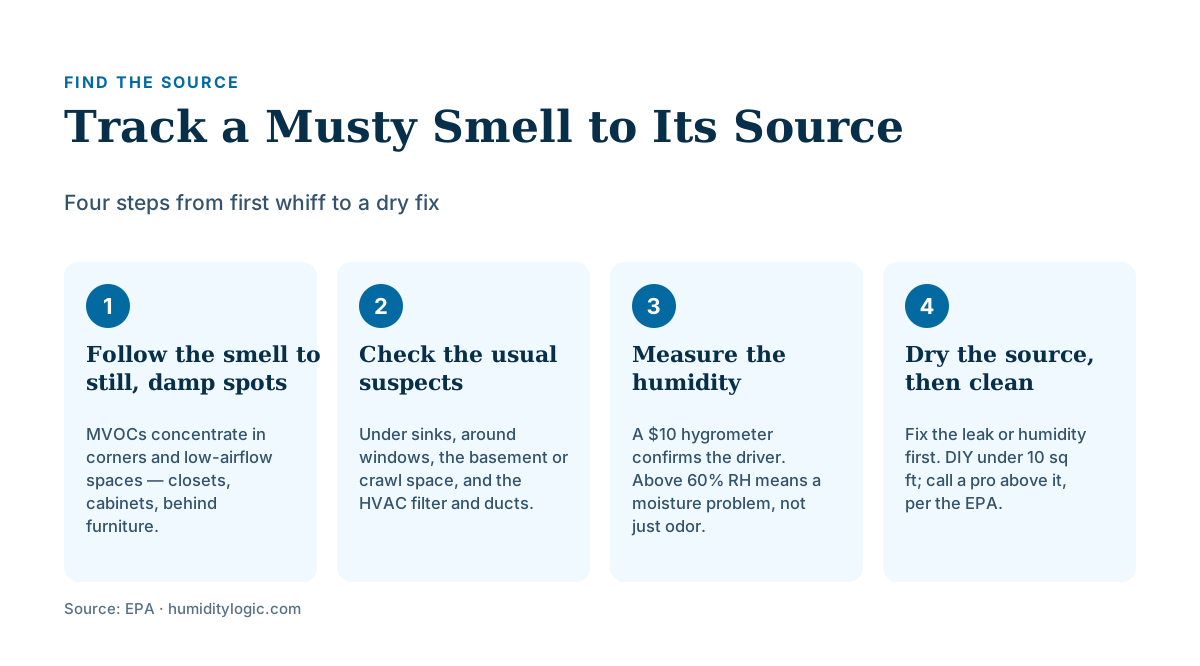
Start where the smell is strongest and the air is most stagnant, then check the usual suspects listed above. Next, measure — a $10 hygrometer settles the question fast. Readings above 60% relative humidity mean you have a moisture problem driving the odor, not just a stray smell. If the whole house reads high, the fix is house-wide humidity control; if only one room does, you have localized your source. Our guide to why your house is so humid walks through the room-by-room sources that push readings up.
Could the smell be something other than mold?
Sometimes — but a musty or earthy smell almost always still means excess moisture. Panasonic’s indoor-air-quality team notes that high humidity, stagnant air, and dust buildup can produce a damp, earthy scent even when no visible mold is present.
A few non-mold sources smell similar. A dry P-trap in a seldom-used drain lets sewer gas seep up; a dirty HVAC filter or damp duct circulates stale air; and moisture-trapping materials like carpet, insulation, and wallpaper can hold a musty odor long after they dry. The table below sorts the common culprits, but notice the through-line: every one of them traces back to water or dampness, which is exactly the condition mold needs.
| If it smells like… | Check for… |
|---|---|
| Damp basement, old books | Hidden mold or mildew in a low-airflow space |
| Wet socks, sour tang | Mold with bacteria on a soaked material |
| Musty air from the vents | Damp HVAC coil, dirty filter, or moldy duct |
| Sewer or rotten-egg | Dry drain trap — run water to refill it (not mold) |
Because the odor and the mold share one root cause, controlling humidity fixes both at once. If the smell rides your ductwork, a whole-home approach and a look at how a dehumidifier works will do more than any air freshener.
How do you get rid of the mold smell for good?
Masking the smell does nothing — you have to remove the mold and, more importantly, stop the moisture that feeds it. The EPA is blunt about this: “If you clean up the mold, but don’t fix the water problem, then, most likely, the mold problem will come back.”
For a small patch on a hard, non-porous surface, the EPA’s guidance is straightforward: scrub the mold off with detergent and water, then dry the area completely. Fix any leak first, and discard soaked porous items like carpet or ceiling tile that cannot be fully dried. Do not paint or caulk over mold — clean and dry the surface before any finish goes back on.
Know the limit. The EPA advises that if the moldy area is larger than about 10 square feet (roughly a 3 ft by 3 ft patch), or if the growth follows major water damage or sewage, you should bring in a professional rather than tackle it yourself. That line keeps a small cleanup from turning into a big exposure.
Then close the door on it by controlling humidity. Keep indoor relative humidity below 60%, ideally 30–50%, which the EPA and CDC both recommend and which sits below the level MVOCs and mold need to thrive. A hygrometer tells you where you stand; a dehumidifier sized to the space pulls damp rooms back into range. Our ideal indoor humidity guide maps the targets, a purpose-built dehumidifier for mold handles chronically damp rooms, and the humidity comfort checker tells you in one glance whether your current numbers are in the safe band or feeding the next musty smell.
Frequently asked questions
What does mold smell like?
Mold smells musty and earthy — often compared to a damp basement, old books, wet cardboard, or forest floor after rain. The odor comes from microbial volatile organic compounds (MVOCs) that mold releases as it grows, not from the mold itself. A persistent musty smell usually signals hidden moisture.
Can you smell mold before you see it?
Yes. Mold often grows inside wall cavities, under flooring, or behind cabinets where you cannot see it, but its MVOC gases drift into the room. The EPA treats a building that "smells moldy" with no visible source as a sign of a hidden mold problem worth investigating.
Is a musty smell always mold?
Not always. Damp materials, a dirty HVAC system, stagnant basement air, or a dry drain trap can smell similar. But a musty or earthy odor almost always points to excess moisture, which is the same condition that grows mold. Measuring your indoor humidity is the fastest way to confirm.
What humidity level prevents mold smell?
Keep indoor relative humidity below 60%, ideally between 30% and 50%, per the EPA. Mold and the MVOCs behind musty odors thrive above 60%. A hygrometer plus a dehumidifier in damp rooms keeps you in the safe band and stops the smell from returning.
When should I call a professional for mold?
The EPA advises that if the moldy area is larger than about 10 square feet (roughly a 3 ft by 3 ft patch), or follows major water damage, you should hire a professional. Smaller patches on hard surfaces can usually be cleaned with detergent and water, then dried completely.
Sources & references
Every figure on this page is checked against these published sources. Last reviewed July 21, 2026.