Your house is so humid because moisture is entering the air faster than it is leaving. The usual culprits, in order: everyday living (cooking, showering, breathing), poor or unvented ventilation, ground moisture wicking up from a basement or crawl space, an oversized air conditioner that never dehumidifies, and hidden leaks. Your target is 30–50% RH, and never above 60%.
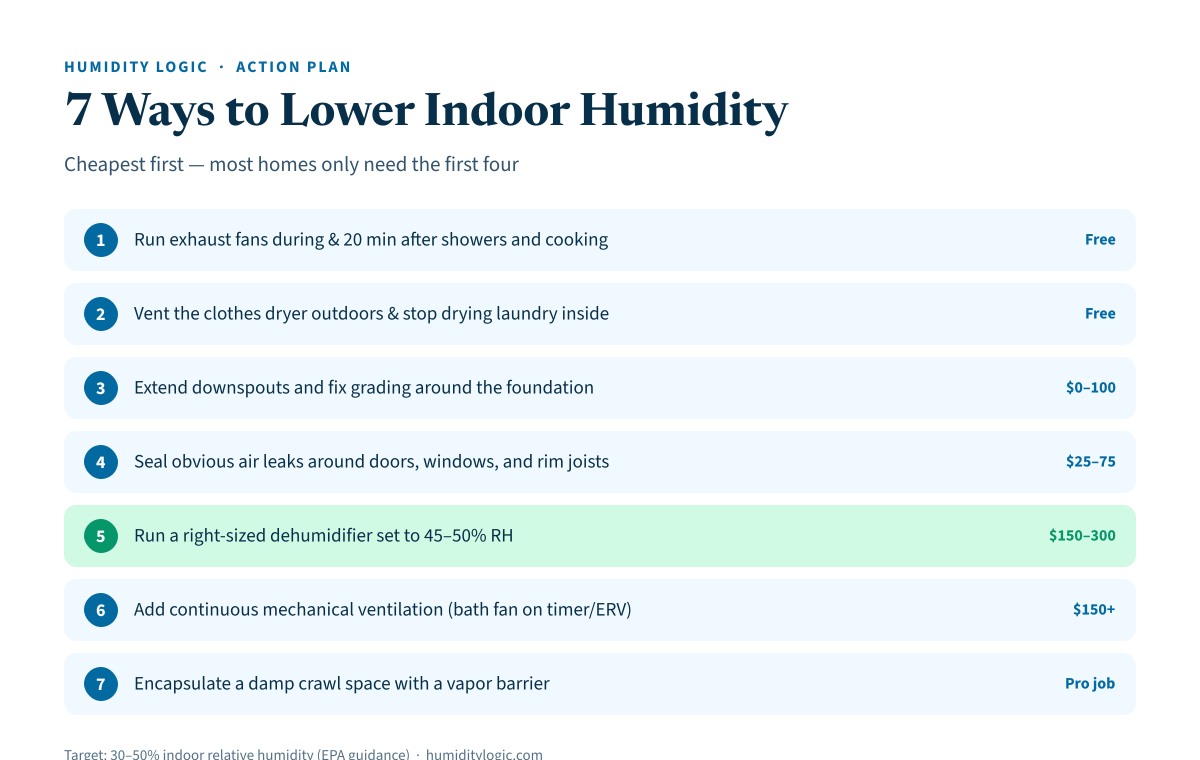
High indoor humidity is a balance problem: something is adding water vapor, and not enough is being removed. The causes below are ranked roughly by how often they turn out to be the answer — and, conveniently, the most common ones are also the cheapest to fix. Work down the list. Each cause names the symptom that gives it away and the fix that resolves it, so you can stop as soon as the air feels right. If you want the full step-by-step playbook, see how to lower humidity in your house.
Is Everyday Living Adding More Moisture Than You Think?
This is the number-one cause, and the easiest to underestimate. A family of four adds gallons of water vapor to indoor air every single day — cooking, boiling water, showering, running the dishwasher, drying laundry, keeping houseplants, and simply breathing all release moisture. None of it feels like much in the moment. Added up over 24 hours in a closed-up house, it is enough to push a whole home past 60% RH.
The tell: humidity climbs during and right after these activities, especially in the kitchen and bathrooms, and windows may fog on cooler surfaces. Drying laundry on an indoor rack is a surprisingly heavy contributor — a single wet load can release a couple of pints of water into the air as it dries.
The fix is not an appliance — it is getting that moisture out at the moment it’s created, before it spreads to the rest of the house. Which leads directly to the next cause.
Are Your Exhaust Fans and Dryer Actually Venting Outside?
Ventilation is widely cited as the single biggest contributor to residential humidity, and the problem is usually not that fans are missing but that they aren’t doing their job. The EPA’s core moisture-control advice is blunt: install exhaust fans in bathrooms and kitchens, and vent clothes dryers to the outdoors. Two things quietly break that.
First, many bath and kitchen fans dump humid air into the attic or a wall cavity instead of outside — which just moves the moisture problem somewhere you can’t see it. Building codes require these fans to terminate outdoors for exactly this reason. Second, plenty of dryers vent indoors through a lint trap or a disconnected duct, releasing a full load’s worth of water vapor into the house every cycle.
The fix: confirm each fan’s duct actually exits the building, and run fans during and for about 20 minutes after showering or cooking. DOE guidance calls for at least 50 CFM in bathrooms and 100 CFM for a kitchen range hood, both vented outside. An unvented dryer should be redirected outdoors — it is one of the largest hidden moisture sources in a home.
Is Ground Moisture Rising From Your Basement or Crawl Space?
Basements and crawl spaces sit against soil that holds water year-round, and that moisture wicks up through concrete and bare dirt into the air above. A lower level that stays musty and damp no matter the season points straight here. Because warm indoor air rises and pulls replacement air up from below, a wet basement raises humidity on the floors above it too.
The EPA’s specific recommendation for crawl spaces is to put a plastic (polyethylene) cover over exposed dirt to block moisture from migrating up out of the ground, and to keep the space ventilated. In finished basements, avoid laying carpet directly on concrete, which traps moisture underneath.
The fix: seal the ground with a vapor barrier, correct any grading or drainage that channels water toward the foundation, and run a dehumidifier in the space. Our basement humidity guide covers the sequence in detail.
Is Your Air Conditioner Oversized and Short-Cycling?
An air conditioner is also a dehumidifier — but only when it runs long enough. An oversized AC cools the house so quickly that it satisfies the thermostat and shuts off before it has run long enough to condense meaningful water out of the air. This is called short-cycling, and it leaves you with a house that is cold and clammy at the same time.
The tell: the AC blasts on and off in short bursts, the air feels cool but sticky, and humidity stays high even while the system runs. Cooling cycles under roughly 10 minutes are a red flag.
The fix: longer, slower cooling cycles remove far more moisture, so a properly sized system, a lower fan speed, or a two-stage unit helps. Counterintuitively, a slightly smaller AC that runs longer often dehumidifies better than an oversized one that races to temperature. Because AC and dehumidifiers overlap here, it’s worth understanding how a dehumidifier compares to an air conditioner before you spend money. In a humid climate, most homes need both.
Do You Have a Leak You Haven’t Found Yet?
Slow plumbing leaks, roof intrusions, and foundation seepage feed humidity silently, often for months. Unlike a burst pipe, they never announce themselves — the water evaporates into the air as fast as it arrives.
The tell: one room that is persistently more humid or musty than the rest, water stains on ceilings or walls, warped trim or flooring, or a damp patch that reappears after rain.
The fix, per EPA moisture guidance, is to find and repair the source — leaks and seepage where water enters from outside may need anything from regrading soil away from the foundation to sealing the basement. Track down the entry point before you treat the symptom; a dehumidifier running against an active leak is a losing battle.
Is Your House New or Recently Renovated?
New construction is wet construction. Poured concrete, framing lumber, drywall compound, and fresh paint all hold water and release it slowly as they cure. This off-gassing can keep a newly built or heavily renovated home humid for a year or more after move-in, even with everything else done right.
The tell: a new build or major remodel that runs humid despite good ventilation and no leaks.
The fix: there’s no shortcut for curing — you bridge the gap with steady ventilation and a dehumidifier until the materials finish drying. The humidity falls on its own once they do.
Is It Just Your Climate?
In much of the US Southeast, Gulf Coast, and Midwest, summer outdoor dew points are high enough that some indoor humidity is simply unavoidable. On those days, opening the windows makes things worse, not better. Here the question shifts from eliminating moisture to managing it with enough capacity.
The fix: keep the house closed when outdoor dew points climb above roughly 60°F, and run a dehumidifier sized to the space and load. Undersized units run constantly and never catch up. Match capacity to your square footage and dampness level — the table below is a rough starting point, and the dehumidifier size calculator refines it for your home.
| Space | Moderately damp | Very wet |
|---|---|---|
| 500 sq ft | 20-pint | 25–30-pint |
| 1,000 sq ft | 25–30-pint | 40–45-pint |
| 1,500 sq ft | 35–45-pint | 50-pint+ |
| 2,000+ sq ft | 45–50-pint | 50-pint + a second unit |
Putting It Together
Nearly every humid house traces back to the top of this list — daily moisture that isn’t ventilated out. Start there, confirm your fans and dryer actually exhaust outdoors, seal the ground under a damp basement, and only then reach for equipment. Keep a hygrometer running so you can see the number fall toward that 30–50% RH band. For the target ranges by season and room, see our guide to ideal indoor humidity levels.
Frequently asked questions
What humidity level should my house be?
The EPA recommends keeping indoor relative humidity below 60% at all times, and ideally between 30% and 50%. Above 60%, mold, dust mites, and musty odors take hold. Most people find 40–50% comfortable in summer without the air feeling either sticky or over-dried.
Why is my house so humid even with the AC running?
The most common reason is an oversized air conditioner that short-cycles — it cools the air so fast that it shuts off before running long enough to condense much water out. You get a cold, clammy house instead of a dry one. Longer cooling cycles, a lower fan speed, or a supplemental dehumidifier fix it.
Why is my house humid in the winter?
Winter humidity usually comes from indoor moisture sources — showers, cooking, unvented dryers, or a humidifier set too high — trapped inside a tightly sealed home. Fogged or dripping windows are the tell. Run exhaust fans, vent the dryer outdoors, and dial back any humidifier until the condensation stops.
Does a new house stay humid longer?
Yes. Fresh concrete, framing lumber, drywall mud, and paint release moisture as they cure, and that off-gassing can keep a newly built or renovated home humid for a year or more. Steady ventilation and a dehumidifier bridge the gap until the materials finish drying.
How do I find out where the moisture is coming from?
Track when and where humidity spikes. If it jumps after showers or cooking, ventilation is the fix; if one room or the basement stays damp regardless, suspect ground moisture or a hidden leak. A cheap hygrometer in each problem area, checked over a few days, points you to the source fast.
Sources & references
Every figure on this page is checked against these published sources. Last reviewed July 21, 2026.