An air conditioner removes heat from your home, and pulling out moisture is a side effect of that job. A dehumidifier removes moisture and, in the process, warms the room by a few degrees. So the choice comes down to a single question: is your complaint that the room is hot, or that it is damp? Name the problem correctly and the right machine is obvious.
That distinction sounds simple, but it is where most people go wrong. They run the AC harder to fight a clammy basement, or buy a dehumidifier to cool a stuffy bedroom. Each machine is superb at its own job and mediocre at the other’s. This guide sorts out which one you actually need, when the honest answer is both, and why an oversized AC can leave a house cold and clammy at the same time.
How does each machine actually move moisture?
Both appliances use the same physics: they pull air across a cold coil so water vapor condenses out of it. The difference is what happens next.
An air conditioner sends that dehumidified air back into the room cold, and dumps the collected heat outdoors. Comfort improves on two fronts, temperature and humidity, but only while the compressor runs. A dehumidifier does the opposite with the heat. It reheats the dried air slightly and returns it to the same room, so the space gets drier but a touch warmer, and the water drains to a tank or a hose.
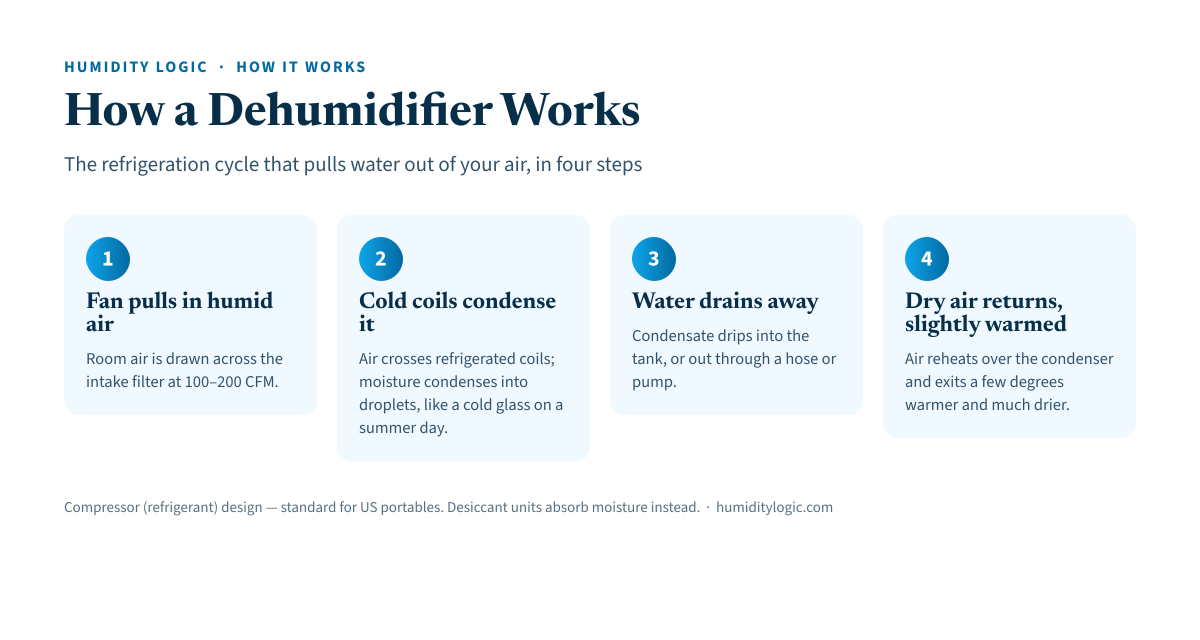
That reheating step is the whole story. The AC exports heat; the dehumidifier keeps it. For a deeper walkthrough of the internals, see how a dehumidifier works.
When should you choose a dehumidifier?
Reach for a dehumidifier whenever the problem is moisture and cooling is not the goal. The tell is a space that feels sticky, smells musty, or grows mildew, yet is not genuinely hot.
- Basements and crawl spaces. These stay cool but damp, especially in spring and fall. Running an AC there would only make a cold room colder without solving the wet.
- Rooms the AC never dries. If your hygrometer reads above 55 to 60 percent even while the AC runs, the cooling system is not keeping up with the moisture load, and a dedicated dehumidifier fills the gap.
- Spaces the AC does not reach. Garages, storage rooms, and closets where you are protecting tools, books, or electronics from rust and mold.
- Cool, humid weather. On a 68°F rainy day the AC will not run, but the air can still sit at 70 percent humidity. A dehumidifier works regardless of temperature.
The EPA recommends keeping indoor humidity between 30 and 50 percent, and never above 60 percent. If you are consistently over that line, moisture is your problem. Our guide to why your house is so humid helps trace the source before you buy anything, and once you commit, size the unit with the dehumidifier size calculator rather than guessing.
When is the air conditioner the right call?
If the real complaint is heat, and the stickiness simply rides along with it, the AC is your machine. On a 90°F afternoon the humidity feels worse mostly because the air is hot, and cooling that air addresses both at once.
But there is a critical failure mode here, and it is the single most misunderstood point in this whole comparison: an oversized AC does not dehumidify. A unit with too much capacity for the space cools the air to the thermostat setting in just a few minutes, then shuts off. It short-cycles, cooling fast but never running long enough to condense meaningful water. That is a leading cause of a home that is cold but clammy at the same time, the temperature is right, yet the air feels wet and the walls sweat.
The fix is not more cooling. It is correct cooling: a properly sized system or a variable-speed (inverter) AC that runs long, low, gentle cycles and wrings the air out as it goes. If your house feels cold and damp, bigger is exactly the wrong direction. The DOE’s guidance on right-sizing central and room air conditioners exists precisely because oversizing wastes money and wrecks comfort.
Dehumidifier vs air conditioner: a decision table
Use this to match the machine to the symptom.
| Your situation | Reach for | Why |
|---|---|---|
| Room is hot and sticky (summer heat) | Air conditioner | Cooling removes heat and sheds moisture as it runs |
| Room is cool but damp or musty (basement) | Dehumidifier | Dries the air without chilling an already-cool space |
| AC runs but humidity still tops 55–60% | Dehumidifier (add-on) | Cooling load alone isn’t pulling enough water |
| House is cold yet clammy | Fix the AC | Oversized unit short-cycles; right-size or go variable-speed |
| Damp on cool, rainy days when the AC won’t run | Dehumidifier | Works independent of temperature |
| Humid climate + finished basement | Both | AC cools the living floors, dehumidifier guards the basement |
| Protecting a garage, closet, or storage room | Dehumidifier | AC doesn’t reach it; moisture control is the only goal |
When do you genuinely need both?
Plenty of homes need both machines, and that is not a failure of either one. It is the correct answer for humid climates with finished lower levels.
Picture a home in the Southeast or Midwest with a finished basement. In July, the AC keeps the main floors comfortable in the heat. The basement, though, stays naturally cool, so the AC rarely cycles down there, which means it rarely dries the air down there. Left alone, that basement drifts to 65 or 70 percent humidity and starts to smell. A dehumidifier holding it steady under 50 percent does the job the AC structurally cannot. In the shoulder seasons, spring and fall, when the AC is off entirely, the dehumidifier may be the only moisture control running in the whole house.
So the two are not competitors so much as a division of labor: the AC owns summer heat on the living floors, the dehumidifier owns year-round dampness in the cool zones.
What does each cost to run?
Here the trade-off gets concrete, and it hinges on that reheating quirk. A right-sized dehumidifier is far cheaper to buy and to run than upgrading a cooling system, and an ENERGY STAR certified model uses about 20 percent less energy than a conventional one of the same capacity. For moisture-only problems in cool spaces, it is by far the cheaper tool.
But a dehumidifier adds heat to the room. In a cool basement that heat is free or even helpful. In an already-hot room, though, that added warmth lands right on your air conditioner’s bill, because the AC now has more heat to remove. There is no free moisture removal. The strategy is to put the dehumidification where its waste heat does the least damage, in the cool zones the AC ignores, not in the rooms the AC is already fighting to cool.
To see what either machine adds to your bill, run the numbers through the electricity cost calculator. And if your humidity problem turns out to be fixable without new hardware at all, the cheapest option of any, start with how to lower humidity in your house.
The bottom line
An air conditioner is a heat machine that dries the air on the side. A dehumidifier is a moisture machine that warms the air on the side. Diagnose whether your discomfort is heat or damp, remember that an oversized AC will leave you cold and clammy, and place any dehumidifier where its exhaust heat won’t just feed the cooling bill. Get those three things right and you will never buy the wrong box again.
Frequently asked questions
Does an air conditioner work as a dehumidifier?
It removes some moisture as a side effect of cooling, but only while it runs and only if it is sized correctly. An AC that is too large cools the room fast, shuts off, and never runs long enough to wring much water out of the air. In cool, damp spaces where you do not want the temperature dropped, a dehumidifier is the right tool.
Why does my house feel cold but still humid?
This is the classic sign of an oversized air conditioner. It satisfies the thermostat in a few short minutes, then short-cycles off before it can pull real moisture from the air. The result is a chilly, clammy house. Correct AC sizing, a variable-speed system, or a dedicated dehumidifier all address it.
Will a dehumidifier make my room hotter?
Slightly. A dehumidifier releases the air a few degrees warmer than it took it in, because the heat of condensation stays in the room. In a cool basement that is barely noticeable and often welcome. In an already-hot room, that added heat lands on your air conditioner, which then has to work harder.
What humidity level should I aim for indoors?
The EPA recommends keeping indoor relative humidity between 30 and 50 percent, and below 60 percent at all times. Above roughly 60 percent, mold, dust mites, and musty odors gain a foothold. A hygrometer that reads consistently over 55 to 60 percent is a signal to add dehumidification.
Do I need both an AC and a dehumidifier?
Often, yes, in humid climates with finished basements. The air conditioner keeps the living floors cool in summer, while a dehumidifier holds the basement under 50 percent year-round, including the cool shoulder seasons when the AC barely runs. They solve different problems in different parts of the house.
Sources & references
Every figure on this page is checked against these published sources. Last reviewed July 21, 2026.