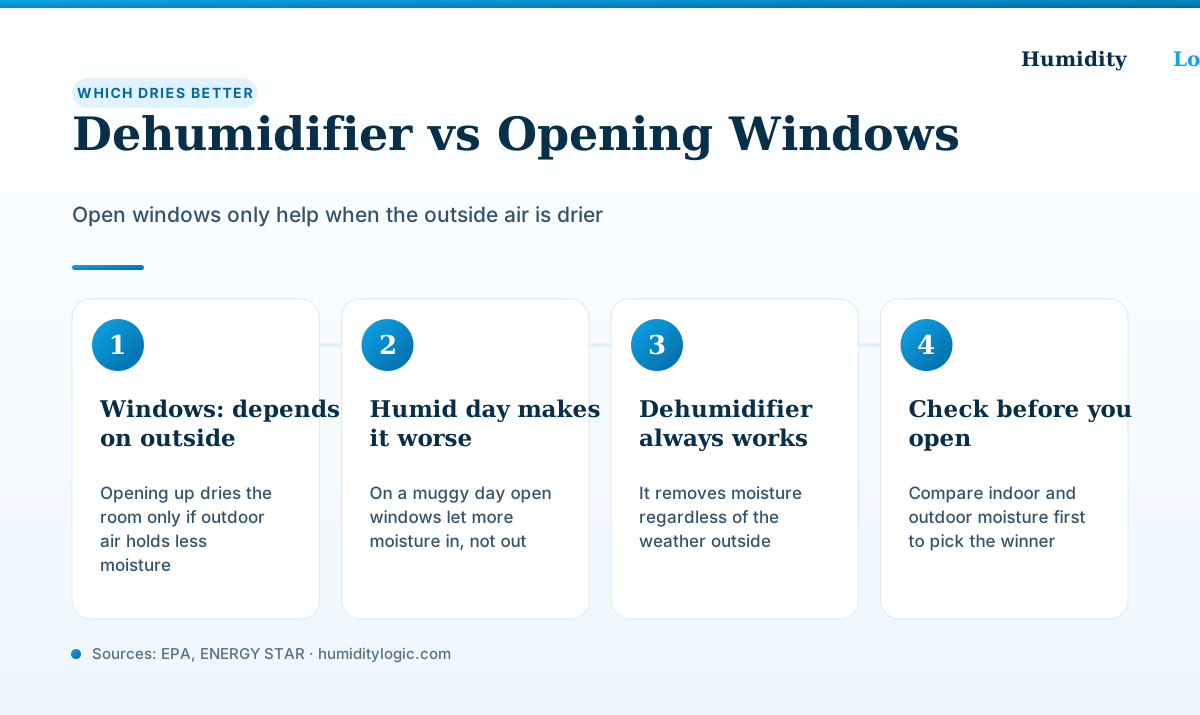
If you are deciding between throwing the windows open and running a dehumidifier to fight indoor damp, the honest answer is that open windows only help when the air outside is drier than the air inside, while a dehumidifier works in any weather — so you have to compare dew points before you open up. Opening windows is really an exchange: you let indoor air out and outdoor air in. That exchange dries your home only if the incoming air carries less moisture than the air it replaces. On a crisp, breezy day that is often true and ventilation is the free, easy fix. On a muggy, still, or rainy day the outdoor air holds more moisture, and opening up pours that dampness straight into your rooms. A dehumidifier sidesteps the whole question because it pulls water out of the air on its own, no matter what the weather is doing.
Why relative humidity fools you — compare dew points instead
The single biggest mistake here is trusting relative humidity. Relative humidity is the percentage of moisture the air is holding relative to the maximum it could hold at that temperature — and that maximum changes as the temperature changes. Warm air can hold far more water than cool air, so the same amount of moisture reads as a low percentage when it is hot and a high percentage when it is cool. That makes relative humidity a poor tool for comparing indoor and outdoor air, because the two are almost never at the same temperature.
Dew point fixes this. It is the temperature at which air becomes saturated, and it tracks the actual amount of water in the air rather than a temperature-dependent percentage. As the National Weather Service puts it, “the higher the dew point rises, the greater the amount of moisture in the air.” That makes dew point the number you want when you are deciding whether opening a window will help. If the outdoor dew point is lower than your indoor dew point, the outside air is genuinely drier and ventilation will dry your home. If it is equal or higher, opening up adds moisture — no matter how comfortable that breeze feels. If this distinction is new to you, our guide on dew point vs. humidity breaks it down in plain terms.
As a rough rule of thumb: an outdoor dew point below about 55°F feels dry and is good ventilation weather, the low 60s°F starts to feel sticky, and anything at 65°F or above is muggy air you do not want to invite inside.
When does opening windows actually lower humidity?
Ventilation genuinely works — it is the first moisture-control step the EPA recommends. Their guidance is to keep humidity in the 30 to 50% range by “ventilating or using a dehumidifier if necessary,” and to “open doors and windows” when the weather permits. The key phrase is when the weather permits.
Opening windows is the better choice when:
- The outdoor dew point is clearly lower than indoors. A dry cold front, a low-humidity afternoon, or a breezy spring or fall day are all good windows of opportunity.
- It is early morning in a dry climate. In arid and semi-arid regions the air often cools and dries overnight, so morning ventilation can flush out moisture before the day heats up.
- You need to clear a short moisture spike. After a shower or a session of cooking, cracking a window (or running an exhaust fan) vents that burst of humid air quickly and cheaply.
- You are moving fresh air through, not just cracking one window. Cross-ventilation with windows open on opposite sides exchanges air far faster than a single opening.
In all of these cases the physics is on your side: drier air comes in, damper air goes out, and the moisture level drops without any electricity at all.
When does opening windows make the damp worse?
The trouble comes when people open windows on exactly the days that feel like they should help — hot, sticky summer afternoons. That warm outdoor air is usually loaded with moisture, and letting it into a cooler house does two bad things at once: it raises the moisture content of your indoor air, and when that humid air touches cool surfaces like basement walls, tile, or air-conditioned rooms, some of it condenses into liquid water. You end up damper than when you started.
Open windows tend to make things worse when:
- It is muggy, foggy, or raining. The outdoor dew point is high, so incoming air is wetter than your indoor air.
- You are ventilating a cool basement. Below-grade spaces stay cool year-round, so almost any outdoor air you bring in is warmer and moister and will condense on the cold surfaces. This is why a basement is usually a dehumidifier job — the same conclusion we reach in how to lower humidity in your house.
- You live on the coast or in a humid climate. Where outdoor dew points routinely sit in the mid-60s°F or higher, ventilation rarely brings relief and mechanical dehumidification is the reliable answer.
- The air is still. Without a breeze there is little actual air exchange, so an open window mostly just leaks humid outdoor air in.
Because it is easy to get this backwards, we built a quick should-I-open-windows calculator that compares your indoor and outdoor moisture and tells you which way the exchange will go before you commit.
Why a dehumidifier works in any weather
A dehumidifier does not care what the sky is doing. It draws room air across cold coils, condenses the water vapor into liquid, drains it away, and returns drier air — so it removes moisture on a rainy August afternoon just as well as on a dry October morning. That weather-independence is its whole advantage over ventilation. It also lets you hold a target: ENERGY STAR recommends keeping indoor relative humidity between 30% and 50%, warning that “anything above this range may promote mold growth,” and the EPA likewise advises keeping humidity “below 60 percent (ideally between 30 and 50 percent).” Ventilation can drift wherever the weather pushes it; a dehumidifier parks the humidity where you set it.
The trade-off is that a dehumidifier uses electricity and needs a sealed space to work well — leave a window open on a humid day and it will run constantly without ever catching up. For that reason the two approaches are not really rivals so much as tools for different days. If you are choosing a unit, match its capacity to the space using our guide on what size dehumidifier you need. And note that a plain fan is a third, weaker option — it moves air but removes no water, as we cover in dehumidifier vs. fan.
So which should you use?
The decision comes down to one comparison. Check your indoor dew point against the outdoor dew point, and let the weather pick the tool:
- Dry, breezy day, outdoor dew point clearly lower than indoors: open the windows. It is free, effective, and freshens the air.
- Muggy, rainy, still, or coastal day — or a cool basement any time of year: keep the windows shut and run a dehumidifier.
- Not sure: compare the dew points (or use the calculator) rather than guessing from how the breeze feels.
Neither approach is universally “better.” Opening windows is the smarter move on the right day and costs nothing; a dehumidifier is the dependable one that works when the weather refuses to cooperate. The skill is simply learning to read the outdoor dew point first — once you do, you will know at a glance whether to open up or seal up and dehumidify.
Frequently asked questions
Does opening windows lower indoor humidity?
Only when the outdoor air actually holds less moisture than the indoor air. If the outside dew point is lower than your indoor dew point, opening up swaps damp inside air for drier outside air and humidity falls. But on a muggy or rainy day the outdoor air is often wetter, so opening windows lets more moisture in and makes the damp worse. Compare dew points — not relative humidity — before you open up.
Is a dehumidifier better than opening windows?
It depends on the weather. On a dry, breezy day, opening windows is free and effective, so ventilation wins. On a humid, still, or rainy day — or in a below-grade basement where outdoor air is almost always wetter — a dehumidifier is better because it removes moisture regardless of what the weather is doing. A dehumidifier also lets you hold a steady 30 to 50% relative humidity that ventilation alone cannot guarantee.
Should I open windows or run a dehumidifier in a damp basement?
Usually a dehumidifier. Basement air is cool, so warmer outdoor air brought in through open windows tends to carry more moisture and can condense on the cool walls and floor, adding dampness rather than removing it. A dehumidifier pulls that moisture out and keeps the space in the EPA and ENERGY STAR recommended 30 to 50% range. Open basement windows only on a genuinely dry day when the outdoor dew point is clearly lower than indoors.
How do I know if outside air is drier than inside?
Compare the dew point, not the relative humidity. Check your local outdoor dew point in a weather app and compare it to your indoor dew point (a hygrometer plus the temperature gives it, or use an online calculator). If the outdoor dew point is several degrees lower than indoors, opening windows will dry the room. If it is equal or higher, keep the windows shut and run a dehumidifier. Relative humidity alone is misleading because it changes with temperature.
Can I open windows while running a dehumidifier?
It is best not to. A dehumidifier works on the air in a sealed room; open a window on a humid day and it will keep pulling in fresh moisture from outside, run almost non-stop, and never reach its target. Close the windows and doors so the unit only has to dry the air already in the space. If the outdoor air is genuinely dry, you do not need the dehumidifier running at all — just ventilate.
Sources & references
Every figure on this page is checked against these published sources. Last reviewed August 13, 2026.