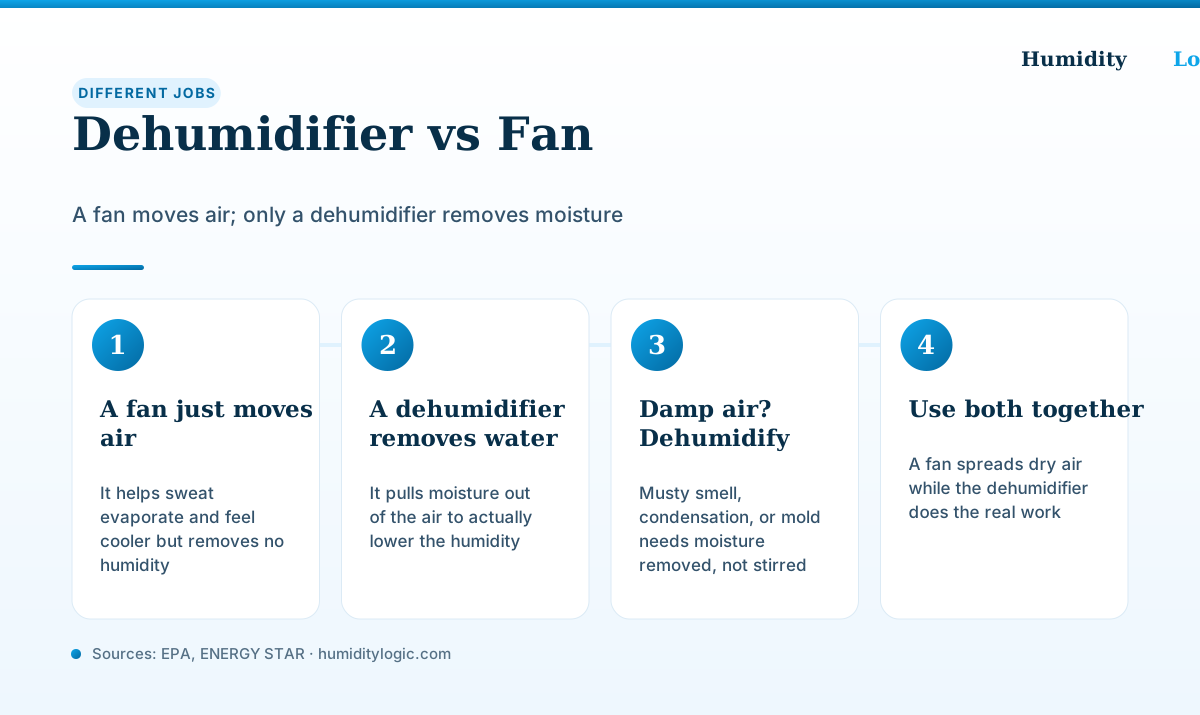
If you are weighing a fan against a dehumidifier for a muggy or damp room, the short answer is that a fan moves air but removes no moisture, while only a dehumidifier lowers the humidity — a fan just makes you feel cooler by helping sweat evaporate. They are not interchangeable. A fan is an air mover: it creates a breeze that speeds evaporation off your skin and can help ventilate a space, but it does not pull a single drop of water out of the air. A dehumidifier is a moisture machine: it condenses water vapor out of the air and drains it away, which is the only way to actually bring relative humidity down and stop damp, mustiness, and mold.
What does a fan actually do?
A fan does one thing: it moves air. It has no coils, no compressor, and no filter for water vapor, so it cannot change how much moisture the air is holding. What it changes is how that air feels against your body.
The reason a fan feels cooling is evaporation. When moving air passes over your skin, it speeds the evaporation of sweat, and because evaporation carries heat away, you feel cooler — the familiar wind-chill effect. But this is happening on your skin, not in the room. The Department of Energy makes the point directly in its home-cooling guidance: fans cool people, not rooms, which is exactly why you should turn a fan off when you leave. An empty room with a fan running is no cooler than one without.
A fan does have a real role in moisture, but an indirect one. If it blows humid indoor air out of a window or through a bathroom exhaust, or draws in drier outdoor air, it is helping with ventilation. The EPA recommends this as basic moisture control: open doors and windows when the weather permits and run kitchen and bath exhaust fans while cooking and showering. That works only when the outdoor air is actually drier than the indoor air — on a humid day, opening up and fanning the air just brings more moisture in.
What does a dehumidifier do?
A dehumidifier removes water from the air. A fan inside the unit draws humid room air across a set of cold coils; the water vapor condenses into liquid, drips into a tank or drains out through a hose, and drier air blows back into the room. The result is a genuine drop in relative humidity — the percentage of moisture the air is holding — and, crucially, the water leaves the air for good.
That is what makes it the right tool for a damp-air problem. ENERGY STAR recommends keeping indoor relative humidity between 30% and 50%, warning that “anything above this range may promote mold growth.” When a basement, bathroom, or closet sits above that band, you get the classic signs of too much moisture: a clammy feel, a musty smell, condensation on windows and pipes, warping, and mildew in grout and corners. A dehumidifier addresses all of them because it removes their shared cause. If you want the full mechanics, see how a dehumidifier works.
The comfort illusion: feeling cooler vs. being drier
Here is where the two devices get confused. On a sticky summer day, switching on a fan brings instant relief, and it is easy to conclude the fan “dried out” the air. It did not. The relative humidity in the room is unchanged; you simply feel better because moving air is helping your sweat evaporate.
That distinction matters because the damage humidity does — mold, mildew, warped wood, dust mites — is driven by the actual moisture level, not by how the air feels. A room can feel pleasant under a fan and still be sitting at 65% relative humidity, quietly feeding mold behind the drywall. The fan treats the symptom you can feel while leaving the cause untouched. A dehumidifier does the reverse: it may do little for that instant skin-level comfort, but it fixes the underlying condition.
Does a fan dry out a damp room? The common myth
The most persistent myth is that a fan will “dry out” a damp room. It will not, and understanding why is the whole point of this comparison.
Air over a wet surface — a mopped floor, a shower wall, damp laundry — evaporates faster when a fan blows across it. But that water does not disappear; it moves from the surface into the room air. Unless that moist air is then exhausted outdoors or replaced with drier air, the room’s humidity actually goes up, not down. You have relocated the water, not removed it. This is why a fan alone can leave a basement feeling drier at the surface while the air stays just as damp.
Removing moisture from the air requires either condensing it out (a dehumidifier or air conditioner) or swapping the air for drier air (ventilation, when outdoor conditions allow). A fan on its own does neither. For the fuller toolkit, see how to lower humidity in your house.
When a fan is the right choice
A fan is genuinely useful — just for different jobs than a dehumidifier:
- You want to feel cooler. A fan raises comfort with very little electricity, letting you tolerate a warmer thermostat setting.
- The outdoor air is drier than indoors. Fanning fresh air through open windows on a cool, dry evening is effective, low-cost ventilation.
- You need to exhaust moisture at the source. A bathroom or kitchen exhaust fan removes shower and cooking humidity before it spreads — see bathroom exhaust fan vs dehumidifier.
- You want to spread conditioned or dehumidified air. A fan circulates the output of an AC or dehumidifier into stagnant corners.
When only a dehumidifier will do
Reach for a dehumidifier — not a fan — whenever the problem is the moisture itself:
- A persistent musty or damp smell that a fan only masks while it runs.
- Condensation beading on windows, pipes, or walls.
- Visible mildew or mold, or the clammy, humid feel of a basement.
- High measured humidity — anything above 50–60% RH. Not sure? See what is considered high humidity.
Mold is the clearest case. The EPA is blunt that “the key to mold control is moisture control,” and its mold-growth guidance notes that “mold can grow on virtually any organic material as long as moisture and oxygen are present.” A fan moves air past mold; it does nothing about the dampness feeding it. Only removing the moisture — with a dehumidifier — takes away what the mold needs.
Dehumidifier vs fan: side by side
| Fan | Dehumidifier | |
|---|---|---|
| What it does | Moves air | Removes water vapor |
| Effect on humidity | None | Lowers it |
| Effect on comfort | Feels cooler (wind chill) | Feels less clammy |
| Lowers room temperature | No | No |
| Fixes musty smell / damp | No | Yes (removes the cause) |
| Helps with mold | No | Yes (removes the moisture) |
| Running cost | Very low (a motor) | Higher (compressor + coils) |
The split is clean: a fan changes how the air feels, a dehumidifier changes what the air contains.
Running cost
A fan is one of the cheapest appliances in the house to run — it is just a motor turning a blade, drawing a few watts to a few dozen watts. A dehumidifier costs more to operate because it runs a compressor and cold coils much like a small air conditioner. That is the trade-off for actually removing moisture. Choosing an ENERGY STAR certified dehumidifier helps: it “uses 20% less energy” than a conventional model to pull out the same amount of water. Sizing matters too — an undersized dehumidifier runs constantly and never reaches its target. Match capacity to your space with our dehumidifier size calculator, and see what size dehumidifier you need for the pint ratings.
Using both together
For many damp rooms, the best setup is both. Let the dehumidifier do the load-bearing work of pulling moisture out of the air, and use a fan to circulate that drier air into closets, corners, and stagnant spots the dehumidifier alone might not reach. Better air movement also feeds humid air from around the room toward the dehumidifier more evenly, so it works more effectively.
The one thing to avoid is working against yourself: do not run a fan pulling humid outdoor air in through a window while the dehumidifier is trying to dry the room. Keep the space reasonably closed, let the dehumidifier remove the moisture, and let the fan spread the results.
Bottom line
A fan and a dehumidifier are not two versions of the same tool. A fan moves air — it makes you feel cooler and can aid ventilation, but it removes no moisture and cannot dry out a damp room on its own. A dehumidifier actually pulls water out of the air, which is the only way to lower humidity and stop damp, mustiness, and mold. Buy a fan for comfort and air movement; buy a dehumidifier when the problem is moisture. In a room that is both stuffy and damp, run the two together — with the dehumidifier doing the real work.
Frequently asked questions
Does a fan reduce humidity in a room?
No. A fan only moves air around the room — it has no way to condense or capture water vapor, so the relative humidity stays exactly the same. A fan can make a muggy room feel less stuffy and help sweat evaporate off your skin, but the amount of moisture in the air does not change. To actually lower humidity you need a dehumidifier, air conditioning, or drier outdoor air brought in by ventilation.
Will a fan dry out a damp room?
Not on its own. Blowing air across a damp surface can speed up evaporation from that surface, but the water goes into the room air rather than out of the house — so humidity can even rise. A fan does help if it exhausts moist air outdoors or pulls in drier outside air. For a chronically damp room with a musty smell or condensation, only a dehumidifier removes the moisture that is causing the problem.
Is a dehumidifier or a fan better for a damp basement?
A dehumidifier. Basements are damp because the air holds too much water vapor, and a fan cannot remove any of it. A dehumidifier pulls that moisture out and holds relative humidity in the 30 to 50% range the EPA and ENERGY STAR recommend, which is what stops the musty smell, condensation, and mold. A fan can help circulate the dried air, but it is a helper, not the fix.
Can I use a fan and a dehumidifier together?
Yes, and they complement each other well. The dehumidifier does the real work of removing moisture, while a fan spreads that drier air into corners, closets, and stagnant spots the dehumidifier alone might miss. Better circulation also helps the dehumidifier pull humid air from around the room more evenly. Just avoid pointing a fan out an open window while the dehumidifier runs, since that pulls in humid outdoor air.
Why does a fan make me feel cooler if it does not lower the temperature?
A fan cools you, not the room. Moving air speeds the evaporation of sweat from your skin, and evaporation carries heat away — the same wind-chill effect that makes a breeze feel refreshing. The air temperature in the room is essentially unchanged, which is why a fan does nothing for you in an empty room and why it should be turned off when no one is there.
Sources & references
Every figure on this page is checked against these published sources. Last reviewed August 3, 2026.