For most bathrooms the right tool is an exhaust fan: it vents shower steam straight outside at the moment it is made, before that moisture can soak into mirrors, grout, and drywall. A dehumidifier does something different. It removes moisture that is already floating in the room air, which makes it the backup choice for a windowless or ventless bathroom where venting steam outdoors simply is not possible. Fan first; dehumidifier where you cannot vent.
The distinction matters because the two devices attack the problem at different points. Steam from a hot shower is a burst of moisture created in seconds. A fan pushes that burst out through a duct while it is still airborne. A dehumidifier waits for the moisture to spread through the room, then pulls it back out of the air over time. Stopping the moisture at the source is almost always more effective than chasing it afterward.
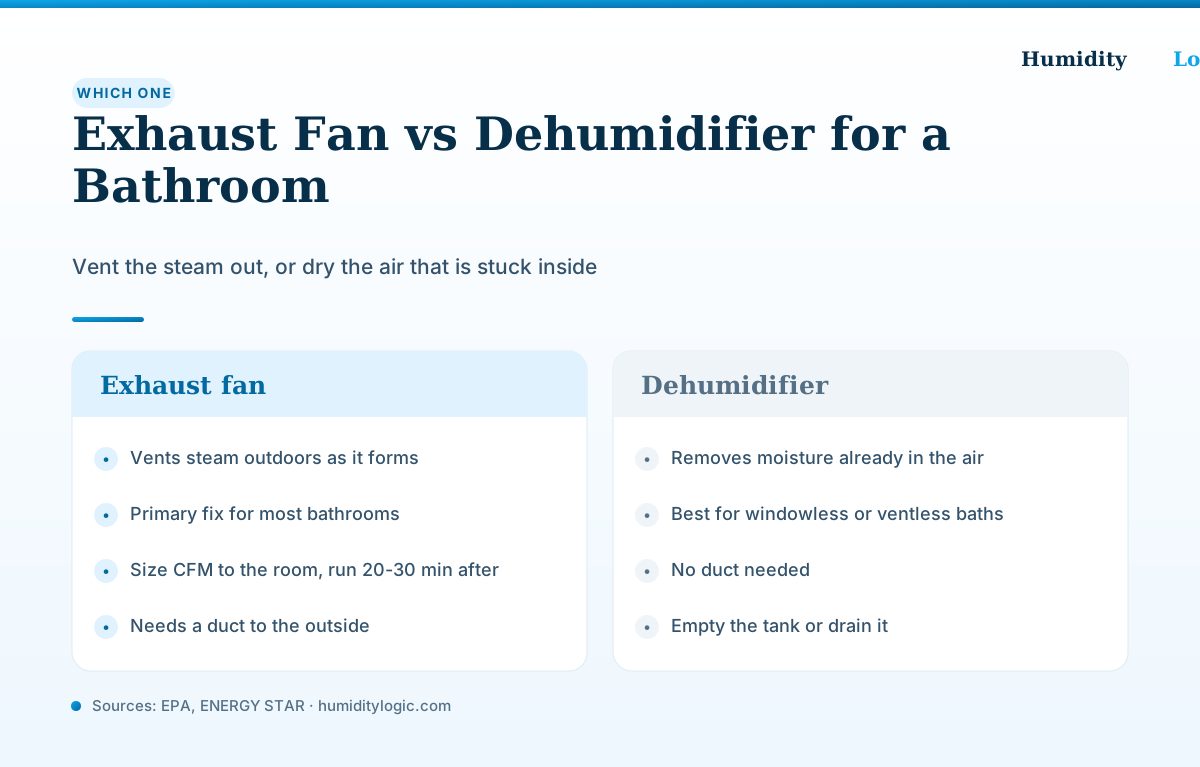
What does each one actually do?
An exhaust fan is a ventilation device. It draws humid air out of the bathroom and pushes it through a duct to the outside, replacing it with drier air from the rest of the house. Because it removes the steam before it condenses, it is the tool the EPA points to first, recommending you “run a fan or open a window” while showering to control moisture. The one firm rule: the duct must terminate outdoors, not in an attic or wall cavity, or you just move the moisture problem somewhere you cannot see it.
A dehumidifier is a drying device. It pulls room air across a cold coil, condenses the water vapor out, drains it to a tank or hose, and returns the air slightly warmer and drier. It moves no air outdoors and needs no duct. That self-contained design is its advantage in a sealed, windowless bathroom, and its limitation everywhere else: it can only work on moisture that has already left the shower and mixed into the room.
There is also a timing difference worth naming. A shower dumps its moisture in a few minutes, so a fan running during and just after the shower catches the humidity at its peak. A dehumidifier, by contrast, chips away at the room’s moisture gradually, which is fine for a background damp problem but slow against a sudden cloud of steam. That is the core reason ventilation is the front line and drying is the reserve.
Bathroom exhaust fan vs dehumidifier: the core comparison
| Factor | Exhaust fan | Dehumidifier |
|---|---|---|
| What it does | Vents steam outdoors as it forms | Removes moisture already in the air |
| Timing | Works at the source, in real time | Works after moisture spreads |
| Best for | Most bathrooms (primary fix) | Windowless or ventless baths (backup) |
| Needs a duct? | Yes, must vent outdoors | No |
| Upkeep | Wipe the grille, clear the duct | Empty the tank or run a drain hose |
| Sizing basis | CFM matched to room size | Pint capacity matched to space |
| Energy use | Very low (runs during and after showers) | Modest; ENERGY STAR models save energy |
How do I size a bathroom exhaust fan?
Fan airflow is measured in CFM (cubic feet per minute), and the sizing rule is simple. For a bathroom up to 100 square feet, the Home Ventilating Institute recommends 1 CFM per square foot, which works out to roughly eight air changes per hour. A 40 square foot powder room needs about a 40 CFM fan; a 60 square foot bath needs about 60 CFM. Round up to the next available fan size rather than down.
For bathrooms larger than 100 square feet, HVI switches to a per-fixture method: budget 50 CFM each for the toilet, shower, and tub, and 100 CFM for a jetted tub, then add them up. A large primary bath with a toilet, a shower, and a soaking tub lands around 150 CFM. You can meet that total with one central fan or with separate fans over the wet fixtures, whichever suits the layout and duct routing.
Two details protect that rating. First, run the fan for about 20 minutes after you finish, as HVI advises, so it clears the steam still clinging to surfaces. A timer switch handles this automatically. Second, remember that a fan’s rated CFM assumes ideal ductwork. Long or crimped ducts cut real airflow sharply, which is why short, smooth, rigid duct runs matter as much as the number on the box. For quiet operation, look for an ENERGY STAR certified fan, which caps noise at 2.0 sones for bathroom models and meets minimum efficiency targets.
When is a dehumidifier the better choice?
A dehumidifier earns its place when venting steam outdoors is genuinely off the table. Interior bathrooms in apartments and older homes often have no exterior wall, no window, and no existing duct, so cutting in a fan is expensive or impossible. In that situation a small dehumidifier that runs after each shower is the practical way to pull humidity back down. Our guide to a bathroom dehumidifier covers capacity and placement for exactly these rooms.
A dehumidifier is also the right backup when a room stays damp even with a working fan, such as a below-grade bath, a bathroom that doubles as a laundry, or one where towels and bath mats never fully dry. The goal is the same target the EPA sets for the whole house: keep relative humidity below 60 percent, ideally between 30 and 50 percent. If you are not sure where your bathroom sits, our explainer on what is considered high humidity puts numbers to it, and you can match a unit to the room with our dehumidifier size calculator.
Placement matters in a wet room. Keep the unit away from the tub and shower splash zone, plug it into a GFCI outlet, and give it clearance for airflow. Our notes on where to place a dehumidifier apply here too. An ENERGY STAR dehumidifier will hold the target humidity while using less electricity than an older model.
Can I use both together?
Sometimes the smart setup is a fan doing the heavy lifting and a dehumidifier covering what it misses. A steam shower, a poorly ducted fan you cannot easily upgrade, or a humid climate can leave enough residual moisture that a dehumidifier is worth adding. But the order does not change: get the ventilation right first, because a fan stops steam at the source for pennies, and only reach for a dehumidifier to mop up what venting cannot.
Whichever route you take, the outcome you want is drier surfaces. Persistent damp on grout and caulk is what feeds mold, so pairing good moisture control with regular cleaning is the durable fix. If growth has already started, see our guide on how to clean shower mold before it spreads.
The bottom line
An exhaust fan and a dehumidifier are not really competitors; they are a first choice and a fallback. If your bathroom can be vented, a correctly sized exhaust fan run for 20 minutes after each shower is the primary, lowest-cost fix, and it is what the EPA and HVI both point to. Reserve the dehumidifier for the windowless, ductless, or stubbornly damp bathrooms where venting steam outside is not an option. Match the fan’s CFM to your room, or the dehumidifier’s capacity to the space, and you keep humidity in the healthy 30 to 50 percent range either way.
Frequently asked questions
Do I need a dehumidifier if I already have a bathroom exhaust fan?
Usually no. A properly sized exhaust fan vented to the outside handles shower steam for most bathrooms, so it is the primary tool. Add a dehumidifier only if the room stays damp after the fan runs, if there is no fan, or if the bathroom has no window and no duct to the outside.
What size exhaust fan does my bathroom need?
For a bathroom up to 100 square feet, HVI recommends 1 CFM per square foot, so a 7 by 8 foot bath (56 sq ft) needs about a 60 CFM fan. For bathrooms over 100 square feet, size by fixture: 50 CFM each for the toilet, shower, and tub, and 100 CFM for a jetted tub.
How long should I run the bathroom fan after a shower?
HVI advises leaving the fan on for about 20 minutes after you use the bathroom so it can clear the steam that lingers on mirrors, walls, and grout. A timer switch automates this. Running the fan only during the shower leaves a lot of moisture behind.
Will a dehumidifier stop bathroom mold?
It helps in a bath that cannot be vented, by holding humidity in the 30 to 50 percent range the EPA recommends. But it removes moisture already in the air rather than stopping steam at the source, so it works best as a backup to ventilation, not a replacement for a fan you could install.
Can I use a dehumidifier in a bathroom with no window and no fan?
Yes, that is the exact situation a dehumidifier is built for. With no duct and no window, steam has nowhere to go, so a small dehumidifier that removes the moisture after each shower is the practical fix. Keep it away from the tub and any splash zone and use a GFCI outlet.
Sources & references
Every figure on this page is checked against these published sources. Last reviewed July 28, 2026.