A bathroom exhaust fan beats a dehumidifier for shower steam, because it removes moist air at the source instead of processing it afterward. A bathroom dehumidifier earns its place in specific cases: no fan and no window, a rental you can’t modify, or humidity stuck above 60% between showers. When you need one, a small 20–22 pint compressor unit is the right size — not a mini “rechargeable” model.
Do You Actually Need a Dehumidifier in Your Bathroom?
Most bathroom humidity problems are ventilation problems wearing a disguise. A hot shower can push a small bathroom to near-saturation in minutes, and the fastest way to deal with that much moisture is to move it outdoors before it soaks into grout, drywall, and towels.
That’s what an exhaust fan does. The Home Ventilating Institute (HVI) recommends sizing a bath fan at roughly 1 CFM per square foot of floor area, with a 50 CFM minimum for bathrooms of 50 square feet or less, and running it for 20 minutes after every shower or bath. A properly sized fan on a timer clears shower steam for a few cents of electricity per use.
A dehumidifier works differently. It doesn’t exhaust anything — it slowly condenses water out of the room’s air, measured in pints per day rather than cubic feet per minute. Ask it to keep up with an active shower and it will lose badly. Ask it to dry the room out over the following hour, or hold a damp bathroom at a healthy baseline, and it does fine.
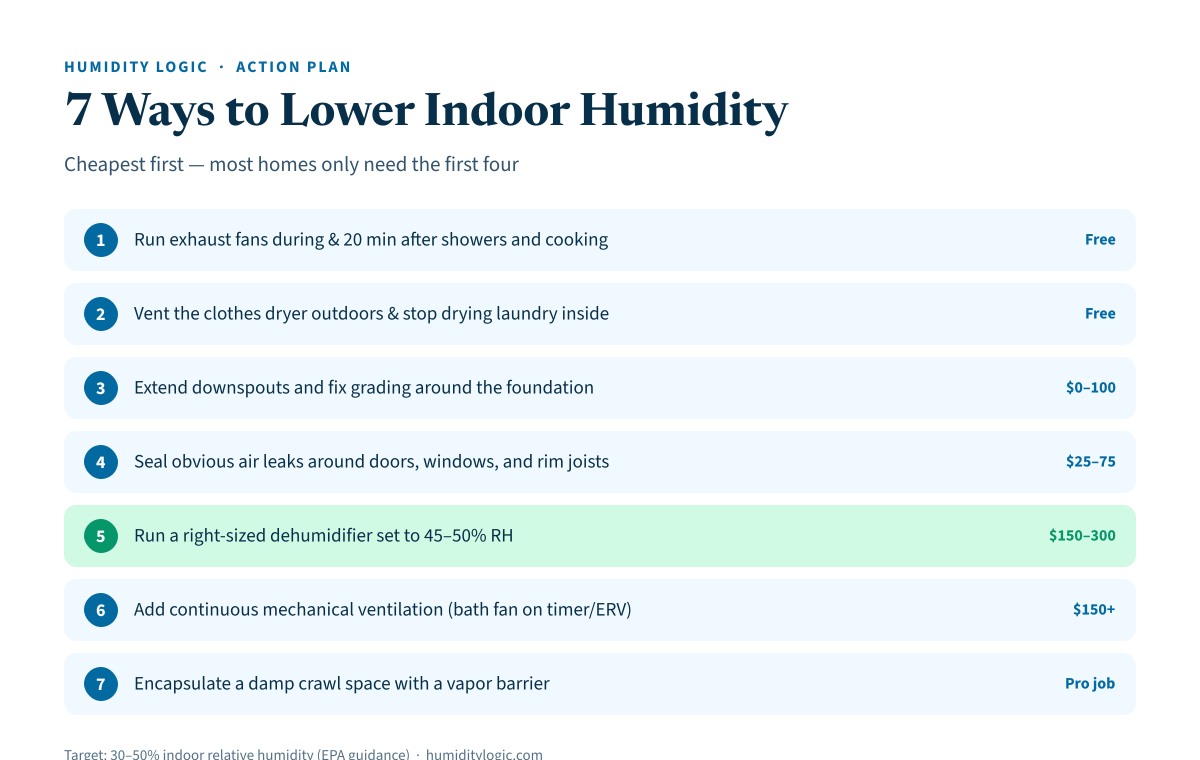
So the honest decision tree is short. If you have a working exhaust fan, use it correctly first: run it during the shower and for 20+ minutes after, and clean the grille if it’s furred with dust. If you have a window, cracking it during and after showers helps too. Only when neither is available — or when the room stays damp long after the steam clears — does a dehumidifier become the right tool. For the whole-house version of this cheapest-fix-first logic, see our guide to lowering humidity in your house.
When Does a Small Bathroom Dehumidifier Genuinely Help?
A dehumidifier earns its keep in a bathroom when ventilation isn’t an option — not when it’s simply not being used. Four situations qualify:
- Windowless interior bathroom with no fan. Common in older homes, basement baths, and converted spaces. The moisture has nowhere to go, so it condenses on every cool surface and lingers for hours. This is the clearest case for a dehumidifier.
- Rentals. Installing an exhaust fan means cutting drywall, running ductwork, and wiring — landlord territory, and the electrical work is a job for a licensed electrician even in a home you own. A plug-in dehumidifier is the one fix you can carry in and take with you.
- A bathroom that never recovers. If a humidity meter reads above 60% two hours after the last shower, the room has a baseline problem, not just a steam problem. Towels that stay damp overnight and mildew creeping back on caulk within weeks of cleaning are the usual tells.
- A bathroom doing double duty. Air-drying laundry on the shower rod adds a surprising moisture load — the kind of steady, all-day release a dehumidifier handles well and a 20-minute fan cycle doesn’t.
One honest caveat: if mold is already established, drying the air stops it from spreading but doesn’t remove what’s there. The EPA considers patches smaller than about 10 square feet reasonable to clean up yourself; anything larger, or mold that keeps returning inside walls or ceilings, is a job for a professional.
What Size Dehumidifier Works for a Bathroom?
In a bathroom, the sizing mistake runs in both directions. The most common one is going too small: the tiny “mini dehumidifiers” marketed for bathrooms — Peltier (thermoelectric) units and rechargeable desiccant pods — typically remove well under a pint of water per day. A single shower can release more moisture than that in ten minutes. They’re closet gadgets, not room equipment.
The opposite mistake is dragging in a 50-pint basement unit that dominates a 40-square-foot floor plan. Because bathrooms are small, a small 20–22 pint compressor dehumidifier is the practical sweet spot: enough capacity to dry the room within an hour of a shower and hold a sub-50% baseline, compact enough to tuck beside the vanity, and it will spend most of the day cycled off once the room stabilizes.
| Option | Typical moisture removal | Best for |
|---|---|---|
| Exhaust fan (50+ CFM, HVI-sized) | Exhausts steam at the source; ~20 min per shower | Any bathroom where installation is possible |
| Mini Peltier / rechargeable pod | Under 1 pint per day | Linen closets and cabinets — not shower moisture |
| Small 20–22 pint compressor unit | Up to 20–22 pints per day | Windowless bathrooms, rentals, chronic dampness |
| 35–50 pint unit | 35–50 pints per day | Oversized for one bathroom; use if also serving a hallway or adjacent rooms |
If the bathroom opens onto a damp hallway or you’re deciding between one unit for several rooms, run the numbers in our dehumidifier size calculator rather than guessing.
Why Does Condensation Keep Forming on the Mirror and Walls?
Fog on the mirror is a live reading of your bathroom’s dew point. During a shower, air near saturation touches the cool glass and dumps its moisture there — that’s physics, and no reasonably sized dehumidifier prevents it in the moment. A fan minimizes how long it lasts; a squeegee handles the rest.
The condensation worth worrying about is the kind that shows up between showers: droplets on the toilet tank, a perpetually clammy window, paint bubbling near the ceiling. That pattern means the room’s baseline humidity is high enough that ordinary cool surfaces sit below the dew point all day — the same mechanism behind condensation on windows elsewhere in the house.
The fix is the baseline, not the surface. The EPA recommends keeping indoor relative humidity below 60%, ideally between 30 and 50%. A $10 hygrometer tells you where your bathroom actually sits; our guide to ideal indoor humidity levels covers the targets room by room. If the reading stays above 60% hours after the last shower, that’s the signal a dehumidifier — or better ventilation — is genuinely needed rather than nice to have.
Where Should You Put a Dehumidifier in a Bathroom?
Placement in a bathroom is mostly about water and electricity keeping their distance. Keep the unit well outside the tub and shower splash zone, on a level floor, with a few inches of clearance around the intake and exhaust. Plug it into a GFCI-protected outlet — standard in modern bathroom code, and the reason those test/reset buttons exist. Never run it on an extension cord draped across a wet floor.
In a truly tiny bathroom, the best position is often just outside the open door: the unit pulls the moist air out of the doorway without occupying floor space or sitting in the splash zone. If it lives inside the room, close the door while it runs so it dries 40 square feet instead of the whole floor of the house.
Two settings make it hands-off. Set the humidistat to 50% so the unit cycles automatically instead of running nonstop, and deal with the water once: either empty the tank on a schedule (a 20–22 pint unit’s tank fills every day or two in a damp bathroom) or run the gravity drain hose to a floor drain or sink and forget about it.
What’s the Playbook for a Rental Bathroom?
Renters get the worst version of this problem — no fan, no permission to install one, and a security deposit riding on the grout. The order of operations:
- Free first: door open after showers, squeegee the walls, hang towels spread out rather than folded, cooler and shorter showers when mildew is winning.
- Then the dehumidifier: a small 20–22 pint unit on a humidistat, run after showers and during laundry-drying, positioned per the guidance above.
- Document and report: persistent mold, moisture stains, or a bathroom that never dries is a habitability issue in most states. A dehumidifier protects your belongings and your deposit, but chronic building moisture is the landlord’s problem to fix — put it in writing.
The pattern across all of these is the same: ventilation solves bathroom humidity at the source, and a dehumidifier is the fallback that works anywhere. Pick the tool that matches your bathroom — not the one with the best product photos.
See it in 3D. Explore the bathroom in The Humidity House, our interactive 3D home — click the shower, tub, or extractor fan to see how shower steam spikes humidity and how venting clears it.
Frequently asked questions
Can I run a dehumidifier while I shower?
You can, but it accomplishes almost nothing — a shower releases steam far faster than any portable unit can pull it back out. Run the dehumidifier after the shower, with the unit well away from the tub's splash zone and plugged into a GFCI-protected outlet.
Do small rechargeable or "mini" dehumidifiers work in bathrooms?
Not for shower moisture. Rechargeable desiccant pods and mini Peltier units remove a few ounces of water a day, while one shower can release more than that in ten minutes. They are fine for a linen closet or vanity cabinet, not for the room itself.
What humidity level should a bathroom be?
It will spike to near 100% relative humidity during a shower — that's normal and unavoidable. What matters is recovery: the room should fall back below 60% within about 30 minutes, and ideally sit in the EPA's 30–50% range the rest of the day.
Is it safe to leave a dehumidifier running in the bathroom all day?
Yes, if it has a built-in humidistat and auto shutoff, sits outside the splash zone, and runs on a GFCI-protected outlet. Set it to 50% and let it cycle on its own. If there's a floor drain or sink nearby, a gravity drain hose beats emptying the tank.
Is a dehumidifier cheaper than installing an exhaust fan?
Up front, sometimes — a small 20–22 pint unit and a professionally installed fan can land in a similar range. Over time the fan wins: it runs about 20 minutes per shower, while a dehumidifier cycles for hours to do the same job. If you own your home and can add a fan, that's the better investment.
Sources & references
Every figure on this page is checked against these published sources. Last reviewed July 21, 2026.