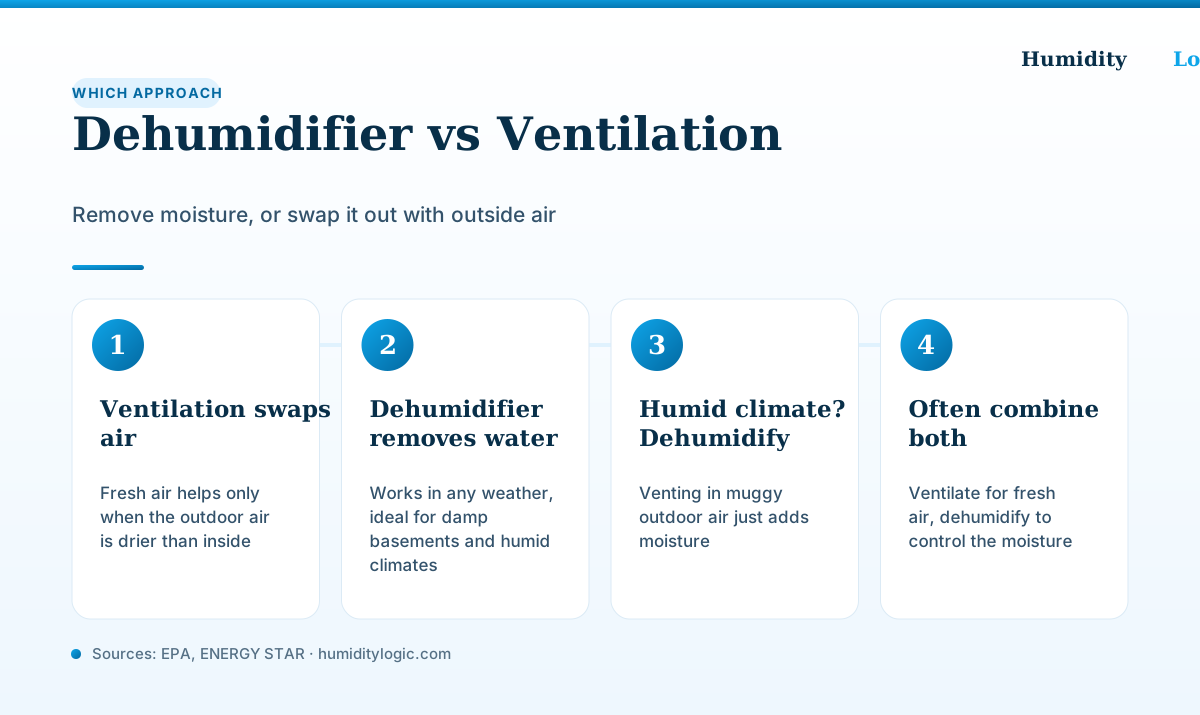
If you are weighing ventilation against a dehumidifier to fight indoor damp, the short answer is that ventilation swaps air and only helps when outside is drier; a dehumidifier removes moisture in any weather — so the best setup for many homes is to combine them. Ventilation exchanges your indoor air for outdoor air, which lowers humidity only when the incoming air carries less moisture than the air it replaces. A dehumidifier takes a completely different approach: it pulls water out of the air right where it sits, regardless of what the weather outside is doing. One is a swap; the other is a removal. Understanding that difference tells you exactly when to reach for each.
What is the actual difference between ventilation and a dehumidifier?
Ventilation moves air. Whether it is an open window, a bathroom exhaust fan, or a whole-house mechanical system, the job is the same: push stale indoor air out and pull outdoor air in. That does two useful things — it brings in fresh air and it carries moisture out of the house — but only if the outdoor air is drier than the indoor air. If it is not, ventilation actually imports moisture.
A dehumidifier does not move air out of the house at all. It draws room air across a cold coil, condenses the water vapor into liquid that drips into a tank or drain, and blows the now-drier (and slightly warmer) air back into the room. Because it works on the air already in the space, it does not care what the weather is doing outside. ENERGY STAR notes that certified dehumidifiers use “more efficient refrigeration coils, compressors, and fans” and are recommended specifically for humid climates and persistently damp spaces like basements.
Both strategies aim for the same target. The EPA advises keeping indoor humidity “below 60 percent (ideally between 30 and 50 percent) relative humidity” to control mold — and it explicitly lists both paths, telling homeowners to keep humidity in range “by ventilating or using a dehumidifier if necessary.”
When does ventilation win?
Ventilation is the cheaper, simpler tool, and when conditions cooperate it is the one to use first. It comes out ahead when:
- The outdoor air is genuinely drier than indoors. On cool, breezy, low-humidity days, opening windows or running a fan swaps damp inside air for drier outside air and humidity drops with zero electricity.
- You need to vent a moisture spike at the source. Showers, cooking, and dishwashing dump a burst of humidity into one room. The EPA recommends running the bathroom fan or opening a window when showering, and using “exhaust fans or open windows whenever cooking, running the dishwasher or dishwashing.” Spot ventilation clears that burst fast.
- You need fresh air, not just dry air. A dehumidifier does nothing for carbon dioxide, odors, or combustion byproducts. Ventilation is the only one of the two that actually refreshes the air you breathe.
- You are venting moisture-producing appliances. Clothes dryers, stoves, and similar appliances should be vented outdoors so their moisture never becomes an indoor humidity problem in the first place.
The catch is that this all depends on the outdoor air being drier. If you want to size fresh-air ventilation properly, our air changes per hour calculator helps you work out how much airflow a room actually needs.
When does a dehumidifier win?
A dehumidifier earns its place whenever the outdoor air is not a reliable ally:
- Damp basements. Below-grade air is cool, and warm outdoor air brought in through a window tends to carry more moisture that then condenses on cool walls and floors. Ventilation frequently makes a basement damper, which is why a dehumidifier is the standard fix.
- Humid climates. In the Southeast and other muggy regions, the outdoor air is often wetter than you want indoors for large parts of the year. Ventilating with that air adds moisture; a dehumidifier removes it regardless.
- Rainy, still, or muggy stretches. On the exact days that feel like they need relief, opening up usually backfires. A dehumidifier keeps working when ventilation cannot.
- When you need a steady humidity level. Ventilation is at the mercy of the weather, so it cannot hold a target. A dehumidifier lets you park the room at a consistent 30 to 50% relative humidity.
If a persistently damp room is your problem, our guide on how to lower humidity in the house covers the full toolkit, and what size dehumidifier you need helps you match a unit to the space.
Dehumidifier vs ventilation at a glance
| Ventilation | Dehumidifier | |
|---|---|---|
| How it works | Swaps indoor air for outdoor air | Removes moisture from the air in place |
| Works in humid weather? | No — imports moisture | Yes — any weather |
| Brings in fresh air? | Yes | No |
| Running cost | Low to none (open windows) | Ongoing electricity |
| Best for | Dry days, source venting, fresh air | Basements, humid climates, steady control |
What are the energy trade-offs?
This is where the two strategies diverge most. Natural ventilation is essentially free: opening a window costs nothing, and an exhaust fan draws only a few watts. Its hidden cost is comfort and conditioning — every cubic foot of hot, humid summer air you invite in is air your air conditioner then has to cool and dry, and every blast of cold winter air is heat you have to replace. So “free” ventilation can quietly raise your heating and cooling bills if you do it at the wrong time. The EPA makes the same point, noting that bringing in more outdoor air, while helpful for air quality, can increase energy costs.
A dehumidifier has the opposite profile: a predictable, ongoing electricity draw, but one that works on the air already indoors without dumping your conditioned air outside. Efficiency varies, which is why ENERGY STAR rates dehumidifiers by their Integrated Energy Factor — liters of water removed per kilowatt-hour — with certified units using about 20% less energy than conventional models. As a bonus in cooling season, a dehumidifier’s drier air feels cooler at the same temperature, which can let you ease off the air conditioner. The practical rule: ventilate for free when the outdoor air is dry, and lean on the dehumidifier when ventilating would force your HVAC system to work harder.
What about ERVs and HRVs?
Not all ventilation means an open window. Mechanical ventilation runs on demand, and the most efficient versions are energy-recovery ventilators (ERVs) and heat-recovery ventilators (HRVs). Both continuously bring in fresh outdoor air while exhausting stale indoor air, passing the two air streams through a heat exchanger so most of the heating or cooling energy in the outgoing air is recovered rather than wasted. The EPA points to these systems as an efficient way for newer homes to bring in fresh air while managing energy costs.
The difference matters for humidity: an HRV transfers heat only, while an ERV transfers a portion of the moisture along with the heat. An ERV can therefore moderate humidity swings, but neither device is a dehumidifier. In a genuinely humid climate you will often run an ERV for fresh air and a dehumidifier for moisture control at the same time.
Should you combine both?
For most homes, yes. Ventilation and dehumidification solve different problems, so the strongest setup uses each for what it does well: ventilate for fresh air and to vent bathrooms, kitchens, and moisture-producing appliances at the source, and run a dehumidifier to hold the moisture level where you want it whenever the outdoor air cannot be trusted. One caveat — do not run a dehumidifier with the windows open on a humid day, or it will keep pulling in fresh moisture and never reach its target. Close up the space so the dehumidifier only has to dry the air already inside.
If you are choosing between specific approaches for a single room, it is worth comparing the narrower matchups too: a dehumidifier vs an exhaust fan for bathrooms and kitchens, a dehumidifier vs a fan for everyday comfort, and a dehumidifier vs opening windows for the classic free-versus-mechanical decision.
Frequently asked questions
Is a dehumidifier or ventilation better for lowering humidity?
It depends on the outdoor air. Ventilation only lowers indoor humidity when the air outside is genuinely drier than the air inside, so it wins on cool, breezy, low-humidity days and for venting quick moisture spikes from cooking or showering. A dehumidifier removes moisture from the air in place no matter what the weather is doing, so it wins in damp basements, humid climates, and any time the outdoor air is muggy or wet. Many homes use both.
Does opening windows count as ventilation for humidity control?
Yes, opening windows is the simplest form of ventilation, but it is weather-dependent. It swaps your indoor air for outdoor air, which only dries the room if the incoming air holds less moisture. On a dry day that works well and costs nothing; on a humid or rainy day it pours more moisture in. Exhaust fans and mechanical systems like ERVs are more controllable forms of ventilation because they run on demand rather than depending on a perfect breeze.
Can ventilation replace a dehumidifier in a humid climate?
Usually not on its own. In a humid climate the outdoor air is frequently wetter than the air you want indoors, so ventilating with that air adds moisture rather than removing it. ENERGY STAR specifically recommends dehumidifiers for humid climates and persistently damp spaces like basements. You still need ventilation for fresh air and to vent bathrooms and kitchens, but a dehumidifier does the actual moisture removal.
Do I still need ventilation if I run a dehumidifier?
Yes. A dehumidifier controls moisture but does nothing for fresh air, carbon dioxide, cooking odors, or combustion byproducts. The EPA recommends venting moisture-producing appliances outdoors and running bathroom and kitchen exhaust fans regardless of humidity. Think of ventilation as your fresh-air and source-venting strategy and the dehumidifier as your moisture-level strategy — they solve different problems.
What is an ERV or HRV, and does it help with humidity?
An energy-recovery ventilator (ERV) or heat-recovery ventilator (HRV) is a balanced mechanical ventilation system that continuously brings in fresh outdoor air while exhausting stale indoor air, using a heat exchanger to recover most of the energy so you are not simply throwing conditioned air away. An HRV transfers heat only; an ERV transfers some moisture too, which helps moderate humidity swings. Neither is a dehumidifier, though — in a humid climate you often still need a dehumidifier alongside an ERV.
Sources & references
Every figure on this page is checked against these published sources. Last reviewed August 10, 2026.