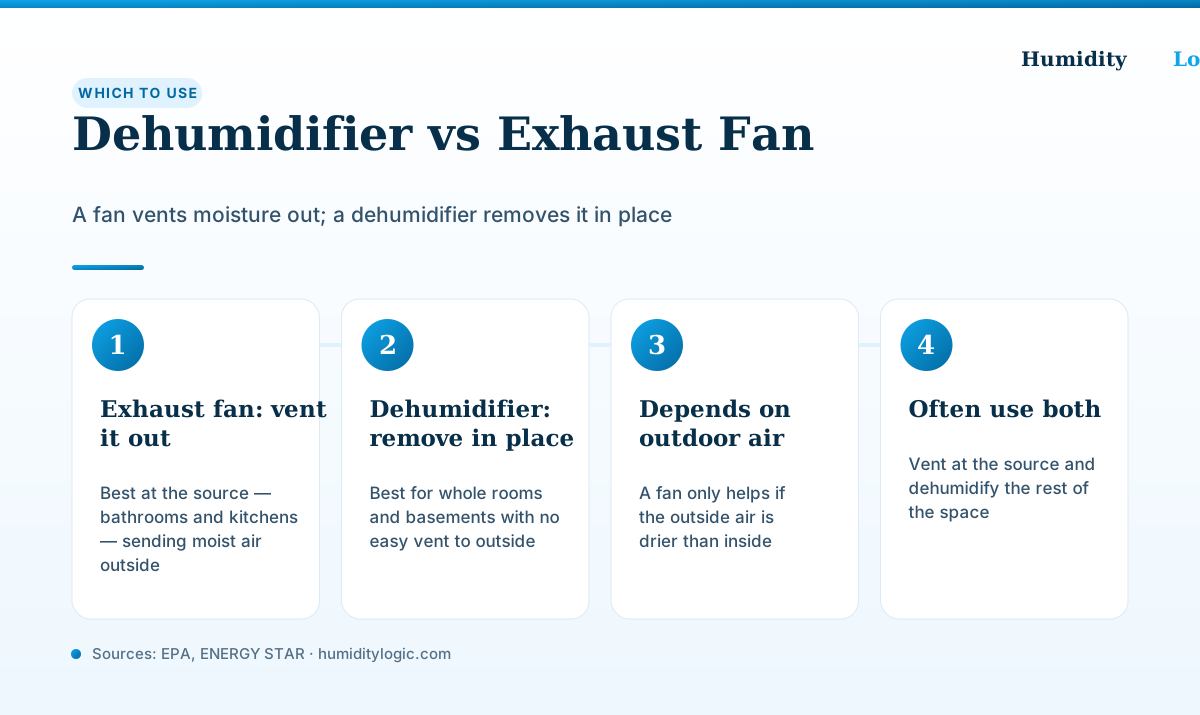
Choosing between the two comes down to where the moisture is: a fan vents humid air out at the source, and a dehumidifier removes it in place — so pick by the location of the problem. An exhaust fan pushes moist air out of a bathroom or kitchen through a duct to the outdoors, stopping the moisture before it spreads. A dehumidifier pulls water vapor out of the room air and drains it away, without moving any air outside. A fan is the tool for a spot source you can vent; a dehumidifier is the tool for a whole room or basement you cannot.
How does each one actually work?
An exhaust fan is a ventilation device. It captures humid air right where it is generated and blows it through a duct to the outside, while drier air from the rest of the house flows in to replace it. Because it removes the moisture before it condenses on mirrors, walls, and grout, it is the tool the EPA points to first for wet rooms, advising you to “run the bathroom fan or open the window when showering” and to use exhaust fans whenever cooking or running the dishwasher. The one firm rule is that the duct must terminate outdoors, not in an attic or wall cavity, or you simply relocate the moisture to somewhere you cannot see it.
A dehumidifier is a drying device. It draws room air across a cold coil, condenses the water vapor out, drains it to a tank or hose, and returns the air slightly warmer and drier. It moves no air outdoors and needs no duct, which is exactly why it works in a sealed basement or an interior room with no window. ENERGY STAR notes that a certified dehumidifier uses about 20 percent less energy than a conventional model to remove the same amount of water. Its limitation is the mirror image of its strength: it only ever works on moisture that is already floating in the room air, so it does nothing to stop a burst of steam at its source.
Dehumidifier vs exhaust fan: the core comparison
| Factor | Exhaust fan | Dehumidifier |
|---|---|---|
| What it does | Vents humid air outdoors at the source | Removes moisture already in the room air |
| Best for | Bathrooms, kitchens, laundry spots | Whole rooms, basements, ventless spaces |
| Needs a duct outside? | Yes | No |
| Depends on outdoor air? | Yes, only helps if outside air is drier | No, works in any weather |
| Running cost | Very low (a few watts, short bursts) | Higher (compressor runs for hours) |
| Sizing basis | CFM matched to room size | Pint capacity matched to the space |
| Upkeep | Wipe the grille, keep the duct clear | Empty the tank or run a drain hose |
When does an exhaust fan win?
A fan wins wherever moisture is created in a burst at a fixed spot you can vent. A hot shower dumps its steam in a few minutes, so a fan running during and just after the shower catches that humidity at its peak and sends it outside before it settles. The Home Ventilating Institute recommends sizing a bathroom fan at 1 CFM per square foot for rooms up to 100 square feet, which works out to roughly eight air changes per hour, and leaving the fan running for about 20 minutes after you finish. To match a fan to your room, use our exhaust fan CFM calculator.
The fan’s other advantage is cost. A bathroom exhaust fan draws only a handful of watts and runs in short spurts, so it is dramatically cheaper to operate than a dehumidifier’s compressor, which can run for hours. That makes it the obvious first choice for a bathroom or kitchen. If your question is specifically the shower-steam case, our companion guide on the bathroom exhaust fan vs dehumidifier decision goes deeper on sizing and placement.
There is one important catch. A fan lowers humidity only when the air it pulls in from outside is drier than the air it pushes out. As building-science writers at GreenBuildingAdvisor explain, running a bath fan dries the house only when the incoming outdoor air has a lower dew point than the indoor air. On a muggy summer day, or in a humid climate, the replacement air can be just as damp, so venting trades one load of moist air for another and the room stays humid.
When does a dehumidifier win?
A dehumidifier wins wherever the moisture problem is spread through a whole space rather than concentrated at a vent-able source, and especially where there is no easy path to the outside. A basement is the classic case: it is often below grade, has few or small windows, and stays damp from ground moisture year-round, so there is nothing for a fan to vent and no drier outdoor air to draw in. A dehumidifier simply removes the water from the air in place. Our basement dehumidifier guide covers that setup in detail, and you can match a unit to any room with our notes on what size dehumidifier you need.
The other case for a dehumidifier is any interior room you cannot vent at all. An interior bathroom with no window and no duct has nowhere to send steam, so a small dehumidifier that runs after each shower is the practical fix. The same logic applies to closets, windowless laundry rooms, and finished spaces where cutting in ductwork is expensive or impossible. The goal in every case is the target the EPA and ENERGY STAR both set: keep relative humidity below 60 percent, ideally between 30 and 50 percent, which is the range that discourages mold. Our overview of how to lower humidity in your house puts that in context alongside other fixes. Note that a dehumidifier is a different tool from a plain fan that only moves air around; our dehumidifier vs fan comparison explains why a circulating fan removes no moisture at all.
Can I use both together?
Often the smartest setup uses each device for the job it does best. Let the exhaust fan handle the concentrated burst of steam at the source, venting the bathroom or kitchen while the moisture is at its peak, and let a dehumidifier hold the surrounding space steady between those bursts. This pairing matters most in humid climates, where the fan alone cannot rely on dry outdoor air, and in homes where one damp basement or laundry room feeds moisture into the rest of the floor. The fan stops the spikes cheaply, and the dehumidifier manages the baseline the fan cannot reach.
The order of priority does not change, though. Wherever you can vent moisture at its source for pennies, do that first, because it is the lowest-cost way to keep humidity down. Reach for a dehumidifier to cover the spaces a fan cannot serve, or to hold the whole area in the healthy range when venting is not enough on its own.
The bottom line
An exhaust fan and a dehumidifier are not really rivals; they solve moisture at different points. A fan vents humid air out at the source, so it is the cheap, effective choice for a bathroom or kitchen you can duct outdoors, as long as the outside air is drier than the inside. A dehumidifier removes moisture in place, so it is the reliable choice for a basement, an interior room, or any space with no way to vent, and it works in any weather. Match the fan’s CFM to the room or the dehumidifier’s capacity to the space, and either way you can hold humidity in the 30 to 50 percent range the EPA recommends.
Frequently asked questions
What is the difference between a dehumidifier and an exhaust fan?
An exhaust fan vents humid air out of the room through a duct to the outdoors, so it works best at the source of moisture like a bathroom or kitchen. A dehumidifier pulls water vapor out of the air in place and drains it, so it works for whole rooms and basements that have no easy way to vent outside.
Is an exhaust fan or a dehumidifier cheaper to run?
An exhaust fan is far cheaper to run because a bathroom fan draws only a few watts and runs in short bursts. A dehumidifier uses much more electricity because its compressor runs for hours. The tradeoff is that a fan only helps when the outdoor air is drier than the indoor air, while a dehumidifier works in any weather.
Does an exhaust fan lower humidity in the whole house?
Not really. An exhaust fan is a spot tool that clears moisture from the room it vents, such as a bathroom during a shower. It does not dry a basement or a whole floor, and it only lowers humidity when the replacement air pulled in from outside is drier than the air being removed.
Can I use a dehumidifier and an exhaust fan together?
Yes, and it is often the best setup. Let the exhaust fan handle the burst of steam at the source in the bathroom or kitchen, and let a dehumidifier hold the rest of the space in the EPA range of 30 to 50 percent relative humidity. They cover different problems, so pairing them gives broader protection against mold and mildew.
Will an exhaust fan work in a humid climate?
It helps less in a humid climate. A fan only lowers indoor humidity when the outdoor air it pulls in is drier than the air it pushes out. On a muggy day the replacement air can be just as damp, so venting alone will not dry the room. In that situation a dehumidifier is the more reliable choice.
Sources & references
Every figure on this page is checked against these published sources. Last reviewed August 8, 2026.