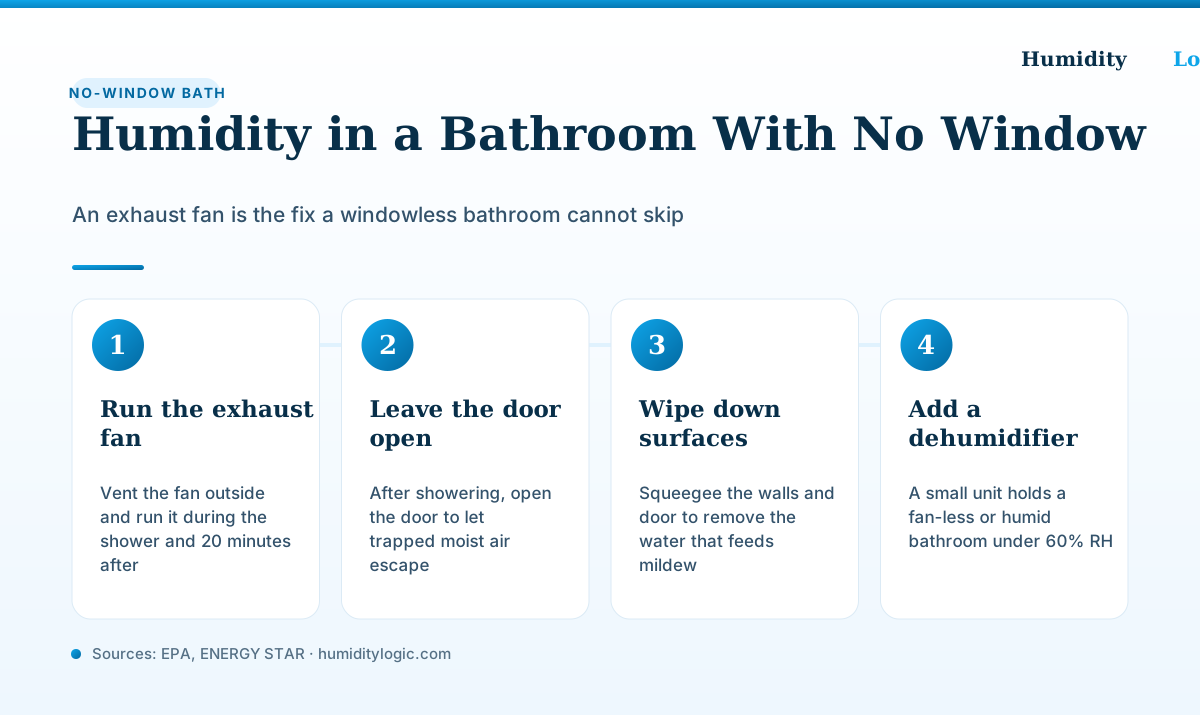
A windowless bathroom needs an exhaust fan that is vented outside, run during and after every shower, to have any hope of staying dry. With no window to crack, shower steam has nowhere to go, so it condenses on grout, caulk, and the ceiling and feeds mildew within days. The fan does the heavy lifting; leaving the door open afterward, wiping down wet surfaces, and adding a small dehumidifier if your fan is weak or missing finish the job. The goal is simple: keep relative humidity under 60%, ideally between 30% and 50%.
Why Is a Windowless Bathroom So Prone to Mildew?
Every hot shower releases a burst of water vapor. In a bathroom with a window, some of that moisture escapes when you open it. In a windowless bathroom, the only exits are the door and whatever mechanical ventilation you have — so if the fan is weak, missing, or never turned on, the steam simply settles onto the coolest surfaces in the room and stays there.
That is exactly the condition mold needs. The EPA is blunt about it: “controlling indoor moisture will control the growth of indoor mold.” Its threshold for how fast a damp surface must dry is 24 to 48 hours — dry within that window and, in most cases, mold will not grow. A windowless bathroom that stays saturated for hours after every shower blows past that limit day after day, which is why mildew shows up first in the grout lines, along the caulk where the tub meets the wall, and on a ceiling that never quite dries out.
Keeping the room’s relative humidity in check is the whole game. The EPA recommends keeping indoor humidity below 60 percent, ideally between 30 and 50 percent. For a fuller picture of where those numbers come from and what happens above them, see what is considered high humidity.
What Is the First Fix for a No-Window Bathroom?
An exhaust fan, ducted to the outside. This is non-negotiable in a windowless bathroom — it is the only thing that removes moist air rather than just moving it around. ENERGY STAR puts it plainly: installing adequate ventilation “helps to control moisture and remove objectionable odors.” A quiet, efficient ENERGY STAR certified fan does that job for a few cents of electricity per shower.
Two details make or break it:
Vent it outside, never into the attic. The duct has to carry humid air all the way to the exterior — through a roof cap, a gable vent, or a soffit fitting. A fan that dumps into the attic or the space above the ceiling just relocates your moisture problem into the framing and insulation, where it condenses on cold roof sheathing and grows mold you cannot see. If you are not certain where your fan terminates, that is worth checking.
Run it long enough. Turn the fan on before you shower and leave it running for about 20 minutes after, so it clears the steam that keeps rising off wet tile and towels. The EPA specifically advises running the bathroom fan when showering. Because it is easy to forget, a timer switch or a humidity-sensing switch — which turns the fan on when moisture climbs and off once the room dries — is one of the highest-value upgrades in a windowless bathroom.
How Big Should the Exhaust Fan Be?
Fans are rated in CFM (cubic feet per minute of airflow), and an undersized one will never keep up. The Home Ventilating Institute recommends about 1 CFM per square foot of floor area for bathrooms up to 100 square feet, with a 50 CFM minimum.
The math is quick. Multiply length by width to get your floor area, then match or exceed that number in CFM:
- A 5 x 8 bathroom is 40 square feet, so the 50 CFM minimum applies.
- A 6 x 10 bathroom is 60 square feet, so aim for at least 60 CFM.
- For rooms over 100 square feet, HVI sizes by fixture instead — roughly 50 CFM each for the toilet, shower, and tub, and 100 CFM for a jetted tub.
When you land between two fan sizes, round up. A slightly oversized fan clears the room faster, and in a space with no window that speed is the difference between drying inside the EPA’s 24-to-48-hour margin and staying damp. If you are also weighing a dehumidifier and want to sanity-check the capacity you need, our guide to what size dehumidifier you need walks through the same square-footage logic.
What Else Helps Between Showers?
The fan removes most of the moisture, but a few habits keep the rest from settling in.
Leave the door open after showering. Once the fan has run its cycle, an open door lets the last of the humid air disperse into the larger volume of the house instead of hanging in a sealed room. In a windowless bathroom this is the closest thing you have to cross-ventilation, and it costs nothing.
Wipe or squeegee wet surfaces. A quick pass over the walls, glass, and door removes the standing water that mildew feeds on. Drying those surfaces by hand pulls the room well inside the EPA’s 24-to-48-hour drying window, and it is especially worth doing on grout and caulk, where mildew takes hold first. Pair it with regular cleaning; our bathroom mold prevention guide covers the surfaces that need the most attention.
Fix the small stuff. A dripping faucet, a running toilet, or a slow leak under the sink adds a steady moisture load on top of the shower steam. In a room that already struggles to dry, those quiet leaks keep humidity elevated around the clock.
When Does a Bathroom Need a Dehumidifier?
A small dehumidifier is the right backup when ventilation alone can’t hold the line — most often a bathroom with no fan at all, a weak or noisy fan you never run, or a room that reads above 60% long after the steam clears. It won’t beat a shower in real time; a dehumidifier condenses water slowly, measured in pints per day rather than the cubic feet per minute a fan moves. What it does well is dry the room out over the hour after a shower and hold a damp bathroom at a healthy baseline the rest of the day.
Size it to the space and keep it outside the tub’s splash zone on a GFCI-protected outlet. A compact unit is plenty for a bathroom, and it is the one fix a renter can carry in without cutting into a wall — see bathroom dehumidifier for how to choose one and when it beats waiting on a landlord to add a fan. For the whole-home version of this cheapest-fix-first logic, our guide to lowering humidity in your house puts ventilation, leaks, and dehumidifiers in order.
One honest limit: drying the air stops mildew from spreading, but it does not remove what is already there. The EPA considers patches smaller than about 10 square feet reasonable to clean yourself; anything larger, or mold that keeps returning, is a job for a professional.
How Do You Know It’s Working?
Put a number on it. A cheap hygrometer on the vanity turns “the bathroom feels muggy” into something you can act on — you want to watch the reading climb during a shower and fall back below 60% within about 30 minutes. If it doesn’t, your fan is undersized, not ducted outside, or not running long enough, and a dehumidifier should join the lineup. You can also run your typical numbers through the humidity comfort checker to see where your bathroom lands against the EPA’s 30-to-50% comfort range and what to change if it’s high.
Frequently asked questions
How do you get moisture out of a bathroom with no window?
With mechanical ventilation. Run an exhaust fan that is ducted to the outdoors during every shower and for about 20 minutes after, then leave the door open so trapped moist air can escape into the rest of the home. Wipe down the walls and door, and if the fan is weak or missing, add a small dehumidifier to hold the room under 60% relative humidity.
Do I really need an exhaust fan if there is no window?
Yes. A windowless bathroom has no way to release shower steam on its own, so moisture condenses on grout, caulk, and the ceiling and lingers for hours. The EPA recommends running a bathroom fan when showering, and an exhaust fan vented outside is the one fix a windowless bathroom cannot skip.
What size exhaust fan does a small bathroom need?
The Home Ventilating Institute recommends roughly 1 CFM per square foot of floor area for bathrooms up to 100 square feet, with a 50 CFM minimum. A 40-square-foot bathroom still wants a 50 CFM fan; measure your floor and round up rather than down.
Can a dehumidifier replace a bathroom exhaust fan?
Not during a shower. A shower releases steam far faster than any portable unit can pull it back out, so a fan that exhausts moist air at the source always wins for steam. A dehumidifier earns its place afterward, or in a bathroom with a weak fan or no fan at all, by holding the room at a healthy baseline between showers.
What humidity level should a windowless bathroom stay at?
It will spike toward 100% during a shower, which is normal. What matters is recovery: the room should fall back below 60% within about 30 minutes, and ideally sit in the EPA's 30-50% range the rest of the day. A cheap hygrometer on the vanity tells you whether your ventilation is keeping up.
Sources & references
Every figure on this page is checked against these published sources. Last reviewed August 3, 2026.