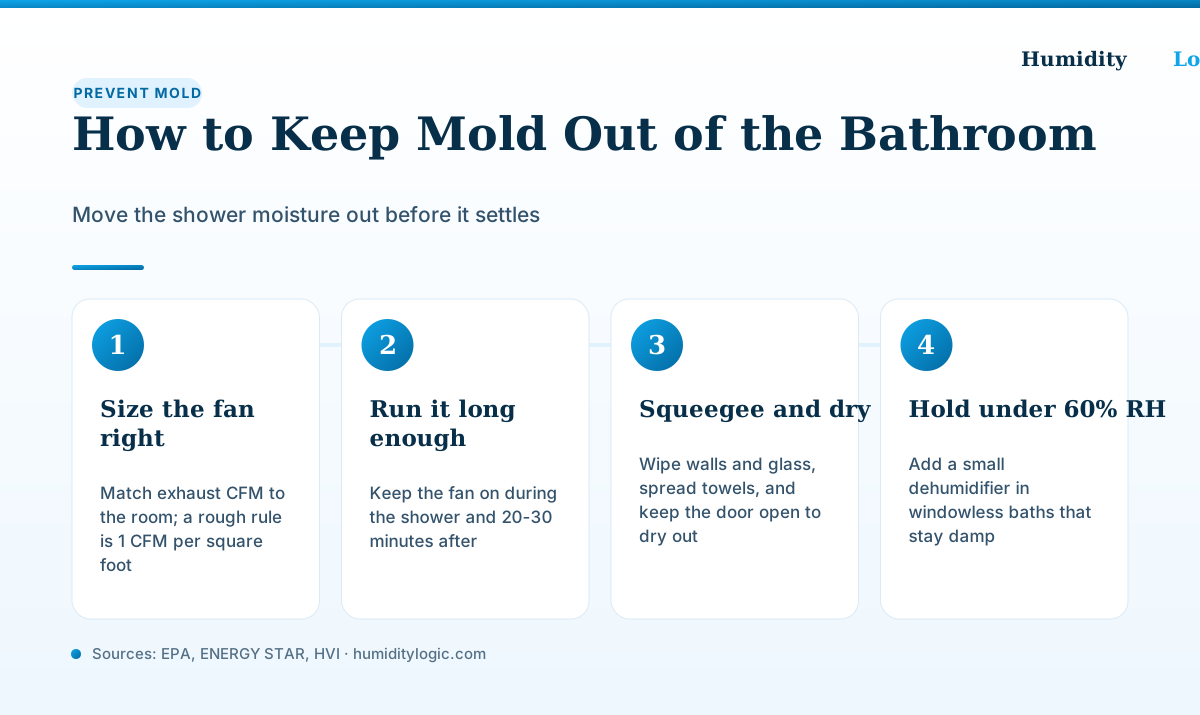
Prevent bathroom mold by moving the shower’s moisture out before it settles: run a right-sized exhaust fan during every shower and for 20 to 30 minutes after, then keep indoor relative humidity under 60%. Mold needs moisture to grow, so drying the room quickly removes the one ingredient you control. Back the fan up with a squeegee, dried-out towels, and prompt leak repairs, and the black film in the grout has nothing to feed on.
What Actually Causes Bathroom Mold?
Bathroom mold grows because the room stays wet and humid long enough for spores — which are floating in the air of every home — to take hold. Remove the moisture and the spores have nothing to grow on.
The EPA is blunt about it: mold needs moisture and a food source, and it “can grow on virtually any organic material as long as moisture and oxygen are present.” A bathroom hands mold everything it wants. Spores drift in through every open door, soap scum and body oil coat the surfaces to feed on, and every hot shower fills the air with water vapor that condenses on cold tile, grout, and caulk. You cannot scrub the spores out of the air or stop soap residue from forming, so moisture is the one lever you can pull. If the water a shower leaves behind is still there hours later, mold gets its opening — usually starting in the grout lines and caulk seams, which are slightly porous and hold damp longer than the smooth tile face.
That is why prevention is almost entirely about speed. The goal is not to keep the bathroom bone dry at all times — it is to clear the moisture from each shower fast enough that mold never gets the sustained dampness it needs.
How Do You Size a Bathroom Exhaust Fan?
Match the fan’s airflow rating, measured in CFM (cubic feet per minute), to the size of the room. The Home Ventilating Institute sizes bathroom fans at 1 CFM per square foot for bathrooms up to 100 square feet, which works out to roughly eight air changes per hour.
The math is simple. Measure the length and width of the bathroom and multiply them. A bathroom that is 9 feet by 5 feet is 45 square feet, which points to a fan rated around 50 CFM. Because most fans are sold in standard sizes and there is no penalty for slightly more airflow, round up to the next available size rather than down. A 50 CFM fan is a sensible practical floor for a small full bathroom.
Larger bathrooms over 100 square feet are sized by fixture instead of by floor area. HVI assigns 50 CFM each for the toilet, shower, and tub, and 100 CFM for a jetted tub, then adds them together — a bathroom with a separate toilet, shower, and tub calls for about 150 CFM, met by one central fan or multiple smaller ones. When you shop, look for the ENERGY STAR label: ENERGY STAR-certified ventilation fans meet minimum efficiency and sound requirements, and a quieter fan (measured in sones) is one you are far more likely to actually leave running. A fan you find too loud to use protects nothing.
If your bathroom has no fan at all and only a window, opening the window during and after a shower is the EPA’s fallback for moving moist air out — but a fan vented to the outside is more reliable, especially in winter when nobody wants the window open.
How Long Should the Fan Run After a Shower?
Leave it on during the shower and for 20 to 30 minutes after you finish. HVI specifically recommends running the fan for 20 minutes after using the bathroom, because that is roughly how long it takes to clear the humidity a hot shower dumps into the air.
Here is the mistake almost everyone makes: flipping the fan off the moment they step out of the shower. At that point the room is at its most saturated, and shutting the fan traps all that vapor to condense on every cold surface. The fan needs to keep pulling after you leave to finish the job. The easiest fix is a timer switch — a wind-up or digital timer that you set for 20 or 30 minutes so the fan turns itself off long after you have left the room. It costs a few dollars, installs in place of the existing switch, and removes the human forgetfulness that undoes good ventilation. A humidity-sensing switch does the same thing automatically, running the fan until the room drops below a set humidity.
What Habits Keep the Bathroom Dry?
The fan does the heavy lifting, but a few 30-second habits remove the standing water it cannot reach and keep the room drying between showers.
Squeegee the shower walls and glass door right after you rinse off — a quick pass sends most of the clinging water down the drain instead of leaving it to evaporate into the air and condense elsewhere. Spread a wet shower curtain or liner all the way across the rod so it dries flat instead of holding damp in its folds, and hang used towels spread out rather than balled up, which also keeps them from developing that musty smell. Leave the bathroom door open after you are done so drier air from the rest of the house can move in and help the room dry out.
Then fix the moisture sources that have nothing to do with showering. A dripping showerhead, a running toilet, or a slow leak under the sink keeps a surface constantly damp, and the EPA’s guidance is to dry any water-damaged area within 24 to 48 hours — after that window, mold usually gets started. Wipe up puddles around the tub and sink, and if caulk or grout is cracked and letting water seep behind the tile, reseal it. If mold has already taken hold in the shower, our guides to cleaning shower mold and removing that mildew smell from towels cover the cleanup before you switch to prevention mode.
What Humidity Level Keeps Mold From Growing?
Keep indoor relative humidity below 60%, and ideally between 30% and 50%. The EPA warns that humidity above 60% is likely to cause condensation, and condensation is what feeds mold. Hold the room in that band and you have removed the condition mold depends on.
You cannot manage what you cannot see, so put a $10 hygrometer in the bathroom and watch what happens after a shower. A healthy bathroom spikes when the water is running and then falls back under 60% within half an hour or so as the fan clears it. If it is still reading 70% or higher an hour later, your ventilation is not keeping up — the fan is undersized, running too briefly, or not venting to the outside. Run your target through the humidity comfort checker to see where a comfortable, mold-resistant bathroom should sit, and read what counts as high humidity for the full picture on why 60% is the line.
When ventilation alone cannot hold the line — a windowless interior bathroom with a weak fan, or a damp basement bathroom that never fully clears — a small dehumidifier gives you direct control over the humidity. It is a backup, not a substitute for moving the moist air out, but in a room that stays swampy it keeps the number under 60% between showers. Our bathroom dehumidifier guide covers picking one for the space, and the broader dehumidifier for mold playbook explains how humidity control shuts mold down room by room. Get the moisture out fast and keep the number down, and bathroom mold simply runs out of what it needs to grow.
Frequently asked questions
How do I prevent mold in my bathroom?
Control the moisture. Run a correctly sized exhaust fan during every shower and for 20 to 30 minutes after, squeegee the walls and glass, spread wet towels out to dry, fix any leaks, and keep indoor relative humidity under 60%. Mold needs moisture to grow, so drying the room out fast removes the one condition you can actually control.
What size exhaust fan do I need for my bathroom?
For a bathroom up to 100 square feet, the Home Ventilating Institute sizes the fan at 1 CFM per square foot — a 45-square-foot bathroom needs about a 50 CFM fan. Bathrooms over 100 square feet are sized by fixture instead: 50 CFM each for the toilet, shower, and tub, or 100 CFM for a jetted tub, added together.
How long should I run the bathroom fan after a shower?
The Home Ventilating Institute recommends leaving the fan on for 20 minutes after you use the bathroom, and 20 to 30 minutes is a safe range. That is how long it takes to clear the moisture a hot shower dumps into the air before it settles on cold tile, grout, and caulk. A timer switch handles this automatically.
What humidity level prevents bathroom mold?
Keep indoor relative humidity below 60%, and ideally between 30% and 50%. The EPA warns that humidity above 60% is likely to cause condensation and mold. A cheap hygrometer tells you whether your bathroom clears after a shower or stays swampy for hours.
Do I need a dehumidifier in the bathroom?
Not usually — a properly sized, properly run exhaust fan is the primary tool. But a small dehumidifier helps in a windowless bathroom with no fan, or one that stays damp long after showering despite good ventilation. It is a backup for humidity control, not a replacement for moving the moist air out.
Sources & references
Every figure on this page is checked against these published sources. Last reviewed July 28, 2026.