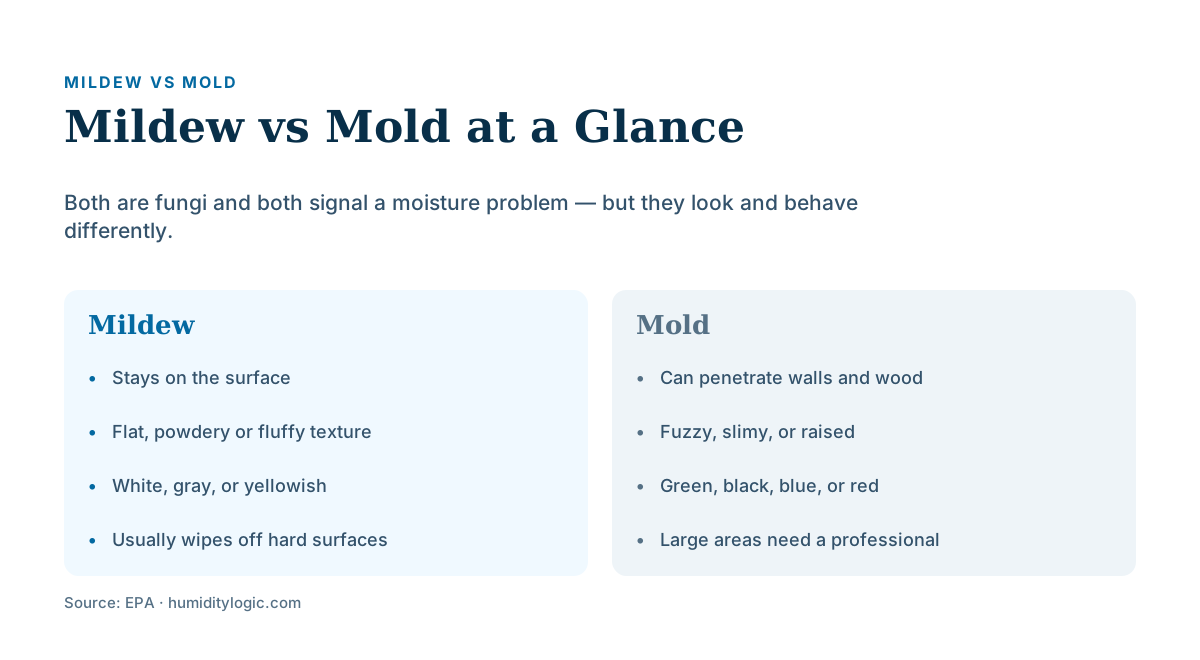
Mildew and mold are both fungi, but they differ in how they look and grow: mildew is a flat, powdery, surface growth that is usually white or gray and wipes off hard surfaces, while mold is often fuzzy or raised, comes in green, black, blue, or red, and can penetrate materials. Both signal one thing — too much moisture — and the EPA’s fix for both is keeping indoor humidity below 60% RH.
What is the difference between mildew and mold?
Mildew is a specific type of mold with a flat growth habit, so the real difference is one of degree, not category. The EPA puts it plainly: “Mildew refers to certain kinds of mold or fungus,” and “the term mildew is often used generically to refer to mold growth, usually with a flat growth habit.” Molds, by contrast, include the whole family of microscopic fungi that grow as branching filaments called hyphae.
In everyday terms, that means mildew is the mild, surface-level end of the spectrum. It tends to stay on top of the material it colonizes — grout, painted walls, fabric, windowsills — and grows outward in a flat patch. The fuzzy, three-dimensional growths people usually mean by “mold” can dig into porous materials, spreading upward and inward through drywall, wood, and ceiling tile. That penetration is what turns a cleaning chore into a repair job.
Because mildew is a kind of mold, there is no separate humidity rule for each. Everything that starves one starves the other, which is why the rest of this guide treats moisture control as the single lever that matters.
How can you tell mildew and mold apart?
Judge by texture, depth, and color. Mildew is flat and dry, often powdery or slightly fluffy, and typically white, gray, or yellowish; mold is usually raised, and it can look fuzzy, cottony, or slimy in shades of green, black, blue, or red. If you can wipe the growth off a hard surface and it does not come back within days, you were likely dealing with mildew.
Location is a useful tiebreaker. Mildew loves the flat, frequently damp surfaces of a home: shower walls, tile grout, window frames, and the fabric of a forgotten towel. Penetrating molds show up where water has actually soaked in — behind a leaking pipe, under a windowsill that sweats every winter, along the base of a damp basement wall. If the material feels soft, stained, or crumbly, moisture has gone below the surface and you are past mildew.
Smell can confirm it. Both give off a musty odor, but mildew’s is milder while heavier mold growth tends to smell stronger and more pungent. None of these tests identify the species, and you do not need one: the EPA advises that sampling is usually unnecessary because the response — remove it and fix the moisture — is the same regardless of type.
Is mildew as dangerous as mold?
For a homeowner, mildew is generally the smaller problem, because it stays on the surface and is easier to clean, while penetrating mold can damage building materials and is harder to fully remove. The EPA does not rank fungal species by danger for the public; instead it treats all indoor mold growth as something to remove promptly and, above all, to prevent. The agency’s guidance is built around moisture, not species identification.
What that means in practice is that you should not spend energy trying to decide whether a patch is “just mildew” and therefore safe to ignore. A recurring mildew ring in a bathroom is telling you the room stays too damp — the same message a mold bloom sends, only quieter. Treat both as a signal to lower humidity and improve ventilation before the problem escalates from a surface stain to soaked, structural material.
The one place the distinction earns its keep is scope. A wipeable mildew film is almost always a do-it-yourself job. Extensive mold, especially after flooding, is not — and that line is drawn by area, which we cover below.
What humidity level stops mildew and mold?
Keep indoor relative humidity below 60%, and ideally between 30% and 50%. The EPA states the guidance directly — “keep indoor humidity below 60 percent (ideally between 30 and 50 percent) relative humidity” — and adds the principle that ties this whole topic together: “The key to mold control is moisture control.” The CDC goes a step tighter, recommending humidity be held no higher than 50% throughout the day.
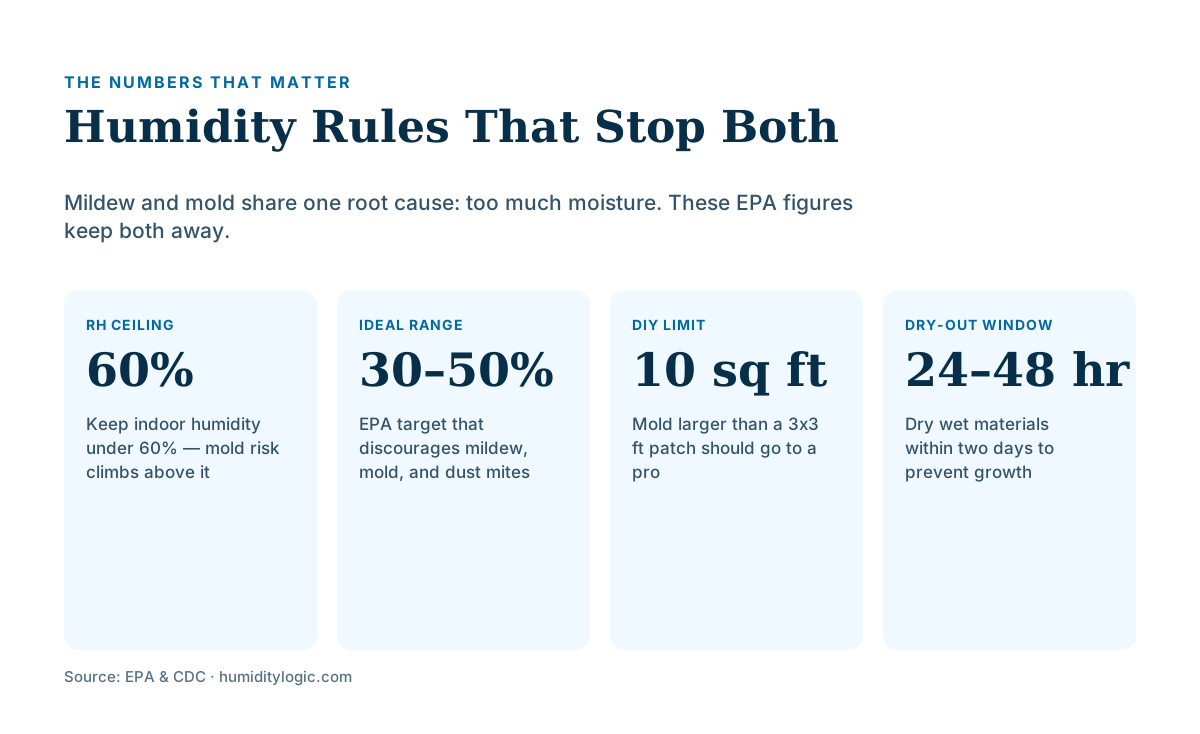
Both fungi need damp surfaces to establish, so a home that sits reliably under 60% RH gives them nowhere to start. You can spot-check any room’s reading against comfort and safety thresholds with our humidity comfort checker, and if the number keeps drifting high, our guide to what is considered high humidity explains why 60% is the line that matters indoors.
Getting there is mostly about removing moisture at the source. The EPA and CDC recommend venting dryers, stoves, and bathrooms to the outdoors, running exhaust fans while showering or cooking, and using air conditioners or dehumidifiers where a room stays humid. If whole rooms — basements especially — run damp, a dedicated dehumidifier sized for mold-prone spaces does the steady work of holding RH in the safe band. For a full playbook, see how to lower humidity in your house.
Condensation is the other half of the equation. Cold surfaces that sweat — single-pane windows, uninsulated pipes, exterior wall corners — create the exact wet film mildew and mold need, even when the room’s overall humidity looks fine. Fixing recurring condensation on windows removes those local damp spots before growth takes hold.
How do you clean mildew and mold safely?
Small patches on hard surfaces are a do-it-yourself job; large areas are not. The EPA’s rule of thumb is clear: “If the moldy area is less than about 10 square feet (less than roughly a 3 ft. by 3 ft. patch), in most cases, you can handle the job yourself.” Above that, or after major water damage or sewage backup, bring in a professional remediation contractor rather than tackling it alone.
For a small area, the method is simple. Scrub mold and mildew off hard surfaces with detergent and water and dry completely, as the EPA directs; the CDC notes you can also use a bleach solution of no more than 1 cup of bleach per 1 gallon of water. Porous materials that have absorbed mold — carpet, ceiling tile, saturated drywall — often cannot be fully cleaned and may need to be removed and replaced. Never paint or caulk over a moldy surface; the growth returns underneath.
| Situation | What the EPA / CDC advises |
|---|---|
| Mildew or mold under ~10 sq ft on a hard surface | Scrub with detergent and water (or diluted bleach), then dry completely |
| Porous material (carpet, drywall, ceiling tile) that soaked through | May need to be removed and replaced — mold can’t be fully cleaned out |
| Area larger than ~10 sq ft, or after flooding/sewage | Hire a professional; do not treat large-scale remediation as safe DIY |
| Any case where it keeps returning | Find and fix the moisture source before cleaning again |
The step people skip is the most important one: fix the water problem. The EPA advises repairing plumbing leaks and other water problems as soon as possible and drying water-damaged areas within 24 to 48 hours to prevent growth. Cleaning without solving the moisture source just resets the clock — the patch comes back because the conditions that fed it never changed.
How do you keep mildew and mold from coming back?
Deny them moisture, permanently. Once you have cleaned a patch and repaired its water source, the job becomes maintenance: hold indoor RH in the 30–50% range, keep air moving, and dry wet materials fast. Both fungi are opportunists that colonize damp surfaces within a couple of days, so consistency beats any single deep clean.
Build the humidity band into your routine. Run bathroom and kitchen exhaust fans every time you shower or cook, make sure the dryer vents outside, and check that damp-prone rooms have a dehumidifier or air conditioner keeping up in humid weather. A cheap hygrometer in the rooms that tend to run damp turns “it feels muggy” into a number you can act on before growth starts — aim to hold the reading in the 30–50% range year-round.
The through-line is simple: mildew and mold are the same problem wearing different faces, and both answer to the same fix. Control the moisture and you control the fungus — whichever name it goes by.
Frequently asked questions
Is mildew just early-stage mold?
Not exactly. The EPA describes mildew as a type of mold with a flat growth habit, so it is always a fungus — but it is not a guaranteed precursor to the fuzzy, penetrating molds that damage materials. Many mildew patches stay superficial. Both, however, mean the same thing: a moisture problem you should fix.
How can you tell mildew from mold at home?
Look at texture and depth. Mildew is flat and powdery and sits on the surface, usually white, gray, or yellowish, and it typically wipes off hard surfaces. Mold tends to be raised, fuzzy, or slimy, comes in green, black, blue, or red, and can grow into porous materials like drywall and wood.
Is mildew dangerous, or only mold?
Mildew is generally the milder problem and is easier to clean from hard surfaces, while penetrating molds can damage building materials and are harder to remove. The EPA does not rank species by danger for homeowners; it treats all indoor mold growth as something to remove and, more importantly, to prevent by controlling moisture.
What humidity level prevents mildew and mold?
Keep indoor relative humidity below 60%, and ideally between 30% and 50%. The EPA states the key to mold control is moisture control, and the CDC recommends holding humidity no higher than 50% all day. Both mildew and mold need damp conditions, so a dry home starves them.
When should you call a professional instead of cleaning it yourself?
The EPA advises hiring a professional when the moldy area is larger than about 10 square feet (roughly a 3 ft by 3 ft patch), or after major water damage or sewage flooding. Small patches on hard surfaces can be scrubbed with detergent and water, then dried completely.
Sources & references
Every figure on this page is checked against these published sources. Last reviewed July 21, 2026.