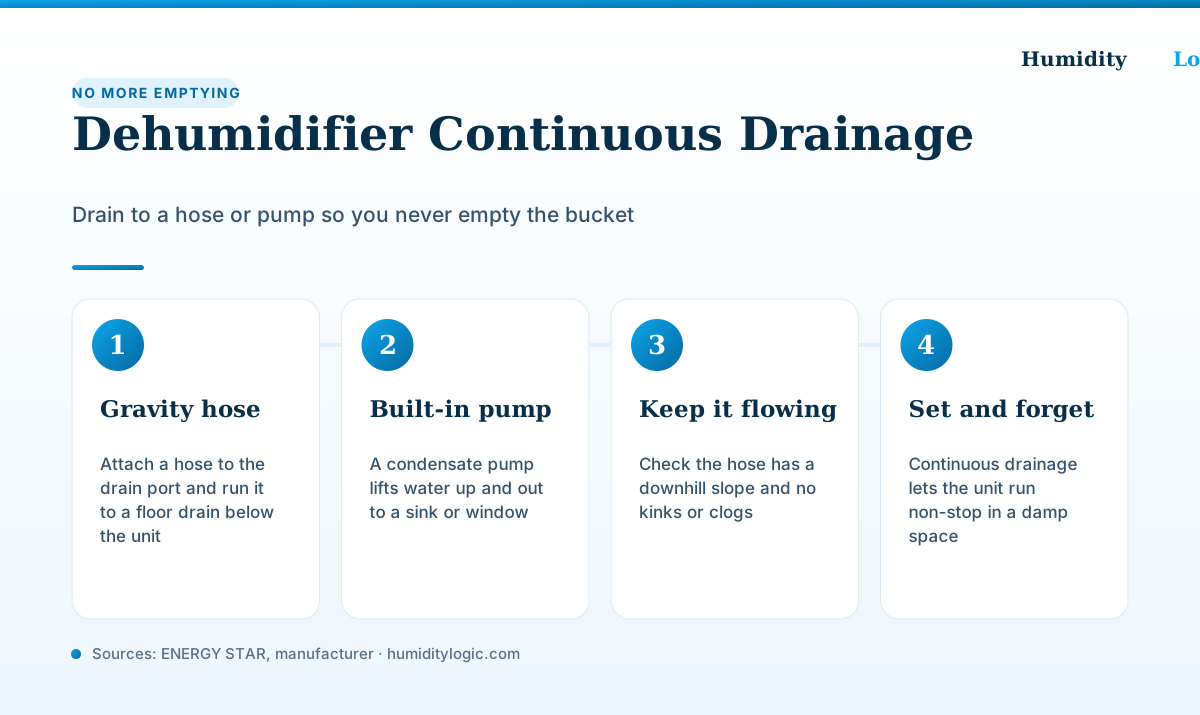
To run a dehumidifier without ever emptying the bucket, set up continuous drainage: drain the water with a gravity hose to a lower floor drain, or use a condensate pump to lift the water up to a sink or window. Gravity draining is the simpler, more reliable of the two – it has no motor to fail – but it only works when a drain sits at or below the unit. When the only drain is higher, a built-in or add-on pump does the lifting. Either way, the machine runs non-stop instead of shutting off every time the tank fills.
What is continuous drainage on a dehumidifier?
A refrigerant dehumidifier makes water constantly: a fan pulls humid air across cold coils, moisture condenses, and that condensate collects in a removable bucket. Left alone, the bucket fills and the unit shuts off until you empty it. A 50-pint machine in a damp basement can fill a 14-to-16-pint bucket three or four times a day, so unless someone is there to empty it, the room quietly re-humidifies while the machine sits idle with a full tank.
Continuous drainage swaps that stop-and-empty cycle for a hose that carries the water away on its own. It is a designed-in feature on nearly every mid-size and large unit – there is a drain port on the back or side for exactly this purpose. Set it up once and the dehumidifier runs non-stop, with no bucket to empty, which is what you want in a basement, crawl space, or any room nobody checks daily.
There are two ways to move the water: let gravity do it, or use a pump. The right choice comes down to one question – is there a drain below the unit?
How do I set up a gravity drain hose?
Gravity draining is the first choice whenever it is possible, because water flowing downhill needs no electricity and has nothing to burn out. The setup is straightforward:
- Find the drain port. Look for a threaded outlet, usually behind a rubber plug, on the back or side of the unit. Most 30-to-70-pint residential models use a 3/4-inch garden-hose thread, so a standard garden hose threads right on.
- Raise the unit. Set the dehumidifier on a sturdy shelf, table, or a couple of cinder blocks so its port sits at least six inches above the drain. The extra height makes a downhill path across the room far easier to achieve.
- Attach the hose. Pop out the plug, keep the rubber washer in the coupling, and thread the hose on hand-tight – about a quarter turn past snug. The port is plastic, so do not crank on it.
- Route it downhill. Run the hose to a floor drain, sump pit, or sink, sloping continuously downward the entire way. GE’s own guidance is to lay the hose flat on the ground and cut it to the shortest length possible. Never submerge the hose end in standing water, or you invite backflow and odors.
- Test it. Run the unit for 30 to 60 minutes and confirm water exits the far end with no leaks at the connection.
Frigidaire recommends a 1/2-inch-or-larger diameter hose, warning that small-bore lines clog easily, and says the hose “should lie flat, and as straight as possible with no kinks.” Our full walkthrough covers fittings, slope, and destinations in more detail in the dehumidifier drain hose setup guide.
How does a condensate pump work, and when do I need one?
Gravity has one hard limit: it cannot move water uphill. If the only available drain – a laundry sink, a window well, a standpipe – sits above the dehumidifier’s port, no amount of hose routing will get water there. That is the one job a pump exists to do.
You have two options. A dehumidifier with a built-in pump collects condensate in its bucket, and when the bucket fills a float switch trips a small motor that forces the water out through a narrow discharge tube. GE rates its pump models at up to 16 vertical feet with the supplied hose – enough to reach a basement utility sink or a ground-level window. Note that on those models the bucket must stay in place, because the pump only activates once the bucket is full.
Or you can add an external condensate pump next to a unit you already own. The dehumidifier gravity-drains a few inches down into the pump’s reservoir, and the pump handles the lift – stand-alone models reach 20 to 25 vertical feet and 50-plus feet horizontally, for roughly $40 to $90. An external pump is also the standard way to add lift to an older dehumidifier that has no pump built in, and because it is a separate part, you can replace a worn pump without replacing the whole machine.
Either way, reach for a pump only when you must send water up. A pump adds a small discharge tube (typically 3/8 inch rather than a fat garden hose), a float switch, and a motor – three more things that can clog or wear out. If any downhill drain is within reach, the plain gravity hose is simpler, quieter, and more dependable, which is why manufacturers and installers favor it whenever a low drain exists.
What are the most common continuous-drainage problems?
Nearly every failure traces back to one of these:
- No downhill slope. The single most common error. Any uphill section, sag, or kink traps water so it backs up and the bucket fills anyway – the classic symptom behind a dehumidifier bucket that fills too fast even with a hose attached. Confirm every inch of the line sits below the port.
- Clogs. Standing condensate grows sludge and algae, and hard water leaves mineral scale, both of which narrow the hose over time. Flush the line with clean water every couple of months as part of routine dehumidifier maintenance.
- Pump trouble. A pump adds a motor and a float switch that can fail. Constant cycling usually means a dirty float switch, and no output often means a clogged discharge tube – detach it and flush it before assuming the motor is dead.
- Freezing. Do not run continuous drainage where the line can drop to 32°F or below; water in the hose freezes, blocks flow, and can crack the fitting. Keep the unit and hose in a heated space.
- Leaving the bucket out. GE notes the bucket must stay in place with any draining method, so it catches overflow if the line ever backs up.
Is my space a good candidate?
Before you buy a hose or a pump, confirm two things. First, whether a drain sits at or below the unit – if it does, use the gravity hose; if not, plan on a pump. Second, that the dehumidifier is sized for the room, so it is not running flat-out and producing more condensate than a marginal drain path can carry. A damp basement is the textbook case for continuous drainage, and it is also the space most likely to be oversized or undersized by guesswork.
If you are unsure the unit matches the room, run the numbers with our dehumidifier size calculator, and see what size dehumidifier you need for the full method. A correctly sized unit draining continuously to a nearby floor drain is the quietest, most hands-off humidity setup there is – flush the line a few times a year and otherwise forget it.
Frequently asked questions
How do I run a dehumidifier without emptying the bucket?
Use continuous drainage. Thread a hose onto the unit's drain port and run it downhill to a floor drain, sump pit, or sink that sits below the unit, so gravity carries the water away and the tank never fills. If the only drain is higher than the unit, use a model with a built-in condensate pump or add an external pump to push the water up and out. Either way the machine runs non-stop instead of shutting off for a full bucket.
Do I need a pump for continuous drainage?
Only if the drain is above the dehumidifier. Gravity draining is free and has nothing to fail, but water only flows downhill, so it needs a floor drain, sump pit, or sink at or below the unit. When the only outlet is a high sink or an out-the-window run, gravity cannot lift water and you need a built-in or external condensate pump. GE, for example, rates its pump models at up to 16 vertical feet, and stand-alone external pumps reach even higher.
Why is water still filling the bucket after I connected a hose?
The hose almost certainly is not running downhill the whole way. Any uphill section, sag, or kink traps water, so it backs up and the bucket fills anyway. Confirm every inch of the hose sits lower than the drain port, remove low spots, and clear any kink. A clog from algae or mineral scale inside the line does the same thing, so flush the hose with clean water if flow has slowed.
Does the collection bucket have to stay in place during continuous draining?
On most units, yes. GE states the bucket must be in place regardless of which draining method you use, because it catches overflow if the hose ever backs up. On pump models the bucket also acts as the reservoir -- the pump only switches on once the bucket fills. Leaving the bucket seated is cheap insurance against a clogged or kinked line quietly flooding the floor.
Can I use continuous drainage outdoors or in freezing weather?
No. Manufacturers warn against continuous draining when temperatures fall to 32°F or below, because water left in the hose freezes, blocks the line, and can crack the fitting. Refrigerant dehumidifiers also stop pulling much moisture once a room drops below roughly 60°F. Keep the unit and its drain line in a heated space, and route any outdoor run so it cannot freeze.
Sources & references
Every figure on this page is checked against these published sources. Last reviewed August 6, 2026.