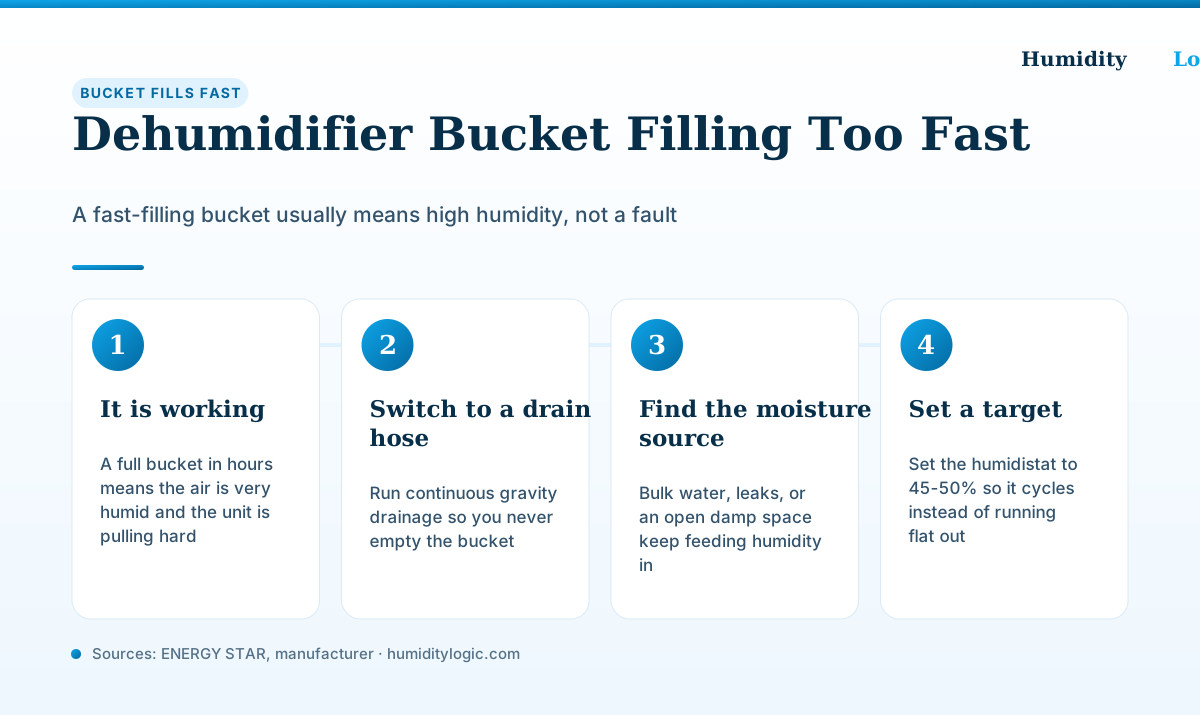
A dehumidifier bucket that fills too fast is almost always a sign the unit is working, not failing. A tank that empties itself into a few hours simply means the air is very humid and the machine is pulling water out quickly, which is exactly its job. A new, damp, or freshly wet space can fill a small bucket several times a day at first. The fix is rarely a repair: switch to a drain hose so you never empty a tank again, then find and fix whatever moisture source is feeding the room. The one number that tells you whether anything is actually wrong is your room’s relative humidity, not the fill rate.
Is a fast-filling bucket normal?
In most cases, yes. A full bucket only proves the dehumidifier is extracting water from the air; it says nothing about whether the unit is winning the battle against incoming moisture. The greater the relative humidity in the space, the more water the machine collects, so rapid filling in a damp room is expected behavior rather than a malfunction.
This is especially true when the unit is new to a space or the space has never been dried out. Wood, drywall, concrete, furniture, and fabrics all hold moisture, and during the first days of operation they release it into the air where the dehumidifier grabs it. That is why a brand-new unit in a humid basement can fill its tank two or three times on day one. Humid summer weather adds to the load: every time a door opens or outdoor air infiltrates the space, more moisture rides in for the machine to remove.
The test that settles it is simple. Put a cheap hygrometer near the unit and watch the reading over a day or two. If relative humidity is falling toward your target, the dehumidifier is working correctly and the fast-filling bucket is just the visible cost of a heavy moisture load. If the reading stays stubbornly high for days while the bucket keeps filling, moisture is entering as fast as it is removed, and that points to a source worth chasing down.
How do I stop emptying the bucket so often?
The most reliable fix is to stop using the bucket for collection at all and switch to continuous gravity drainage. Nearly every modern dehumidifier supports it. According to GE Appliances’ draining guidance, you remove the bucket, open the drain cover on the back, thread a standard garden hose onto the drain nozzle, cut the hose to length, and lead it to a floor drain, then replace the bucket. Water then flows out on its own and you never haul a tank again.
A few practical points make gravity drainage reliable. The hose drains by gravity alone, so it must slope continuously downhill from the unit to the drain, with no kinks, loops, or flat runs where water can pool. Keep the hose as short as practical. If the unit sits on the floor, raise it on a sturdy stand or shelf so the drain nozzle is above the drain. Our drain hose setup guide walks through the slope, fittings, and common mistakes step by step.
When there is no drain lower than the unit, gravity cannot help. In that case a dehumidifier with a built-in condensate pump solves the problem by pushing water upward and out to a sink, laundry standpipe, or window. Pump models cost more but let you place the unit anywhere. Either way, continuous drainage does not reduce how much water the machine collects; it only removes the chore, which is usually the real complaint behind a fast-filling bucket.
One caution when you switch to a hose: the bucket usually stays in place even when you drain continuously, because the float switch that shuts the unit off lives inside it. Leave the bucket seated so the float can sit at the bottom, or the unit may read the tank as full and stop collecting. If a hose is connected but the tank keeps filling anyway, check that the drain cover is fully open and the hose is not clogged or pinched, since water backing up will spill into the bucket instead of running out.
Where is all the moisture coming from?
If the bucket fills fast and the room stays damp, the machine is not the problem. Something is feeding humidity into the space faster than the unit can keep up, and finding it matters more than any setting.
Bulk water is the biggest culprit. A dehumidifier pulls moisture from air, not from puddles. A basement floor kept wet by seepage, a foundation leak, a failed sump, or groundwater will keep evaporating into the air no matter how hard the unit runs. The fix is drainage and waterproofing, not more dehumidification. Our guide to basement humidity explains how to tell diffuse dampness from an active leak.
Hidden sources feed the same problem. Vapor rising through bare concrete, an unvented clothes dryer, a slow plumbing leak, an exposed crawl space, or humid air infiltrating from an attached garage all pump moisture into the space continuously. Air leaks matter too: an open door to a damp area, a window left cracked in humid weather, or unsealed ductwork lets outdoor moisture in as fast as the unit removes it. Close off and seal the damp space so the dehumidifier is conditioning a defined volume of air rather than fighting the whole outdoors.
A quick way to gauge which situation you are in is to compare the fill rate over time rather than in a single day. A dehumidifier working through the normal drying-out period collects the most water in its first day or two and then tapers off as the room dries. A unit fighting an active source shows no such taper: it keeps filling at the same fast rate day after day, week after week. If the fill rate never slows and the humidity reading never falls, you are looking at a moisture source, and no amount of dehumidifier capacity will fix it until that water is stopped at the door.
What humidistat setting should I use?
If your unit runs flat out and never cycles, the target may be set too low. The EPA recommends keeping indoor relative humidity below 60 percent, ideally between 30 and 50 percent. Setting the humidistat to 45 to 50 percent hits that range and lets the unit cycle off once the room is dry, instead of running nonstop and filling the bucket around the clock. A target of 35 percent in a humid climate can keep the compressor running indefinitely because indoor and outdoor moisture nudge the room back above 35 percent the moment it stops.
Is my dehumidifier the right size?
A fast-filling bucket is rarely a sizing problem on its own. Rated capacity is measured under lab conditions, so a “50 pint” unit collects a different amount in a real 65°F basement at 75 percent humidity than it does on the test bench. High collection usually reflects high humidity, not a mismatch.
Sizing is only suspect if the room never reaches your target after several days of continuous running. ENERGY STAR sizes units by both square footage and how damp the space is, with wet areas needing far more capacity than merely damp ones. Check the match with our sizing calculator or the guide on what size dehumidifier you need before assuming the unit is too small.
When should I actually worry?
There is one case where fast filling signals a fault: if the unit collects little or no water yet the coil or airflow seems off, the concern is the opposite problem. A frozen coil or choked filter changes the picture entirely, covered in our guide on a dehumidifier not collecting water. Otherwise, keep the filter clean so airflow stays strong, and treat a fast-filling bucket for what it is: proof the machine is doing its job. Set up a drain hose, fix the moisture source, set a sensible target, and the fill rate will slow on its own as the space dries out over the coming days.
Frequently asked questions
Is it normal for a dehumidifier bucket to fill up in a few hours?
Yes, especially at first. A bucket that fills in a few hours means the air is very humid and the unit is pulling water out fast, which is exactly what it is supposed to do. A new or freshly damp space, a wet basement, or humid summer weather can fill a small tank several times a day for the first few days. What matters is not how fast the bucket fills but whether your room humidity is falling. If a hygrometer shows the level dropping toward your target over a day or two, the unit is working correctly.
How do I stop emptying the dehumidifier bucket so often?
Switch to continuous gravity drainage. Most units let you remove the bucket, thread a standard garden hose onto the drain nozzle on the back, and run it downhill to a floor drain, so the water leaves on its own and you never empty a tank again. If there is no drain below the unit, a model with a built-in condensate pump can push water up and out to a sink or window. This does not change how much water the unit collects; it just removes the chore of hauling the bucket.
Does a fast-filling bucket mean my dehumidifier is the wrong size?
Not by itself. Rated pint capacity is measured in a lab at 80°F and 60% relative humidity, so a unit rated for 50 pints a day can collect far less, or far more relative to a small bucket, depending on real conditions. A fast-filling tank usually reflects high humidity, not the wrong size. Sizing is only wrong if the room never reaches your target humidity after several days of running. Check the match with a sizing calculator before assuming the unit is too small.
Why does the bucket fill fast but the room still feels damp?
That points to a moisture source the unit cannot outpace, such as bulk water on the floor, a plumbing or foundation leak, an exposed crawl space, or humid air leaking in from outside or an attached garage. The dehumidifier removes water from the air, but if water keeps entering the space just as fast, the room stays damp while the bucket keeps filling. Find and fix the source, and both the fill rate and the dampness will fall together.
Will the bucket keep filling this fast forever?
Usually not. In a space that has never been dried out, the first days see the fastest collection as building materials, furniture, and fabrics give up stored moisture. Once the air and contents dry, the fill rate slows noticeably and the unit begins to cycle instead of running flat out, as long as no active leak keeps feeding humidity in. If weeks pass with no slowdown, look for a moisture source rather than blaming the machine.
Sources & references
Every figure on this page is checked against these published sources. Last reviewed August 3, 2026.