A whole house dehumidifier is a 70–170 pint-per-day unit ducted into your HVAC system that dries your entire home automatically, draining condensate away with no tanks to empty. It beats portables when you need more than one room treated, and installation is a professional job that typically runs $1,500–$3,500 installed.
What is a whole house dehumidifier?
A whole house dehumidifier (also called a whole home dehumidifier) is a high-capacity refrigerant dehumidifier that connects to your home’s ductwork, treating every conditioned room from a single unit instead of drying one space at a time.
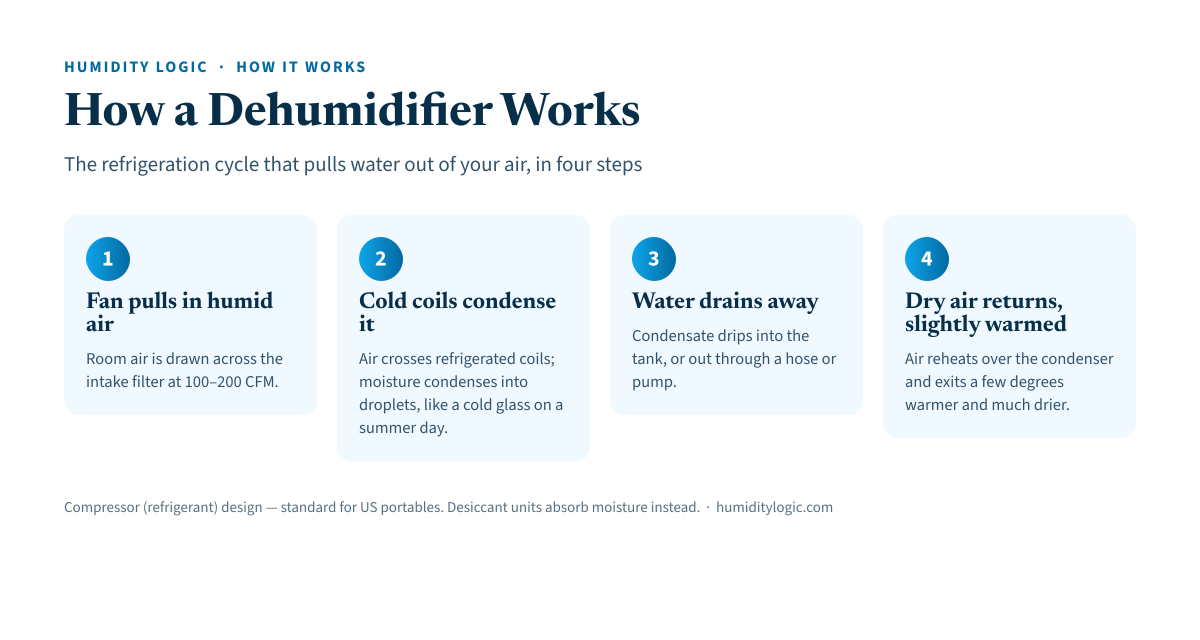
It works the same way as a portable: a fan pulls humid air across cold evaporator coils, moisture condenses and drains away, and the air passes back over warm condenser coils before returning to the house slightly warmer and much drier. The differences are scale and integration. A whole-home unit typically sits near your air handler — in a basement, crawl space, utility closet, or attic — and is ducted into the HVAC return so dry air distributes through your existing supply vents.
Three things separate it from the portable sitting in your basement:
- Capacity. Whole-home units from manufacturers like Aprilaire and Santa Fe carry ratings from roughly 70 to 170 pints per day under the current DOE test standard. Portables top out around 50 pints per day.
- Automation. A built-in dehumidistat samples return air and runs the unit only when humidity drifts above your setpoint. There is no tank to empty — condensate goes straight to a drain.
- Durability. Whole-home units use commercial-grade components and typically last 10–15 years, roughly two to three times the service life of a portable.
The EPA recommends keeping indoor relative humidity between 30% and 50%, and below 60% at all times, to prevent mold growth and dust mite activity. A whole house dehumidifier holds that range everywhere in the house — not just within a few feet of wherever you parked a portable.
When does a whole house dehumidifier beat a portable?
A whole house dehumidifier wins when humidity is a house-wide problem — sticky bedrooms upstairs, a musty basement below, condensation on windows — while a portable remains the better buy for a single damp room.
Portables are cheap, plug-in, and effective for one space. But post-2019 DOE testing (which measures capacity at a realistic 65°F instead of the old 80°F) makes their limits clear: the largest portables now rate about 50 pints per day. If you are comparing against an older unit, note that pre-2019 labels read roughly 30% higher — a “70-pint” portable from 2018 is comparable to a 50-pint unit today. Whole-home units are tested under their own DOE category and rate 70–170 pints per day.
| Portable dehumidifier | Whole house dehumidifier | |
|---|---|---|
| Coverage | One room or zone | Entire home (up to ~5,000+ sq ft) |
| Capacity (post-2019 rating) | 20–50 pints/day | 70–170 pints/day |
| Drainage | Tank to empty (or gravity hose) | Automatic condensate drain |
| Control | Onboard, per-unit | Central dehumidistat or thermostat |
| Noise in living space | Audible in the room | Remote — runs near the air handler |
| Typical lifespan | 3–5 years | 10–15 years |
| Upfront cost | $150–$400 | $1,500–$3,500 installed |
| Installation | None — plug in | Professional HVAC job |
Choose a whole house dehumidifier when:
- Two or more rooms need dehumidification, or you are running multiple portables already. Two large portables cost $500–$800, still leave the rest of the house untreated, and need their tanks emptied daily.
- Your AC can’t keep up with moisture. Air conditioners dehumidify only while cooling, so on mild, muggy days they short-cycle and leave the air clammy. Our dehumidifier vs. air conditioner comparison covers why the two appliances solve different problems.
- You want it invisible. No tanks, no noise in living spaces, no unit to trip over.
Stick with a portable when the problem is confined to one space — a single damp basement is the classic case, and our basement dehumidifier guide walks through when a portable is genuinely enough down there.
What size whole house dehumidifier do you need?
Most homes need a whole house dehumidifier rated between 70 and 130 pints per day; as a starting rule, a 70–90 pint unit suits homes up to about 2,300 square feet, 90–120 pints covers roughly 2,300–3,000 square feet, and larger or very humid homes step up from there.
Manufacturer coverage claims track this pattern. Santa Fe’s Ultra98 (98 pints/day) is rated for homes up to about 2,300 square feet, its larger Ultra-series units stretch toward 5,000 square feet, and Aprilaire’s E-series spans 70 to 130 pints across similar home sizes. But square footage is only the starting point. Size up when you have:
- A humid climate — Gulf Coast, Southeast, or anywhere summer dew points live in the 70s
- A leaky, older house with high air infiltration, or a vented crawl space under the living area
- High indoor moisture load — big household, frequent cooking and showering, lots of houseplants, an indoor spa
- Persistent readings above 60% RH even with the AC running
Undersizing is the expensive mistake: an undersized unit runs continuously, never reaches setpoint, and wears out early. Oversizing by one step costs a little more upfront but cycles less and lasts longer. Run your square footage, climate, and conditions through our dehumidifier sizing calculator for a specific pint recommendation, and see our guide to what size dehumidifier you need for the full sizing method, including how to translate old-standard ratings.
What does whole house dehumidifier installation involve?
Whole house dehumidifier installation is an HVAC-professional job: the unit is mounted near your air handler, ducted into the return plenum, connected to a condensate drain, and wired to a dedicated electrical circuit — typically a half-day to full-day project.
Here is what a licensed installer actually does:
- Placement. The unit is mounted or suspended near the air handler — basement, crawl space, utility closet, or attic. Accessible locations (a utility closet) install faster and cheaper than tight attics or crawl spaces.
- Duct connections. In the most common configuration, the dehumidifier pulls air from the HVAC return, dries it, and discharges it back into the return plenum or a supply trunk, letting your blower distribute dry air house-wide. Dedicated returns from problem areas (a damp basement) are an option.
- Condensate drain. A drain line runs to a floor drain, utility sink, or condensate pump — the same approach your AC coil uses. This is what eliminates tank-emptying forever.
- Electrical. Whole-home units draw enough current that most manufacturers require a dedicated circuit, which may mean an electrician adds a breaker.
- Controls. The installer sets up the onboard dehumidistat or ties the unit into a compatible thermostat so it samples return air and cycles automatically.
This is not a DIY project. Cutting into plenums, modifying ductwork, and adding circuits are licensed-trade work in most jurisdictions, and improper duct configuration can create airflow problems for your furnace and AC. DIY installation also typically voids the manufacturer warranty.
How much does a whole house dehumidifier cost?
Expect to pay $1,500 to $3,500 installed for a whole house dehumidifier — roughly $1,000 to $2,800 for the unit itself depending on capacity, plus $500 to $1,000 for professional installation.
Where you land in that range depends on:
- Capacity. A 70-pint unit sits near the bottom of the equipment range; 130–155 pint units command the top.
- Installation complexity. A simple tie-in next to an accessible air handler is the cheap end. Attic or crawl-space placement, long drain runs, a condensate pump, or a new dedicated circuit push labor toward $1,000 or beyond.
- Region. HVAC labor rates vary widely across the US.
Operating cost is the number most buyers forget. A whole-home unit drawing 500–700 watts that runs several hours a day through a humid summer typically adds $15–$40 per month to your electric bill, varying with your climate, setpoint, and local rates — plug your unit’s wattage and expected runtime into our electricity cost calculator for a personalized estimate. Efficient models certified under the current ENERGY STAR whole-home category offset part of that, and drier air often lets you raise the AC setpoint 2–3°F, clawing back some cooling cost.
Is a whole home dehumidifier worth it?
For homes with humidity problems in more than one room — especially in humid US climates — a whole home dehumidifier is usually worth the cost, because it protects the entire structure, runs itself, and outlasts two or three generations of portables.
The math favors going whole-home when you would otherwise buy multiple portables: $600 in portables replaced every 3–5 years, plus daily tank duty, against one $2,500 installed system that runs unattended for a decade. It also favors whole-home when moisture is threatening things portables can’t protect — hardwood floors cupping, window condensation, musty odors in closets, mold spots on ceilings — since those are house-wide symptoms that need house-wide drying.
Skip it if your humidity problem is confined to one room, your climate only has a few muggy weeks a year, or you rent. Start with the numbers: measure RH in a few rooms with a $15 hygrometer for a week. If multiple rooms sit above 60%, size a system with our dehumidifier sizing calculator and get two or three quotes from licensed HVAC contractors.
Frequently asked questions
Can I install a whole house dehumidifier myself?
No — treat it as a professional HVAC job. The unit has to be ducted into your return plenum, connected to a condensate drain, and wired to a dedicated circuit, and mistakes in any of those steps can damage your HVAC system or void the warranty. Expect to hire a licensed HVAC contractor.
How long does a whole house dehumidifier last?
Most whole-home units are built for roughly 10–15 years of service, versus about 3–5 years for a typical portable. They use commercial-grade compressors and coils, which is a big part of why the upfront price is higher.
Does a whole house dehumidifier run all the time?
No. A dehumidistat measures the humidity of air returning from the house and cycles the unit only when moisture rises above your setpoint. In most US climates that means heavy runtime in summer and shoulder seasons and little to none in winter.
What humidity should I set a whole house dehumidifier to?
Set it between 30% and 50% relative humidity, the range the EPA recommends for indoor spaces. Staying under 60% is the critical threshold, since mold and dust mites thrive above it. A 45–50% setpoint is a comfortable, efficient target for most homes in summer.
Will a whole house dehumidifier cool my house?
Not directly — it actually returns air slightly warmer than it took in, because the removal process releases heat. But drier air feels noticeably cooler at the same temperature, so many homeowners raise the AC setpoint a few degrees and save on cooling.
Sources & references
Every figure on this page is checked against these published sources. Last reviewed July 21, 2026.