Alaska is the most humid state in the US, with an average annual relative humidity of 77.1% — ahead of Florida (74.5%) and Louisiana (74.0%), per a NOAA-based analysis by climatologist Brian Brettschneider. But there’s a catch: relative humidity measures how saturated air is, not how much moisture it holds. Cold Alaskan air saturates easily — so the No. 1 state is also among the least muggy.
That paradox is the key to reading any humidity ranking correctly, and we’ll unpack it below. You can also explore every state on our interactive US humidity map, which is powered by the same dataset.
Which Are the 10 Most Humid States?
Six of the top ten aren’t in the South. The ranking below comes from NOAA hourly surface weather observations analyzed by climatologist Brian Brettschneider in 2018 and compiled by DataPandas — the canonical dataset behind our interactive map.
| Rank | State | Avg. Relative Humidity |
|---|---|---|
| 1 | Alaska | 77.1% |
| 2 | Florida | 74.5% |
| 3 | Louisiana | 74.0% |
| 4 | Mississippi | 73.6% |
| 5 | Hawaii | 73.3% |
| 6 | Iowa | 72.4% |
| 7 | Michigan | 72.1% |
| 8 | Indiana | 72.0% |
| 9 | Maine | 71.7% |
| 10 | Vermont | 71.7% |
The list splits into three groups. The Gulf and tropical states — Florida, Louisiana, Mississippi, Hawaii — sit atop a warm ocean that feeds constant moisture into the air. The Upper Midwest — Iowa, Michigan, Indiana — combines humid summers, Great Lakes moisture, and cool, damp shoulder seasons. And then there are the cold-climate entries — Alaska, Maine, Vermont — which rank high for a reason that has more to do with temperature than water.
Is Alaska Really the Most Humid State?
Yes — and no, depending entirely on what you mean by “humid.”
By relative humidity, Alaska’s 77.1% is the highest in the nation, and the number is legitimate. Coastal Alaska is wrapped in cool ocean air, fog, and near-daily drizzle in places like Southeast Alaska’s panhandle. The air there spends most of the year close to saturation.
But relative humidity is a percentage, not a quantity. It tells you how full the air is relative to what it could hold at its current temperature — and cold air can hold very little water vapor in the first place. Air at 40°F is fully saturated with a fraction of the moisture that 90°F air can carry. So Alaska’s air is almost always nearly full of a very small amount of water.
That’s why nobody steps off a plane in Anchorage and complains about the mugginess. In fact, when Brettschneider ranked states by dew point — the temperature at which air becomes saturated, and a direct proxy for actual moisture content — Alaska fell to the bottom of the list while Florida rose to the top.
What’s the Difference Between Relative Humidity and Dew Point?
The National Weather Service is blunt about this: dew point, not relative humidity, is the better measure of how humid it actually feels outside. Relative humidity depends on temperature; dew point doesn’t.
Two quick examples make the point:
- Anchorage, 45°F with 85% RH: dew point around 41°F. Feels crisp, even damp-cool — but not muggy.
- New Orleans, 90°F with 60% RH: dew point around 74°F. Feels oppressive, despite the lower relative humidity.
As a rule of thumb, dew points below 55°F feel dry, 55–65°F feels noticeably humid, and above 65°F feels sticky to most people. Gulf Coast states spend entire summers above 70°F dew points, which is why Florida, Louisiana, and Mississippi feel like the most humid states even though Alaska outranks them on paper. For a deeper walkthrough of the two metrics — and why your weather app’s RH number can mislead you — see our guide to dew point vs. humidity.
Why Do Cold States Like Maine and Vermont Rank So High?
The same math that puts Alaska at No. 1 lifts Maine and Vermont into the top ten. Northern New England is cool for much of the year, and cool air sits near saturation with modest amounts of moisture. Add Atlantic air masses, long damp springs and falls, and snowmelt, and the average relative humidity climbs even though summer stickiness is mild compared with the Gulf Coast.
The Midwest trio — Iowa, Michigan, Indiana — is a different story. These states get genuinely muggy summers. Moisture streams north from the Gulf of Mexico, and Iowa adds a local source meteorologists call “corn sweat”: millions of acres of crops transpiring water vapor into the July air, which can push dew points into the mid-70s°F. Combine real summer mugginess with cool, damp winters and you get year-round averages above 72%.
What Does Living in a Top-10 Humid State Mean for Your Home?
Outdoor climate sets the baseline your home has to fight against. In a high-humidity state, moist outdoor air infiltrates through every gap, rides in on ventilation, and seeps through basement walls and crawl spaces. The stakes are concrete:
- Mold and mildew. The EPA warns that indoor mold growth is driven by moisture, and sustained indoor humidity above 60% creates conditions where mold can colonize drywall, wood framing, and fabrics.
- Dust mites and allergens. Dust mite populations thrive in humid air and decline sharply when RH is held below 50%.
- Structural damage. Chronic moisture warps wood floors, peels paint, corrodes fasteners, and degrades insulation performance.
- Comfort and energy costs. Humid air feels warmer, so homeowners in sticky climates run air conditioning harder to feel cool at the same temperature.
The EPA’s target for healthy indoor air is 30–50% relative humidity — a band most homes in top-10 humid states won’t hit in summer without mechanical help.
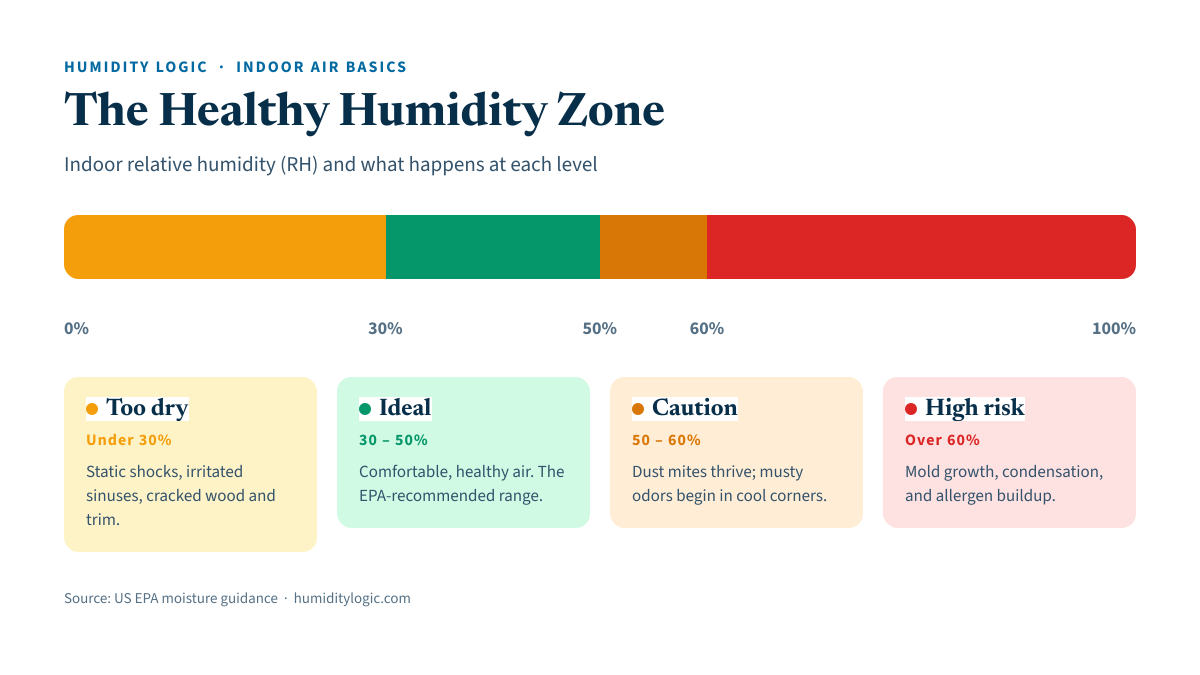
If your home reads above that band, start with the fundamentals — ventilation, air sealing, and source control — covered in our guide on how to lower humidity in your house. For basements, crawl spaces, or whole rooms that stay damp, a properly sized dehumidifier is usually the fix; our dehumidifier sizing calculator matches capacity to your room size and moisture level so you don’t buy a unit that runs nonstop and still falls short.
One nuance worth knowing: in cold top-10 states like Alaska, Maine, and Vermont, the indoor problem often flips in winter. Heated indoor air becomes very dry even as outdoor RH stays high, so homeowners there may run humidifiers in January and dehumidifiers in a damp basement come June.
Which States Have the Lowest Humidity?
The bottom of the ranking is a tour of the high desert:
- Nevada — 38.3%
- Arizona — 38.5%
- New Mexico — 45.9%
- Utah — 51.7%
- Colorado — 54.1%
Nevada and Arizona average roughly half the relative humidity of the top-10 states. Homeowners there face the opposite problem — cracked woodwork, static, and dry sinuses — and are more likely to need a humidifier than a dehumidifier for most of the year.
The Bottom Line
Alaska’s No. 1 ranking is a lesson in reading climate data carefully: relative humidity crowns the coldest damp state, while dew point tells you where the air actually feels heavy. Wherever your state lands, the number that matters most for your home is the one on your indoor hygrometer — aim for the EPA’s 30–50% band, and see how your state compares on our interactive US humidity map.
Frequently asked questions
Is Alaska really the most humid state?
Yes — by average annual relative humidity, Alaska leads the nation at 77.1%, according to a NOAA-based analysis by climatologist Brian Brettschneider. But relative humidity measures saturation, not moisture. Because cold air holds very little water vapor, Alaska ranks first on RH while its air actually carries less total moisture than any Gulf Coast state.
Which state has the lowest humidity?
Nevada is the driest state, with an average relative humidity of just 38.3%. Arizona is a near-tie at 38.5%, followed by New Mexico at 45.9%, Utah at 51.7%, and Colorado at 54.1%. All five are high-desert or mountain states far from major moisture sources.
Which state feels the most humid?
Florida. When ranked by dew point — the measure that tracks how sticky air actually feels — Florida and the Gulf Coast states top the list, while Alaska drops to the bottom. Dew points above 65°F feel muggy to most people, and Florida spends much of the year well above that line.
What is a healthy indoor humidity level?
The EPA recommends keeping indoor relative humidity between 30% and 50%. Below 30%, air feels dry and can irritate skin and sinuses; sustained levels above 60% put your home at high risk for mold growth, dust mites, and moisture damage.
Do I need a dehumidifier if I live in a top-10 humid state?
Very likely, at least in some rooms. Homes in high-humidity states routinely see basements, crawl spaces, and poorly ventilated rooms climb past 60% RH, where mold risk rises sharply. Size the unit to the room — an undersized dehumidifier runs constantly and still misses the target.
Sources & references
Every figure on this page is checked against these published sources. Last reviewed July 21, 2026.