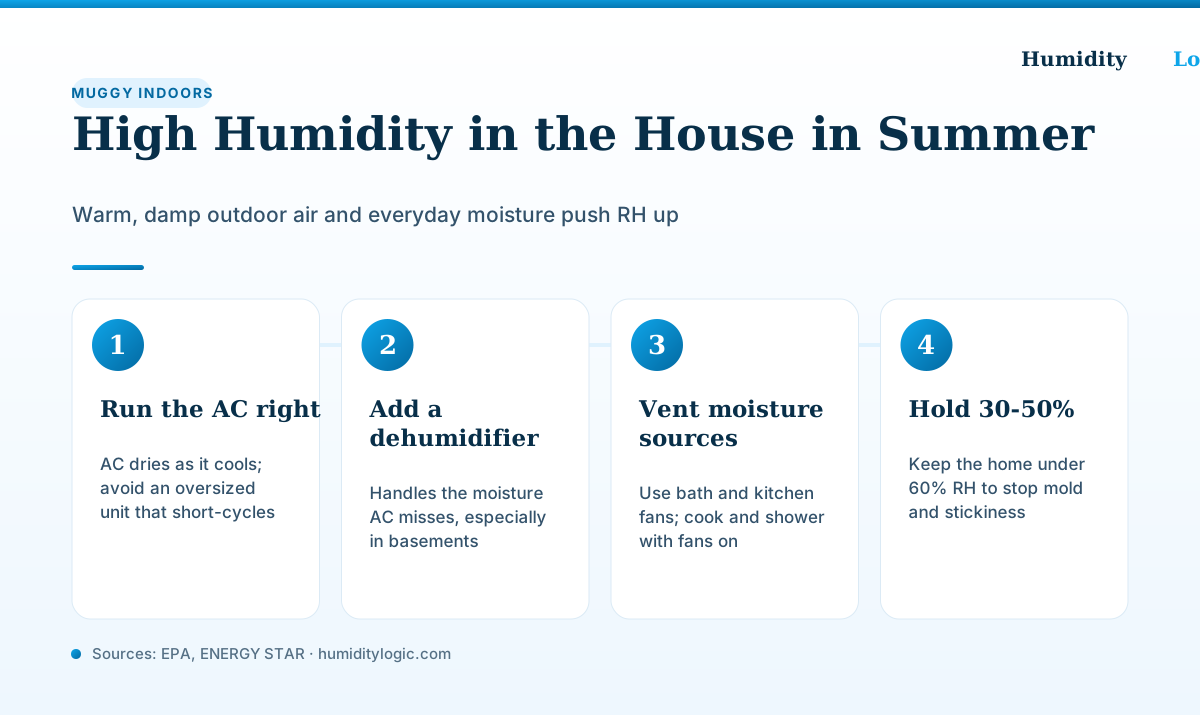
Summer indoor mugginess comes from three things working together: humid outdoor air leaking in, everyday moisture from cooking, showering, and people, and an oversized air conditioner that cools fast but short-cycles so it never dehumidifies. The fix is the same three-part response — run the AC correctly, add a dehumidifier for what it misses, and vent moisture at the source — all aimed at holding your home in the 30-50% relative humidity band and never above 60%.
If the air in your house feels thick and sticky in July even though the thermostat reads a comfortable number, you are feeling humidity, not heat. The temperature is fine; the moisture is not. Understanding where that moisture comes from makes the fix obvious, so let’s walk through the causes first, then the solutions.
The signs are easy to spot once you know them: skin that stays damp indoors, laundry and towels that take forever to dry, a musty smell that gets stronger downstairs, condensation beading on cold-water pipes or window glass, and an AC that runs in short bursts yet leaves the house feeling clammy. Any one of these points to too much moisture in the air rather than a cooling problem — which is why turning the thermostat down usually doesn’t help.
Why Does My House Get So Humid in Summer?
Three sources stack up, and in a humid-climate summer they reinforce each other.
Warm, damp outdoor air infiltrating. Summer air outside holds a lot of water vapor. Every time a door opens, and continuously through the small gaps and leaks in a typical house, that humid air pushes inside. On a muggy day the outdoor dew point can sit above 70°F, and any of that air that gets in raises the moisture load your cooling system has to remove.
Everyday moisture from living. Cooking, boiling water, showering, running the dishwasher, drying laundry, watering plants, and simply breathing all release water vapor indoors. A household adds gallons of it to the air every day. In summer, when the house is closed up against the heat, that moisture has nowhere to go and accumulates.
An oversized AC that short-cycles. This is the counterintuitive one. An air conditioner is also a dehumidifier — it pulls water out of the air as it cools. But it only does that while it is running. An oversized unit cools the house so quickly that it satisfies the thermostat and shuts off in a few minutes, before it has run long enough to wring much water out. The DOE notes that oversizing an air conditioner leads to “poor humidity removal due to excessive on-off cycling”. The result is a house that is cold and clammy at the same time. For the full mechanics, see does AC reduce humidity.
What Is a Healthy Humidity Level Indoors?
Aim for 30-50% relative humidity, and keep it below 60% at all times. The EPA states that indoor relative humidity “should be kept below 60 percent – ideally between 30 percent and 50 percent, if possible”. Above 60%, mold, dust mites, and musty odors take hold; the air also simply feels sticky. In summer most people land around 45-50% as the comfortable sweet spot — dry enough to stop the clammy feeling without over-drying.
If you are not sure where your home sits, a cheap hygrometer in each problem area tells you fast, and our humidity comfort checker translates a temperature-and-humidity reading into how the air will actually feel. For the wider context on what counts as too much, see what is considered high humidity.
How Do I Run My AC to Lower Humidity?
Start with the AC, because it is already installed and already doing half the job.
Don’t oversize it. When you replace a system, resist the urge to buy bigger. A slightly smaller unit that runs in longer cycles dehumidifies far better than an oversized one that blasts cold and quits. Proper sizing uses a Manual J load calculation rather than a rule of thumb, and it matters most in humid climates where short-cycling leaves moisture behind.
Favor longer, slower cooling cycles. Moisture condenses on the AC coil only while the system runs, so anything that lengthens the run helps. A lower fan speed keeps air over the cold coil longer and pulls out more water. Many thermostats and modern systems offer a “dry” or dehumidify mode that does exactly this — running the compressor with reduced airflow to prioritize moisture removal over raw cooling.
Keep the coil and filter clean. A dirty coil or clogged filter reduces the system’s ability to condense and drain water. Basic maintenance keeps the dehumidifying side of the AC working.
Even done perfectly, though, the AC has a blind spot: it barely runs in spaces that are already cool, like a basement. That is where the next tool comes in. For a broader rundown of tactics, see how to lower humidity in the house.
When Do I Need a Dehumidifier Too?
A dehumidifier handles the moisture the AC misses. It runs independently of cooling, so it works on mild, muggy days when the thermostat is satisfied and the AC hardly cycles on — and it shines in basements, which stay cool enough that the AC does almost nothing there while ground moisture keeps the air damp.
The EPA’s core moisture advice is explicit: “Use dehumidifiers and air conditioners, especially in hot, humid climates, to reduce moisture in the air.” ENERGY STAR adds that the optimum indoor RH “is generally considered to be between 30% and 50%,” and that its certified units include a built-in humidistat so you can set a target and let the machine cycle to hold it.
Size the unit to the space and how damp it is — an undersized dehumidifier runs constantly and never catches up. Our guide to what size dehumidifier you need matches capacity to square footage and dampness level.
How Do I Stop Moisture at the Source?
The cheapest humidity you can remove is the humidity you never let build up. Ventilation targets moisture at the moment it is created, before it spreads through the house.
The EPA recommends you “use exhaust fans in bathrooms and kitchens to remove moisture to the outside (not into the attic)” and “vent your clothes dryer to the outside.” Two things quietly undo this: fans that dump into an attic or wall cavity instead of outdoors, and dryers venting indoors through a disconnected duct. Confirm each fan’s duct actually exits the building, run bath and kitchen fans during and for about 20 minutes after showering or cooking, and make sure the dryer exhausts outside.
One summer-specific trap: on humid days, do not try to ventilate by opening the windows. The outdoor air is wetter than the indoor air, so you would be importing moisture. When the outdoor dew point climbs above roughly 60°F, keep the house closed and let the AC and dehumidifier do the work.
Putting It Together
Summer mugginess is a moisture-balance problem, and you have three levers. Run the AC so it actually dehumidifies — right-sized, longer cycles, dry mode, clean coil. Add a dehumidifier for the mild days and the basement the AC can’t reach. And vent cooking, showering, and laundry moisture straight outside so it never accumulates. Keep a hygrometer running and watch the number settle into the 30-50% band. Sustained high humidity is not just uncomfortable — it invites mold and dust mites, which is why holding the line below 60% matters; see the effects of high humidity for what is at stake.
Frequently asked questions
Why is my house so humid in the summer even with the AC on?
Usually the AC is oversized and short-cycling. It cools the air so fast that it shuts off before running long enough to condense much water out, so the house ends up cold but still clammy. The DOE notes that oversizing leads to poor humidity removal from excessive on-off cycling. Longer, slower cooling cycles, a lower fan speed, or a supplemental dehumidifier fix it.
What humidity level should I keep my house at in summer?
The EPA recommends keeping indoor relative humidity below 60% at all times, and ideally between 30% and 50%. Most people find 45-50% comfortable in summer, which is dry enough to stop the sticky feeling and to suppress mold and dust mites, without over-drying the air.
Does running the AC lower humidity?
Yes. An air conditioner dehumidifies as it cools, condensing water vapor on its cold coil and draining it away. But it only removes moisture while it actually runs, so a properly sized unit that runs in longer cycles dries the air far better than an oversized one that races to temperature and shuts off.
Should I use a dehumidifier or just the air conditioner?
In a humid climate, most homes benefit from both. The AC handles the main living space while it cools, but it does little in a cool basement where it barely runs. A dehumidifier covers what the AC misses, especially in basements and on mild, muggy days when the AC hardly cycles on.
Why does opening the windows make my house more humid in summer?
On humid summer days the outdoor air holds more moisture than your indoor air, so opening the windows lets that damp air in faster than it leaves. When the outdoor dew point climbs above roughly 60°F, keep the house closed and let the AC or a dehumidifier manage the moisture instead.
Sources & references
Every figure on this page is checked against these published sources. Last reviewed August 9, 2026.