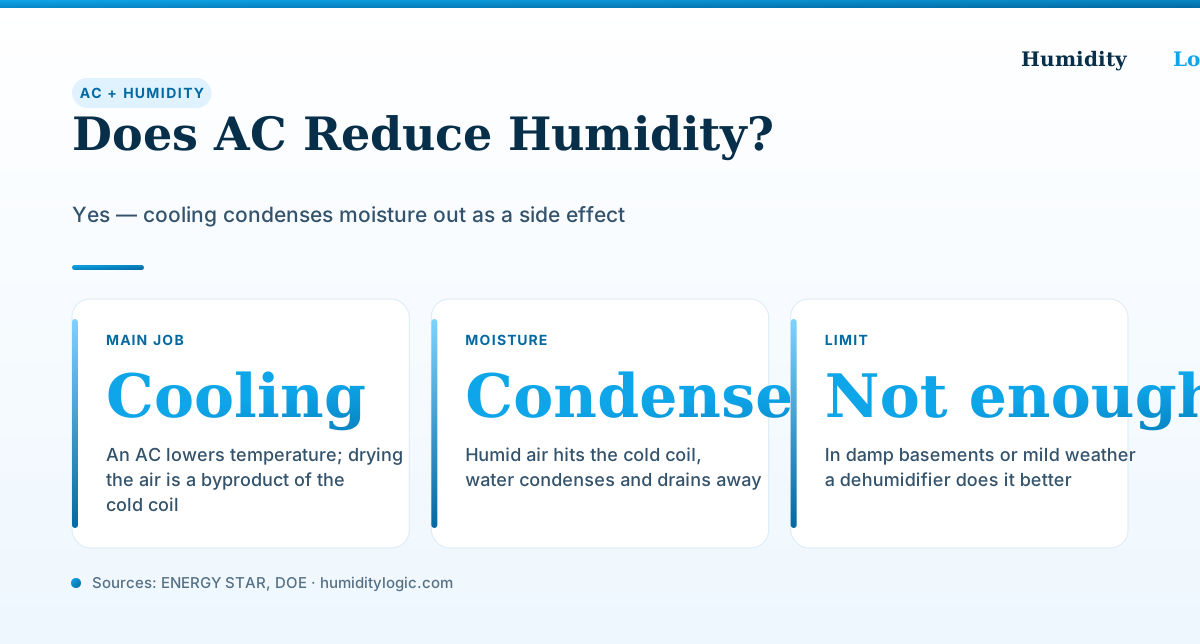
Yes, an air conditioner removes some moisture as it cools, but a dehumidifier does it better in damp or mild conditions. As warm, humid air is pulled across the AC’s cold coil, water vapor condenses on the metal and drips away to a drain, leaving the air that returns to your rooms both cooler and drier. Drying the air, though, is a side effect of the AC’s real job, which is lowering the temperature. That distinction is why the AC alone often falls short in a cool basement or on a mild, rainy day.
This guide walks through how an air conditioner pulls water out of the air, what the “dry mode” setting actually does, why AC alone frequently leaves a home clammy, and when pairing it with a dehumidifier is the right move.
How does an air conditioner remove humidity?
An AC removes humidity by condensing water vapor on its cold coil, the same way beads of water form on a glass of iced tea. Inside the indoor unit, a blower pulls warm, humid room air across the evaporator coil, which refrigerant has chilled well below the air’s dew point. When the air touches that cold surface, it can no longer hold all its moisture, so water condenses out onto the coil, runs down into a collection pan, and drains outside through a condensate line.
According to the US Department of Energy, cooling coils “remove heat and humidity from the air using refrigerant” as the core of how central and room air conditioners work. The dried, cooled air is then blown back into your living space while the heat that was collected gets dumped outdoors by the outdoor condenser unit. So an AC delivers two comfort improvements at once, a lower temperature and lower humidity, but both only last as long as the compressor is actually running. The moment it stops, the coil warms back up and no more water is pulled from the air.
The catch is right there in that sentence. The AC’s thermostat measures temperature, not humidity. The moment the room hits the set temperature, the system shuts off, and moisture removal stops with it, regardless of how damp the air still feels. Understanding what is considered high humidity helps you judge whether your AC is keeping up or quietly falling behind.
What does the AC “dry mode” setting do?
Dry mode is a setting that tells the AC to prioritize pulling out moisture instead of dropping the temperature. When you switch to it, the unit runs the indoor fan at a slower speed and cycles the compressor in short bursts. That slower airflow is the whole trick: air lingers longer against the cold coil, so more water vapor has time to condense out, while the temperature barely changes.
It is genuinely useful on a mild but muggy day, the kind of 72°F rainy afternoon when the house feels clammy but you do not want it any colder. Dry mode wrings out some of that stickiness without turning the living room into a refrigerator. It is also a little gentler on energy use, since the compressor and refrigerant flow run lower than in full cooling mode.
That said, dry mode is not a substitute for a real dehumidifier. It still relies on the same cold coil and still cannot run independently of the cooling system’s logic. For a persistently damp space, its moisture-removal capacity is modest compared with a machine built for the job, and it does nothing at all in a room your AC does not serve.
Why isn’t AC alone enough to control humidity?
Air conditioning falls short on humidity because it is designed around temperature, and the two do not always line up. The DOE notes that modern systems are very effective at reducing temperature but “not as effective at removing moisture from the air”. Three common situations expose that gap.
- Oversized systems short-cycle. An AC with too much capacity for the space cools the air to the set point in just a few minutes, then shuts off. The DOE’s Home Cooling guide warns that oversizing leads to “poor humidity removal due to excessive on-off cycling.” The unit never runs long enough to condense meaningful water, so you get a house that is cold but clammy.
- Mild and rainy weather. On a 65°F damp day, the air can still sit at 70 percent humidity, but the AC will barely turn on because there is no heat to remove. No runtime means no dehumidification.
- Cool, disconnected spaces. Basements, crawl spaces, and storage rooms stay cool but damp year-round, especially in spring and fall. The AC either does not reach them or has no reason to run there, so moisture just accumulates.
In all three cases the problem is the same: dehumidification is tied to cooling demand, and moisture does not politely wait for hot weather. This is a leading reason a home can feel muggy even with the AC humming along. If that describes your house, our guide to how to lower humidity in the house covers the fixes that go beyond simply running the AC harder.
When should you pair AC with a dehumidifier?
Pair the two whenever moisture is a problem in places or seasons the AC cannot cover. The air conditioner keeps the living floors cool through summer, and a dehumidifier handles the damp that cooling alone leaves behind, which is exactly the split that ENERGY STAR describes when it recommends a properly sized dehumidifier for spaces with excess moisture. The two machines are not redundant; they solve different halves of the comfort problem.
A dehumidifier earns its place in these situations:
- Finished basements. They run cool and damp even in summer, so the AC rarely dries them enough. A dehumidifier holds a basement under 50 percent year-round. If you are weighing that space specifically, see how a dehumidifier works.
- Shoulder seasons. In spring and fall, when the AC barely runs but the air is heavy, a dehumidifier works independent of temperature and keeps moisture in check.
- Whole-house humidity that tops 55 to 60 percent even with the AC on. That is a sign the cooling load alone is not pulling enough water, and a dedicated unit fills the gap.
Both appliances share the same cold-coil physics, so it is worth knowing how they differ from a purely air-cleaning device; our dehumidifier vs air purifier comparison sorts that out. To confirm whether your space actually needs the extra help, run your numbers through the humidity comfort checker, and if you decide to buy, what size dehumidifier do I need keeps you from over- or under-buying.
What humidity level are you aiming for?
Keep indoor relative humidity below 60 percent, and ideally between 30 and 50 percent. The EPA advises keeping humidity in that range to prevent mold, dust mites, and musty odors, and recommends using air conditioners and dehumidifiers as needed to get there. An inexpensive hygrometer is the only way to know where you actually stand, and it settles the question this whole article circles: whether your AC is doing enough on its own.
If that meter reads comfortably under 50 percent while the AC runs, cooling is carrying the moisture load fine, and you likely need nothing more. If it keeps drifting past 55 to 60 percent, or if the damp shows up in a basement or during mild weather when the AC is idle, that is your cue to add a dehumidifier rather than just lowering the thermostat another few degrees.
Frequently asked questions
Does running the AC lower indoor humidity?
Yes, to a degree. As warm, humid air passes over the cold evaporator coil, water vapor condenses on the coil and drains away, so the air that returns to the room is drier. But this only happens while the compressor runs, and cooling, not drying, is what the thermostat is chasing.
Why is my house still humid even with the AC on?
Usually the AC is oversized and short-cycles. It cools the air to the set temperature in a few minutes, then shuts off before it runs long enough to wring out much water. On mild or rainy days the AC barely runs at all, so humidity climbs even though the thermostat is satisfied.
What does the dry mode on my AC do?
Dry mode prioritizes moisture removal over cooling. It runs the fan slower and cycles the compressor in short bursts, giving air more time on the cold coil so more water condenses out while the temperature barely drops. It helps on muggy days but is weaker than a dedicated dehumidifier for very damp spaces.
Is an AC or a dehumidifier better for humidity?
For a hot, sticky room, the AC handles both heat and moisture at once. For a cool, damp basement or mild weather where you do not want the room colder, a dehumidifier is better, because it dries the air at any temperature and keeps running when the AC would not turn on at all.
What indoor humidity level should I aim for?
The EPA recommends keeping indoor relative humidity below 60 percent, ideally between 30 and 50 percent. Above roughly 60 percent, mold, dust mites, and musty odors take hold. If a hygrometer reads consistently over 55 to 60 percent while the AC runs, cooling alone is not keeping up with the moisture.
Sources & references
Every figure on this page is checked against these published sources. Last reviewed August 5, 2026.