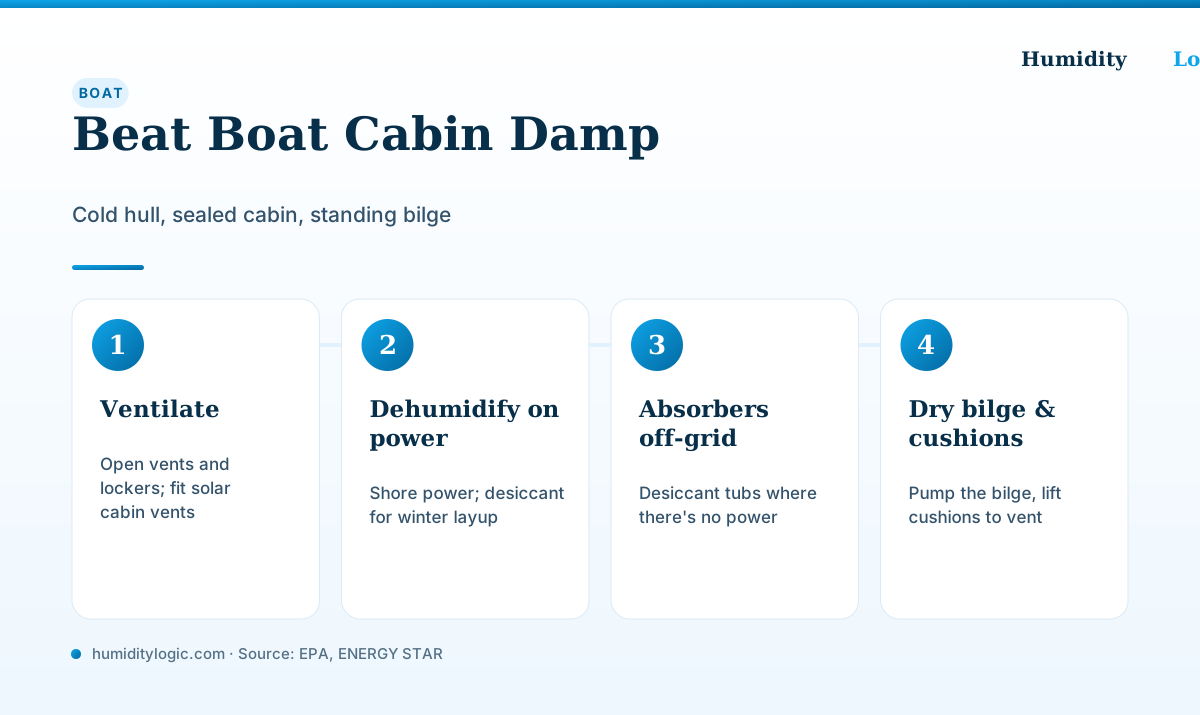
Boats live surrounded by water, sit sealed up between trips, and have cold hulls that sweat — which is why a cabin can grow mildew over a single damp month. A boat dehumidifier is the most reliable way to beat cabin damp when you have shore power; without it, ventilation plus moisture absorbers is the fallback — and for cold winter layup, a desiccant unit is the right type. Here is how to keep a boat dry and mildew-free.
Why boats get so damp
Everything about a boat conspires to trap moisture. The cabin is small and sealed tight when you leave it, the hull and windows are cold surfaces surrounded by water, and the bilge is a standing source of humidity below. Cooking, breathing, and wet gear add more, and with little air exchange it all condenses on the coldest surfaces — the same process the EPA describes for any space, warm humid air meeting a cold surface (EPA Mold Course, Chapter 2). The result is condensation on the deckhead and windows, damp cushions, and mildew on upholstery, lockers, and woodwork. Because mold only needs moisture and a surface, the EPA’s one rule applies: control the moisture and you control the mold (EPA — A Brief Guide to Mold, Moisture and Your Home).
When a dehumidifier is the answer
If your boat has shore power — on a marina berth or in a powered storage building — a dehumidifier is the set-and-forget solution. It holds the cabin humidity down automatically through the weeks you are not aboard, which is exactly when mildew takes over. Run it to a drain or a large tank, set the humidistat around 50%, and let it cycle. ENERGY STAR notes every certified unit has a built-in humidistat, so it only runs when the air climbs above your setting (ENERGY STAR — Dehumidifiers).
Sizing for a boat cabin
Boat cabins are small, so you do not need a monster — but size by dampness, not just volume. A compact 20–30 pint/day unit covers many cabins, while a larger boat or a persistently humid marina wants more. Marine air is relentlessly humid, so lean up a size rather than down. Put the cabin’s area and dampness into the dehumidifier size calculator, and see what size dehumidifier do I need for the method.
Winter layup: go desiccant
Most boats sit through winter unheated, and that is where dehumidifier type matters most. A standard compressor unit frosts its cold coil in a cold cabin — below about 50°F it “spend[s] more and more of [its] time defrosting… rather than dehumidifying” (Meaco). A desiccant unit keeps removing water in the cold and gives off a little warmth as it runs, which is ideal for winter layup. Our desiccant dehumidifier guide covers the full comparison.
No power? Ventilate and absorb
A small boat on a mooring, or one between weekend trips, usually has no power to run a dehumidifier. There, the plan is passive:
- Ventilate. Open vents, hatches, and locker doors when weather allows, and fit solar- or wind-powered cabin vents so air keeps moving while you are away.
- Moisture absorbers. Rechargeable desiccant tubs or disposable calcium-chloride pots pull moisture down with no power. Place them in the cabin, the heads, and damp lockers, and keep the corrosive brine away from metal fittings.
- Lift and circulate. Stand cushions on edge or lift them so air reaches underneath, where condensation and mildew love to hide — the same trick that works under an RV mattress.
Keep the bilge and lockers dry
A wet bilge is a constant humidity source, so keep it pumped and as dry as you can, and ventilate the lockers above it. Damp gear stowed wet is another culprit — dry life jackets, foulies, and towels before you close up. Hold the cabin under the EPA’s 60% ceiling, ideally lower, and the mildew never gets started.
Power it when you can, ventilate and absorb when you cannot, and go desiccant for winter — and your boat stays fresh instead of musty. For other small sealed spaces with the same battle, see the car dehumidifier and storage unit guides.
Frequently asked questions
Do I need a dehumidifier on my boat?
If the boat holds shore power, a dehumidifier is the most reliable way to stop the cabin mildew, condensation, and musty smell that boats are prone to — especially over winter layup. Without shore power, you rely on ventilation plus moisture absorbers instead. Either way, controlling moisture is what protects the upholstery, electronics, and woodwork.
What size dehumidifier for a boat cabin?
Most boat cabins are small, so a modest unit goes a long way, but size by how damp it is, not just the floor area. A compact 20–30 pint/day dehumidifier covers many cabins; a larger or very damp boat may want more. Marine air is persistently humid, so lean up a size, and set the humidistat around 50%.
Will a dehumidifier work in a cold boat over winter?
A desiccant dehumidifier will, because it does not rely on a cold coil and keeps working as temperatures drop — ideal for an unheated boat in winter layup. A standard compressor unit ices up below about 50°F and spends its time defrosting. For winter storage, a desiccant unit (or moisture absorbers) is the right call.
How do I stop condensation and mildew in a boat?
Ventilate, dehumidify, and keep air moving. Open vents and hatches when weather allows, run a dehumidifier or place moisture absorbers, lift cushions so air circulates underneath, and keep lockers and the bilge as dry as possible. Mildew needs moisture, so holding the cabin under 60% starves it.
Are moisture absorbers enough for a boat?
For a small boat with no shore power, or between trips, rechargeable or disposable moisture absorbers plus good ventilation often keep damp in check. For a larger boat, long winter layup, or a persistently humid marina, an electric dehumidifier does a far more reliable job when you can power one.
Sources & references
Every figure on this page is checked against these published sources. Last reviewed November 4, 2026.