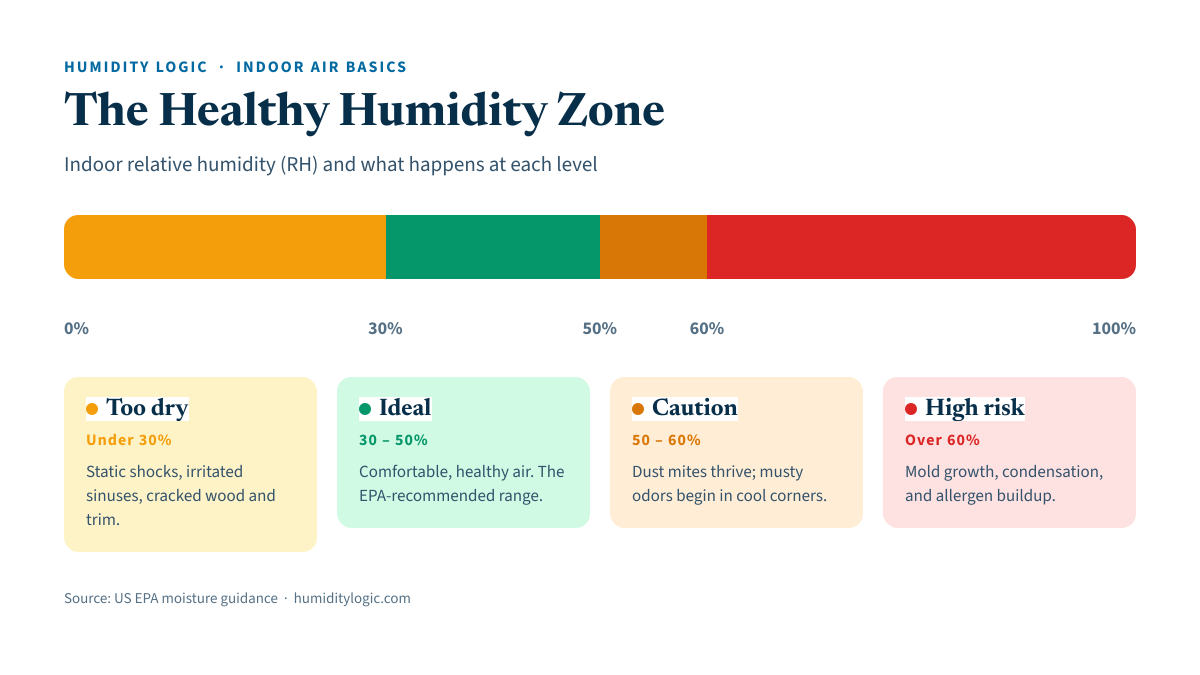
A dehumidifier removes moisture from the air; a humidifier adds it. You need a dehumidifier if your indoor relative humidity sits above 50% RH, and a humidifier if it drops below 30%. Both push toward the same EPA-recommended 30–50% zone — from opposite directions. Before buying either, measure your actual humidity with a $10–20 hygrometer, because guessing wrong means buying the wrong machine.
What’s the Difference Between a Humidifier and a Dehumidifier?
They are opposite tools aimed at the same target. The EPA’s guidance is to keep indoor relative humidity below 60% at all times — ideally between 30% and 50% — and each appliance handles one side of that range.
A dehumidifier works like a small air conditioner that dumps its heat back into the room. A fan pulls humid air across cold refrigerated coils, water vapor condenses into a tank or drain hose, and drier air blows out the other side. It is the fix for air that is too wet — above 50% RH.
A humidifier does the reverse: it converts liquid water into vapor and releases it into the room, either by ultrasonic vibration (cool mist), a wick and fan (evaporative), or boiling (warm mist). It is the fix for air that is too dry — below 30% RH.
Neither cleans, filters, or purifies air. They only move the moisture number, which is why the decision comes down entirely to what your number is. If you are not sure what a “good” number looks like room by room, see our guide to ideal indoor humidity levels.
How Do You Know Which One You Need?
Your house has been telling you all along — the symptoms of dry air and damp air do not overlap. Match your home’s complaints to the column they fall in:
| Symptom you’re noticing | What it means | What you need |
|---|---|---|
| Static shocks on doorknobs and blankets | Air below ~30% RH | Humidifier |
| Cracked wood floors, gapping trim, out-of-tune piano | Wood shrinking in dry air | Humidifier |
| Chapped lips, dry throat, scratchy sinuses on waking | Dry bedroom air overnight | Humidifier |
| Condensation or fog on window interiors | Moist air hitting cold glass | Dehumidifier |
| Musty smell in basement or closets | Sustained RH above 60% | Dehumidifier |
| Clammy sheets, damp-feeling rooms in summer | Air above 50–60% RH | Dehumidifier |
| Visible mildew spots on walls, grout, or window sills | Moisture problem, likely 60%+ | Dehumidifier |
Two caveats. First, window condensation in winter can appear even at moderate indoor humidity if the glass is cold enough — our guide to condensation on windows covers when it signals a real problem. Second, symptoms confirm a suspicion; a hygrometer proves it. Place one in the room in question, wait 24 hours, and read the number. Below 30%, humidify. Above 50%, dehumidify. Between the two, save your money — you don’t need either.
Why Does the Season Change the Answer?
Most homes don’t have a humidifier problem or a dehumidifier problem — they have a January problem and a July problem.
Winter is dry season. Cold outdoor air holds little moisture, and heating it indoors drops the relative humidity further — often into the teens in northern states. This is when static, cracked wood, and dry sinuses peak, and when a humidifier earns its keep. Target 30–40% RH when it’s below freezing outside; pushing to 50% in a cold snap sends moisture into windows and wall cavities as condensation.
Summer is damp season. Warm air carries far more water vapor, and in much of the eastern and southern US, outdoor dew points keep indoor humidity above 60% for weeks — prime range for that musty basement smell. Dust mites also thrive when humidity climbs above 50%, which is one reason the EPA’s under-60% ceiling isn’t just about comfort. This is dehumidifier weather, especially below grade. If you’re unsure where “humid” officially starts, here’s what is considered high humidity.
In humid-summer, cold-winter climates — the Midwest, Northeast, and much of the mid-South — the honest answer to “humidifier or dehumidifier?” is both, six months apart.
What Happens If You Run the Wrong One?
Running the wrong appliance doesn’t just waste electricity — it actively pushes your air out of the healthy zone.
This mistake is more common than it sounds. The typical version: someone buys a humidifier for stuffy-feeling summer air, when “stuffy” was actually excess humidity. The humidifier pushes a 60% room toward 70%, and within weeks there’s condensation on the windows and a musty smell in the closet. The reverse happens too — running a dehumidifier through a dry winter can pull bedroom air below 20% RH, making static and cracked woodwork worse while the machine strains to extract water that barely exists.
The tell is that your symptoms get worse after the appliance arrives, not better. The prevention is the same $10–20 hygrometer mentioned above — a number beats a hunch, and it’s the cheapest insurance in home air care.
Do Some Homes Need Both — and Where Should Each Go?
Yes, and usually in different rooms. Humidity is local: a basement can sit at 65% RH in July while a second-floor bedroom sits at 45%, and in January that same bedroom can drop to 25% while the basement stays damp.
The standard placement pattern for mixed-climate homes:
- Dehumidifier: basement or crawl space, running roughly May through September. Below-grade spaces stay cool, and cool surfaces plus summer air mean chronic dampness.
- Humidifier: bedrooms and main living areas, running during the heating season, when furnace-warmed air is driest and you spend eight hours a night breathing it.
Never run both in the same room at once — they will fight each other, and the dehumidifier will happily drink whatever the humidifier produces while both burn electricity.
How Do You Size the One You Choose?
Capacity, not brand, is what separates a machine that solves the problem from one that runs constantly and never catches up.
Dehumidifiers are rated in pints of water removed per day — common sizes are 20, 35, and 50 pints — and the right size depends on square footage and how damp the space starts out. A 50-pint unit is the usual call for a damp 1,000-plus-square-foot basement; a 20-pint unit suits a merely humid bedroom. Our dehumidifier size calculator turns your room dimensions and dampness level into a pint rating in about thirty seconds.
Humidifiers are rated by coverage area and tank size. Match the coverage rating to the actual room — a small bedroom unit can’t humidify an open-plan main floor, and an oversized console in a small bedroom will overshoot 50% and fog the windows.
The Bottom Line
Dry-air symptoms — static, cracked wood, parched sinuses — point to a humidifier and a winter problem. Damp-air symptoms — condensation, musty smells, clammy rooms — point to a dehumidifier and a summer or basement problem. The target is the same either way: the EPA’s 30–50% RH zone, never above 60%. Spend $10–20 on a hygrometer first, let the number make the call, and you’ll never own the wrong machine.
Frequently asked questions
Can I use a humidifier and a dehumidifier in the same house?
Yes, and many homes in the northern half of the US need both — just never in the same room at the same time. Run a dehumidifier in the basement during humid summers and a humidifier in bedrooms during the dry heating season. A hygrometer in each space tells you which appliance that room needs.
What humidity level is ideal for a home?
The EPA recommends keeping indoor relative humidity below 60% at all times, and ideally between 30% and 50%. In winter, aim for the lower end — about 30–40% — because warm indoor moisture condenses on cold windows and wall cavities when it is below freezing outside.
How do I know if my air is too dry or too damp without a meter?
Dry air announces itself through static shocks, chapped lips, and gaps opening in wood floors. Damp air shows up as window condensation, musty odors, and clammy-feeling rooms. Symptoms overlap enough that a $10–20 hygrometer is still worth buying before you spend money on either appliance.
Does a dehumidifier cool a room like an air conditioner?
No. A dehumidifier actually adds a small amount of heat to the room while it runs. The room feels cooler because drier air lets sweat evaporate more easily, but the thermometer reading will tick up slightly, not down.
Which costs more to run, a humidifier or a dehumidifier?
A dehumidifier, by a wide margin. A compressor dehumidifier typically draws 300–700 watts, while most portable humidifiers draw under 50 watts (evaporative and ultrasonic types). Whole-home steam humidifiers use more, but for portables, adding moisture is far cheaper than removing it.
Sources & references
Every figure on this page is checked against these published sources. Last reviewed July 21, 2026.