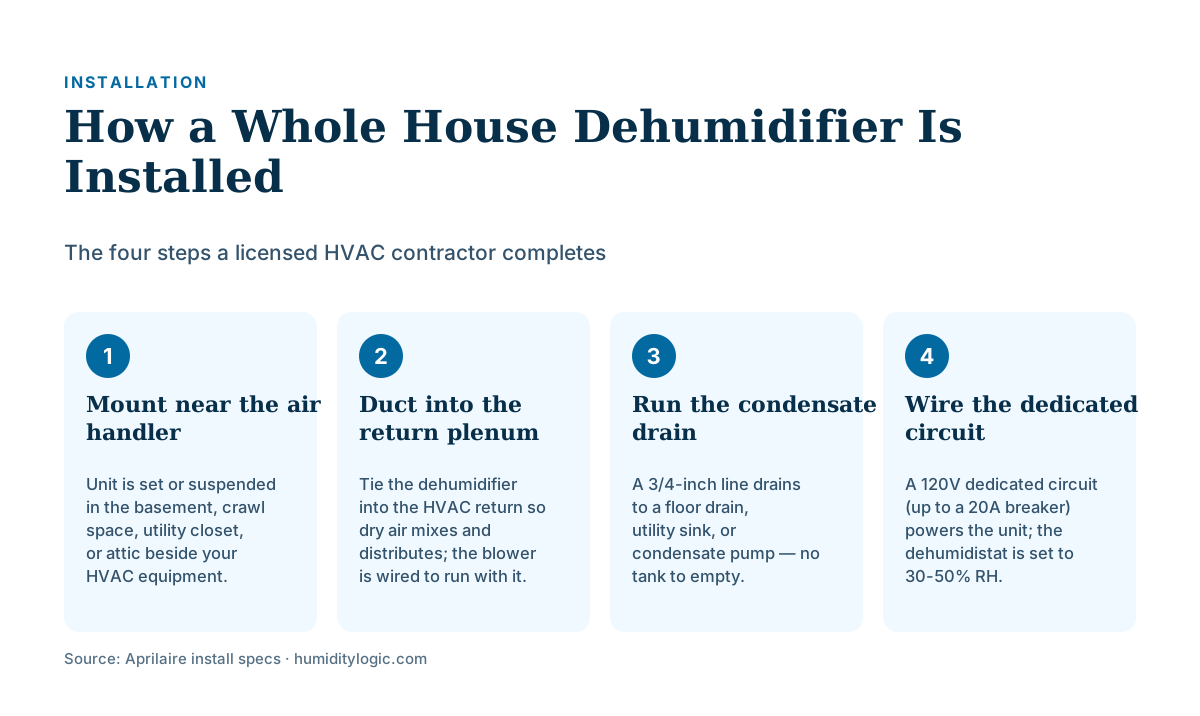
Whole house dehumidifier installation is a licensed HVAC job, not a DIY project. A contractor mounts the unit near your air handler, ducts it into the HVAC return plenum, runs a 3/4-inch condensate drain, and wires it to a dedicated 120V circuit — usually a few hours to a full day of work, for $1,500–$3,500 installed.
This is the hands-on companion to our whole house dehumidifier guide, which covers what the appliance is, when it beats portables, and how to size one. Here we walk through exactly what happens on install day, why each step is licensed-trade work, and where your money goes.
Can you install a whole house dehumidifier yourself?
No. A whole house dehumidifier has to be integrated into your ductwork, plumbed to a drain, and wired to a dedicated circuit — three separate trades’ worth of work — and getting any of them wrong can damage your HVAC system, starve your furnace of airflow, or void the unit’s warranty.
Portables are plug-and-play; whole-home units are not. Cutting into a return plenum, adding or modifying duct runs, and adding a breaker are permitted, licensed-trade tasks in most US jurisdictions. An undersized or leaky duct connection can throw off the static pressure your furnace and air conditioner depend on, and most manufacturers require professional installation to keep the warranty valid. The right path is to size the unit first — use our dehumidifier sizing calculator or the full method in what size dehumidifier do I need — then get two or three quotes from licensed HVAC contractors.
How is a whole house dehumidifier ducted into your HVAC system?
In the most common configuration, the dehumidifier both pulls air from and returns dried air to the HVAC return duct, so your system’s blower mixes and distributes it throughout the house. This “return-to-return” tie-in is the setup manufacturers like Aprilaire recommend for whole-home coverage.
There are three broad ducting approaches, and the installer picks based on your home and where the moisture is:
- Return-to-return (integrated). The unit draws from the return plenum and discharges back into it. Because the dehumidifier’s own fan alone won’t move air through the house, the installer wires it to switch on the HVAC blower whenever it runs, so dry air reaches every supply vent. This is the standard whole-house method.
- Dedicated return duct. A separate return is run from a specific problem area — a damp basement or a humid zone the main return doesn’t reach well — into the dehumidifier. Adding a dedicated duct run takes longer and costs more than tapping the existing return.
- Free-standing / standalone. The unit sits in one space (often a basement or crawl space) and treats that area directly with little or no ducting. This is closer to how a large portable works and suits sealed crawl spaces, but it does not give true whole-house coverage.
Placement drives much of the labor here. A unit hung beside an accessible air handler in a utility closet is a quick tie-in; the same unit in a tight attic or a low crawl space means more time, more duct, and higher cost.
What do the condensate drain and electrical hookup involve?
Two utility connections finish the job: a gravity or pumped condensate drain, and a dedicated electrical circuit. Both are code-regulated, which is a core reason the install belongs to licensed trades rather than a weekend project.
Condensate drain. The moisture the unit pulls from the air has to go somewhere continuously. The drain outlet is typically hard-piped or hosed with 3/4-inch tubing running by gravity to a floor drain or utility sink. Where there’s no gravity path — a basement or crawl space below the drain line — a condensate pump lifts the water out. Our guide to a dehumidifier with a pump explains when a pump is required and how it differs from gravity draining.
Electrical. Whole-home units draw more than a standard portable and generally need a dedicated 120V circuit. Published specs make the point concrete: Aprilaire’s E080 runs at 120V and about 4.8 amps, while the larger E100 hard-wired model calls for a minimum 12-amp circuit ampacity, a 20-amp breaker, and 14 AWG wire. If your panel doesn’t have a free circuit, an electrician adds a breaker — part of why complex jobs cost more.
Finally, the installer sets the controls. A dehumidistat (mounted in the living space it serves, or built into the unit) samples humidity and cycles the dehumidifier only when readings climb above your setpoint. The EPA recommends holding indoor relative humidity between 30% and 50%, and always under 60%, to keep mold and dust mites in check — so 45–50% is a sensible, efficient setting for most homes.
How long does whole house dehumidifier installation take?
A straightforward installation — a return-to-return tie-in beside an accessible air handler with a nearby drain and an available circuit — takes a few hours. Jobs with harder placement or added infrastructure stretch to a full day.
What pushes the timeline (and the bill) upward:
- Placement. Attic and crawl-space work is slower and more physical than a basement or utility-closet install.
- New ducting. Running a dedicated return duct adds fabrication and sealing time versus tapping an existing plenum.
- Drainage. A gravity drain nearby is fast; adding a condensate pump and lift line adds a step.
- Electrical. Using an existing circuit is quick; running a new dedicated circuit from the panel adds an electrician’s time.
- Permits. Some jurisdictions require a mechanical or electrical permit and inspection, which your contractor handles but which adds calendar time.
Because the unit runs automatically for a decade or more once it’s in, this is a one-day disruption for a long-term fix — not an ongoing project.
How much does whole house dehumidifier installation cost?
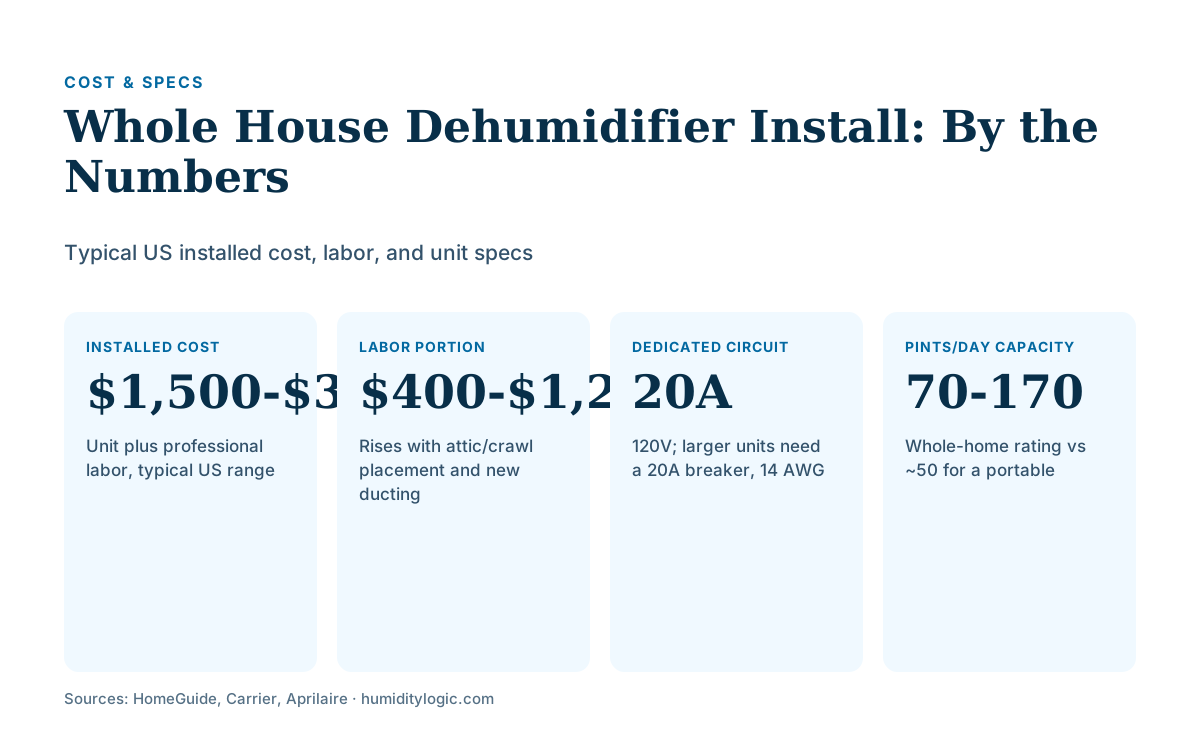
Expect $1,500 to $3,500 installed for a whole house dehumidifier — roughly $1,000 to $2,800 for the unit depending on capacity, plus $400 to $1,200 in labor. Simple tie-ins land near the bottom; attic placement, new ducting, a pump, or a new circuit push toward the top.
Here’s where the money typically goes:
| Line item | Typical range |
|---|---|
| Whole-home unit (70–170 pints/day) | $1,000–$2,800 |
| Professional labor | $400–$1,200 |
| New / dedicated duct run | $270–$500 |
| Condensate pump (if needed) | $150–$500 |
| Electrical (new dedicated circuit) | Varies by panel |
National cost data lands in the same band: HomeGuide and Carrier put installed jobs at roughly $1,000–$3,500, and Homewyse’s 2026 estimate for a typical single-unit install runs about $2,800–$3,300 including materials and labor. Region matters too, since HVAC labor rates vary widely across the US.
Don’t forget operating cost. A whole-home unit drawing 500–700 watts through a humid summer typically adds $15–$40 a month to your power bill at the US average of 17.9¢/kWh — run your unit’s wattage and expected runtime through our electricity cost calculator for a personalized figure. Drier air also feels cooler, so many homeowners raise the AC setpoint 2–3°F and recover part of that cost.
Is professional installation worth it over a portable?
For a house-wide moisture problem, yes — the professional install buys you automatic, whole-home drying that a portable can’t match, and it protects the entire structure rather than one room. A whole-home unit rates 70–170 pints/day against a portable’s ~50, runs unattended off a central dehumidistat, and lasts 10–15 years.
The install cost is the price of that integration: ducting into the plenum, a permanent drain, and a dedicated circuit are exactly what let the system run itself and treat every room. If your humidity is confined to a single space, a portable is still the smarter buy. But if multiple rooms sit above 60% RH — or moisture is threatening finishes, framing, or air quality across the house — size a system with our dehumidifier sizing calculator and have a licensed HVAC contractor handle the installation. And if you’re already seeing mold, remember the EPA’s rule: patches larger than about 10 square feet call for a professional, not a DIY cleanup.
Frequently asked questions
Can I install a whole house dehumidifier myself?
No — treat it as a licensed HVAC job. It has to be ducted into your return plenum, drained, and wired to a dedicated circuit, and mistakes can damage your furnace or AC, create airflow problems, or void the warranty. Hire a licensed HVAC contractor.
How long does it take to install a whole house dehumidifier?
A straightforward tie-in next to an accessible air handler takes a few hours. Attic or crawl-space placement, a new dedicated return duct, a condensate pump, or a new electrical circuit can push it to a full day.
Does a whole house dehumidifier need its own electrical circuit?
Most whole-home units require a dedicated 120V circuit. Larger models such as the Aprilaire E100 call for a 20-amp breaker and 14 AWG wire, so an electrician may need to add a breaker at the panel.
Where does the water from a whole house dehumidifier go?
Condensate leaves through a 3/4-inch drain line that runs to a floor drain, utility sink, or condensate pump — the same way your AC coil drains. There is no tank to empty.
Can a whole house dehumidifier share ductwork with my furnace and AC?
Yes. The most common setup ties it into the existing HVAC return so your blower distributes the dried air. A dedicated return duct from a problem area like a basement is an alternative when whole-house tie-in is not ideal.
Sources & references
Every figure on this page is checked against these published sources. Last reviewed July 21, 2026.