Relative humidity is the amount of water vapor in the air compared with the maximum the air could hold at its current temperature, written as a percentage. At 100% the air is saturated and dew, fog, or condensation forms. Because warm air holds far more moisture than cold air, the same amount of water vapor reads as high RH when the air is cool and low RH when it is warm — which is exactly why it is called “relative.”
What does relative humidity actually measure?
It measures how full the air is with moisture, not how much moisture is present. Relative humidity compares the water vapor currently in the air to the total amount the air could hold if it were saturated at that temperature, and it is written as a percent.
That “could hold” part is the key. Air has a ceiling on how much water vapor it can carry, and that ceiling rises steeply with temperature. So a reading of 50% doesn’t tell you a fixed quantity of water — it tells you the air is halfway to its limit for whatever temperature it happens to be. The actual amount of moisture is called absolute humidity; relative humidity is that amount expressed as a fraction of the maximum. When the air reaches its limit and RH hits 100%, any further cooling forces water back out as condensation.
Why is it called “relative” humidity?
Because the percentage is relative to temperature, the same air can show wildly different readings without gaining or losing a single drop of water. Warm air can hold more water vapor than cold air, so for a fixed amount of moisture the RH is higher when the air is cooler and lower when it is warmer.
This is why relative humidity swings over a single day even when the moisture in the air barely moves. The National Weather Service notes that RH is typically highest in the early morning, when the air is coolest, and lowest in the afternoon, when the air is warmest. Nothing changed about the water content — only the temperature, and therefore the air’s capacity, moved.
How does temperature change relative humidity? (a worked example)
Take one parcel of air holding a fixed amount of moisture — enough to give it a dew point of about 50°F — and simply change its temperature. No water is added or removed:
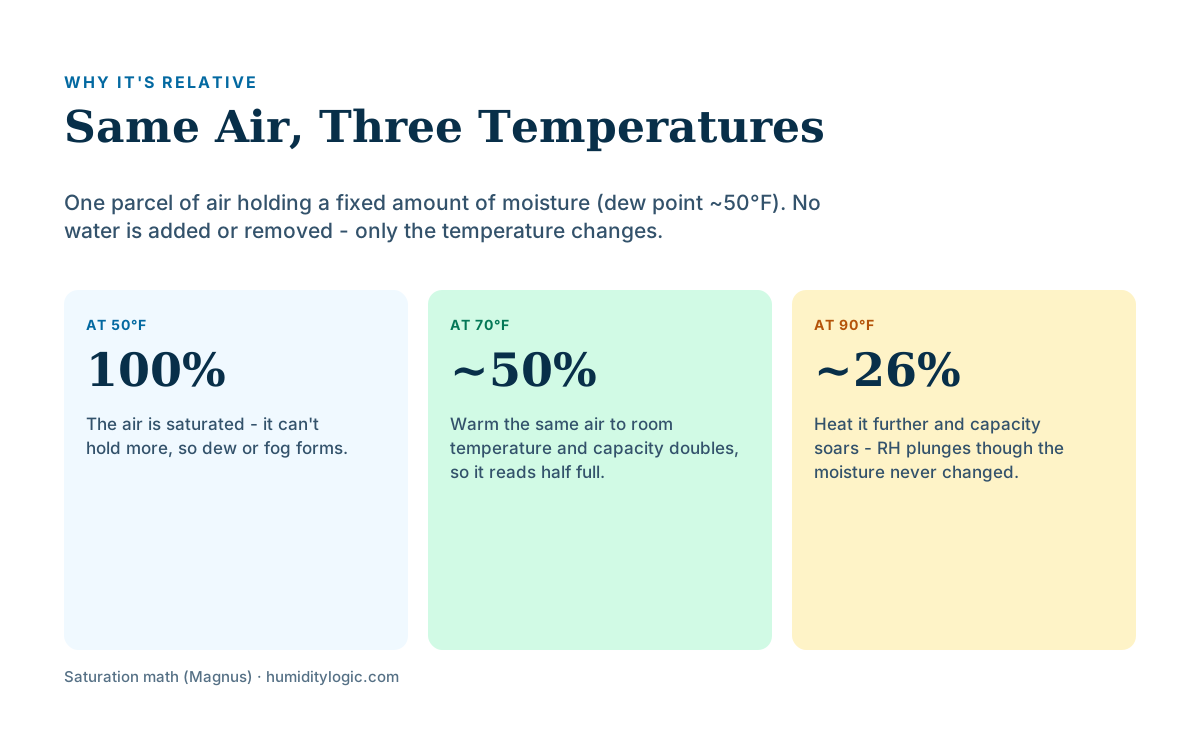
- At 50°F, the RH is 100%. The air is saturated; it cannot hold any more, so this is the point where dew or fog appears.
- At 70°F, the RH is about 50%. Warm that same air to room temperature and its capacity roughly doubles, so the unchanged moisture now fills only half of it.
- At 90°F, the RH is about 26%. Heat it further and capacity climbs again, dropping the percentage even though the water content never budged.
Those figures come from the same saturation math the site’s condensation risk calculator uses, and they explain a familiar experience: heating your house in winter makes the indoor air feel parched. You didn’t remove moisture — you raised the temperature, expanded the air’s capacity, and pushed the RH down.
What is a healthy relative humidity level indoors?
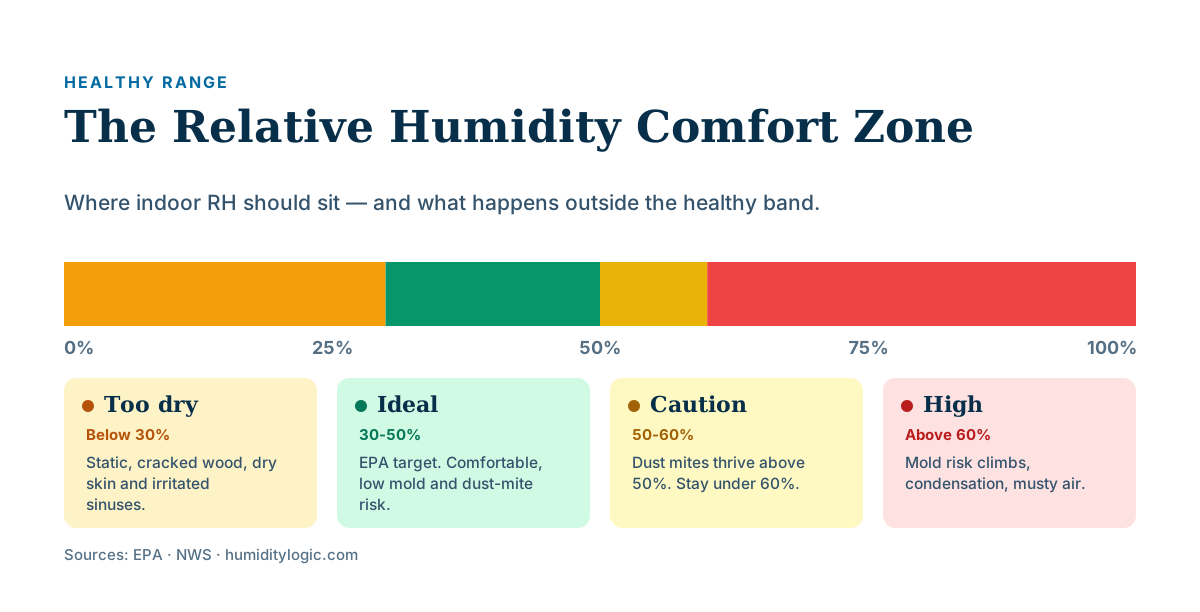
For a home, aim to keep relative humidity below 60%, ideally between 30% and 50%. That is the range the EPA recommends to limit mold growth, and it happens to be the same band where most people feel comfortable and dust mites struggle to thrive.
Straying outside that band has consequences in both directions. Below about 30%, air feels dry: static shocks, cracking wood and trim, chapped skin, and irritated sinuses. Above 50%, dust mite populations expand, and once RH climbs past 60% the risk of mold and musty odors rises quickly — which is one of the clearest signs of genuinely high humidity rather than air that is simply warm. Because a thermostat keeps indoor temperature fairly steady, RH becomes a dependable indoor target; our full guide to ideal indoor humidity levels breaks the seasonal targets down further.
How does relative humidity relate to dew point and comfort?
Relative humidity tells you how close the air is to saturation; dew point tells you how much moisture is actually there — and dew point is the better guide to how muggy the air feels. The two are locked together: a room at 70°F and 50% RH has a dew point of about 50.5°F, and any surface colder than that will collect condensation.
The reason RH can mislead you on comfort is the same temperature-dependence covered above. NOAA offers a stark example: air at 80°F and 50% RH feels more humid than air at 30°F and 100% RH, because the warm day carries far more actual water vapor despite the lower percentage. Your body cools by evaporating sweat, and that depends on the moisture already in the air — the dew point — not the percentage. As a rough scale, dew points at or below 55°F feel comfortable, 55–65°F feels sticky, and 65°F and up feels oppressive.
| Relative humidity | What it usually means indoors |
|---|---|
| Below 30% | Too dry — static, cracked wood, dry skin |
| 30–50% | Ideal — comfortable, low mold and mite risk |
| 50–60% | Caution — dust mites thrive; keep it under 60% |
| Above 60% | High — mold risk, condensation, musty air |
Can relative humidity reach — or pass — 100%?
For practical purposes, 100% is the ceiling: it means the air is saturated and can hold no more water vapor at that temperature. At that point the dew point equals the air temperature, and cooling the air even slightly forces moisture out as dew, fog, or condensation on cold surfaces.
You can briefly exceed 100% — called supersaturation — but it requires very clean air with few particles for water to condense onto, and it collapses back to 100% almost immediately once it has a surface to work with. In a house, you’ll never see a meaningful reading above 100%; instead you’ll see the consequences of hitting it, like water beading on single-pane glass or a cold basement wall. You can test any temperature-and-humidity combination against a given surface with the condensation risk calculator.
The bottom line
Relative humidity answers one question: how full is this air, relative to what it could hold right now? Because that ceiling rises with temperature, the percentage moves as the air warms and cools even when the moisture stays put — so a low RH on a hot day can still mean sticky air, and a high RH on a cold morning can feel merely damp. Indoors, keep it between 30% and 50%, watch the dew point for comfort and condensation, and the number will start telling you something useful instead of surprising you.
Frequently asked questions
What is a good relative humidity level in a house?
The EPA recommends keeping indoor relative humidity below 60%, ideally between 30% and 50%. That range keeps most people comfortable while holding down mold growth and dust-mite populations, which climb sharply once RH passes 50–60%.
Why is it called 'relative' humidity?
Because the number is relative to the air temperature, not an absolute amount of moisture. It compares the water vapor present to the maximum the air could hold at that exact temperature, so the same moisture reads as a high percentage when cool and a low percentage when warm.
Can relative humidity be over 100%?
At the surface it effectively tops out at 100%, which is saturation — the point where dew, fog, or condensation forms. Brief supersaturation above 100% can occur in very clean air aloft, but for household purposes 100% is the practical ceiling.
Does heating a room lower the relative humidity?
Yes. Warming the air raises how much moisture it could hold, so the same amount of water vapor fills a smaller share of that capacity and the RH percentage drops. This is why homes feel dry in winter even though little moisture has actually left the air.
Is relative humidity or dew point the better comfort measure?
Dew point is the more reliable gauge of how muggy air feels because it tracks actual moisture and does not swing with temperature. Relative humidity is still the right target indoors for controlling mold, dust mites, and condensation at a steady room temperature.
Sources & references
Every figure on this page is checked against these published sources. Last reviewed July 21, 2026.