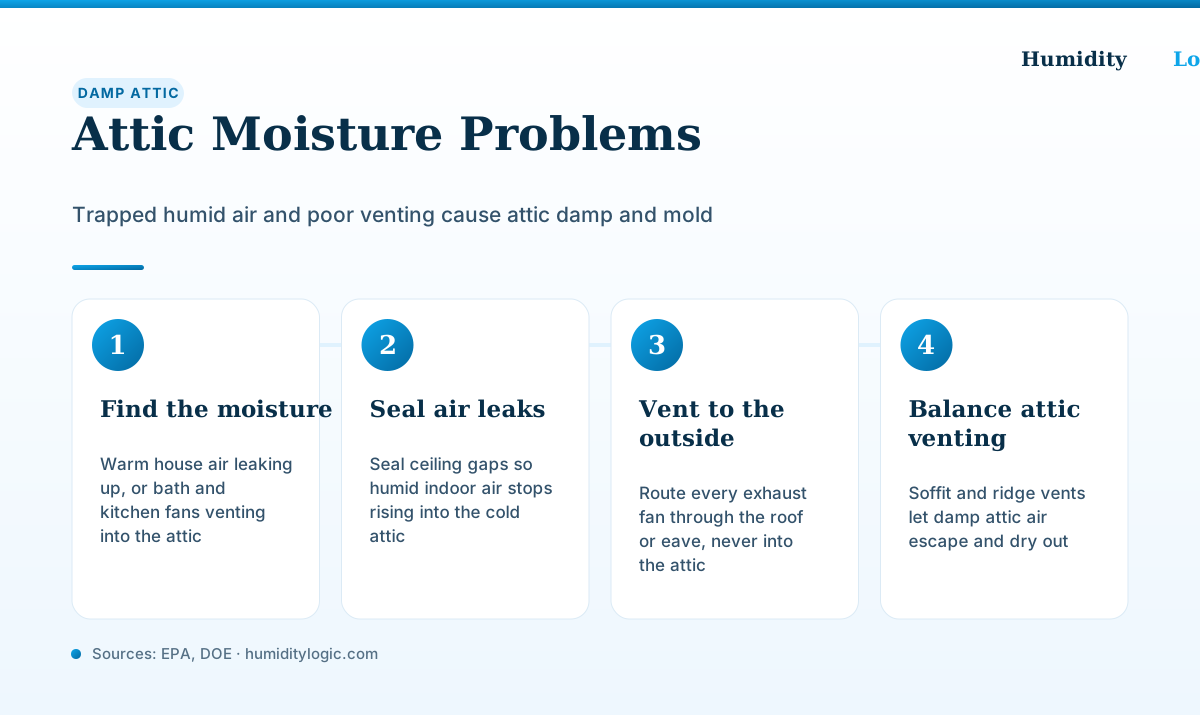
Attic moisture is mostly a case of warm, humid house air leaking up through gaps in the ceiling and exhaust fans venting into the attic instead of outside. That vapor hits the cold underside of the roof deck and condenses into frost, drips, and eventually mold or rotted sheathing. The fix, in order: air-seal the ceiling plane, vent every bath, kitchen, and dryer fan to the outdoors, then balance soffit-to-ridge attic ventilation and check the insulation. A dehumidifier is not the answer for a vented attic — it is a tool for conditioned rooms.
What actually causes attic moisture problems?
Attic dampness is almost always a moisture-transport problem, not a roof problem. Your heated home is full of water vapor from showering, cooking, laundry, houseplants, and simply breathing. Warm air is buoyant, so it rises and pushes through every unsealed opening in the ceiling — the attic hatch, recessed lights, plumbing and wiring holes, and the top plates of interior walls. When that vapor reaches roof sheathing that sits near or below freezing, it gives up its moisture as condensation or frost.
The DOE Building America Solution Center describes four conditions that combine to cause it: a cold surface below the dew point, air leakage from the interior, high indoor humidity, and too little ventilation to dry things out. Two of those four — air leakage and indoor humidity — start inside the house, which is why attic fixes begin below the ceiling, not on the roof.
The second big source is mechanical: an exhaust fan or dryer that dumps its warm, saturated air directly into the attic. A single bath fan running through a shower can release a startling amount of water vapor, and if its duct ends under the sheathing rather than at an exterior cap, that moisture has nowhere to go but into the wood. This closely mirrors the broader problem covered in our guide to attic humidity — same physics, viewed through the lens of visible damage.
How do I know if I have an attic moisture problem?
The clearest early sign is condensation itself: frost or fine water droplets on the underside of the roof deck and on the tips of roofing nails during cold weather. On a sunny day that frost melts and “rains” down onto the insulation. Other warning signs include:
- Dark staining or black mold on the sheathing and rafters, usually worst on a shaded north-facing slope.
- Damp, matted, or compressed insulation that has lost its loft.
- A musty smell when you open the hatch.
- Rusted nail tips, truss plates, or fasteners.
- Peeling paint or brown stains on the ceiling in the rooms below.
Widespread mold on the sheathing is a symptom of an ongoing air or water leak, not just a surface to scrub. The EPA is blunt about the priority: “the key to mold control is moisture control.” Clean the mold without fixing the moisture and it comes right back.
Is it condensation or a roof leak?
This distinction changes the entire repair, so it is worth getting right before you spend a dollar.
Condensation shows up in cold weather, is spread broadly across the whole underside of the sheathing and along nail lines, and gets worse after humid indoor activities. It is driven by the house, so it tends to be seasonal and diffuse.
A roof leak follows recent rain or snowmelt, concentrates around a single penetration — a plumbing vent boot, chimney flashing, skylight, or a valley — and leaves a defined brown stain that runs downward from that entry point. If a spot is wet during a dry cold snap, it is condensation; if it is wet only after storms and dry otherwise, suspect the roof.
You can have both at once, and a persistent roof leak also raises attic humidity enough to trigger condensation elsewhere. When the pattern is ambiguous, or when water is reaching finished ceilings, get a roofer or building-performance contractor to inspect before winter.
How do I fix attic moisture — and in what order?
Order matters. Working from the roof inward wastes money; working from the ceiling outward removes the source.
1. Air-seal the ceiling plane first. Sealing the gaps between the heated house and the attic stops humid air from rising into it, and it is the single most effective step. ENERGY STAR notes that the biggest leaks are usually where walls meet the attic floor, at dropped soffits, and behind kneewalls, and that dirty insulation is a telltale sign of air moving through it. Working from the attic side, weatherstrip the hatch, foam around plumbing and wiring penetrations (fire-rated material near flues), seal the top plates of walls, and cover recessed cans with airtight boxes unless they are IC-rated.
2. Vent every fan to the outdoors. Bath fans, kitchen fans, and the clothes dryer must discharge outside — through the roof or a wall cap — never into the attic. The DOE Building America Solution Center states plainly that exhaust fans should “vent outdoors, not into an attic, crawlspace, or space between floors.” Walk the attic and confirm each duct runs continuously to an exterior cap, is not crushed or disconnected, and has sealed, clamped joints.
3. Balance the attic ventilation. Once the moisture source is cut off, ventilation keeps the roof deck close to outdoor temperature so condensation cannot form. The usual code target is 1 square foot of net free vent area per 300 square feet of attic floor, split evenly between low intake at the soffits and high exhaust at the ridge; in cold, condensation-prone climates the BASC guide recommends the more generous 1/150 ratio. The most common failure is not too few vents but buried soffit intakes — insulation stuffed into the eaves starves the ridge vent. Install rafter baffles at each bay to keep a clear channel.
4. Check and top up insulation. Adequate, dry, evenly distributed insulation keeps the ceiling warm below and lets the attic stay cold above, which is exactly what you want. Add insulation only after air-sealing, since insulation slows heat but does little to stop air movement.
Why isn’t a dehumidifier the fix for a damp attic?
A dehumidifier is the wrong tool because a vented attic is not a sealed room — it is a large, unconditioned space deliberately connected to the outdoors through its vents. A portable unit would run continuously while fresh humid air kept leaking in from the house and from outside, never pulling the space to target, and it would ice over once attic temperatures dropped below its operating range. It treats a symptom while burning electricity.
Dehumidifiers earn their keep in conditioned or semi-sealed spaces instead: a finished basement, a laundry room, or an encapsulated crawl space, as covered in our guide to crawl space encapsulation with a dehumidifier. If you do have a conditioned space that needs one, our dehumidifier size calculator matches capacity to square footage and dampness, and our explainer on what size dehumidifier you need walks through the pint ratings. For the attic itself, spend that money on air-sealing and ventilation.
When should I call a professional?
Call a professional when mold on the sheathing covers more than about 10 square feet, when the moisture followed major water damage such as a roof leak, or when you simply cannot locate the source. The EPA sets that roughly 3-by-3-foot patch as the line between DIY cleanup and work that needs trained remediation, because larger jobs risk spreading spores and usually signal a moisture problem that has been running for months.
Bring in a pro for the diagnosis, not just the cleanup. A building-performance contractor can find hidden air leaks with a blower door, confirm the ventilation is balanced, and rule out a roof leak — the difference between fixing the cause and cleaning the same stain every spring. Get the sequence right and an attic stays dry on its own: seal the air paths, vent the fans outside, balance the venting, and keep the house between 30% and 50% relative humidity.
See it in 3D. Explore the attic in The Humidity House, our interactive 3D home — click the roof space to see how warm, moist air leaks up from below and condenses on the cold deck.
Frequently asked questions
What causes moisture in an attic?
Most attic moisture is warm, humid air from the living space leaking up through gaps in the ceiling, plus bath, kitchen, or dryer fans that vent into the attic instead of outdoors. That vapor condenses on the cold underside of the roof deck in winter, showing up as frost, drips, and mold. A true roof leak is a smaller share of cases and looks different — it follows rain and stains one spot from above.
Will a dehumidifier fix attic moisture?
No, not in a normal vented attic. The attic is a large, unconditioned space open to outdoor air through its vents, so a portable dehumidifier runs nonstop while humid air keeps leaking in, and it freezes up when attic temperatures fall. Air-sealing the ceiling and venting fans outside removes the moisture source. A dehumidifier belongs in conditioned spaces such as a finished basement, not a vented attic.
How do I tell attic condensation from a roof leak?
Condensation appears in cold weather, spreads as a light frost or fine droplets across the whole underside of the sheathing and on nail tips, and gets worse after humid activities like showering. A roof leak tracks recent rain or snowmelt, concentrates around one point such as a vent boot, chimney, or valley, and leaves a defined brown stain running downward from that spot.
Should bathroom and dryer fans vent into the attic?
Never. The DOE Building America Solution Center is explicit that exhaust fans must vent outdoors, not into an attic, crawlspace, or space between floors. A single bath fan or dryer dumping warm, saturated air into the attic can soak the sheathing on its own. Route each duct to an exterior cap on the roof or wall, with sealed, clamped joints and no disconnected sections.
When should I call a professional about attic moisture?
Call a pro when mold on the sheathing covers more than about 10 square feet, when moisture followed major water damage such as a roof leak, or when you cannot find the source. The EPA sets that roughly 3-by-3-foot patch as the line between DIY cleanup and trained remediation. A building-performance contractor can find hidden air leaks and confirm the attic ventilation is balanced.
Sources & references
Every figure on this page is checked against these published sources. Last reviewed August 13, 2026.