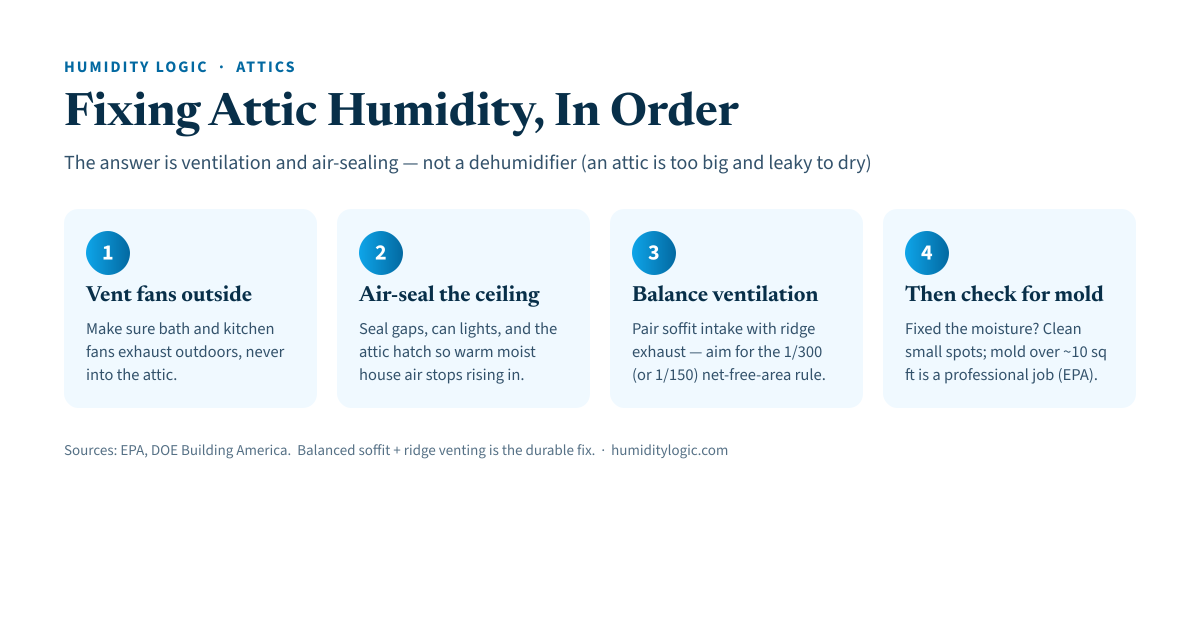
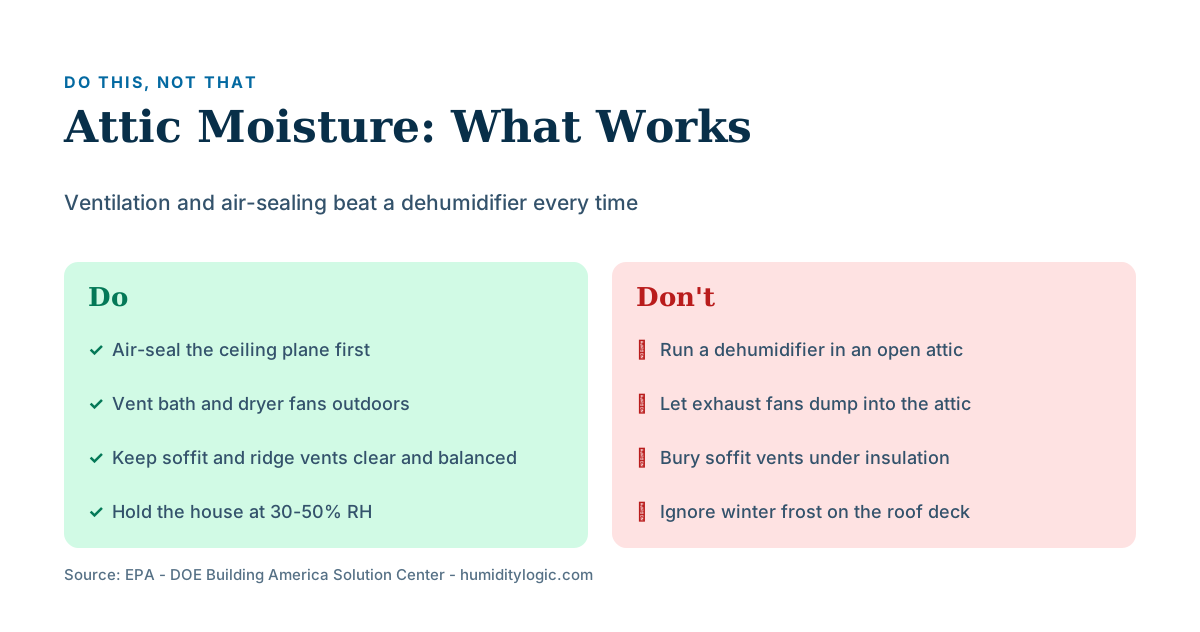
Attics get humid because warm, moist air from the house below rises and leaks into the attic through gaps in the ceiling, then condenses on the cold roof deck in winter. The fix is almost never a dehumidifier — a vented attic is too big and too leaky to dry that way. Instead, air-seal the ceiling plane, vent bath and dryer fans outdoors, and balance soffit-and-ridge ventilation. Keep the house at 30–50% relative humidity.
Why does my attic get humid?
Attic humidity is a moisture-transport problem: warm indoor air carries water vapor up into a cold attic, where it condenses. The DOE Building America Solution Center identifies four conditions that combine to cause it — a cold surface below the dew point, air leakage from the interior, high indoor humidity, and inadequate ventilation to dry things out.
In winter the mechanism is easy to picture. Your heated house is full of moisture from showering, cooking, laundry, and simply breathing. That warm air is buoyant, so it pushes up through every unsealed gap in the ceiling — recessed lights, the attic hatch, plumbing and wiring penetrations, the top plates of interior walls. When it reaches the underside of the roof sheathing, which can be near or below freezing, the vapor gives up its moisture as condensation or frost. This is the same physics that fogs your windows; our guide on condensation on windows walks through the dew-point math in more detail.
The air leaking up from the house is the fuel, and the cold roof deck is the trigger. Remove either one and the condensation stops.
What are the signs of an attic moisture problem?
The clearest sign is visible condensation or frost on the coldest surfaces — the underside of the roof deck and the tips of roofing nails poking through. In winter you may see a layer of frost that melts and “rains” down onto the insulation whenever the sun warms the roof.
Other warning signs include:
- Dark staining or black mold on the roof sheathing and rafters, usually worst on the shaded north-facing slope.
- Damp, matted, or compressed insulation that has lost its loft and R-value.
- A musty or earthy smell when you open the attic hatch.
- Rusty or corroded nail tips, truss plates, and fasteners.
- Peeling paint or stains on the ceiling below, which point to moisture soaking through.
If you find widespread mold on the sheathing, treat it as a symptom of an ongoing leak of either water or air, not just a surface to scrub. Persistent attic moisture almost always traces back to warm indoor air escaping upward, so the same root-cause thinking in why is my house so humid applies here.
Why won’t a dehumidifier fix a humid attic?
A dehumidifier is the wrong tool because a vented attic is not a sealed room — it is a large, unconditioned space deliberately connected to the outdoors through its vents. A portable unit would run nonstop while fresh outdoor and indoor air kept leaking in, never pulling the space down to target, and it would freeze up in cold weather when attic temperatures drop below its operating range.
Dehumidifiers earn their keep in enclosed, conditioned spaces such as basements and crawl spaces — see where to place a dehumidifier for those cases. An attic is the opposite situation. The building-science fix is to remove the moisture source and let ventilation carry away what remains, which is exactly what the next sections cover. If you already have surface mold to deal with, our dehumidifier for mold guide explains where drying equipment does and does not belong.
How do I air-seal the ceiling plane?
Air-sealing means closing the gaps between the heated house and the attic so warm, humid air can no longer leak upward — and it is the single most effective step. ENERGY STAR recommends sealing air leaks throughout the house with a focus on leaks into the attic, and doing it before adding insulation, because insulation slows heat but does almost nothing to stop air movement.
Work from the attic side and seal, in rough order of leakage:
- The attic hatch or drop-down stairs — weatherstrip the perimeter and add a rigid insulated cover.
- Plumbing, wiring, and flue penetrations — seal small gaps with caulk and larger ones with expanding foam (use fire-rated material around flues and chimneys).
- Recessed can lights — replace with airtight, IC-rated fixtures or cover with a rated air-sealing box.
- Top plates of interior and exterior walls — a common, hidden leakage path that runs the length of every wall.
- Bath-fan and duct penetrations — seal where the duct passes through the ceiling.
Because air-sealing pushes moisture back into the living space, pair it with running exhaust fans and keeping the house at the EPA’s recommended range. The EPA advises keeping indoor humidity below 60%, ideally between 30% and 50%. If the house itself runs damp, our how to lower humidity in a house guide covers the whole-home strategy.
Where should bathroom and dryer fans vent?
Every bathroom fan, kitchen fan, and clothes dryer must discharge to the outdoors — through the roof or a gable wall — never into the attic. A single bath fan or dryer dumping warm, saturated air into the attic can overwhelm the space on its own, and it is one of the most common causes of a soaked attic and moldy sheathing.
The EPA specifically advises venting appliances that produce moisture — clothes dryers, stoves, and similar — to the outside. Check each duct in your attic and confirm three things: it runs continuously to an exterior cap, it is not disconnected or crushed, and its joints are sealed and clamped. A duct that terminates just under the roof sheathing, or a “vent” that simply ends in the insulation, is doing real damage every time the fan runs.
How much attic ventilation do I need?
Balanced ventilation lets outside air wash through the attic and carry moisture away, keeping the roof deck close to outdoor temperature so condensation cannot form. The standard building code target is 1 square foot of net free ventilation area for every 300 square feet of attic floor, split roughly evenly between low intake and high exhaust. In cold climates where condensation is likely, the DOE Building America Solution Center recommends the more generous 1/150 ratio.
| Ventilation ratio | Attic floor area | Total net free vent area | Split (intake / exhaust) |
|---|---|---|---|
| 1/300 (code minimum) | 1,500 sq ft | 5 sq ft (720 sq in) | ~360 in² soffit / ~360 in² ridge |
| 1/150 (cold-climate) | 1,500 sq ft | 10 sq ft (1,440 sq in) | ~720 in² soffit / ~720 in² ridge |
The most common real-world failure is not too few vents but blocked intake: insulation stuffed into the eaves buries the soffit vents, so the ridge vent has nothing to pull from and airflow stalls. Install baffles (rafter vents) at every bay to keep a clear channel from soffit to ridge, and keep intake at the eaves at least equal to exhaust at the peak. Avoid mixing a powered attic fan with ridge vents — the fan can short-circuit the airflow and pull conditioned air out of the house.
Do I need a vapor barrier in the attic?
For most vented attics, air-sealing matters far more than a vapor barrier, because air leakage carries vastly more moisture than vapor diffusion through drywall. Building scientists at the DOE Building America Solution Center emphasize a continuous air barrier at the ceiling plane plus generous ventilation, rather than relying on a plastic vapor retarder that can trap moisture if installed on the wrong side.
Vapor control still matters at the margins, especially in very cold climates (IECC zones 6–8) where code may call for a Class I or II vapor retarder on the warm-in-winter side of the ceiling. But adding a vapor barrier while leaving big air leaks in place solves little. Get the sequence right: seal the air paths first, vent the attic properly, then let a professional advise on vapor control if your climate zone requires it. You can gauge how close your roof deck runs to the dew point with our condensation risk calculator.
When should I call a professional?
Call a professional when mold on the roof sheathing covers more than about 10 square feet, or any time the moisture followed major water damage such as a roof leak. The EPA sets that roughly 3-foot-by-3-foot patch as the line between do-it-yourself cleanup and work that needs trained remediation, because larger jobs risk spreading spores and usually signal a moisture problem that has been running for a while.
Bring in a pro for the diagnosis too, not just the scrubbing. Roofers and building-performance contractors can find hidden air leaks with a blower door, confirm your ventilation is balanced, and rule out roof leaks — the difference between fixing the cause and repeatedly cleaning the symptom. Electrical work around can lights and any spray-foam air-sealing over large areas are also best left to licensed trades. Small spots of surface mold on well-lit sheathing can be cleaned following EPA guidance, but treat widespread growth as a signal to get the whole system checked.
Frequently asked questions
Why is my attic so humid in winter?
Warm, moist air from the living space leaks up through gaps in the ceiling and hits the cold underside of the roof deck, where it condenses into frost or water. Poor attic ventilation traps that moisture instead of letting it dry out. The fix is air-sealing the ceiling and balancing intake and exhaust vents, not a dehumidifier.
Should I put a dehumidifier in my attic?
No, in almost every case. A vented attic is large, unconditioned, and open to outdoor air, so a dehumidifier runs constantly while fresh humid air keeps leaking in and never reaches the target. Air-sealing the ceiling plane and improving soffit-and-ridge ventilation removes the moisture source instead of chasing it.
How do I know if my attic has a moisture problem?
Look for frost or water droplets on the underside of the roof deck and nails in winter, dark staining or mold on the sheathing, damp or matted insulation, a musty smell, and rusty nail tips. Condensation on the coldest surfaces is the clearest early warning sign.
Does an attic exhaust fan reduce humidity?
A powered attic fan can pull conditioned air out of the house and draw more humid air up through ceiling gaps, sometimes making moisture and energy bills worse. Passive, balanced soffit-and-ridge ventilation combined with a well-sealed, insulated ceiling is the approach building scientists recommend.
When is attic mold a job for a professional?
The EPA advises hiring a professional when mold covers more than about 10 square feet or follows major water damage such as a roof leak. Widespread mold on roof sheathing usually means an ongoing moisture problem that a contractor should diagnose alongside the cleanup.
Sources & references
Every figure on this page is checked against these published sources. Last reviewed July 23, 2026.