Encapsulation and a dehumidifier are two halves of one system: encapsulation seals out ground and outdoor moisture by covering the crawl space floor and walls with a heavy, sealed vapor barrier and closing the vents, and then a right-sized dehumidifier holds the sealed crawl space under 60% RH. Sealing alone lowers the moisture load dramatically, but a closed crawl space still needs a drying mechanism to stay dry year-round — and in most US homes that mechanism is a continuously drained dehumidifier.
What Is Crawl Space Encapsulation?
Encapsulation means turning a dirt-floored, vented crawl space into a sealed, semi-conditioned part of the house. You cover the exposed soil with a heavy polyethylene liner, run that liner up the foundation walls and seal it, close and seal the old foundation vents, and insulate the walls instead of the floor above. The DOE Building America Solution Center describes the result as an unvented, insulated crawlspace kept “warm and dry with a continuous layer of 6-mil vapor retarder covering the floor and the walls.”
The point is to cut off the two biggest moisture sources at once. Bare soil can release roughly 10 pints of water vapor per day into a crawl space, and open vents pour humid outdoor air in every time it is warmer or wetter outside than under the house. Seal both and you remove most of the moisture before any equipment runs. If you want the fuller picture on why crawl spaces get damp in the first place, our crawl space humidity guide breaks down each source.
Why Does a Sealed Crawl Space Still Need a Dehumidifier?
Sealing is not the same as drying. Even a well-encapsulated crawl space retains some moisture in the soil, concrete, and framing, and no seal is perfectly airtight — small amounts of humid air still migrate in through the access hatch, penetrations, and the band joist. Because the space is now closed, that residual moisture has nowhere to go. Without a drying mechanism, humidity can climb and condense on the coolest surfaces, which is exactly where mold starts.
That is why DOE treats mechanical drying as part of the design, not an optional add-on. Its vented-to-unvented crawl space checklist calls for a “drying mechanism such as a continuously operating exhaust fan or conditioned air supply,” and Building America guidance lists a stand-alone dehumidifier as a common way to meet that requirement. A dedicated dehumidifier gives you the most precise control: it runs on its own humidistat, independent of whether the home’s HVAC is calling for cooling. Our crawl space dehumidifier guide covers when a dedicated unit beats the alternatives.
The target to aim for is straightforward. The EPA advises keeping indoor humidity below 60 percent, ideally between 30 and 50 percent, to control mold. Most crawl space units are set around 55% RH — dry enough to stop mold and wood rot, but not so dry that it wastes electricity or shrinks framing.
Is a Sealed Crawl Space Better Than a Vented One?
In hot, humid US climates, yes. The old logic behind foundation vents was that outdoor air would carry moisture away. In practice, during a muggy summer the outdoor air is often more humid than the crawl space, and when that warm, moist air hits cooler framing and ductwork under the house, it condenses. The vents become a moisture inlet rather than an outlet.
Encapsulation flips that. By sealing the vents you stop importing humid air, and by lining the ground you stop importing soil moisture. What is left is a small, manageable load that a single right-sized dehumidifier can handle. This is why the sealed, conditioned approach has become the recommended strategy across the mixed-humid and hot-humid South. In dry climates a vented crawl can still perform acceptably, but for most of the humid US, sealed plus conditioned is the more reliable system.
What Order Should You Do the Work In?
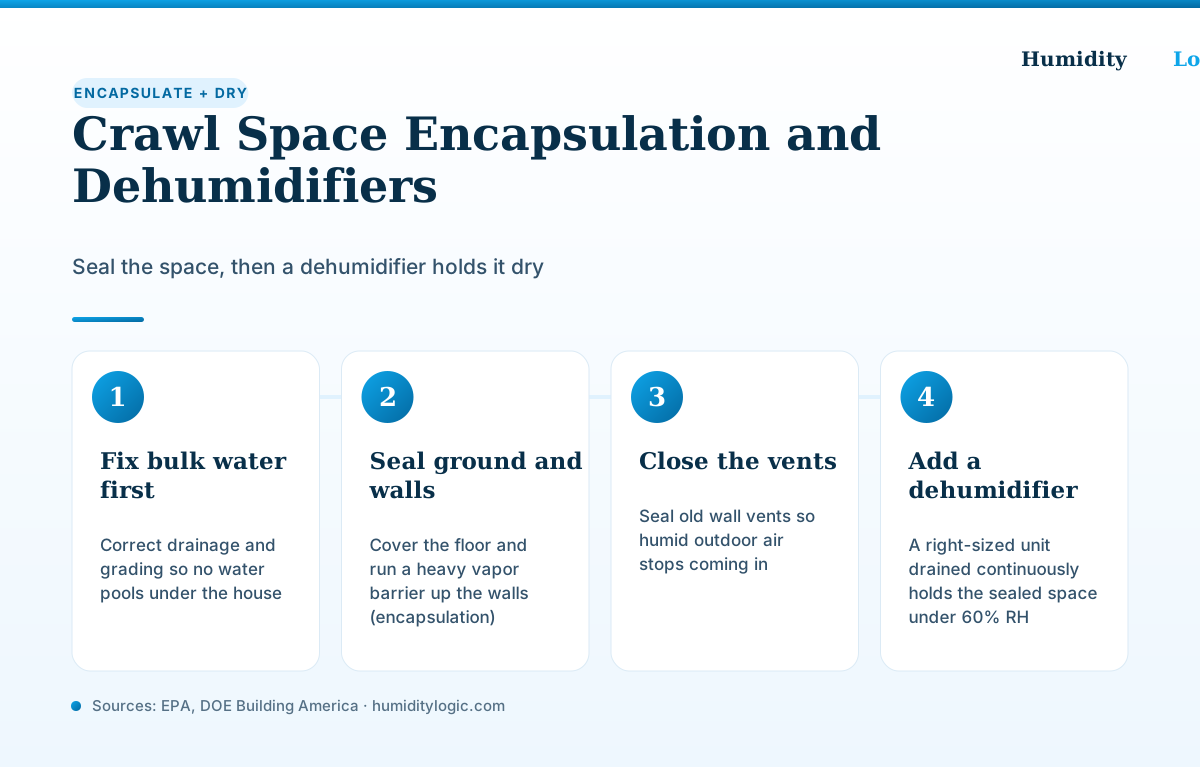
Sequence matters more than any single product. A dehumidifier installed over active water intrusion will run forever and still lose. DOE is blunt that moisture problems must be dealt with before sealing. Work in this order:
- Fix bulk water and drainage first. Regrade so the ground slopes away from the house, extend downspouts and gutters away from the foundation, and add footing drains or a sump pump if water still collects. This is the step people skip, and it is the one that decides whether everything downstream works. If you have standing water or a sump already, our sump pump and humidity guide explains how the two interact.
- Lay the liner over the ground and up the walls. Cover the entire floor with 6-mil (or heavier, for full encapsulation) polyethylene, overlap seams by at least 6 inches and tape them, and run the barrier up the foundation walls, sealing it near the top. This is the encapsulation step that stops soil moisture.
- Close and seal the vents. Fill the old wall vents with rigid foam cut to fit and seal the edges, so humid outdoor air stops coming in. At this point the crawl space is sealed.
- Add a dehumidifier drained continuously. Set a right-sized unit on a raised, level base near the center of the space, run its condensate line to a drain, sump, or pump so it empties automatically, plug it into a GFCI outlet, and set it to about 55% RH. Our installation walkthrough covers placement, drainage, and power in detail.
Do these out of order — sealing before drainage is fixed, or adding a dehumidifier before the liner is down — and you either trap a water problem inside or ask the machine to dry the earth itself.
How Big a Dehumidifier Does an Encapsulated Crawl Space Need?
Because encapsulation removes most of the moisture load up front, a sealed crawl space usually needs less dehumidification capacity than the same space would if left vented and bare. Even so, size the unit deliberately rather than guessing. The two variables that matter are the floor area and how damp the space still is after sealing, plus one crawl-space-specific factor: temperature.
Crawl spaces often sit cooler than living space, and standard dehumidifiers lose capacity and can ice their coils below about 65°F. Choose a low-temperature-capable crawl space model with automatic defrost if yours runs cool, since a portable room unit rated for 70°F living space will struggle in a 55°F crawl space and short-cycle. It is also worth oversizing modestly rather than undersizing: a unit that runs a light duty cycle lasts longer and recovers faster after a humid spell than one pinned at 100% output all summer. To get a specific pints-per-day target for your square footage and dampness level, run the numbers through our dehumidifier sizing calculator, and our what size dehumidifier do I need guide explains how the AHAM capacity ratings translate to real spaces.
Does Encapsulation Alone Stop Crawl Space Mold?
Encapsulation removes the moisture sources that feed mold, but it does not condition the air that remains. If humidity is allowed to drift back above 60%, a sealed crawl space can still grow mold on framing and subflooring — the seal just changes where the moisture comes from, not whether high humidity is dangerous. The combination is what protects the wood: the liner and sealed vents keep new moisture out, and the dehumidifier keeps what remains under the EPA’s 60% threshold. If you are already dealing with visible growth, treat it before you seal the space, and see our crawl space mold guide for how to handle it without entombing the problem.
Done in the right order — drainage, liner, vents, dehumidifier — encapsulation plus a right-sized, continuously drained dehumidifier is the most reliable way to keep a US crawl space dry, protect the structure above it, and keep that damp-basement smell out of the house.
Frequently asked questions
Does an encapsulated crawl space still need a dehumidifier?
Usually yes. Encapsulation seals out ground and outdoor moisture, but a sealed crawl space is not automatically dry — remaining moisture and any air leakage still push humidity up. DOE Building America lists a dehumidifier (or ducted conditioned air) as the drying mechanism a sealed crawl space needs to stay under control.
What humidity level should an encapsulated crawl space hold?
Keep it under 60% relative humidity. The EPA recommends indoor humidity below 60%, ideally 30–50%, to stop mold. Most crawl space dehumidifiers are set to about 55% RH, which is dry enough to prevent mold and wood rot without over-drying framing lumber.
Is a sealed crawl space better than a vented one in a humid climate?
In hot, humid US climates a sealed and conditioned crawl space is generally the safer approach. Open vents pull warm, moisture-laden outdoor air into the cooler crawl space, where it condenses on framing and ducts instead of drying anything out. Sealing the vents removes that moisture source.
Do I seal the crawl space before or after fixing drainage?
Fix bulk water and drainage first. DOE guidance is explicit that moisture problems must be dealt with before sealing and insulating, because a vapor barrier and dehumidifier cannot keep up with active water intrusion. Correct grading, gutters, and any standing water, then seal.
How big a dehumidifier does an encapsulated crawl space need?
Size it to the floor area and how damp the space is, then favor a low-temperature crawl space model. A sealed crawl typically needs less capacity than a wet, vented one because encapsulation cuts the moisture load first. Use a sizing calculator to get a pints-per-day target.
Sources & references
Every figure on this page is checked against these published sources. Last reviewed August 3, 2026.